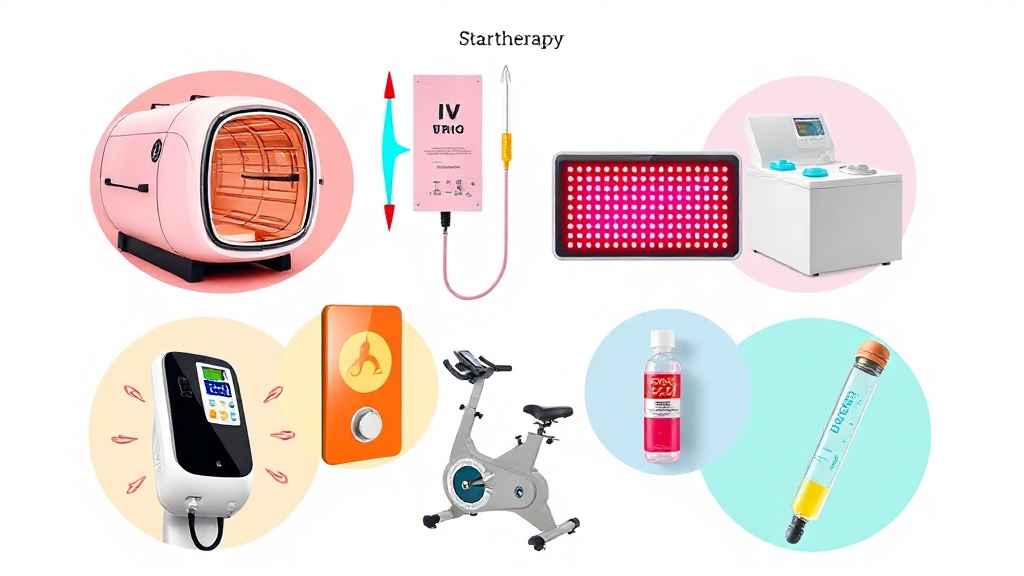
Hyperbaric oxygen therapy is one of several oxygen-based, immune-modulating, and cellular repair therapies used in regenerative and integrative medicine. Each works through a different mechanism, targets different conditions, and carries a different evidence base. This guide breaks down how HBOT compares to the most common alternatives so you can make informed decisions about which therapies fit your situation.
HBOT vs Ozone Therapy
HBOT increases dissolved oxygen in plasma under pressure. Ozone therapy introduces reactive oxygen species (O3) to trigger immune and antioxidant responses. They sound similar but work through fundamentally different pathways.
HBOT has FDA clearance for 14 specific indications, including wound healing, radiation injury, and decompression illness, and robust clinical trial data for wound healing, long COVID, and TBI. Ozone therapy is not FDA-approved in the United States but is more widely accepted in European medicine, particularly for chronic infections and immune modulation.
For a detailed head-to-head comparison with cost data and stacking guidance, read our full HBOT vs Ozone Therapy vs IV NAD+ comparison.
HBOT vs IV NAD+
IV NAD+ replenishes a coenzyme critical for mitochondrial energy production and DNA repair. It targets cellular energy at the molecular level. HBOT targets tissue oxygenation at the systemic level. They address different bottlenecks and are often stacked rather than used as substitutes.
IV NAD+ may be a better starting point if your primary complaints are fatigue and brain fog related to mitochondrial dysfunction. HBOT is the stronger choice for tissue repair, neuroplasticity, and conditions with published RCT data.
HBOT vs Stem Cell Therapy
Stem cell therapy introduces new cells to repair damaged tissue. HBOT creates the oxygen-rich environment that helps both existing and transplanted stem cells survive and function. Research shows HBOT mobilizes endogenous stem cells from bone marrow. Many clinics now combine HBOT with stem cell procedures for this reason.
They are complementary, not competing. If you are considering stem cell therapy, ask your provider about HBOT as a pre- and post-procedure protocol.
HBOT vs Red Light Therapy (Photobiomodulation)
Red light therapy uses specific wavelengths of light (typically 630-850nm) to stimulate mitochondrial function via cytochrome c oxidase activation. It is non-invasive, inexpensive, and has growing evidence for wound healing, pain reduction, and skin conditions.
HBOT works at higher pressures and deeper tissue penetration than light can achieve. Red light therapy is limited to superficial tissues (skin, joints near the surface). For deep tissue repair, neurological conditions, or systemic oxygenation, HBOT is necessary. For surface-level recovery, inflammation reduction, and skin health, red light therapy is more accessible and cost-effective.
HBOT vs EWOT (Exercise with Oxygen Therapy)
EWOT involves exercising while breathing concentrated oxygen through a mask. It increases oxygen delivery during physical activity but does not use pressure to dissolve oxygen into plasma the way HBOT does. The oxygen levels achieved with EWOT are significantly lower than even a soft chamber at 1.3 ATA.
EWOT is more affordable and accessible (home setups start at a few hundred dollars). It may help with general circulation and exercise performance. It is not a substitute for clinical HBOT for any medical indication. For a deeper comparison, see our EWOT vs HBOT article.
HBOT vs Peptide Therapy
Peptide therapy uses short-chain amino acids (like BPC-157, TB-500, and GHK-Cu) to target specific repair pathways: gut healing, tendon repair, collagen synthesis, and inflammation. These are highly targeted molecular interventions.
HBOT is a broad-spectrum intervention that improves the oxygen environment for all cellular repair processes. Peptides are precision tools. HBOT is infrastructure. Many regenerative medicine practitioners use both together: HBOT creates the healing environment, peptides direct specific repair pathways within it.
Comparison Table
| Therapy | Best For | FDA Status (US) | Cost Per Session | Evidence Level |
|---|---|---|---|---|
| HBOT | Tissue repair, TBI, long COVID, wounds, neurological | Cleared (14 indications) | $150-$600 | Strong (multiple RCTs) |
| Ozone Therapy | Chronic infections, immune modulation, joints | Not approved | $100-$400 | Moderate |
| IV NAD+ | Fatigue, brain fog, mitochondrial dysfunction | Not approved (supplement) | $250-$1,000 | Early-stage |
| Stem Cell Therapy | Joint repair, degenerative conditions, anti-aging | Limited (some products) | $5,000-$25,000+ | Varies widely |
| Red Light Therapy | Skin, surface wounds, pain, inflammation | Cleared (some devices) | $25-$150 (or buy device) | Moderate (growing) |
| EWOT | General fitness, circulation | Wellness device | $0 (home setup) – $50 | Limited |
| Peptide Therapy | Targeted repair (gut, tendon, collagen) | Varies by peptide | $200-$500/month | Emerging |
How to Decide
Start with the therapy that has the strongest evidence for your specific condition. For most conditions covered on BaricBoost (TBI, long COVID, stroke, wound healing, neurological recovery), that is HBOT. Then consider complementary therapies based on your specific bottlenecks:
- Mitochondrial dysfunction? Add IV NAD+
- Chronic infection component? Add ozone therapy
- Tissue repair at specific sites? Add peptides
- Surface-level inflammation? Add red light therapy
- Already doing HBOT and want to maintain between protocols? Consider EWOT at home
Use the BARIC Score to evaluate any HBOT clinic before booking, and read our clinic vetting guide for detailed questions to ask.
Frequently Asked Questions
Can I do multiple therapies at once?
Yes. Many integrative practitioners combine HBOT with IV NAD+, peptides, and/or ozone therapy. There are no known dangerous interactions between these therapies, but always inform each provider about everything you are doing. Timing matters: some practitioners prefer HBOT before other therapies to prime tissue oxygenation.
Which therapy is most cost-effective?
Red light therapy has the lowest entry cost (a quality device costs $200-$1,000 for home use). EWOT is also inexpensive for home setups. HBOT has the highest per-session cost but also the strongest evidence base for serious medical conditions. Cost-effectiveness depends on your condition: paying $10,000 for HBOT that resolves long COVID brain fog may be more cost-effective than $2,000 on a therapy with weaker evidence.
Do I need a doctor’s recommendation for these therapies?
Medical HBOT (hard chamber, 1.5+ ATA) requires a physician’s involvement. The UHMS and FDA both recommend physician oversight for clinical HBOT programs. Ozone therapy should be administered by a trained practitioner. IV NAD+ is typically given at clinics with medical oversight. Red light therapy, EWOT, and some peptides are available without a prescription but benefit from practitioner guidance for dosing and protocol design.
Medical Disclaimer
The content on BaricBoost.com is for informational purposes only and is not intended as a substitute for professional medical advice, diagnosis, or treatment. Always seek the advice of your physician or other qualified health provider with any questions you may have regarding a medical condition. Never disregard professional medical advice or delay in seeking it because of something you have read on this website.