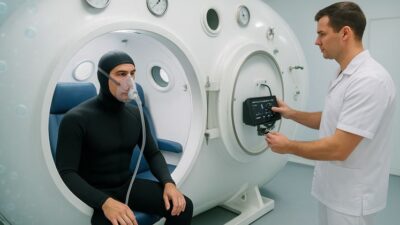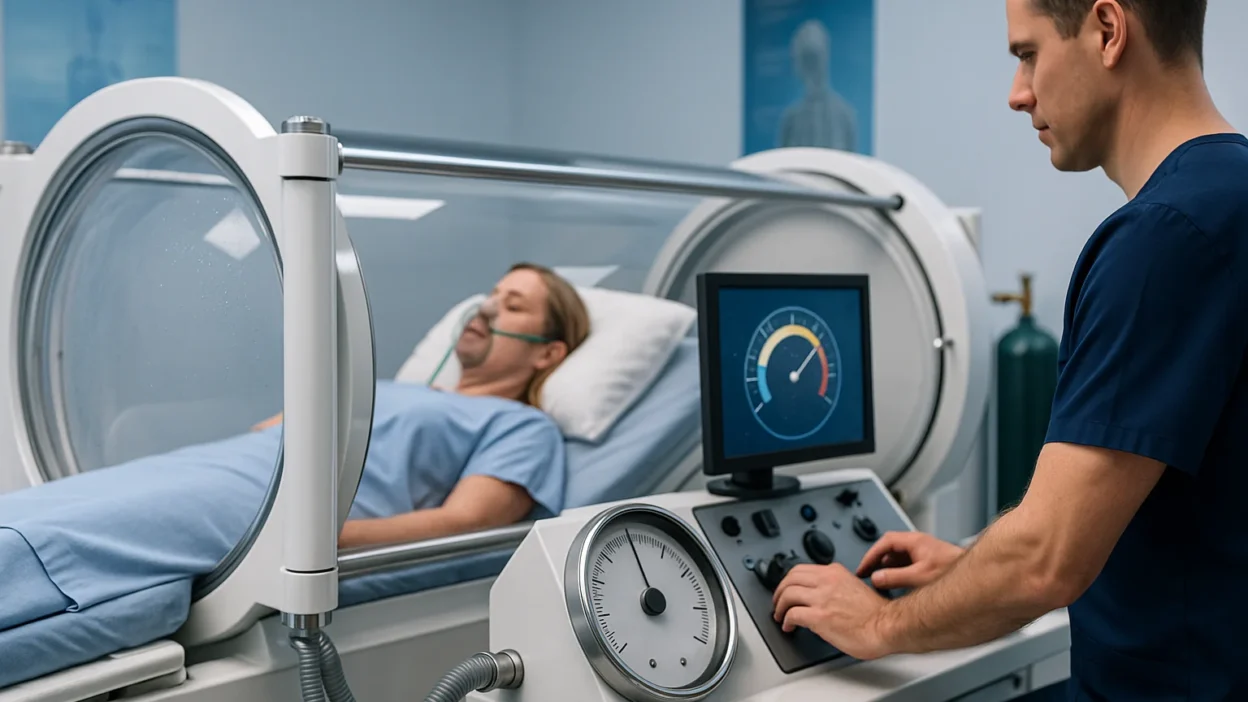
For most people learning about hyperbaric oxygen therapy, the ATA HBOT seems like complete gibberish. ATA means “atmospheres absolute”.
Atmospheric pressure in ATA HBOT isn’t some random number doctors throw around. It’s the engine that drives oxygen deep into your tissues and gets your healing machinery firing on all cylinders.
And yes, without the right pressure, you’re basically paying premium prices to breathe fancy air in what amounts to a really expensive metal tube.
At 2.0 ATA, plasma oxygen concentration rises by 1,000 to 1,400%, enabling oxygen delivery to tissues that red blood cells cannot reach.
Henry’s Law applied to HBOT
Understanding ATA in Hyperbaric Oxygen Therapy
ATA HBOT works because pressure determines how much oxygen dissolves into blood plasma. Think of it like how a pressure cooker transforms tough meat into something tender, except we’re talking about healing damaged tissue. Climb into a chamber set at 2.0 ATA, and you’re dealing with double the atmospheric squeeze you’d get hanging out at the beach.
Here’s how medical practitioners typically dial in these pressure settings:
- 1.5 ATA: Standard for chronic wound healing and diabetic complications
- 2.0 ATA: Most common clinical range; includes carbon monoxide poisoning treatment
- 2.4 ATA: Used for decompression sickness and complex cases
- 3.0 ATA: Emergency and specialized medical applications
With ATA HBOT, your blood plasma turns into this oxygen-packed delivery truck. Usually, your red blood cells handle the heavy lifting for oxygen transport. But pump up that pressure, and suddenly your plasma becomes this supercharged transport system that can squeeze into spots where defective or sluggish blood vessels just can’t cut it anymore.
Henry’s Law explains this phenomenon. The higher the pressure above a liquid, the more gas dissolves into it. Higher pressure means more dissolved oxygen in plasma, reaching hypoxic tissues that need it most.
The Science Behind Atmospheric Pressure and Oxygen Delivery
ATA HBOT doesn’t just blast more oxygen at you; it completely alters how oxygen moves through your system. Under normal air pressure, your hemoglobin already carries about 97% of the oxygen it can handle, so breathing 100% oxygen at sea level produces minimal additional benefit.
| Pressure Level | Oxygen Dissolution | Plasma Oxygen Increase | Tissue Penetration |
| 1.0 ATA (Sea Level) | Regular hemoglobin loading | Barely any plasma oxygen | Normal tissue reach |
| 2.0 ATA | 10-15x more dissolution | 1000-1400% plasma boost | 2-3x deeper reach |
| 2.4 ATA | 15-20x more dissolution | 1400-1900% plasma boost | 3-4x deeper reach |
| 3.0 ATA | 20-25x more dissolution | 1900-2400% plasma boost | 4-5x deeper reach |
Under pressure, oxygen dissolves directly into blood plasma. This dissolved oxygen reaches areas where red blood cells cannot: damaged capillaries, edematous tissue, and regions with compromised circulation
10-15x
more oxygen dissolves into blood plasma at 2.0 ATA compared to normal atmospheric pressure
Thom, 2009
What’s really exciting is how ATA HBOT kicks off something called oxygen-induced angiogenesis. Flood tissues with high-pressure oxygen, and your body responds by sprouting brand new blood vessels (Thom, 2009)[1].
Medical Applications Requiring Specific ATA Levels
Different medical conditions need specific ATA HBOT pressure levels.There’s rock-solid research backing up these recommendations. They are adopted and recommended by the Undersea and Hyperbaric Medical Society.
Take acute carbon monoxide poisoning, we’re looking at 2.8 to 3.0 ATA treatments. High pressure becomes absolutely crucial because carbon monoxide binds hemoglobin roughly 200 times more readily than oxygen. High pressure is required to displace CO from hemoglobin and restore oxygen transport.
Wound healing situations usually call for gentler pressures, somewhere around 2.0 to 2.4 ATA. This range delivers sufficient oxygen without damaging already compromised tissues. Diabetic foot ulcers respond well to this range because it compensates for the peripheral vascular disease common in diabetic patients.
Radiation injury treatment typically lands in the middle ground, around 2.0 to 2.5 ATA. The goal is stimulating neovascularization in tissues damaged by radiation therapy, which demands steady oxygen delivery across multiple treatment sessions.
What Are the Side Effects and Risks?
Now, let’s talk about safety. ATA HBOT isn’t a casual wellness trend you experiment with on weekends, and keeping tabs on pressure isn’t something you can phone in. Your body handles increased atmospheric pressure pretty well, but there are definitely limits and potential curveballs you need to respect.
Oxygen toxicity becomes a genuine concern when you’re dealing with higher pressures and longer exposure times. Your central nervous system can actually get oversaturated with oxygen, potentially triggering seizures in worst-case scenarios. That’s exactly why treatment protocols carefully juggle pressure levels with session timing.
Key safety checkpoints during ATA HBOT include:
- Ear pressure management: Patients must pop their ears regularly as pressure climbs
- Vital sign tracking: Blood pressure, heart rate, and oxygen saturation monitoring
- Communication links: Constant contact between the patient and the chamber operator
- Emergency decompression: Rapid pressure relief capability for emergencies
- Fire prevention: 100% oxygen environments demand serious safety protocols
The decompression phase carries just as much importance as the pressure buildup. Drop pressure too fast, and you risk decompression sickness, the same condition affecting divers who surface too rapidly. Most protocols include stepped decompression with specific timing intervals at reduced pressures.
| Safety Parameter | Normal Range | Action Required | Emergency Protocol |
| Blood Pressure | ±20% of starting point | Keep watching closely | Think about stopping |
| Heart Rate | 60-100 BPM | Write down changes | Get medical backup |
| Ear Discomfort | Slight pressure feeling | Teach clearing techniques | Stop adding pressure |
| Anxiety Level | Manageable nerves | Give reassurance | Emergency pressure drop |
From what I’ve seen working with ATA HBOT patients, most individuals adjust to pressure changes without too much drama. The secret sauce is gradual pressurization, typically around 2 PSI per minute, giving your body enough time to adapt without freaking out.
Long-term Benefits of Properly Administered ATA HBOT
The lasting impact that proper pressure protocols can have on healing results is amazing. We’re not just talking about quick symptom relief. Consistent, correctly pressurized treatments can create permanent physiological improvements.
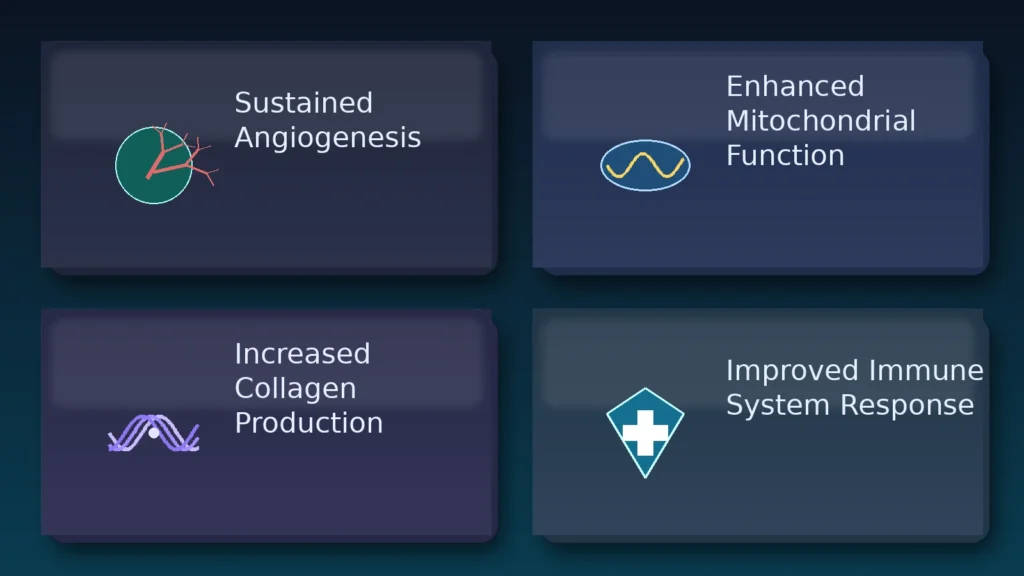
Sustained angiogenesis ranks among the most impressive long-term perks. Complete a full ATA HBOT treatment series at the right pressure levels, and the body continues forming new blood vessels for weeks after the final session.
This upgraded vascular network keeps delivering better oxygen and nutrient flow long after you’ve said goodbye to the treatment facility.
Mitochondrial function gets a serious upgrade from proper ATA HBOT protocols, too. These cellular energy factories become more efficient at churning out power when they’ve been bathed in therapeutic oxygen levels under pressure (Hadanny et al., 2018)[2].
This leads to improved cellular performance across multiple body systems, not just the targeted treatment area.
Properly delivered ATA HBOT also stimulates fibroblast activity, leading to stronger, better-organized collagen formation.
This is particularly important in wound healing where tissue strength and integrity determine long-term outcomes.
The immune system benefits are also significant. ATA HBOT at therapeutic pressures enhances white blood cell performance, especially neutrophil activity. Neutrophils become more effective at combating infections and clearing cellular debris, establishing a healing environment that persists after treatment ends.
Treatment Protocols and Pressure Optimization
Maximizing HBOT benefit requires adherence to established protocols with specific pressure ranges for each condition. Decades of research define which pressures work for which conditions.
Standard treatment schedules typically involve daily sessions spread across several weeks. For wound healing applications, we’re usually talking 90-minute sessions at 2.0 ATA, five days weekly for four to six weeks straight. Consistency matters just as much as pressure level because you’re trying to maintain therapeutic oxygen concentrations in tissues over extended periods.
Recovery gaps between sessions are built into protocols deliberately. The body needs time to process increased oxygen exposure and mount appropriate healing responses.
Cramming sessions too close together can actually backfire and bump up oxygen toxicity risks. What’s really cool about ATA HBOT optimization is how individual patient variables influence protocol choices.
Age, overall health picture, current medications, and specific medical conditions all factor into determining ideal pressure levels and treatment duration. A protocol appropriate for a healthy 30-year-old may need adjustment for a diabetic 65-year-old with peripheral vascular disease.
Most facilities now run computerized pressure monitoring systems that maintain precise atmospheric control throughout entire treatment sessions.
These systems detect pressure variations as small as 0.1 ATA and make real-time adjustments to maintain therapeutic levels.
Oxygen toxicity risk is real at higher pressures. Every HBOT protocol carefully balances session duration with pressure level to keep patients safe.
UHMS Safety Guidelines
FAQs
- What does ATA mean in hyperbaric oxygen therapy?
ATA stands for “atmospheres absolute,” measuring total atmospheric pressure during HBOT treatment. At sea level, we naturally experience 1 ATA, while therapeutic HBOT typically runs 1.5 to 3.0 AT, depending on what medical condition gets treated.
- How do I know what ATA level is right for my condition?
ATA levels get determined by established medical protocols based on your specific condition. Wound healing typically runs 2.0-2.4 ATA, while emergency situations like carbon monoxide poisoning may demand 2.8-3.0 ATA. Your healthcare provider selects appropriate pressure based on medical guidelines.
- Is higher pressure always better in ATA HBOT?
No, higher pressure isn’t automatically better. Each medical condition has an optimal pressure range that maximizes benefits while minimizing risks. Using excessive pressure can trigger oxygen toxicity and other complications without providing extra therapeutic benefit.
- How long does it take to reach therapeutic ATA levels?
Most chambers pressurize gradually at roughly 2 PSI per minute for patient safety and comfort. Reaching 2.0 ATA typically takes 10-15 minutes, giving your body time to adjust and equalize ear pressure naturally.
- Can ATA levels be adjusted during treatment?
Yes, modern hyperbaric systems allow pressure adjustments during treatment when needed. However, changes get made gradually and only when medically necessary, since frequent pressure variations can reduce treatment effectiveness.
- What happens if the pressure drops unexpectedly during ATA HBOT?
Hyperbaric chambers have multiple safety systems preventing rapid decompression. If pressure loss occurs, emergency protocols ensure gradual decompression to prevent decompression sickness, similar to precautions used in deep-sea diving.
References
- Thom SR. (2009). Oxidative stress is fundamental to hyperbaric oxygen therapy. J Appl Physiol, 106(3):988-995. doi:10.1152/japplphysiol.91004.2008
- Hadanny A, et al. (2018). Hyperbaric oxygen therapy can induce angiogenesis and recover erectile function. Restor Neurol Neurosci, 36(1):81-94. doi:10.3233/RNN-170744
- UHMS. (2020). Hyperbaric Oxygen Therapy Indications. Undersea and Hyperbaric Medical Society. Link
Medical Disclaimer
The content on BaricBoost.com is for informational purposes only and is not intended as a substitute for professional medical advice, diagnosis, or treatment. Always seek the advice of your physician or other qualified health provider with any questions you may have regarding a medical condition. Never disregard professional medical advice or delay in seeking it because of something you have read on this website.

Author
Seph Fontane Pennock is the founder of BaricBoost.com and Regenerated.com, a clinic directory for regenerative medicine serving 10,000+ providers across the United States. He previously built and sold PositivePsychology.com, which grew to 19 million users and became the largest evidence-based positive psychology resource on the web. Seph brings direct experience as an HBOT patient, having completed protocols at clinics across three continents while navigating mold illness, systemic inflammation, and autoimmune conditions. His treatment journey includes hyperbaric oxygen therapy, peptide protocols, NAD+ therapy, and consultations with specialists from Dubai to Cape Town to Mexico. This combination of entrepreneurial track record and lived patient experience shapes everything published on BaricBoost.com. Every article is grounded in peer-reviewed research, informed by real clinical encounters, and written for patients making high-stakes treatment decisions. Seph's focus is on bringing transparency, scientific rigor, and practical guidance to the hyperbaric oxygen therapy space.