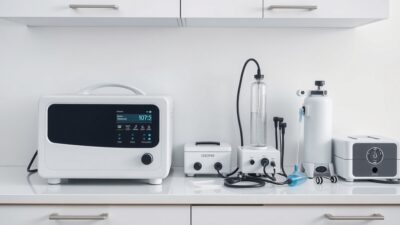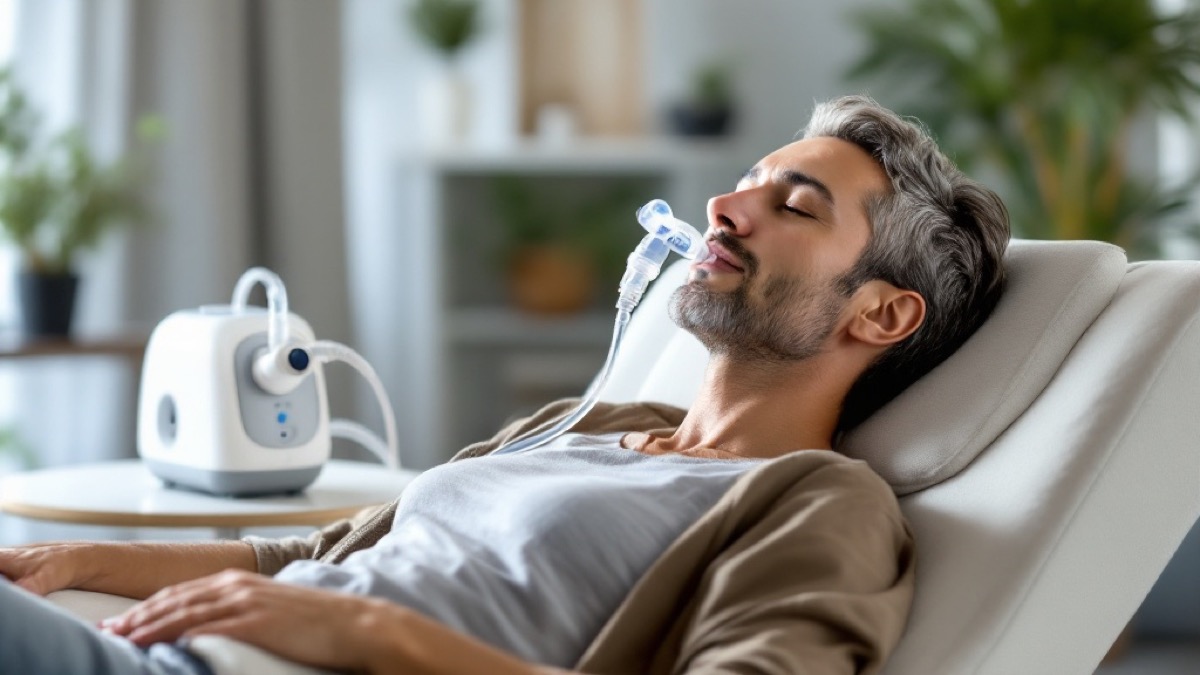
Hydrogen oxygen therapy is an inhalation treatment that delivers a mixture of molecular hydrogen (H2) and oxygen (O2) gas, typically around 66% hydrogen and 33% oxygen, through a nasal cannula at normal atmospheric pressure. Sometimes called Brown’s gas or oxyhydrogen therapy, it drew attention during the COVID-19 pandemic when a 144-patient Chinese trial reported reduced breathlessness. It is not the same as hyperbaric oxygen therapy. Its proposed mechanism is hydrogen’s selective antioxidant action, not hyperoxygenation.
This guide explains what hydrogen oxygen therapy is, what the clinical evidence does and does not show, how it differs from HBOT, and the practical details of devices, cost, and safety.
Key Takeaways
- Hydrogen oxygen therapy delivers roughly 66% H2 and 33% O2 gas via nasal cannula at 1.0 ATA (normal pressure).
- Molecular hydrogen acts as a selective antioxidant, neutralizing hydroxyl radicals and peroxynitrite while sparing signaling molecules like hydrogen peroxide and nitric oxide (Ohsawa et al., Nature Medicine, 2007).
- The strongest human data is a single open-label RCT of 144 COVID-19 patients that improved dyspnea and disease severity, not mortality (Guan et al., 2020).
- Evidence for cancer, COPD, and neurodegenerative disease is limited to preclinical work and small pilot trials.
- No health authority outside China has approved it, and the US FDA has not cleared hydrogen inhalation for any disease.
- Home devices cost $2,000 to $6,000; clinic sessions run $50 to $150.
What is hydrogen oxygen therapy?
Hydrogen oxygen therapy uses an electrolyzer to split water into hydrogen and oxygen, then delivers the combined gas through a nasal cannula at atmospheric pressure. The mixture is approximately 66% hydrogen and 33% oxygen by volume, reflecting the 2:1 ratio of water (H2O). Flow rates range from about 300 mL/min on entry devices to 3,000 mL/min on clinical units.
The therapy goes by several names:
- Brown’s gas, after Yull Brown, who popularized electrolytic gas generation
- HHO gas, referring to the 2:1 hydrogen-to-oxygen ratio
- Oxyhydrogen therapy
- Hydrogen inhalation therapy, when the focus is the hydrogen component
It differs from hyperbaric oxygen therapy in every way that matters. HBOT raises pressure to force more oxygen into plasma. Hydrogen oxygen therapy stays at normal pressure and relies on a proposed chemical effect of hydrogen. If you are weighing oxygen-based options, our guide to HBOT vs ozone vs IV NAD and the comparison of HBOT vs normobaric oxygen lay out how these modalities separate.
| Feature | Hydrogen Oxygen Therapy | HBOT |
|---|---|---|
| Gas | 66% H2 + 33% O2 | 100% O2 |
| Pressure | 1.0 ATA (normal) | 1.5 to 3.0 ATA |
| Delivery | Nasal cannula | Pressurized chamber |
| Primary mechanism | Selective antioxidant (hydrogen) | Hyperoxygenation |
| Session setting | Open room, home or clinic | Sealed hyperbaric chamber |
| Cost per session | $50 to $150 (or home device) | $150 to $350+ |
How does molecular hydrogen work in the body?
Molecular hydrogen is thought to act as a selective antioxidant. The idea traces to a 2007 paper by Ohsawa and colleagues in Nature Medicine, which reported that hydrogen gas preferentially reduces hydroxyl radicals and peroxynitrite, the two most damaging reactive oxygen species, while leaving beneficial signaling molecules such as hydrogen peroxide and nitric oxide intact.1
That selectivity is the proposed differentiator. Vitamin C and vitamin E neutralize reactive oxygen species indiscriminately, which can blunt normal cell signaling. Hydrogen, at least in laboratory models, targets only the most destructive radicals.
Mechanisms described in preclinical reviews include the following. All are supported by laboratory and animal data rather than large human trials.3
- Selective antioxidant activity: neutralizes hydroxyl radicals and peroxynitrite
- Anti-inflammatory signaling: downregulates NF-kB and pro-inflammatory cytokines such as TNF-alpha, IL-6, and IL-1beta
- Nrf2 pathway activation: upregulates the body’s own antioxidant enzymes
- Mitochondrial protection: reduces oxidative damage to mitochondrial membranes and DNA
Hydrogen is the smallest molecule that exists. It diffuses rapidly through cell membranes, crosses the blood-brain barrier, and reaches intracellular compartments including mitochondria. That penetration is the theoretical basis for interest across so many conditions, though reaching a tissue and changing an outcome are not the same thing.
What did the COVID-19 research find?
The highest-profile human study came during the pandemic. In 2020, a team including the Chinese pulmonologist Zhong Nanshan tested H2/O2 inhalation in patients with COVID-19 and respiratory distress.
Guan and colleagues (2020) reported a multicenter, open-label randomized trial of 144 patients with mild to moderate COVID-19. Patients received either standard oxygen or the H2/O2 mixed gas (66% H2, 33% O2) at 3 L/min by nasal cannula. The H2/O2 group showed greater improvement in dyspnea, cough, and a composite disease-severity score from baseline to day 7.2
Based on this and related work, China’s National Health Commission listed H2/O2 inhalation among its COVID-19 supportive measures. The limitations matter as much as the result:
- The trial was open-label, not blinded, which invites bias.
- The benefit was in symptom scores, not hard outcomes like mortality or ICU admission.
- No health authority outside China adopted the recommendation.
- The findings have not been replicated in large trials elsewhere.
What conditions has hydrogen oxygen therapy been studied for?
Beyond COVID-19, hydrogen research spans many conditions, and the quality of evidence varies widely. A recurring caveat: much of the literature uses hydrogen-rich water (drinking) or hydrogen gas alone, not the H2/O2 mixed gas that defines hydrogen oxygen therapy. Results from one delivery route do not automatically transfer to another.
Two of the better-controlled human signals sit in neurology and exercise. Yoritaka and colleagues (2013) ran a randomized, double-blind, placebo-controlled pilot of hydrogen-rich water in 17 Parkinson’s patients; the hydrogen group improved on the Unified Parkinson’s Disease Rating Scale while the placebo group worsened (P<0.05), a promising but very small result.4 In sport, Aoki and colleagues (2012) found that hydrogen-rich water blunted the rise in blood lactate during heavy exercise in 10 elite athletes, though later trials in runners found no performance benefit, so the exercise data is mixed.5
| Condition | Evidence Level | Key Findings |
|---|---|---|
| COVID-19 respiratory symptoms | Moderate (1 open-label RCT) | Improved dyspnea and disease-severity scores by day 7 |
| Parkinson’s disease | Emerging (1 small pilot + preclinical) | UPDRS improved in a 17-patient hydrogen-water pilot; animal neuroprotection data |
| Exercise recovery | Emerging (small trials, mixed) | Lower blood lactate in some studies; no performance gain in others |
| Cancer (adjunct) | Limited (preclinical + pilot) | Animal tumor-growth data; small pilots on radiation side effects |
| Metabolic syndrome | Limited (small trials) | Improved lipid and insulin markers in hydrogen-water studies |
| COPD | Preclinical | Reduced airway inflammation in animal models |
For a broader look at where oxygen-based options stand relative to hydrogen, see our guides to EWOT vs HBOT and the full rundown of HBOT alternatives.
Can you do hydrogen oxygen therapy at home?
Yes. Unlike HBOT, hydrogen oxygen therapy can be done at home with a commercial electrolysis device. These units plug into a standard outlet, run on distilled water, and deliver the H2/O2 gas through a nasal cannula.
Specifications worth checking:
- Flow rate: 300 mL/min entry level to 3,000 mL/min clinical grade
- Hydrogen purity: 99.99% or higher from the electrolysis cell
- Safety features: automatic shutoff, water-level sensors, overheat protection
- Reservoir capacity: determines continuous run time
Home devices typically cost $2,000 to $6,000 depending on flow rate and build quality. Clinical-grade units with higher flow rates run $8,000 to $15,000. Clinic sessions cost $50 to $150, usually 30 to 60 minutes.
Is hydrogen oxygen therapy safe?
Hydrogen has a favorable safety profile at therapeutic concentrations, and reported side effects in clinical studies are minimal: occasional mild nausea, headache, or nasal dryness, with no serious adverse events attributed to hydrogen inhalation in published trials.3 Hydrogen does not accumulate in the body; excess gas is exhaled within minutes of stopping.
The real caution is flammability, not toxicity. Hydrogen is explosive in air above about 4% by volume, and the H2/O2 mixture leaving an electrolysis cell sits above that limit. Low flow rates and immediate dilution during breathing keep ignition risk low in practice, but devices should never be used near open flames, sparks, or lit cigarettes. Basic ventilation and following the manufacturer’s instructions matter here.
Is hydrogen oxygen therapy FDA approved?
No. The US Food and Drug Administration has not approved or cleared hydrogen inhalation to treat, cure, or prevent any disease. Molecular hydrogen is recognized as safe as a food additive, but that status says nothing about medical benefit. Devices sold in the US are generally marketed as general wellness products, not treatments, which is why sellers cannot make disease claims. Anyone considering it for a diagnosed condition should treat it as an unproven adjunct, not a replacement for evidence-based care. For safe use of any oxygen-based device at home, review our oxygen therapy safety precautions.
The bottom line
Hydrogen oxygen therapy has a plausible mechanism and a growing but still early evidence base. The strongest human data is a single open-label COVID-19 trial showing symptom improvement, not survival, and it has not been replicated in large trials elsewhere. The selective antioxidant effect Ohsawa described in 2007 is well established in the lab, and more than a thousand hydrogen papers have been published, but preclinical promise does not guarantee clinical benefit.
As a low-risk adjunct with a coherent rationale, it may appeal to people managing conditions tied to oxidative stress and inflammation. It should not replace proven treatments for any condition, and buyers should weigh the cost against evidence that remains preliminary.
Sources
- Ohsawa I, Ishikawa M, Takahashi K, et al. Hydrogen acts as a therapeutic antioxidant by selectively reducing cytotoxic oxygen radicals. Nat Med. 2007;13(6):688-694. doi:10.1038/nm1577
- Guan WJ, Wei CH, Chen AL, et al. Hydrogen/oxygen mixed gas inhalation improves disease severity and dyspnea in patients with coronavirus disease 2019 in a recent multicenter, open-label clinical trial. J Thorac Dis. 2020;12(6):3448-3452. doi:10.21037/jtd-2020-057
- Ge L, Yang M, Yang NN, Yin XX, Song WG. Molecular hydrogen: a preventive and therapeutic medical gas for various diseases. Oncotarget. 2017;8(60):102653-102673. doi:10.18632/oncotarget.21130
- Yoritaka A, Takanashi M, Hirayama M, Nakahara T, Ohta S, Hattori N. Pilot study of H2 therapy in Parkinson’s disease: a randomized double-blind placebo-controlled trial. Mov Disord. 2013;28(6):836-839. doi:10.1002/mds.25375
- Aoki K, Nakao A, Adachi T, Matsui Y, Miyakawa S. Pilot study: effects of drinking hydrogen-rich water on muscle fatigue caused by acute exercise in elite athletes. Med Gas Res. 2012;2(1):12. doi:10.1186/2045-9912-2-12
Medical Disclaimer
The content on BaricBoost.com is for informational purposes only and is not intended as a substitute for professional medical advice, diagnosis, or treatment. Always seek the advice of your physician or other qualified health provider with any questions you may have regarding a medical condition. Never disregard professional medical advice or delay in seeking it because of something you have read on this website.

Author
Seph Fontane Pennock is the founder of BaricBoost.com and Regenerated.com, a clinic directory for regenerative medicine serving 10,000+ providers across the United States. He previously built and sold PositivePsychology.com, which grew to 19 million users and became the largest evidence-based positive psychology resource on the web. Seph brings direct experience as an HBOT patient, having completed protocols at clinics across three continents while navigating mold illness, systemic inflammation, and autoimmune conditions. His treatment journey includes hyperbaric oxygen therapy, peptide protocols, NAD+ therapy, and consultations with specialists from Dubai to Cape Town to Mexico. This combination of entrepreneurial track record and lived patient experience shapes everything published on BaricBoost.com. Every article is grounded in peer-reviewed research, informed by real clinical encounters, and written for patients making high-stakes treatment decisions. Seph's focus is on bringing transparency, scientific rigor, and practical guidance to the hyperbaric oxygen therapy space.