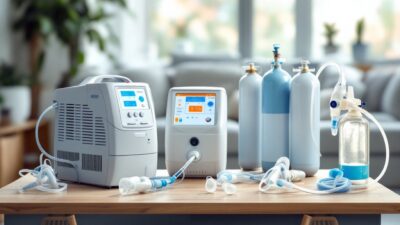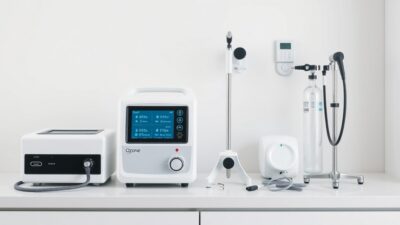
There are specific situations where supplemental oxygen should not be used or requires careful dose titration. The most dangerous misconception is that more oxygen is always better. A landmark 2010 randomized trial (Austin et al., BMJ) found that high-flow oxygen during COPD exacerbations more than doubled mortality (9% versus 4%) compared with titrated oxygen targeting 88-92% SpO2. Untreated pneumothorax, bleomycin history, and paraquat poisoning are the situations where oxygen turns actively harmful.
- FiO2 (fraction of inspired oxygen): the proportion of oxygen in the gas a patient breathes, from 0.21 (room air) to 1.0 (100% oxygen).
- SpO2: oxygen saturation of hemoglobin measured by pulse oximeter, expressed as a percentage.
- Hypercapnia: an abnormally high level of carbon dioxide in the blood.
- Hypoxic drive: the state in which low blood oxygen, rather than high CO2, becomes the main stimulus to breathe, seen in some patients with chronic CO2 retention.
This article covers the major contraindications and precautions for supplemental oxygen therapy, including the clinical reasoning behind each one. The companion guide to oxygen therapy safety precautions covers home and equipment risks, and the article on oxygen therapy for brain fog looks at where supplemental oxygen does and does not help cognition.
Why Is High-Flow Oxygen Dangerous in COPD?
This is the most clinically significant oxygen therapy precaution. A subset of patients with chronic obstructive pulmonary disease (COPD) have chronic CO2 retention (hypercapnia). Their respiratory drive has adapted to chronically elevated CO2 levels, and in some cases, low oxygen levels (hypoxic drive) become the primary stimulus for breathing.
When these patients receive high-flow oxygen:
- The hypoxic drive is suppressed, reducing respiratory effort
- CO2 levels rise further (worsening hypercapnia)
- This can progress to CO2 narcosis: confusion, drowsiness, and ultimately respiratory failure
A randomized controlled trial by Austin et al. (2010) demonstrated that high-flow oxygen during COPD exacerbations significantly increased mortality compared with titrated oxygen. Mortality was 9% in the high-flow group versus 4% in the titrated group, and among the subgroup with confirmed COPD the risk reduction with titration was even larger.2
| Approach | Target SpO2 | Rationale |
|---|---|---|
| Titrated oxygen (recommended for COPD) | 88-92% | Maintains adequate oxygenation without suppressing respiratory drive |
| High-flow oxygen (standard for most patients) | 94-98% | Appropriate for patients without CO2 retention risk |
Not all COPD patients are CO2 retainers. The precaution applies specifically to those with known hypercapnia or those at risk for it (severe COPD, FEV1 <30% predicted, prior episodes of hypercapnic respiratory failure). Arterial blood gas (ABG) analysis confirms whether a patient retains CO2.
Why Must Bleomycin Patients Avoid Supplemental Oxygen?
Bleomycin is a chemotherapy drug used to treat Hodgkin lymphoma, testicular cancer, and other malignancies. It causes dose-dependent pulmonary toxicity in 10-40% of patients, and supplemental oxygen significantly increases this risk.3
The mechanism involves bleomycin’s impairment of lung cells’ ability to neutralize reactive oxygen species. When supplemental oxygen is added, the oxidative burden overwhelms the already-damaged lung tissue, leading to:
- Acute respiratory distress syndrome (ARDS)
- Pulmonary fibrosis
- Death in severe cases
The critical point is that this risk persists long after bleomycin treatment ends. Cases of oxygen-induced pulmonary toxicity have been reported months to years after the last bleomycin dose. Any patient with a history of bleomycin exposure should:
- Alert all healthcare providers, especially anesthesiologists before surgery
- Receive the minimum FiO2 necessary to maintain adequate SpO2
- Avoid elective procedures requiring high-concentration oxygen when possible
- Wear a medical alert bracelet indicating bleomycin history
Why Is Oxygen Harmful in Paraquat Poisoning?
Paraquat is a herbicide that causes severe, often fatal, lung damage when ingested. In paraquat poisoning, supplemental oxygen is directly harmful because paraquat toxicity is oxygen-dependent. The herbicide generates superoxide radicals in the presence of oxygen, and higher oxygen concentrations accelerate the destruction of lung tissue.4
Management of paraquat poisoning requires:
- Withholding supplemental oxygen unless the patient’s SpO2 drops below 90%
- Using the lowest possible FiO2 if oxygen is unavoidable
- Aggressive decontamination (activated charcoal, gastric lavage)
- Monitoring for pulmonary fibrosis over weeks to months
Paraquat poisoning is relatively rare in the United States (it was banned for residential use) but remains a significant toxicology concern globally, particularly in agricultural regions of Asia and South America.
Can You Give Oxygen With a Collapsed Lung?
A pneumothorax (collapsed lung) occurs when air leaks into the pleural space between the lung and chest wall. While supplemental oxygen is not contraindicated per se, giving positive-pressure oxygen (via mask or mechanical ventilation) to a patient with an untreated pneumothorax can worsen the condition and convert it to a tension pneumothorax, which is immediately life-threatening.5
Tension pneumothorax occurs when the air leak acts as a one-way valve, progressively increasing pressure in the chest. This compresses the heart and great vessels, causing cardiovascular collapse. The treatment is emergency needle decompression followed by chest tube placement.
Supplemental oxygen via nasal cannula at low flow rates is generally safe for small pneumothoraces and can actually help by promoting nitrogen reabsorption from the pleural space, which speeds resolution of the pneumothorax.5
How Much Oxygen Causes Oxygen Toxicity?
Prolonged exposure to high concentrations of oxygen damages lung tissue through oxidative stress. This is primarily a concern in critical care settings where patients receive mechanical ventilation at high FiO2 levels.
| FiO2 Level | Duration | Risk |
|---|---|---|
| <0.4 (40%) | Extended periods | Generally safe for prolonged use |
| 0.4-0.6 (40-60%) | Days | Low to moderate risk; monitor closely |
| >0.6 (60%+) | >24-48 hours | Significant risk of absorptive atelectasis, tracheobronchitis, ARDS6 |
| 1.0 (100%) | >12-24 hours | High risk of diffuse alveolar damage |
Oxygen toxicity manifests in two forms:
- Absorptive atelectasis. High FiO2 washes out nitrogen from the alveoli, causing them to collapse.
- Direct oxidative damage. Reactive oxygen species damage alveolar epithelial cells and capillary endothelium, leading to inflammation, edema, and fibrosis.
Who Else Needs Oxygen Limited?
Premature Infants
Excessive oxygen in premature neonates causes retinopathy of prematurity (ROP), which can lead to blindness. Neonatal oxygen saturation targets are typically 90-95%, lower than adult targets, and require continuous monitoring.7
Hyperoxemia in Critical Illness
Evidence indicates that hyperoxemia (PaO2 >300 mmHg) in critically ill patients, including those with cardiac arrest, stroke, and traumatic brain injury, may worsen outcomes through oxidative stress and vasoconstriction. The 2018 BMJ Rapid Recommendation (Siemieniuk et al.) advises against routine oxygen above an SpO2 of 96% in acutely ill adults for this reason.1 The same balance drives conservative targets in ARDS management.
Which Contraindications Are Absolute Versus Relative?
Oxygen Contraindication Severity at a Glance
| Condition | Absolute or relative | Safe approach |
|---|---|---|
| CO2-retaining COPD | Relative | Titrate to SpO2 88-92% |
| Bleomycin history | Relative (lifelong) | Minimum FiO2 to hold adequate SpO2 |
| Paraquat poisoning | Absolute (until SpO2 <90%) | Withhold oxygen unless hypoxemic |
| Untreated pneumothorax | Relative (positive pressure) | Low-flow nasal cannula only; no positive pressure |
| Prolonged high FiO2 | Relative (dose/time) | Keep FiO2 <0.6 beyond 24-48h where possible |
| Premature infants | Relative | Target SpO2 90-95% with continuous monitoring |
The Bottom Line
Supplemental oxygen is essential and life-saving when indicated, but it is a drug with real risks. The major contraindications and precautions are: CO2-retaining COPD patients (titrate to 88-92%), bleomycin history (minimize FiO2), paraquat poisoning (withhold oxygen if possible), untreated pneumothorax (avoid positive pressure), and prolonged high-concentration oxygen (causes toxicity). The guiding principle is to use the minimum oxygen concentration needed to achieve adequate saturation, not to maximize it.
Sources
- Siemieniuk RAC, Chu DK, Kim LHY, et al. Oxygen therapy for acutely ill medical patients: a clinical practice guideline. BMJ. 2018;363:k4169. doi:10.1136/bmj.k4169
- Austin MA, Wills KE, Blizzard L, Walters EH, Wood-Baker R. Effect of high flow oxygen on mortality in chronic obstructive pulmonary disease patients in prehospital setting: randomised controlled trial. BMJ. 2010;341:c5462. doi:10.1136/bmj.c5462
- Sleijfer S. Bleomycin-induced pneumonitis. Chest. 2001;120(2):617-624. doi:10.1378/chest.120.2.617
- Gawarammana IB, Buckley NA. Medical management of paraquat ingestion. Br J Clin Pharmacol. 2011;72(5):745-757. doi:10.1111/j.1365-2125.2011.04026.x
- MacDuff A, Arnold A, Harvey J. Management of spontaneous pneumothorax: British Thoracic Society Pleural Disease Guideline 2010. Thorax. 2010;65(Suppl 2):ii18-ii31. doi:10.1136/thx.2010.136986
- Kallet RH, Matthay MA. Hyperoxic acute lung injury. Respir Care. 2013;58(1):123-141. doi:10.4187/respcare.01963
- Askie LM, Darlow BA, Finer N, et al. Association between oxygen saturation targeting and death or disability in extremely preterm infants. JAMA. 2018;319(21):2190-2201. doi:10.1001/jama.2018.5725
Medical Disclaimer
The content on BaricBoost.com is for informational purposes only and is not intended as a substitute for professional medical advice, diagnosis, or treatment. Always seek the advice of your physician or other qualified health provider with any questions you may have regarding a medical condition. Never disregard professional medical advice or delay in seeking it because of something you have read on this website.

Author
Seph Fontane Pennock is the founder of BaricBoost.com and Regenerated.com, a clinic directory for regenerative medicine serving 10,000+ providers across the United States. He previously built and sold PositivePsychology.com, which grew to 19 million users and became the largest evidence-based positive psychology resource on the web. Seph brings direct experience as an HBOT patient, having completed protocols at clinics across three continents while navigating mold illness, systemic inflammation, and autoimmune conditions. His treatment journey includes hyperbaric oxygen therapy, peptide protocols, NAD+ therapy, and consultations with specialists from Dubai to Cape Town to Mexico. This combination of entrepreneurial track record and lived patient experience shapes everything published on BaricBoost.com. Every article is grounded in peer-reviewed research, informed by real clinical encounters, and written for patients making high-stakes treatment decisions. Seph's focus is on bringing transparency, scientific rigor, and practical guidance to the hyperbaric oxygen therapy space.