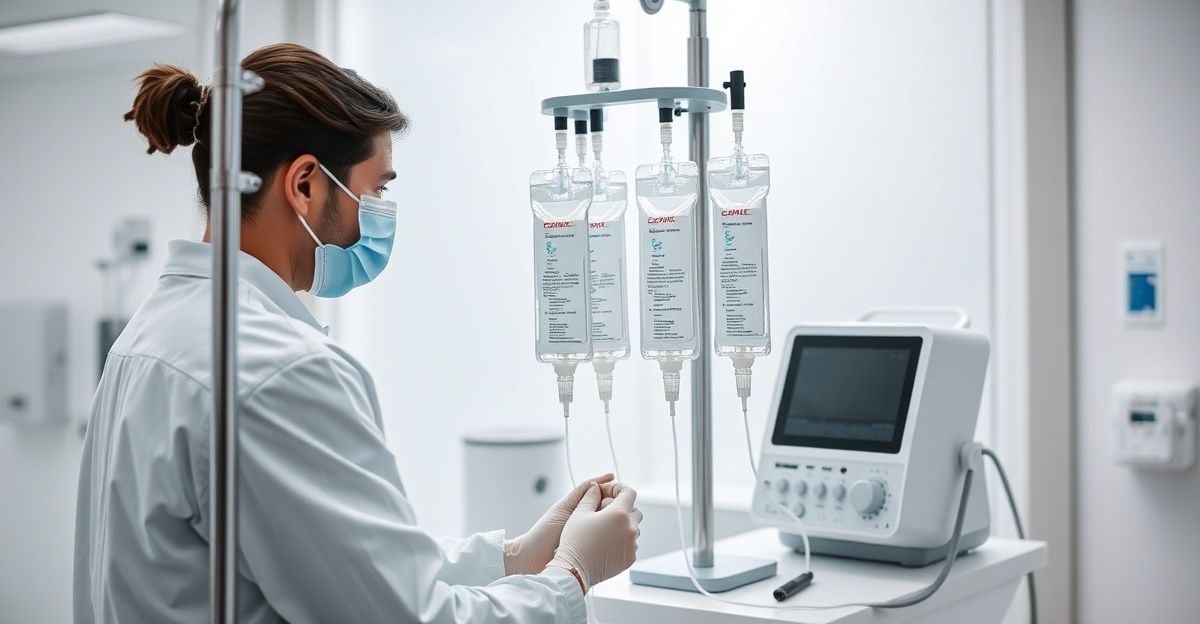
IV ozone therapy is one of the safer procedures in integrative medicine when administered correctly, but it is not without side effects. The most common are Herxheimer reactions (die-off symptoms), fatigue, and bruising at the IV site. The most serious risk, air embolism, is almost exclusively associated with improper technique, specifically the direct injection of ozone gas into a vein, which no trained ozone practitioner should ever do. Understanding these side effects, what causes them, and when they signal a problem helps patients make informed decisions and recognize when something needs attention.
This guide covers side effects specific to IV ozone delivery, including major autohemotherapy (MAH) and 10-pass protocols. Side effects from other ozone delivery routes (rectal insufflation, nasal insufflation, joint injection) are different and covered separately. For a comprehensive overview of all ozone therapy side effects across every delivery method, see the full guide on ozone therapy side effects.
Key Takeaways
- Most side effects are mild and temporary: Fatigue, bruising, and light-headedness are the most common and typically resolve within 24-48 hours
- Herxheimer reactions are the most misunderstood side effect: They indicate pathogen die-off and immune activation, not a harmful reaction to ozone itself. They can be intense but are generally a sign the therapy is working
- Air embolism is the most serious risk: It is caused by direct injection of gas into a vein, which is a technique error, not an inherent risk of properly performed MAH
- G6PD deficiency is an absolute contraindication: Patients with this enzyme deficiency cannot safely receive IV ozone. Testing should be done before the first session
- Side effects tend to decrease with subsequent sessions: As the body adapts to the hormetic stress and pathogen load decreases, reactions become milder
Common Side Effects
Fatigue
Post-session fatigue is the most frequently reported side effect of IV ozone therapy. It typically begins 2 to 6 hours after treatment and can last 12 to 48 hours. The fatigue is usually described as a deep tiredness rather than acute exhaustion.
The cause is multifactorial. The immune activation triggered by ozone exposure requires energy. If pathogen die-off occurs, the body expends additional resources processing and eliminating debris. The hormetic stress response, while ultimately beneficial, temporarily taxes cellular energy systems.
Fatigue is generally most pronounced after the first 1 to 3 sessions and tends to diminish as the body adapts. Patients who experience significant fatigue are typically advised to rest on treatment days, stay hydrated, and schedule sessions when they can afford downtime.
Bruising at the IV Site
Like any IV procedure, MAH and 10-pass ozone therapy can cause bruising, tenderness, or a small hematoma at the puncture site. This is a mechanical side effect of venipuncture, not of ozone itself. The 10-pass method, which involves extended IV access over 60 to 90 minutes, may produce more site discomfort than standard single-pass MAH due to the longer needle time.
Patients who bruise easily (those on blood thinners, aspirin, fish oil, or with naturally fragile veins) should inform their practitioner before treatment. Using a larger, more stable vein and applying pressure after needle removal reduces bruising risk.
Light-headedness or Dizziness
Some patients feel briefly light-headed during or immediately after IV ozone, particularly during the reinfusion phase. This typically resolves within minutes. Contributing factors may include mild vasodilation from the ozone exposure, being in a reclined position for an extended period, dehydration, and anxiety (particularly during the first session).
Eating a light meal before treatment and staying well-hydrated helps prevent this. Patients should sit for a few minutes after treatment before standing.
Mild Nausea
A small percentage of patients experience mild nausea during or after IV ozone, particularly with higher doses (10-pass). This is usually transient and may be related to the speed of blood reinfusion, the patient’s sensitivity to the oxidative metabolites, or concurrent Herxheimer reactions. Ginger tea or a light snack after treatment often helps.
Herxheimer Reactions
The Jarisch-Herxheimer reaction is the most commonly discussed and most frequently misunderstood side effect of IV ozone therapy. Named after the dermatologists who first described it in syphilis patients treated with mercury, a Herxheimer reaction occurs when rapid pathogen die-off releases endotoxins and inflammatory mediators faster than the body can process them.
What It Feels Like
Herxheimer symptoms can include flu-like malaise (body aches, chills, low-grade fever), headache, increased fatigue beyond normal post-treatment tiredness, temporary worsening of existing symptoms, joint and muscle pain, brain fog, skin rashes or breakouts, and digestive upset.
Why It Happens with IV Ozone
IV ozone is particularly prone to triggering Herxheimer reactions because the ozone contacts blood directly, producing an immediate systemic antimicrobial effect. In patients with high pathogen loads (chronic Lyme disease, chronic viral reactivation, systemic candidiasis), the rapid die-off can be substantial. The immune activation that ozone triggers also contributes: as the immune system ramps up, it attacks pathogens more aggressively, adding to the die-off cascade.
A Herxheimer reaction is not a sign that ozone therapy is harming you. It is a sign that pathogens are dying and your body is processing the debris. The discomfort is temporary, and it typically means the treatment is reaching its target.
Managing Herxheimer Reactions
- Start low: Beginning with lower ozone concentrations and fewer passes (for 10-pass patients) reduces the initial die-off burden
- Support detoxification: Adequate hydration, glutathione support (oral or IV), binders (activated charcoal, bentonite clay), and lymphatic support (dry brushing, gentle movement)
- Space sessions appropriately: Allow 48 to 72 hours between sessions to let the body clear die-off products
- Communicate with your practitioner: Severe Herxheimer reactions may require dose adjustment or additional supportive therapies
For a detailed guide on managing Herxheimer reactions from ozone therapy specifically, see the dedicated guide on ozone therapy Herxheimer reactions.
Rare but Serious Risks
Air Embolism
Air embolism is the most serious potential complication of IV ozone therapy, and it is almost entirely preventable. It occurs when gas (air or ozone) is injected directly into a vein, forming a bubble that can travel to the heart, lungs, or brain and obstruct blood flow.
This risk exists specifically with the outdated practice of direct IV ozone injection (DIV), where ozone gas is pushed directly into a vein via syringe. Properly performed MAH does not carry this risk because the ozone is mixed with blood in an external container (bag or syringe) and then reinfused as ozone-treated blood, not as gas.
The 10-pass (Zotzmann) method uses a closed, pressurized system that also prevents direct gas injection. The blood is drawn out, ozonated under pressure in a sealed container, and returned to the patient as liquid, not gas.
The key safety point: never allow a practitioner to push ozone gas directly into your vein via syringe. This technique is considered unsafe by mainstream ozone therapy organizations and has caused documented adverse events and fatalities.
Hemolysis
Ozone at excessively high concentrations can damage red blood cells (hemolysis). This is why therapeutic ozone concentrations are carefully controlled, typically staying within 20 to 70 mcg/mL for IV applications. At these concentrations, hemolysis is minimal and clinically insignificant. Concentrations above this range can cause meaningful red blood cell destruction, which is one reason why calibrated, medical-grade ozone generators are essential.
Citrate Reaction
MAH and 10-pass protocols use sodium citrate as an anticoagulant to prevent blood from clotting in the container. Some patients are sensitive to citrate and may experience tingling around the mouth, numbness in the fingers, or muscle cramping during or after treatment. These symptoms are related to citrate binding calcium in the blood (transient hypocalcemia) and are usually mild and temporary. Slowing the reinfusion rate and taking oral calcium before treatment can help prevent citrate reactions.
Contraindications
Certain conditions make IV ozone therapy unsafe. These are absolute contraindications, not relative ones:
| Contraindication | Reason |
|---|---|
| G6PD (glucose-6-phosphate dehydrogenase) deficiency | This enzyme protects red blood cells from oxidative damage. Without it, ozone exposure causes severe hemolysis. G6PD testing should be performed before the first IV ozone session. |
| Active hyperthyroidism (uncontrolled) | Ozone may stimulate thyroid activity further, worsening hyperthyroid symptoms |
| Severe anemia | Drawing blood for MAH in severely anemic patients can worsen the anemia. The hemolytic stress of ozone, even at normal concentrations, adds additional burden. |
| Active hemorrhage or bleeding disorders | The anticoagulant (citrate) used in MAH and the blood draw itself are contraindicated in active bleeding |
| Pregnancy | Insufficient safety data. No ozone therapy during pregnancy. |
| Recent myocardial infarction | The hemodynamic changes from blood draw and reinfusion may stress a recently damaged heart |
What to Watch for After Treatment
Most side effects from IV ozone therapy are self-limiting and resolve within 24 to 48 hours. However, certain symptoms after treatment warrant immediate medical attention:
- Chest pain, sudden shortness of breath, or rapid heartbeat: Could indicate a rare cardiac or pulmonary event. Seek emergency care.
- Severe headache with vision changes: Especially if it comes on suddenly, this warrants evaluation.
- Prolonged bleeding or growing hematoma at the IV site: Pressure should stop bleeding within a few minutes. If it does not, contact your provider.
- Dark or blood-colored urine: Could indicate significant hemolysis. Contact your ozone practitioner and consider emergency evaluation.
- Herxheimer symptoms lasting more than 72 hours or worsening after 48 hours: May require dose adjustment or supportive intervention.
Side Effects by Protocol Type
| Side Effect | Standard MAH | 10-Pass |
|---|---|---|
| Fatigue | Mild to moderate | Moderate to significant |
| Herxheimer reaction | Mild to moderate | Often more intense (higher dose) |
| IV site bruising | Common | More common (longer IV time) |
| Nausea | Occasional | More frequent |
| Light-headedness | Occasional | More frequent |
| Citrate reaction | Rare | More common (more citrate used) |
The 10-pass method generally produces more intense side effects than standard MAH because the total ozone dose is significantly higher (up to 140,000 mcg vs. 2,000-15,000 mcg). Patients new to ozone therapy are often advised to start with standard MAH and progress to 10-pass after establishing tolerance.
Frequently Asked Questions
How long do IV ozone side effects last?
Most side effects resolve within 24 to 48 hours. Fatigue and mild Herxheimer symptoms are the longest-lasting common effects. If symptoms persist beyond 72 hours, contact your practitioner.
Do side effects get better with more sessions?
Yes. As the body adapts to the hormetic stress and pathogen load decreases (if present), side effects typically become milder with subsequent sessions. The first 2 to 3 sessions usually produce the strongest reactions.
Should I get a G6PD test before starting?
Absolutely. G6PD deficiency is an absolute contraindication for IV ozone therapy. Any responsible practitioner will either test you or require proof of a recent G6PD test before your first session. This is a simple blood test available at any standard lab.
Can IV ozone damage my veins?
Repeated venipuncture can cause mild scarring of veins over extended treatment courses, similar to any therapy requiring frequent IV access. Rotating sites and using experienced phlebotomists minimizes this. For patients requiring long treatment courses, some practitioners use a central line or PICC line, though this introduces its own risks.
Sources
- Bocci V. “Ozone as Janus: this controversial gas can be either toxic or medically useful.” Mediators of Inflammation, 2004. DOI: 10.1080/0962935062000236588
- Sagai M, Bocci V. “Mechanisms of action involved in ozone therapy: is healing induced via a mild oxidative stress?” Medical Gas Research, 2011. DOI: 10.1186/2045-9912-1-29
- Smith NL, et al. “Ozone therapy: an overview of pharmacodynamics, current research, and clinical utility.” Medical Gas Research, 2017. DOI: 10.4103/2045-9912.215752
- Jarisch A. “Therapeutische Versuche bei Syphilis.” Wiener Medizinische Wochenschrift, 1895.
- Cappello C, et al. “Ozone therapy: a potentially safe complementary/alternative treatment.” British Journal of Biomedical Science, 2020. DOI: 10.1080/09674845.2020.1774886
Medical Disclaimer
The content on BaricBoost.com is for informational purposes only and is not intended as a substitute for professional medical advice, diagnosis, or treatment. Always seek the advice of your physician or other qualified health provider with any questions you may have regarding a medical condition. Never disregard professional medical advice or delay in seeking it because of something you have read on this website.

Author
Seph Fontane Pennock is the founder of BaricBoost.com and Regenerated.com, a clinic directory for regenerative medicine serving 10,000+ providers across the United States. He previously built and sold PositivePsychology.com, which grew to 19 million users and became the largest evidence-based positive psychology resource on the web. Seph brings direct experience as an HBOT patient, having completed protocols at clinics across three continents while navigating mold illness, systemic inflammation, and autoimmune conditions. His treatment journey includes hyperbaric oxygen therapy, peptide protocols, NAD+ therapy, and consultations with specialists from Dubai to Cape Town to Mexico. This combination of entrepreneurial track record and lived patient experience shapes everything published on BaricBoost.com. Every article is grounded in peer-reviewed research, informed by real clinical encounters, and written for patients making high-stakes treatment decisions. Seph's focus is on bringing transparency, scientific rigor, and practical guidance to the hyperbaric oxygen therapy space.