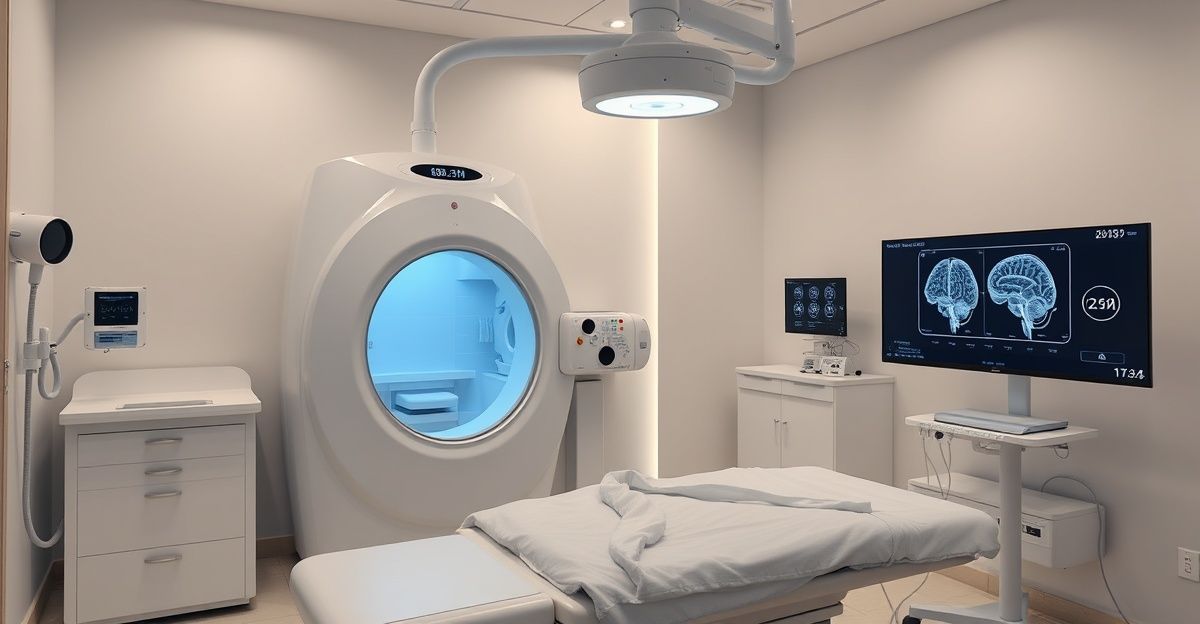
Alzheimer’s disease has no cure and limited treatment options. The drugs currently available (donepezil, memantine, and the newer anti-amyloid antibodies like lecanemab) slow decline modestly at best. Against that backdrop, oxygen therapy, particularly Hyperbaric Oxygen Therapy (HBOT), has emerged as an area of active research. A 2024 meta-analysis of 11 randomized controlled trials found significant cognitive improvements in HBOT-treated Alzheimer’s patients. Animal studies show HBOT can reduce amyloid plaques and increase cerebral blood flow. But the evidence comes with important caveats.
Here is an honest look at what oxygen therapy can and cannot do for Alzheimer’s disease, based on the best available research.
Key Takeaways
- A 2024 meta-analysis of 11 RCTs (847 patients) found HBOT improved Mini-Mental State Examination (MMSE) scores by 3.08 points (p<0.00001) and reduced Alzheimer’s Disease Assessment Scale-Cognitive (ADAS-Cog) scores by 4.53 points (p<0.00001) (Lin et al., 2024).
- Animal studies demonstrate HBOT reduces amyloid plaque burden, increases cerebral blood flow, and restores mitochondrial function (Shapira et al., 2021; Yao et al., 2025).
- All 11 human RCTs in the meta-analysis were conducted in China. No large Western double-blind sham-controlled trials have been published.
- A single case report describes a patient who maintained stable cognition over 7 years with regular HBOT sessions (Mukaetova-Ladinska et al., 2023).
- HBOT is not FDA-approved for Alzheimer’s disease. Clinical trials are ongoing.
How Oxygen Therapy Could Help Alzheimer’s
Alzheimer’s disease involves multiple interconnected pathological processes: amyloid plaque accumulation, tau protein tangles, neuroinflammation, reduced cerebral blood flow, oxidative stress, and mitochondrial dysfunction. HBOT addresses several of these simultaneously.
The proposed mechanisms are:
- Increased cerebral blood flow (CBF): Alzheimer’s patients have significantly reduced blood flow to the brain, which precedes and worsens cognitive decline. HBOT at 1.5-2.0 ATA (atmospheres absolute) increases CBF by improving vascular function and stimulating angiogenesis (new blood vessel formation).
- Amyloid plaque reduction: In the 5XFAD Alzheimer’s mouse model, HBOT shrank existing amyloid plaques and prevented formation of new ones. This occurred through changes in amyloid precursor protein processing and enhanced amyloid-beta clearance (Shapira et al., 2021).
- Mitochondrial repair: Yao et al. (2025) demonstrated that HBOT restores mitophagy (the process of clearing damaged mitochondria) and suppresses neuroinflammation in an Alzheimer’s mouse model.
- Reduced neuroinflammation: The meta-analysis found HBOT significantly reduced IL-1-beta (a pro-inflammatory cytokine) and oxidative stress markers (MDA) while increasing antioxidant capacity (SOD) (Lin et al., 2024).
- Neuroplasticity: HBOT has been shown in other neurological contexts (TBI, stroke) to activate neuroplasticity pathways and upregulate brain-derived neurotrophic factor (BDNF).
The Meta-Analysis: What 11 Clinical Trials Show
Lin et al. (2024) published a systematic review and meta-analysis in Frontiers in Aging Neuroscience that pooled data from 11 randomized controlled trials involving 847 Alzheimer’s patients (433 HBOT, 414 control). This is the most comprehensive analysis of HBOT for Alzheimer’s to date.
| Outcome Measure | Result | Significance |
|---|---|---|
| MMSE (cognitive screening) | Mean difference: +3.08 points | p<0.00001 |
| ADAS-Cog (Alzheimer’s assessment) | Mean difference: -4.53 points (improvement) | p<0.00001 |
| Activities of Daily Living (ADL) | Mean difference: +10.12 points | p=0.0005 |
| IL-1-beta (inflammation marker) | Significant reduction | p<0.0001 |
| SOD (antioxidant enzyme) | Significant increase | p<0.0001 |
| Adverse events | No significant increase vs control | p=0.58 |
A 3-point MMSE improvement is clinically meaningful. For context, donepezil (Aricept), the most prescribed Alzheimer’s drug, produces approximately 1.5-2.0 MMSE points of improvement. The HBOT results in this meta-analysis exceed that. The ADL improvement (10.12 points) is particularly significant because it measures functional independence in daily tasks like dressing, eating, and personal hygiene.
A meta-analysis of 11 randomized controlled trials found HBOT improved Alzheimer’s cognitive scores by 3.08 MMSE points (p<0.00001), exceeding the typical effect size of donepezil, the most prescribed Alzheimer’s medication. But all 11 trials were conducted in China, and no large Western sham-controlled trial has been published.
The Animal Evidence
The animal studies provide stronger mechanistic evidence than the human trials. Shapira et al. (2021) published a landmark study in Aging using the 5XFAD transgenic mouse model (which develops aggressive amyloid pathology). Key findings:
- HBOT increased arteriolar luminal diameter (widened blood vessels), directly improving blood flow to brain tissue
- Existing amyloid plaques shrank, and new plaque formation was prevented
- These effects correlated with changes in amyloid precursor protein processing, suggesting HBOT affects the upstream biology of plaque formation
- Elderly human patients with significant memory loss showed improved cognitive performance and increased cerebral blood flow after the same HBOT protocol
Yao et al. (2025) added another piece, demonstrating in the same mouse model that HBOT restores mitophagy, a critical cellular cleanup process that removes damaged mitochondria. Impaired mitophagy is now recognized as a key driver of Alzheimer’s pathology.
The 7-Year Case Report
Mukaetova-Ladinska et al. (2023) published a case report in Exploratory Neuroprotective Therapy documenting a 63-year-old male with probable Alzheimer’s who received over 400 HBOT sessions (2-3 times per week, 30-50 minutes at 2.0 ATA) over 7 years. For the last 3 years, he also took donepezil.
The result: his cognitive and neuroradiological status remained stable over the entire 7-year period. He continued driving and maintaining his independence. For a progressive disease that typically shows significant decline within 3-5 years of diagnosis, this trajectory is unusual.
A single case report cannot establish causation. But it raises the hypothesis that long-term, regular HBOT may slow Alzheimer’s progression, a hypothesis worth testing in controlled trials.
Critical Limitations
The evidence is promising but has significant gaps that must be acknowledged:
- All human RCTs are from China. Every one of the 11 trials in the meta-analysis was published by Chinese research groups between 2007 and 2021. Concerns about publication standards, blinding methodology, and potential publication bias in some Chinese clinical research have been documented. Independent replication by Western research groups is needed.
- No sham-controlled Western RCT exists. A proper sham involves a pressurized chamber with normal air (creating the physical experience of HBOT without therapeutic oxygen levels). Without this control, placebo effects cannot be excluded.
- Small sample sizes. Individual studies ranged from 30 to 160 patients. While the pooled analysis of 847 patients provides more statistical power, larger trials are needed.
- Short follow-up. Most trials lasted 2-3 months. Alzheimer’s is a disease measured in years. Whether HBOT benefits persist, plateau, or reverse after treatment stops is unknown.
- Protocol heterogeneity. Trials used different pressures (1.5-2.5 ATA), session durations (60-120 min), and total session counts (20-60). The optimal protocol is not established.
Ongoing Clinical Trials
Several trials are currently underway that may address these limitations:
- NCT05349318: A US-based trial investigating HBOT for prodromal Alzheimer’s disease (the stage before clinical dementia develops). This could provide the first rigorous Western data.
- Additional trials registered on ClinicalTrials.gov are examining HBOT for mild cognitive impairment (MCI) and various stages of Alzheimer’s dementia.
Results from these trials, expected in the next 2-4 years, will significantly clarify whether the promising findings from Chinese RCTs replicate in Western populations with rigorous methodology.
Cost and Practical Considerations
| Factor | Details |
|---|---|
| Cost per session | $150-400 (not covered by insurance for Alzheimer’s) |
| Sessions in research protocols | 20-60 sessions (40 is most common in the meta-analysis studies) |
| Total estimated cost | $6,000-16,000 for a standard course |
| Ongoing maintenance | Unknown. The 7-year case report used 2-3 sessions/week continuously |
| FDA approval status | Not FDA-approved for Alzheimer’s. Off-label use only. |
| Availability | HBOT centers in most US metro areas. Hard chamber required (not soft/home chambers). |
For families considering HBOT for an Alzheimer’s patient, the financial commitment is substantial and ongoing. Insurance will not cover it. The treatment requires regular clinic visits over an extended period. These practical realities must be weighed against the current evidence, which is encouraging but not definitive.
For more on HBOT research in Alzheimer’s and related conditions, see our guide on hyperbaric chambers for Alzheimer’s patients.
Realistic Expectations
Based on the current evidence, here is what is reasonable to expect and what is not:
- Reasonable: HBOT may improve cognitive function and daily living skills in the short term, based on meta-analysis data. It appears safe with no significant increase in adverse events.
- Uncertain: Whether benefits persist after treatment stops, whether HBOT genuinely slows disease progression, and what the optimal protocol is.
- Not supported: Claims that HBOT cures Alzheimer’s, reverses the disease entirely, or eliminates the need for other treatments. No evidence supports these claims.
The Bottom Line
Oxygen therapy for Alzheimer’s disease, primarily through HBOT, is one of the more promising experimental approaches currently under investigation. The meta-analysis data showing cognitive improvements exceeding those of approved medications is noteworthy. The animal evidence demonstrating amyloid plaque reduction and cerebral blood flow improvement provides a plausible biological mechanism. But the absence of large, rigorous, sham-controlled Western trials means the evidence has not yet crossed the threshold for clinical recommendation. For families weighing their options, HBOT represents a reasonable area to discuss with a neurologist, particularly as new trial results emerge. It is not a substitute for current standard of care, but it may complement it.
- Lin G, et al. Clinical evidence of hyperbaric oxygen therapy for Alzheimer’s disease: a systematic review and meta-analysis of randomized controlled trials. Front Aging Neurosci. 2024;16:1360148. doi:10.3389/fnagi.2024.1360148
- Shapira R, et al. Hyperbaric oxygen therapy alleviates vascular dysfunction and amyloid burden in an Alzheimer’s disease mouse model and in elderly patients. Aging. 2021;13(16):20935-20969. doi:10.18632/aging.203485
- Yao M, et al. Hyperbaric oxygen therapy ameliorates Alzheimer’s disease pathology by restoration of mitophagy and suppressing neuroinflammation in 5xFAD mice. Exp Neurol. 2025;115534. doi:10.1016/j.expneurol.2025.115534
- Mukaetova-Ladinska E, et al. Hyperbaric oxygen therapy – a new hope for Alzheimer’s patients: a case report and literature review. Explor Neuroprotect Ther. 2023;3:100462. doi:10.37349/ent.2023.00062
- Somaa F. A review of the application of hyperbaric oxygen therapy in Alzheimer’s disease. J Alzheimers Dis. 2021;81(2):519-530. doi:10.3233/JAD-210157
- Alhewiti A. Effectiveness of HBOT for treating neurodegenerative and non-neurodegenerative dementia: a systematic review. South East Eur J Public Health. 2025. doi:10.70135/seejph.vi.4828
- Chen J, et al. Hyperbaric oxygen ameliorates cognitive impairment in patients with Alzheimer’s disease and amnestic mild cognitive impairment. Alzheimers Dement. 2020;6(1):e12030. doi:10.1002/trc2.12030
Medical Disclaimer
The content on BaricBoost.com is for informational purposes only and is not intended as a substitute for professional medical advice, diagnosis, or treatment. Always seek the advice of your physician or other qualified health provider with any questions you may have regarding a medical condition. Never disregard professional medical advice or delay in seeking it because of something you have read on this website.

Author
Seph Fontane Pennock is the founder of BaricBoost.com and Regenerated.com, a clinic directory for regenerative medicine serving 10,000+ providers across the United States. He previously built and sold PositivePsychology.com, which grew to 19 million users and became the largest evidence-based positive psychology resource on the web. Seph brings direct experience as an HBOT patient, having completed protocols at clinics across three continents while navigating mold illness, systemic inflammation, and autoimmune conditions. His treatment journey includes hyperbaric oxygen therapy, peptide protocols, NAD+ therapy, and consultations with specialists from Dubai to Cape Town to Mexico. This combination of entrepreneurial track record and lived patient experience shapes everything published on BaricBoost.com. Every article is grounded in peer-reviewed research, informed by real clinical encounters, and written for patients making high-stakes treatment decisions. Seph's focus is on bringing transparency, scientific rigor, and practical guidance to the hyperbaric oxygen therapy space.