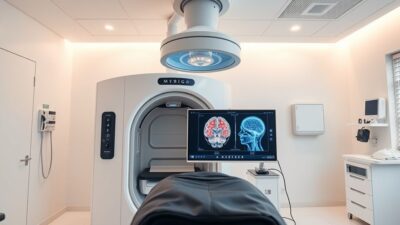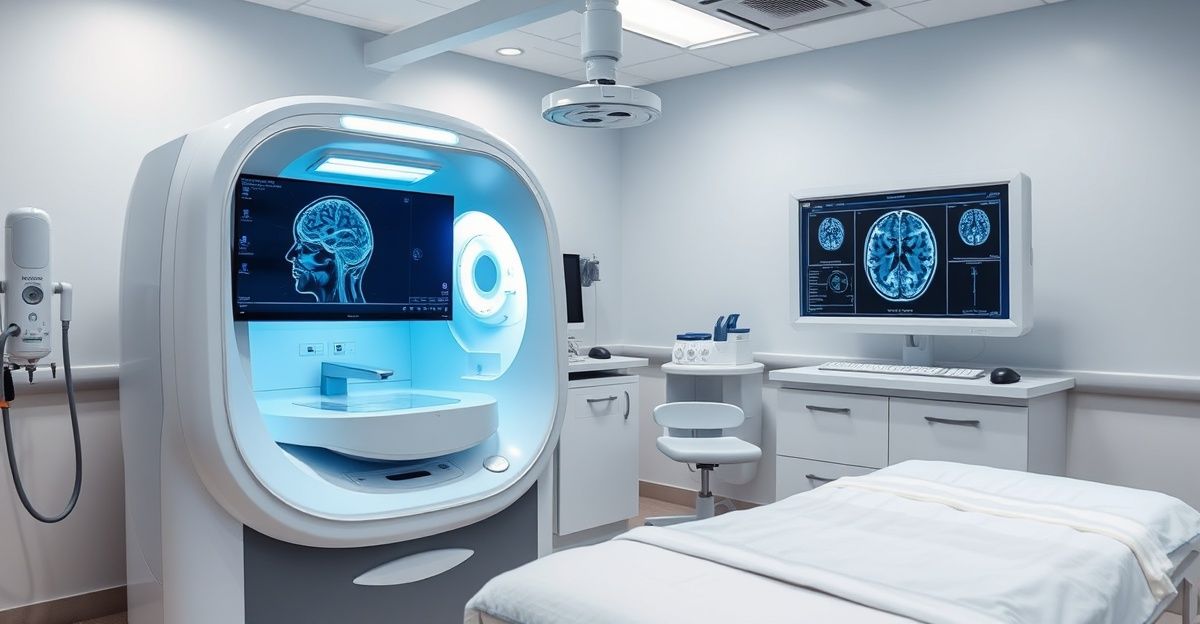
Oxygen therapy for traumatic brain injury (TBI) is one of the most actively researched applications of hyperbaric oxygen treatment. Military studies on blast-related brain injuries, the Harch protocol for persistent symptoms, and Efrati’s Israeli trials on neuroplasticity have produced compelling results. The evidence is stronger than for most off-label HBOT indications, though it remains insufficient for FDA approval or insurance coverage.
An estimated 2.8 million Americans sustain a traumatic brain injury each year. While most mild TBIs resolve within weeks, a significant percentage of patients develop persistent symptoms: chronic headaches, cognitive impairment, mood disorders, sleep disruption, and fatigue. For moderate and severe TBIs, the consequences can be lifelong. Standard rehabilitation helps, but many patients reach a plateau where further improvement stalls.
HBOT offers a fundamentally different approach. Rather than training the brain to compensate for damaged areas (which is what most rehabilitation does), it aims to repair the underlying tissue by flooding it with oxygen and triggering biological repair cascades.
Key Takeaways
- Military studies show significant improvements in PTSD scores, cognitive function, and brain blood flow in veterans with blast-related TBI.
- The Harch protocol (1.5 ATA, 40 sessions) has the most consistent positive results for mild TBI and post-concussion syndrome.
- Efrati’s Israeli trials demonstrated neuroplasticity: SPECT imaging showed new blood vessel growth and restored brain perfusion after HBOT.
- The Israel Defense Forces adopted HBOT for TBI treatment based on trial results, moving from research to clinical implementation.
- Not FDA-approved for TBI. Insurance does not cover it. Cost ranges from ,000 to ,000 for a full course.
How HBOT Works for Brain Injury
Traumatic brain injury causes a cascade of damage beyond the initial impact. Blood vessels rupture or constrict. Brain tissue swells. Inflammation surges. Mitochondria, the energy factories of brain cells, become dysfunctional. The result is large areas of brain tissue that are alive but not functioning normally, caught in a state of chronic metabolic distress.
HBOT works on this damaged tissue through several mechanisms:
- Hyperoxygenation: At therapeutic pressures, dissolved oxygen in the blood increases dramatically, reaching brain tissue that damaged blood vessels can no longer supply adequately.
- Angiogenesis: Repeated HBOT sessions trigger the growth of new blood vessels. SPECT brain imaging in clinical trials has confirmed measurable improvements in cerebral blood flow after treatment courses.
- Neuroplasticity stimulation: Increased oxygen availability appears to reactivate dormant neural pathways and support the formation of new connections. This is the mechanism that Efrati’s group has documented most extensively.
- Anti-inflammatory effects: HBOT reduces neuroinflammation, interrupting the chronic inflammatory cycle that perpetuates brain dysfunction after TBI.
- Stem cell mobilization: HBOT has been shown to increase circulating stem cells, which may contribute to brain tissue repair.
Military Studies
The U.S. military’s interest in HBOT for TBI stems from the large number of service members who sustained blast-related brain injuries in Iraq and Afghanistan. Blast injuries produce a different pattern of damage than civilian concussions, with diffuse axonal injury and vascular disruption spread across multiple brain regions.
The Harch Military Study
A U.S. Department of Defense-administered case series by Dr. Paul Harch prospectively treated 30 active duty and retired military members with mild TBI and persistent post-concussion syndrome, 23 of whom also met diagnostic criteria for PTSD. Each subject received 40 sixty-minute sessions at 1.5 ATA.
Key findings:
- PTSD scores dropped by an average of 16.6 points, a statistically significant reduction
- SPECT brain imaging showed significant improvements in blood flow to the right posterior hemispheric gray and white matter
- Cognitive testing demonstrated measurable improvements in processing speed, memory, and attention
- Quality-of-life measures improved across multiple domains
“The Israel Defense Forces asked Efrati’s team to stop testing and start treating based on the evidence from their randomized controlled trials.”
The VA-Funded Studies
The Department of Veterans Affairs funded several large randomized controlled trials to evaluate HBOT for combat-related TBI. These studies produced more nuanced results. While individual symptom domains often showed improvements, the primary endpoints in some studies did not reach statistical significance when compared to sham controls.
However, these studies faced the same methodological challenge as other HBOT brain injury research: the sham condition (pressurized air at 1.2 ATA) may itself have therapeutic effects, making it harder to demonstrate clear superiority of the treatment condition.
The Efrati Studies
Professor Shai Efrati and his team at Tel Aviv University’s Sagol Center have conducted some of the most rigorous HBOT research for brain injuries. Their work stands out for two reasons: they use objective neuroimaging to document brain changes, and they have studied patients years after their initial injuries.
Key Findings
In randomized controlled trials of combat veterans with chronic, treatment-resistant PTSD, a 60-session HBOT protocol led to:
- Significant symptom improvement on validated PTSD scales
- Restoration of fronto-limbic connectivity on functional brain imaging
- Increased activity in the prefrontal cortex and hippocampus
- Improved white matter integrity on diffusion tensor imaging
A 2017 study by Efrati’s group published in Frontiers in Human Neuroscience directly demonstrated that HBOT can induce angiogenesis and nerve fiber regeneration in TBI patients. Brain imaging before and after treatment showed measurable structural improvements in brain tissue that had been damaged years earlier (Tal et al., 2017. DOI: 10.3389/fnhum.2017.00508).
The results were compelling enough that the Israel Defense Forces moved from a research framework to clinical implementation, offering HBOT as an established treatment option for injured soldiers rather than an experimental one.
When to Start Oxygen After TBI
Timing matters, though the research suggests a wider window than many clinicians assume:
- Acute phase (first 72 hours): HBOT in the acute phase of severe TBI is still experimental and not standard practice. Some research suggests potential benefit, but the evidence is limited and the logistics of treating an ICU patient in a hyperbaric chamber are challenging.
- Subacute phase (1 to 6 months): This may be the optimal window, where the brain is actively attempting repair but has not yet stabilized into a chronic pattern. Limited data suggests earlier intervention produces better outcomes.
- Chronic phase (6 months to years later): This is where most of the positive clinical trial data exists. Both Harch and Efrati have demonstrated that HBOT can produce meaningful improvements in patients treated years after their initial injuries. The brain retains more plasticity than previously believed.
Treatment Protocols
| Protocol | Harch | Efrati |
|---|---|---|
| Pressure | 1.5 ATA | 2.0 ATA |
| Oxygen | 100% | 100% |
| Session length | 60 minutes | 90 minutes (with air breaks) |
| Total sessions | 40 | 60 |
| Frequency | 5 days/week | 5 days/week |
| Timeline | 8 weeks | 12 weeks |
The choice between protocols often comes down to provider preference. Harch advocates for lower pressure to avoid excessive oxygen stress on damaged brain tissue. Efrati uses higher pressure with air breaks (intervals of breathing normal air during the session) to manage oxygen toxicity risk while delivering a higher total oxygen dose.
Evidence Quality and Limitations
The evidence for HBOT in TBI is stronger than for most off-label hyperbaric applications, but it still falls short of the standard needed for regulatory approval:
- Sham control challenges: The most persistent criticism. Pressurized air at 1.2 ATA (the common “sham” condition) has some therapeutic effect, which dilutes the apparent benefit of HBOT.
- Heterogeneous populations: TBI varies enormously in severity, location, and mechanism. Blast injuries differ from falls, which differ from sports concussions. Treating them as one condition in clinical trials may obscure real effects in specific subgroups.
- Outcome measure variability: Different studies use different scales and tests, making direct comparisons difficult.
- Small sample sizes: Most trials involve fewer than 100 participants.
Cost
HBOT for TBI is not covered by insurance in the United States. Some VA medical centers offer HBOT to veterans as part of research protocols or clinical programs, but this is not universally available.
- 40-session Harch protocol: ,000 to ,000
- 60-session Efrati protocol: ,000 to ,000
- Per session at most clinics: to
For a broader discussion of HBOT and brain injury evidence, including concussion-specific protocols, see our guide on hyperbaric chamber for brain injury.
Frequently Asked Questions
Can HBOT repair brain damage?
Research shows HBOT can stimulate neuroplasticity, grow new blood vessels, and reactivate dormant brain tissue. “Repair” may be too strong a word for severe injuries, but measurable improvements in brain function and structure have been documented on imaging studies, even years after the initial injury.
How soon after TBI should HBOT start?
There is no definitive answer. Most clinical trial evidence comes from patients treated months to years after injury. Some researchers believe starting within the first few months is optimal, but the data confirming this is limited. The important takeaway is that late treatment can still be effective.
Does HBOT help with PTSD that accompanies TBI?
Multiple studies have shown PTSD symptom improvements alongside TBI recovery. The Harch military study showed a 16.6-point reduction in PTSD scores. Efrati’s imaging studies demonstrated restoration of the fronto-limbic connectivity that is disrupted in PTSD. Whether this represents a direct PTSD effect or a secondary benefit of brain healing is debated.
Is HBOT available through the VA?
Some VA medical centers have hyperbaric chambers and offer HBOT through research programs or clinical protocols. Availability varies by location. Check with your local VA medical center. Several VA-affiliated researchers have been strong advocates for expanding access.
References
- Tal, S., et al. (2017). Hyperbaric oxygen therapy can induce angiogenesis and regeneration of nerve fibers in traumatic brain injury patients. Frontiers in Human Neuroscience, 11, 508. DOI: 10.3389/fnhum.2017.00508
- Harch, P.G., et al. (2012). A phase I study of low-pressure hyperbaric oxygen therapy for blast-induced post-concussion syndrome and post-traumatic stress disorder. Journal of Neurotrauma, 29(1), 168-185. DOI: 10.1089/neu.2011.1895
- Hadanny, A., et al. (2022). Systematic review and dosage analysis: Hyperbaric oxygen therapy efficacy in mild traumatic brain injury persistent postconcussion syndrome. Frontiers in Neurology, 13, 815056. DOI: 10.3389/fneur.2022.815056
- Doenyas-Barak, K., et al. (2023). Hyperbaric oxygen therapy for veterans with combat-associated posttraumatic stress disorder: A randomized, sham-controlled clinical trial. Journal of Clinical Psychiatry, 84(1). DOI: 10.4088/JCP.22m14344
- Cifu, D.X., et al. (2014). Hyperbaric oxygen for blast-related postconcussion syndrome. JAMA Internal Medicine, 174(7), 1163-1171.
Medical Disclaimer
The content on BaricBoost.com is for informational purposes only and is not intended as a substitute for professional medical advice, diagnosis, or treatment. Always seek the advice of your physician or other qualified health provider with any questions you may have regarding a medical condition. Never disregard professional medical advice or delay in seeking it because of something you have read on this website.

Author
Seph Fontane Pennock is the founder of BaricBoost.com and Regenerated.com, a clinic directory for regenerative medicine serving 10,000+ providers across the United States. He previously built and sold PositivePsychology.com, which grew to 19 million users and became the largest evidence-based positive psychology resource on the web. Seph brings direct experience as an HBOT patient, having completed protocols at clinics across three continents while navigating mold illness, systemic inflammation, and autoimmune conditions. His treatment journey includes hyperbaric oxygen therapy, peptide protocols, NAD+ therapy, and consultations with specialists from Dubai to Cape Town to Mexico. This combination of entrepreneurial track record and lived patient experience shapes everything published on BaricBoost.com. Every article is grounded in peer-reviewed research, informed by real clinical encounters, and written for patients making high-stakes treatment decisions. Seph's focus is on bringing transparency, scientific rigor, and practical guidance to the hyperbaric oxygen therapy space.