Oxygen therapy for asthma is a targeted emergency intervention, not a daily maintenance treatment. When an asthma attack drops your blood oxygen below safe levels, supplemental oxygen keeps your organs protected while bronchodilators and steroids work to reopen your airways. But oxygen itself does not treat asthma. Understanding when it is needed, how it is delivered, and why too much can actually cause harm is critical for anyone living with asthma.
Key Takeaways
- Oxygen therapy is used during acute asthma exacerbations when SpO2 drops below 94% in adults or 92% in severe attacks.
- The BTS guideline recommends a target SpO2 of 94-98% for most asthma patients during an acute attack.
- Over-oxygenation (pushing SpO2 above 98%) provides no benefit and may delay recognition of clinical deterioration.
- Home oxygen is rarely prescribed for asthma. If you need it between attacks, another diagnosis may be at play.
- Nebulizers in the ER use oxygen as the driving gas, delivering both the bronchodilator medication and supplemental O2 simultaneously.
When Is Oxygen Used for Asthma?
Oxygen therapy enters the picture only during acute asthma exacerbations, the episodes commonly called “asthma attacks.” During a severe attack, airway narrowing reduces the amount of oxygen reaching your bloodstream. When blood oxygen saturation (SpO2) measured by pulse oximetry falls below 94%, supplemental oxygen is indicated.1
Outside of acute attacks, most asthma patients maintain normal oxygen levels. Asthma is primarily an airway disease, not a gas exchange disease. Your lungs can still transfer oxygen efficiently when the airways are open. This is why oxygen is not a maintenance therapy for asthma, unlike conditions such as COPD or pulmonary fibrosis where the lung tissue itself is damaged.
There are three clinical scenarios where oxygen therapy is used in asthma:
- Emergency department treatment for moderate-to-severe exacerbations
- Hospital admission for status asthmaticus (a severe, prolonged attack that does not respond to initial treatment)
- Ambulance/pre-hospital care by paramedics during 999/911 calls
Target Oxygen Saturation in Asthma
The British Thoracic Society (BTS) guideline for emergency oxygen use, published in Thorax in 2017, provides clear targets:2
| Patient Group | Target SpO2 | Notes |
|---|---|---|
| Most acute asthma patients | 94-98% | Standard target for adults without CO2 retention risk |
| Asthma with COPD overlap | 88-92% | Lower target due to hypercapnia risk |
| Pediatric asthma (children) | 94-98% | Same as adults; monitor closely |
| Life-threatening asthma | 94-98% | High-flow oxygen; prepare for intubation |
The key principle: aim for a safe range, not maximum saturation. Pushing SpO2 to 100% does not help and may mask worsening respiratory status.
How Oxygen Is Delivered During an Asthma Attack
Nasal Cannula (Low Flow)
A nasal cannula delivers 1 to 6 liters per minute of oxygen through two small prongs in the nostrils. This provides approximately 24-44% inspired oxygen concentration (FiO2). It is used for mild-to-moderate hypoxemia and is comfortable enough for patients who are alert and breathing independently.2
Simple Face Mask
A face mask delivers 5 to 10 liters per minute at 40-60% FiO2. It is used when nasal cannula flow rates are insufficient to maintain the target SpO2.
Non-Rebreather Mask (High Flow)
A non-rebreather mask with a reservoir bag delivers 10 to 15 liters per minute at 60-90% FiO2. This is reserved for severe or life-threatening asthma where SpO2 is dropping rapidly or has fallen below 90%. The reservoir bag ensures the patient receives a high concentration of oxygen with each breath.
Oxygen-Driven Nebulizer
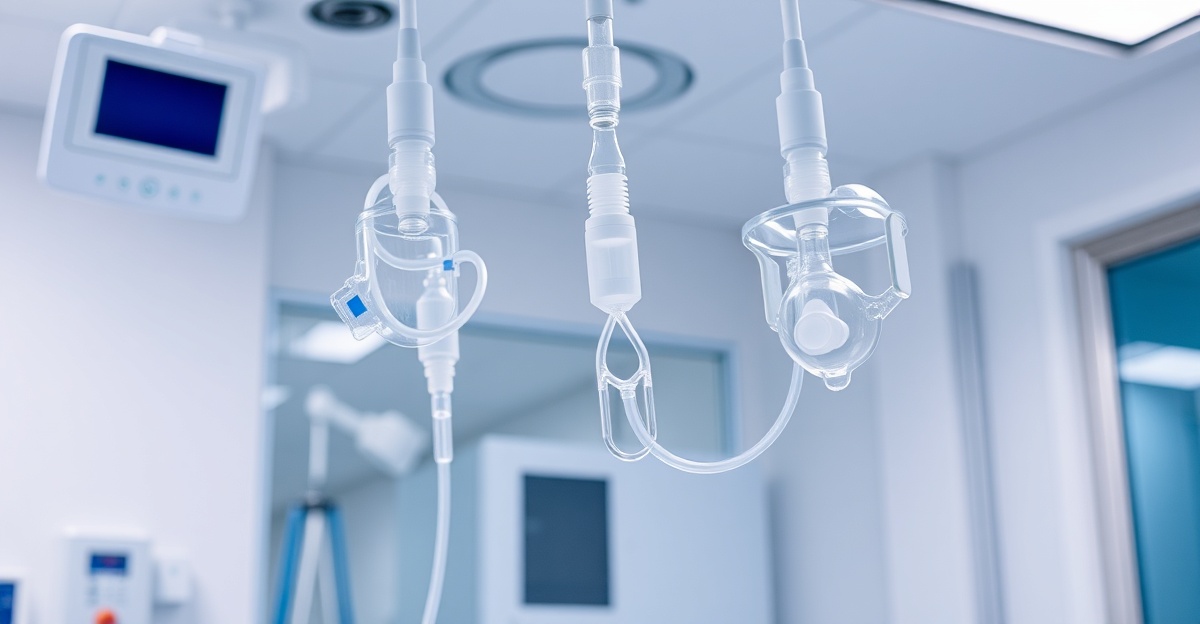
In the emergency department, nebulized bronchodilators (salbutamol/albuterol, ipratropium bromide) are typically driven by oxygen at 6 to 8 liters per minute rather than compressed air. This delivers the medication and supplemental oxygen simultaneously, which is particularly valuable during acute attacks.3
A 2024 study in Pediatric Pulmonology examined back-to-back short-acting beta-agonist administration protocols in pediatric asthma, confirming that oxygen-driven nebulization remains a standard approach in emergency settings.4
“Oxygen should be prescribed to achieve a target saturation of 94-98% for most acutely ill patients, or 88-92% for those at risk of hypercapnic respiratory failure.”
BTS Guideline for Emergency Oxygen Use, 2017
Risks of Over-Oxygenation in Asthma
More oxygen is not always better. Excessive oxygen administration in asthma carries real risks:
Masking Clinical Deterioration
If SpO2 is maintained at 100% with high-flow oxygen, clinicians may not recognize early signs that a patient is getting worse. A declining SpO2 trend is an important warning signal. When oxygen flow is maxed out, you lose that signal until the patient is in critical danger.
Oxygen-Induced Hypercapnia
While this is more of a concern in COPD than pure asthma, some asthma patients (especially those with long-standing disease or COPD overlap) can develop CO2 retention when given excessive oxygen. High oxygen levels can suppress the hypoxic respiratory drive, leading to reduced ventilation and rising CO2 levels.5
A 2022 review on oxygen-induced hypercapnia found that the international guideline recommends a target SpO2 of 88-92% in patients with chronic lung diseases at risk of hypercapnia. For pure asthma without COPD features, the 94-98% target provides a safe margin without this risk.5
Absorption Atelectasis
When high concentrations of oxygen replace nitrogen in the alveoli, the oxygen can be absorbed faster than it is replaced by ventilation, causing small areas of lung collapse. This is a theoretical risk with prolonged high-FiO2 use and is not a major concern during short emergency treatments.
Home Oxygen and Asthma
Home oxygen therapy is almost never prescribed for asthma alone. Here is why:
- Between attacks, asthma patients typically maintain normal SpO2 (96-99%).
- Asthma is a reversible airway obstruction. When treated with inhaled corticosteroids and bronchodilators, the airways open and gas exchange returns to normal.
- If you need oxygen between attacks, it usually means another condition is contributing (COPD, obesity hypoventilation, pulmonary hypertension, or deconditioning).
If your doctor has recommended home oxygen for what you have been told is asthma, ask whether there might be an additional diagnosis. Spirometry, arterial blood gas testing, and a chest CT can help clarify the picture.
Emergency Oxygen Protocol for Asthma
Here is the standard emergency department approach to an acute asthma exacerbation, with oxygen therapy integrated into the algorithm:12
Step 1: Assess Severity
- Check SpO2, respiratory rate, peak expiratory flow (PEF), ability to speak, and level of consciousness.
- If SpO2 is below 92%, the attack is classified as severe or life-threatening.
Step 2: Start Oxygen if Needed
- If SpO2 is below 94%, start supplemental oxygen via nasal cannula or face mask.
- Target SpO2 94-98%. Do not aim for 100%.
- For life-threatening attacks (SpO2 below 92%, silent chest, altered consciousness), use a non-rebreather mask at 15 L/min.
Step 3: Bronchodilators
- Nebulized salbutamol (2.5-5 mg) driven by oxygen at 6-8 L/min.
- Add nebulized ipratropium bromide (0.5 mg) for severe attacks.
- Repeat every 15-20 minutes as needed.
Step 4: Systemic Steroids
- Oral prednisolone (40-50 mg) or IV hydrocortisone (100 mg) to reduce airway inflammation.
- Steroids take 4-6 hours to reach full effect.
Step 5: Reassess
- Monitor SpO2 continuously. If improving, wean oxygen gradually.
- If not responding, consider IV magnesium sulfate, IV aminophylline, or preparation for intubation.
Hyperbaric Oxygen for Asthma: Is There Evidence?
Some patients ask about hyperbaric oxygen therapy (HBOT) for asthma. The research here is very early. A 2017 study investigated how ozone exposure can exacerbate asthma through oxidative stress pathways, and how the Nrf2 antioxidant pathway may provide protection. But this is about the harm of oxidant exposure, not the benefit of supplemental oxygen.6
There is currently no strong clinical evidence supporting HBOT as a treatment for asthma. The condition is primarily inflammatory and bronchospastic, not hypoxic at baseline. Standard inhaled medications remain the evidence-based approach. For more on what HBOT can treat, see our guide on hyperbaric chamber for asthma.
When to Go to the ER
Call 911 or go to the emergency department immediately if you experience any of the following during an asthma attack:
- Your rescue inhaler is not providing relief after 2-3 uses
- You cannot speak in full sentences
- Your lips or fingernails turn blue or gray (cyanosis)
- You are breathing rapidly (more than 25 breaths per minute)
- You feel drowsy or confused during an attack
- Your peak flow reading is below 50% of your personal best
- Your chest feels “tight” and you are sitting upright, leaning forward to breathe
These are signs of a severe or life-threatening attack that requires emergency oxygen and medical intervention.
Frequently Asked Questions
Does oxygen help with asthma?
Oxygen does not treat asthma itself. It protects your body from low oxygen levels during a severe attack while bronchodilators and steroids work to open your airways. Between attacks, oxygen therapy is not needed.
What oxygen level is dangerous for asthma?
An SpO2 below 92% during an asthma attack is classified as severe. Below 90% is a medical emergency. If your pulse oximeter reads below 94% during an attack, seek medical attention.
Can I use an oxygen concentrator at home for asthma?
Not without a prescription, and it is rarely appropriate for asthma alone. If you need oxygen between attacks, your doctor should investigate whether another condition is contributing. A rescue inhaler, not oxygen, is the first-line treatment for acute symptoms.
Is COPD the same as asthma?
No. Asthma involves reversible airway narrowing triggered by inflammation and bronchospasm. COPD involves permanent lung damage from smoking or long-term irritant exposure. Some patients have features of both (asthma-COPD overlap). The oxygen targets and management differ between the two conditions.
Bottom Line
Oxygen therapy is a critical support during severe asthma attacks, not a treatment for asthma itself. The target is 94-98% SpO2, delivered by nasal cannula, face mask, or non-rebreather depending on severity. Over-oxygenation provides no benefit and may mask deterioration. If you have asthma, your focus should be on daily controller medications (inhaled corticosteroids) to prevent attacks, and a rescue inhaler for breakthroughs. Oxygen is what the ER team uses to keep you safe when things get serious.
- Pelka K, Buzun WH, Dudek J, et al. Exacerbation of Asthma Among Pediatric Patients. J Clin Med. 2025;14(8):2672. doi:10.3390/jcm14082672
- O’Driscoll BR, Howard LS, Earis J, Mak V; British Thoracic Society Emergency Oxygen Guideline Group. BTS guideline for oxygen use in adults in healthcare and emergency settings. Thorax. 2017;72(Suppl 1):ii1-ii90. doi:10.1136/thoraxjnl-2016-209729
- Craig S, Collings M, Gray C, et al. Comparing clinical guideline recommendations for acute asthma exacerbations. Arch Dis Child. 2024;109(5):385-392. doi:10.1136/archdischild-2023-326375
- Ozdemir A, Ersoy M, Aydogdu AK. Salbutamol administration protocols in acute asthma exacerbation in children. Pediatr Pulmonol. 2024;59(10):2517-2524. doi:10.1002/ppul.27134
- Abdo WF, Heunks LM. Oxygen-induced hypercapnia in COPD: myths and facts. Crit Care. 2012;16(5):323. doi:10.1186/cc11475
- Wiegman CH, Li F, Clarke CJ, et al. Vitamin E antagonizes ozone-induced asthma exacerbation in Nrf2-deficient mice through Nrf2-independent antioxidant mechanisms. Free Radic Biol Med. 2017;113:445-455. doi:10.1016/j.freeradbiomed.2017.10.380
Medical Disclaimer
The content on BaricBoost.com is for informational purposes only and is not intended as a substitute for professional medical advice, diagnosis, or treatment. Always seek the advice of your physician or other qualified health provider with any questions you may have regarding a medical condition. Never disregard professional medical advice or delay in seeking it because of something you have read on this website.

Author
Seph Fontane Pennock is the founder of BaricBoost.com and Regenerated.com, a clinic directory for regenerative medicine serving 10,000+ providers across the United States. He previously built and sold PositivePsychology.com, which grew to 19 million users and became the largest evidence-based positive psychology resource on the web. Seph brings direct experience as an HBOT patient, having completed protocols at clinics across three continents while navigating mold illness, systemic inflammation, and autoimmune conditions. His treatment journey includes hyperbaric oxygen therapy, peptide protocols, NAD+ therapy, and consultations with specialists from Dubai to Cape Town to Mexico. This combination of entrepreneurial track record and lived patient experience shapes everything published on BaricBoost.com. Every article is grounded in peer-reviewed research, informed by real clinical encounters, and written for patients making high-stakes treatment decisions. Seph's focus is on bringing transparency, scientific rigor, and practical guidance to the hyperbaric oxygen therapy space.