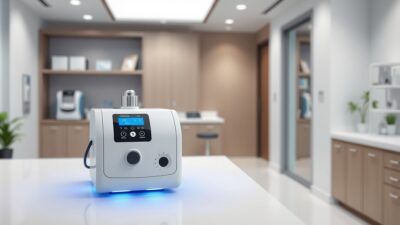
Ozone blood therapy is a medical procedure where a practitioner draws your blood, mixes it with ozone gas, and returns it to your vein. The formal name is Major Autohemotherapy (MAH). It has been practiced in Europe since the 1950s and is now offered by integrative clinics across the United States.
This guide covers how ozone blood therapy works, what a session looks like, what the research says, and how it compares to other ozone treatments like EBOO and 10-pass.
Key Takeaways
- Ozone blood therapy (MAH) involves drawing 100-250 mL of blood, mixing it with medical-grade ozone, and reinfusing it intravenously.
- Sessions take 30-60 minutes. Most treatment plans involve 6-20 sessions.
- Research shows potential benefits for circulation, immune function, and chronic infections, though large-scale clinical trials remain limited.
- Costs range from – per session. Insurance does not cover it.
- It differs from EBOO (continuous filtration circuit) and 10-pass (higher dose, pressurized system) in dose, volume, and cost.
What Is Ozone Blood Therapy?
Ozone blood therapy, or Major Autohemotherapy (MAH), is the most widely practiced form of intravenous ozone treatment. “Auto” means self, and “hemo” means blood. Your own blood is drawn, exposed to a precise concentration of ozone gas (O3), and then returned to your body through an IV line.
The procedure was developed in Germany and has been used in clinical settings across Europe for over 70 years. Today, it is offered by naturopathic doctors, integrative physicians, and functional medicine practitioners throughout the US.
MAH is not approved by the FDA for any medical condition. However, it is legal for practitioners to administer it in most US states, and multiple professional organizations, including the Italian Scientific Society of Oxygen-Ozone Therapy (SIOOT), have published standardized protocols.1
How Ozone Blood Therapy Works
The core idea behind MAH is oxidative preconditioning. When ozone contacts your blood, it reacts instantly with lipids and proteins in the plasma. This reaction produces two key signaling molecules:
- Hydrogen peroxide (H2O2): Acts as a short-lived messenger that stimulates white blood cells, improving immune surveillance.
- Lipid oxidation products (LOPs): The most important is 4-hydroxynonenal (4-HNE), which activates the Nrf2 pathway. This triggers your cells to produce more antioxidant enzymes like superoxide dismutase (SOD), glutathione peroxidase (GPx), and catalase.2
The result is paradoxical: a controlled dose of oxidative stress makes your body better at handling oxidative stress. Professor Velio Bocci, the leading researcher in ozone therapy science, described this as “therapeutic shock” that upregulates the body’s defense systems.3
Ozone also inhibits NF-kB, a protein complex that drives inflammation. By activating Nrf2 and suppressing NF-kB simultaneously, ozone blood therapy creates both an anti-inflammatory and an immune-boosting effect.2
What a Session Looks Like: Step by Step
If you have never had ozone blood therapy, here is exactly what to expect during a typical MAH session.
1. Blood Draw (5 minutes)
A practitioner inserts a butterfly needle or standard IV catheter into a vein in your arm. Between 100 and 250 mL of blood is drawn into a sterile glass bottle or specialized IV bag. An anticoagulant (usually heparin or sodium citrate) is added to prevent clotting.
2. Ozone Mixing (5-10 minutes)
Medical-grade ozone is generated from pure oxygen (99.5%+ purity) using a corona discharge ozone generator. The ozone-oxygen gas mixture is injected into the bottle or bag containing your blood. Concentrations typically range from 20 to 70 micrograms per milliliter (mcg/mL), depending on the clinical protocol.
The blood changes color during this step. Venous blood starts dark red. After ozone exposure, it turns bright cherry red as hemoglobin becomes fully oxygenated.
3. Reinfusion (15-30 minutes)
The ozonated blood is returned to your body through the same IV line, flowing by gravity. The entire reinfusion takes 15-30 minutes. Some practitioners add saline or other nutrients to the IV during this phase.
4. Post-Treatment (5 minutes)
The IV is removed, and a bandage is applied. Most patients can drive themselves home. Side effects during or immediately after the session are uncommon. The most frequent complaint is mild bruising at the IV site.
A full MAH session takes 30 to 60 minutes from start to finish.
Single-Pass vs. Multi-Pass (10-Pass) Ozone Therapy
Standard MAH is a single-pass procedure. Your blood is drawn once, ozonated once, and returned once. This delivers roughly 5,000 to 15,000 micrograms of total ozone per session.4
Multi-pass ozone therapy, commonly called “10-pass,” repeats the draw-ozonate-return cycle 10 times in one sitting. It uses a hyperbaric pressurized system (the Zotzmann 2000 device) to treat approximately 2,000 mL of blood and deliver around 140,000 micrograms of ozone. That is roughly 10 times the dose of a standard MAH session.4
| Feature | Single-Pass MAH | 10-Pass |
|---|---|---|
| Blood Volume | 100-250 mL | ~2,000 mL |
| Total Ozone Dose | 5,000-15,000 mcg | ~140,000 mcg |
| Session Duration | 30-60 minutes | 60-90 minutes |
| Equipment | Glass bottle or IV bag | Zotzmann 2000 (pressurized) |
| Cost per Session | – | -,500 |
| Evidence Base | Moderate (decades of use) | Limited (newer technique) |
European ozone therapy societies tend to favor lower doses, emphasizing hormesis (small stress = big response). American practitioners often prefer higher doses. Neither approach has been validated in head-to-head trials.
What Does Ozone Blood Therapy Treat?
Practitioners use ozone blood therapy for a wide range of conditions. The evidence base varies significantly depending on the condition.
Conditions With Emerging Clinical Evidence
- Chronic infections: Ozone has demonstrated antimicrobial properties against bacteria, viruses, and fungi in laboratory settings. MAH is commonly used for chronic Lyme disease, Epstein-Barr virus reactivation, and hepatitis.
- Peripheral artery disease: Multiple studies have shown improvements in blood flow and walking distance in patients with PAD.
- Post-COVID syndrome: A 2024 randomized controlled trial by Zheng et al. found that MAH combined with conventional treatment significantly improved pulmonary function, inflammation markers, and cellular immunity in Long COVID patients compared to conventional treatment alone.5
- Stroke recovery: A 2025 randomized controlled study of 62 patients found that MAH significantly improved neurological outcomes after acute ischemic stroke. NIHSS scores decreased by 30%, Barthel Index scores increased by 25%, and MoCA cognitive scores improved by 20% versus controls.6
Conditions Commonly Treated (Limited Formal Evidence)
- Autoimmune conditions (rheumatoid arthritis, multiple sclerosis, lupus)
- Chronic fatigue syndrome and fibromyalgia
- Mold illness and environmental toxicity
- Diabetic ulcers and wound healing
- Age-related cognitive decline
“After millions of autohemotherapy sessions performed in Germany, Austria, Switzerland, and Italy, neither serious acute nor chronic side effects, nor an increased cancer incidence has been reported.”
Bocci et al., Frontiers in Chemistry, 2015
Side Effects and Safety
When performed by a trained practitioner using proper equipment and medical-grade oxygen, MAH has a strong safety record. The most common side effects include:
- Bruising at the IV site
- Mild fatigue after the first few sessions (Herxheimer-type reaction)
- Temporary lightheadedness during blood draw
- A feeling of warmth during reinfusion
Serious adverse events are rare but have been reported with improper administration, particularly when ozone is injected directly into a vein (which is NOT the same as MAH and is considered dangerous).
Contraindications
Ozone blood therapy is contraindicated in the following situations:7
- G6PD deficiency: Patients lacking the glucose-6-phosphate dehydrogenase enzyme cannot adequately buffer the oxidative stress from ozone, risking hemolytic anemia. A simple blood test can screen for this.
- Hyperthyroidism: Uncontrolled thyroid overactivity can be worsened by ozone’s metabolic effects.
- Pregnancy: Insufficient safety data exists for use during pregnancy.
- Active hemorrhage: The anticoagulant used during the procedure could worsen bleeding.
- Severe cardiovascular instability: Patients with unstable angina or recent heart attack should avoid MAH.
How Ozone Blood Therapy Differs From EBOO
EBOO (Extracorporeal Blood Oxygenation and Ozonation) is a more intensive form of ozone blood treatment. While MAH processes a small batch of blood in a bottle, EBOO runs your blood through a continuous circuit. Blood flows out of one arm, passes through a filtration and ozonation unit, and returns through the other arm.
EBOO treats a much larger volume of blood (up to 4,800 mL in published studies) and sessions last 45-60 minutes. It costs -,500 per session compared to – for standard MAH.8
The key differences are scale and filtration. EBOO uses a dialysis-like membrane that filters the blood while ozonating it. MAH is simpler, cheaper, and more widely available.
Cost and Insurance
A single MAH session typically costs between and at US clinics. Treatment plans usually involve 6-20 sessions, often starting with 2 sessions per week and tapering to weekly or biweekly maintenance.
Total cost for an initial treatment series: ,200 to ,000.
Insurance does not cover ozone blood therapy. It is considered an out-of-pocket expense. Some clinics offer package discounts (for example, 10 sessions for ,800 instead of ,500 individually).
Compare this to 10-pass ozone therapy at -,500 per session, or EBOO at -,500 per session.
How to Find a Qualified Practitioner
Not all ozone providers have the same training or equipment. Here is what to look for:
- Medical license: MDs, DOs, NDs (in states where licensed), or DCs with IV therapy certification.
- Ozone-specific training: Organizations like the American Academy of Ozonotherapy (AAO) and the International Scientific Committee of Ozone Therapy (ISCO3) offer certification programs.
- Equipment: The clinic should use a medical-grade ozone generator with precise concentration controls, not an industrial unit. They should use medical-grade oxygen from tanks, not an oxygen concentrator.
- Disposable supplies: All tubing, needles, and collection bottles should be single-use.
Ozone blood therapy is one component of a broader category of ozone therapy treatments. The right approach depends on your condition, budget, and access to qualified providers.
The Bottom Line
Ozone blood therapy is a well-established integrative treatment with a long clinical history and a growing body of research. It is the most accessible and affordable form of IV ozone therapy. The evidence is strongest for chronic infections, circulatory conditions, and post-viral syndromes.
It is not a miracle cure. It is not FDA-approved. But for patients who have exhausted conventional options or want to support their body’s healing capacity alongside standard care, MAH offers a reasonable risk-to-benefit profile when administered by a qualified practitioner.
Sources
- Chirumbolo S, Valdenassi L, Simonetti V, et al. “The Oxygen-Ozone Adjunct Medical Treatment According to the Protocols from the Italian Scientific Society of Oxygen-Ozone Therapy.” Int J Mol Sci. 2023;24(24):17338. doi:10.3390/ijms242417338
- Manizheh M, Sadr S, et al. “Mechanisms of Action of Ozone Therapy in Emerging Viral Diseases: Immunomodulatory Effects and Therapeutic Advantages.” Front Microbiol. 2022;13:871645. doi:10.3389/fmicb.2022.871645
- Re L, Mawsouf MN, Menendez S, et al. “Mechanisms of Action Involved in Ozone Therapy: Is healing induced via a mild oxidative stress?” Med Gas Res. 2011;1:29. doi:10.1186/2045-9912-1-29
- Zahn J. “Ozone high dose therapy (OHT) improves mitochondrial bioenergetics in peripheral blood mononuclear cells.” Translational Medicine Communications. 2022;7:17. doi:10.1186/s41231-022-00122-y
- Zheng X, et al. “A pilot randomized controlled trial of major ozone autohemotherapy for patients with post-acute sequelae of COVID-19.” Int Immunopharmacol. 2024;133:112115. doi:10.1016/j.intimp.2024.112115
- Zhang Y, et al. “A clinical study on ozone autohemotherapy for the treatment of acute ischemic stroke.” Front Med. 2025;12:1595568. doi:10.3389/fmed.2025.1595568
- Viebahn-Hansler R, Leon Fernandez OS, Fahmy Z. “The Potential Toxicity of Ozone: Side Effects and Contraindications of Ozonetherapy.” Ozone: Science & Engineering. 2012;34(3):210-221.
- Di Paolo N, Bocci V, et al. “Extracorporeal blood oxygenation and ozonation (EBOO): a controlled trial in patients with peripheral artery disease.” Int J Artif Organs. 2005;28(10):1039-1050. doi:10.1177/039139880502801012
Medical Disclaimer
The content on BaricBoost.com is for informational purposes only and is not intended as a substitute for professional medical advice, diagnosis, or treatment. Always seek the advice of your physician or other qualified health provider with any questions you may have regarding a medical condition. Never disregard professional medical advice or delay in seeking it because of something you have read on this website.

Author
Seph Fontane Pennock is the founder of BaricBoost.com and Regenerated.com, a clinic directory for regenerative medicine serving 10,000+ providers across the United States. He previously built and sold PositivePsychology.com, which grew to 19 million users and became the largest evidence-based positive psychology resource on the web. Seph brings direct experience as an HBOT patient, having completed protocols at clinics across three continents while navigating mold illness, systemic inflammation, and autoimmune conditions. His treatment journey includes hyperbaric oxygen therapy, peptide protocols, NAD+ therapy, and consultations with specialists from Dubai to Cape Town to Mexico. This combination of entrepreneurial track record and lived patient experience shapes everything published on BaricBoost.com. Every article is grounded in peer-reviewed research, informed by real clinical encounters, and written for patients making high-stakes treatment decisions. Seph's focus is on bringing transparency, scientific rigor, and practical guidance to the hyperbaric oxygen therapy space.