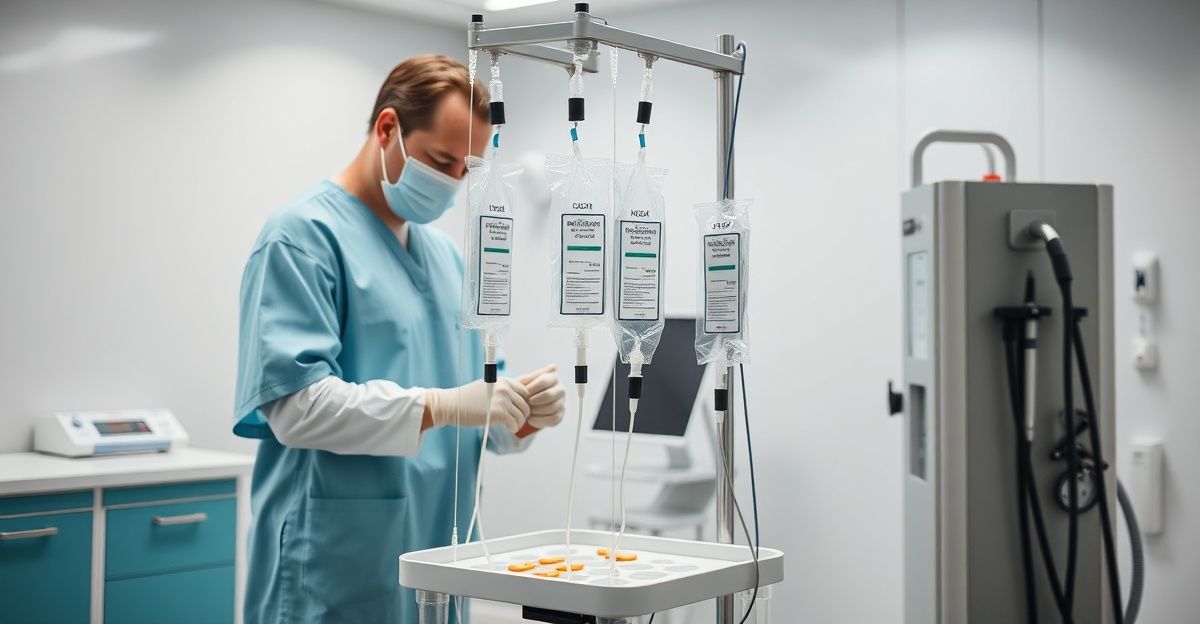
High-dose ozone therapy refers to protocols that deliver significantly more ozone per session than standard major autohemotherapy, including 10-pass, EBOO, and high-concentration MAH. These methods are increasingly popular in integrative clinics, but the evidence base is thin compared to standard ozone protocols.
Key Takeaways
- High-dose ozone delivers 10-30x more ozone per session than standard MAH (140,000+ mcg vs. 5,000-15,000 mcg).
- The three main methods are 10-pass (Lahodny protocol), EBOO (extracorporeal blood oxygenation and ozonation), and high-concentration MAH.
- These protocols are used for chronic Lyme disease, cancer support, severe autoimmune conditions, and chronic infections.
- Safety data from 4,000+ high-dose treatments shows no significant adverse events, but formal clinical trials are lacking.
- Cost ranges from $500-1,500 per session, significantly more than standard MAH ($150-350).
What Makes It “High-Dose”?
Standard major autohemotherapy (MAH) typically delivers 5,000-15,000 mcg of ozone per session. The ozone concentration ranges from 20-50 mcg/mL, and the gas volume mixed with blood is 100-200 mL.
High-dose ozone therapy breaks through these limits by either cycling blood through multiple ozonation passes, using continuous extracorporeal circulation, or applying higher concentrations. The goal is to achieve a much greater cumulative ozone dose in a single session.
The three primary high-dose methods are:
1. 10-Pass Ozone Therapy (Lahodny Protocol)
Developed by Austrian physician Dr. Johann Lahodny in the early 2000s, the 10-pass protocol cycles blood through 10 successive rounds of ozonation in a single session.
How It Works
- 200 mL of blood is drawn into a vacuum glass bottle containing heparin (anticoagulant).
- 200 mL of ozone/oxygen gas at 70 mcg/mL concentration is introduced under pressure.
- The bottle is gently mixed.
- The ozonated blood is returned to the patient.
- This cycle repeats 10 times.
Total ozone delivered: approximately 140,000 mcg (70 mcg/mL x 200 mL x 10 passes), roughly 10-28 times a standard MAH session.
A 10-pass session takes 60-90 minutes and requires specialized equipment (the Zotzmann 2000 or Herrmann Hyper Medozon device) that can perform the pressurized cycling.
The Evidence
Dr. Lahodny’s clinical observations suggested rapid improvement in chronic fatigue, chronic infections, and inflammatory conditions. The first peer-reviewed study, published in 2022 by Konig and Lahodny, examined the effect of 10-pass on mitochondrial function. Results showed that bioenergetic health index (BHI) in peripheral blood mononuclear cells improved significantly after just 2 sessions over one week.[1]
However, this study did not measure clinical outcomes, and the patient recruitment methodology had limitations. No randomized controlled trials have been published on 10-pass therapy.
2. EBOO (Extracorporeal Blood Oxygenation and Ozonation)
EBOO, also called recirculatory hemoperfusion (RHP) or ozone dialysis, takes a different approach. Instead of cycling blood in a bottle, it uses a continuous-flow system similar to dialysis.
How It Works
- Blood is drawn from one arm vein using a peristaltic pump.
- Blood flows through a specialized dialysis-type chamber containing hollow fiber membranes.
- Ozone/oxygen gas flows in the opposite direction (countercurrent) through the chamber.
- Ozone diffuses through the membranes into the blood.
- Ozonated blood returns to the patient through a second arm vein.
- The process runs continuously for 30-60 minutes.
A 2022 study by Cespedes-Suarez and Borroto-Rosales found that ozone dialysis delivers at least 3 times more ozone than comparable forms of blood ozone treatment, including 10-pass.[2]
“Based on a survey of high-dose ozone therapists, in over 4,000 treatments, no significant toxicity or untoward effects were observed, except for transient rust-colored urine in a small minority of patients.”
American Academy of Ozonotherapy safety review
Clinical Evidence
The strongest EBOO study is a controlled trial by Di Paolo and colleagues in patients with peripheral artery disease. The EBOO group showed a sharp decrease in median lesion stage (from 4 to 1), while the prostacyclin control group showed no change. The study also reported improvements in inflammatory markers and blood rheology.[3]
Beyond this, the evidence consists primarily of case reports and observational data. EBOO has been performed for over two decades with no published reports of serious injuries.
3. High-Concentration MAH
Some practitioners use standard MAH technique but at higher ozone concentrations (60-80 mcg/mL vs. the typical 20-45 mcg/mL) or with larger blood volumes. This delivers more ozone without the specialized equipment required for 10-pass or EBOO.
The World Federation of Ozone Therapy recommends staying within 15-50 mcg/mL for routine MAH. Concentrations above 80 mcg/mL risk hemolysis (destruction of red blood cells) and are not considered safe.[4]
When High-Dose Protocols Are Used
Practitioners typically reserve high-dose ozone for conditions where standard MAH has been insufficient or where a more aggressive approach is deemed necessary:
| Condition | Rationale for High-Dose | Evidence Level |
|---|---|---|
| Chronic Lyme disease | Greater antimicrobial effect against persistent Borrelia | Anecdotal only |
| Cancer (adjunct) | Enhanced oxidative stress on cancer cells | Theoretical/anecdotal |
| Severe autoimmune conditions | Stronger immunomodulatory response | Very low |
| Chronic viral infections (EBV, HSV) | Higher antimicrobial doses | Very low |
| Mold illness / CIRS | Enhanced detoxification pathways | Anecdotal only |
| Peripheral artery disease | Greater vascular effects (EBOO) | Low-moderate (one controlled trial) |
Safety Considerations at Higher Doses
The safety data for high-dose ozone, while limited, is reassuring. The American Academy of Ozonotherapy surveyed practitioners performing high-dose treatments and found no significant adverse events in over 4,000 sessions.[5]
Potential risks at higher doses include:
- Hemolysis: Very high ozone concentrations can damage red blood cells. This risk is managed by keeping concentrations within established ranges and ensuring proper mixing technique.
- Herxheimer reaction: Patients with chronic infections may experience a temporary worsening of symptoms as pathogens are killed. This is a known response, not a true adverse event, but it can be severe in sensitive patients.
- Oxidative stress: Higher ozone doses generate more reactive oxygen species. In theory, this could overwhelm antioxidant defenses, particularly in patients with compromised antioxidant systems (e.g., G6PD deficiency).
- Transient “rust-colored” urine: Reported in a small percentage of patients after high-dose sessions, likely indicating some degree of hemolysis. This is considered self-limiting.
Absolute contraindications: G6PD deficiency (risk of acute hemolytic crisis), active hemorrhage, pregnancy, hyperthyroidism, and ozone allergy. These apply to all ozone therapy, not just high-dose.
Criticism from Within the Ozone Community
Not all ozone practitioners support high-dose protocols. A 2022 commentary published in response to the Konig-Lahodny mitochondrial study raised concerns about the OHT (ozone high-dose therapy) approach, noting that the established therapeutic window for ozone has been well-characterized and that exceeding it may not provide additional benefit while potentially increasing risk.[6]
The debate comes down to a fundamental question: does more ozone equal better outcomes? The hormesis model that underlies ozone therapy suggests there is an optimal dose range, with both too little and too much being less effective. Whether high-dose protocols fall within or beyond this optimal range remains unresolved.
Cost Comparison
| Method | Cost per Session | Ozone Delivered | Session Duration |
|---|---|---|---|
| Standard MAH | $150-350 | 5,000-15,000 mcg | 30-60 min |
| 10-Pass | $500-1,200 | ~140,000 mcg | 60-90 min |
| EBOO | $800-1,500 | Variable (3x+ more than 10-pass) | 30-60 min |
| High-concentration MAH | $200-400 | 10,000-20,000 mcg | 30-60 min |
A course of 10 high-dose sessions can cost $5,000-15,000. Insurance does not cover any form of ozone therapy in the US.
The Bottom Line
High-dose ozone therapy represents the cutting edge (and the frontier) of ozone medicine. The safety data is reassuring, the mechanistic rationale is plausible, and patient reports are often enthusiastic. But the clinical evidence lags far behind the marketing. No randomized controlled trials have been published for 10-pass or EBOO for the conditions they are most commonly used to treat. If you are considering high-dose ozone, go in with clear expectations: this is experimental therapy with a good safety profile but unproven efficacy for most indications.
- Konig J, Lahodny J. Ozone high dose therapy (OHT) improves mitochondrial bioenergetics in peripheral blood mononuclear cells. Transl Med Commun. 2022;7:17. doi:10.1186/s41231-022-00123-7
- Cespedes-Suarez J, Borroto-Rosales M. Ozone dialysis delivers three or more times the ozone than other forms of ozone blood treatment. J Ozone Ther. 2022;6(3). doi:10.7203/jo3t.6.3.2022.26284
- Di Paolo N, Gaggiotti E, Galli F. Extracorporeal blood oxygenation and ozonation: clinical and biological implications of ozone therapy. Redox Rep. 2005;10(3):121-130. doi:10.1179/135100005X38888
- World Federation of Ozone Therapy (WFOT). Review on Evidence Based Ozone Therapy. WFOT Scientific Advisory Committee. 2015.
- Robins HI. OHT safety review. Presented at: Annual Meeting of the American Academy of Ozonotherapy; 2019.
- Bocci V, Valacchi G. Comments on the optimal use of medical ozone in clinics versus the Ozone High Dose Therapy (OHT) approach. Front Public Health. 2022;10:1059725. doi:10.3389/fpubh.2022.1059725
Medical Disclaimer
The content on BaricBoost.com is for informational purposes only and is not intended as a substitute for professional medical advice, diagnosis, or treatment. Always seek the advice of your physician or other qualified health provider with any questions you may have regarding a medical condition. Never disregard professional medical advice or delay in seeking it because of something you have read on this website.

Author
Seph Fontane Pennock is the founder of BaricBoost.com and Regenerated.com, a clinic directory for regenerative medicine serving 10,000+ providers across the United States. He previously built and sold PositivePsychology.com, which grew to 19 million users and became the largest evidence-based positive psychology resource on the web. Seph brings direct experience as an HBOT patient, having completed protocols at clinics across three continents while navigating mold illness, systemic inflammation, and autoimmune conditions. His treatment journey includes hyperbaric oxygen therapy, peptide protocols, NAD+ therapy, and consultations with specialists from Dubai to Cape Town to Mexico. This combination of entrepreneurial track record and lived patient experience shapes everything published on BaricBoost.com. Every article is grounded in peer-reviewed research, informed by real clinical encounters, and written for patients making high-stakes treatment decisions. Seph's focus is on bringing transparency, scientific rigor, and practical guidance to the hyperbaric oxygen therapy space.