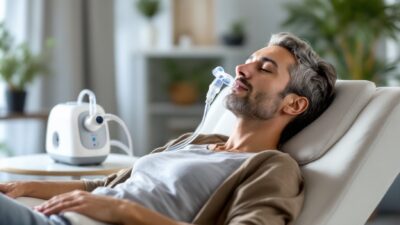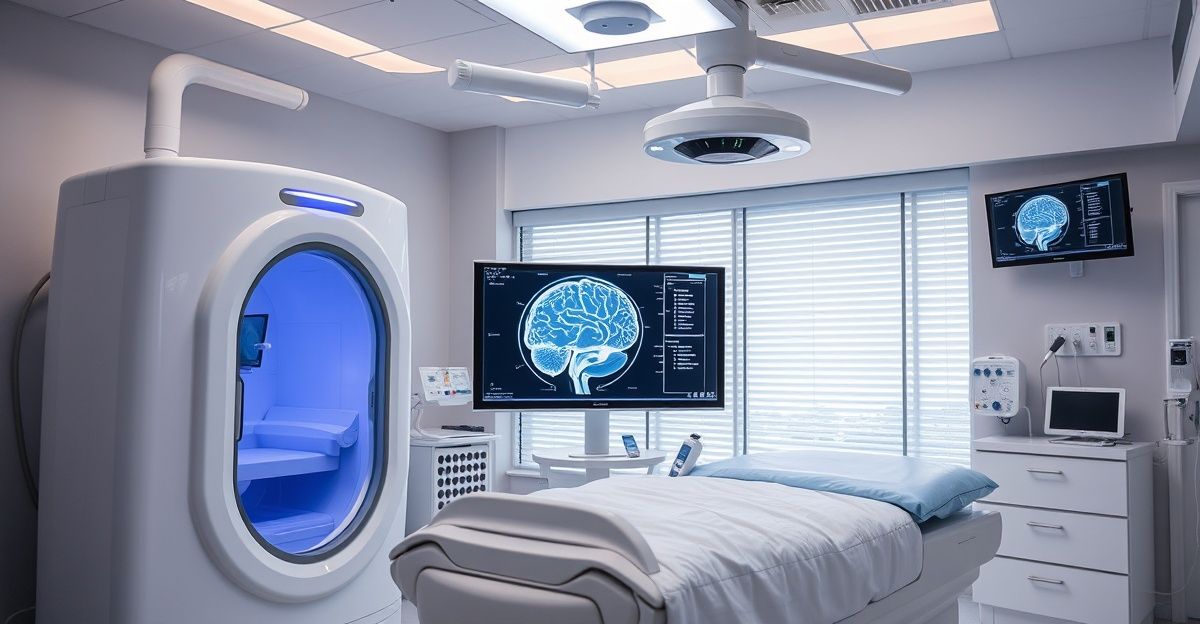
The brain consumes roughly 20% of the body’s total oxygen supply despite making up only 2% of body weight, making it uniquely vulnerable to oxygen deprivation and uniquely responsive to oxygen-based therapies. Hyperbaric oxygen therapy (HBOT), the most studied form of oxygen therapy for neurological conditions, has shown measurable benefits for traumatic brain injury, stroke recovery, cognitive decline, and long COVID brain fog. The underlying science centers on neuroplasticity: the brain’s ability to form new connections and reactivate dormant tissue when given sufficient metabolic fuel.
This guide covers how oxygen supports brain function, what the clinical evidence shows across major brain-related conditions, and what patients should know before pursuing oxygen therapy for neurological benefit.
Key Takeaways
- The brain requires approximately 3.3 mL of oxygen per 100 g of tissue per minute; even small reductions in supply impair cognitive function1
- HBOT increases dissolved plasma oxygen by 10 to 15 times, reaching brain regions with compromised blood flow
- Clinical evidence is strongest for chronic stroke (Efrati 2013 RCT) and mild TBI (Hadanny 2022 RCT)23
- A 2021 trial demonstrated HBOT reversed hallmarks of brain aging in healthy adults, including increased cerebral blood flow and improved cognitive performance4
- Emerging evidence supports HBOT for long COVID cognitive symptoms, with trials ongoing
- Typical protocols: 40 to 60 sessions at 2.0 ATA, costing $6,000 to $21,000 total
How Oxygen Supports Brain Function
The brain runs almost entirely on aerobic metabolism. Neurons depend on a constant supply of oxygen to produce ATP (adenosine triphosphate), the energy currency that powers everything from synaptic transmission to memory consolidation. When oxygen delivery drops below critical thresholds, cognitive function degrades predictably:
| Blood Oxygen Level | Cognitive Effect |
|---|---|
| Normal (95-100% SpO2) | Full cognitive capacity |
| Mild hypoxia (90-94%) | Subtle impairment in judgment, short-term memory, and reaction time |
| Moderate hypoxia (80-89%) | Measurable cognitive decline, confusion, impaired coordination |
| Severe hypoxia (below 80%) | Loss of consciousness, seizures, permanent damage within minutes |
HBOT works by dramatically increasing the amount of oxygen dissolved in blood plasma. Under normal conditions, almost all oxygen travels bound to hemoglobin. At 2.0 ATA with 100% oxygen, dissolved plasma oxygen increases to levels that can sustain tissue even without hemoglobin-bound oxygen. This hyperoxygenated plasma reaches brain regions where blood flow is compromised but tissue remains viable.
The mechanisms relevant to brain health include:
- Neuroplasticity activation: Elevated oxygen upregulates brain-derived neurotrophic factor (BDNF), which promotes the formation of new synaptic connections and supports neuronal survival4
- Angiogenesis: HBOT stimulates vascular endothelial growth factor (VEGF), driving new blood vessel formation in oxygen-deprived brain regions
- Reduced neuroinflammation: Hyperbaric oxygen modulates microglial activity and reduces pro-inflammatory cytokine levels
- Stem cell mobilization: HBOT increases circulating stem cells from bone marrow, which may home to damaged brain tissue
- Mitochondrial support: Enhanced oxygen availability improves mitochondrial function and energy production in neurons
Evidence by Brain Condition
Stroke Recovery
The Efrati et al. (2013) randomized controlled trial remains the landmark study. Seventy-four chronic stroke patients (6 to 36 months post-stroke) received 40 HBOT sessions at 2.0 ATA. The treatment group showed significant improvements in neurological function, daily activities, and quality of life. SPECT imaging confirmed reactivation of dormant brain regions. The control group showed no improvement during a matched observation period.2
The most striking finding: patients who were years past the conventional recovery window still responded. This challenges the assumption that stroke recovery plateaus permanently after 6 to 12 months.
Traumatic Brain Injury
Hadanny et al. (2022) published an RCT of 63 patients with mild TBI (1 to 5 years post-injury) comparing 60 HBOT sessions at 2.0 ATA with sham treatment. The HBOT group showed significant improvements in cognitive function, psychiatric symptoms, pain, and sleep quality. Brain MRI demonstrated improved microstructure and cerebral blood flow.3
“HBOT can induce neuroplasticity and significantly improve cognitive function in mild TBI patients years after their injury, when no other treatment had succeeded.”
Hadanny et al., 2022, Scientific Reports
Cognitive Aging and Dementia
Hadanny et al. (2020) conducted a prospective trial of 63 healthy adults over age 64. Participants received 60 HBOT sessions at 2.0 ATA. After treatment, participants showed significant increases in cerebral blood flow, improvements in attention, information processing speed, and executive function. Notably, the biological markers of brain aging (as measured by MRI) reversed, suggesting actual rejuvenation of brain tissue rather than merely compensatory improvement.4
For dementia specifically, the evidence is early-stage. Several case reports and small series have shown cognitive improvement in patients with vascular dementia and early Alzheimer’s disease following HBOT, but no large RCTs have been completed.
Long COVID Brain Fog
Long COVID cognitive symptoms (brain fog, memory problems, difficulty concentrating) affect an estimated 20 to 30% of COVID-19 survivors. Zilberman-Itskovich et al. (2022) published an RCT of 73 long COVID patients comparing 40 HBOT sessions at 2.0 ATA with a sham control. The HBOT group showed significant improvements in cognitive function, energy levels, sleep, and psychiatric symptoms. MRI showed improved cerebral blood flow in regions associated with the reported cognitive deficits.5
Summary of Evidence Strength
| Condition | Evidence Level | Key Study |
|---|---|---|
| Chronic stroke | Strong (RCT + retrospective) | Efrati 2013, Hadanny 2020 |
| Mild TBI | Strong (sham-controlled RCT) | Hadanny 2022 |
| Cognitive aging | Moderate (prospective trial) | Hadanny 2020 |
| Long COVID brain fog | Moderate (sham-controlled RCT) | Zilberman-Itskovich 2022 |
| Dementia / Alzheimer’s | Limited (case reports) | Various case series |
Cost and Practical Considerations
HBOT for brain health typically follows the same protocols used in the clinical studies:
- Pressure: 2.0 ATA (the most studied pressure for neurological applications)
- Duration: 60 to 90 minutes per session
- Frequency: 5 days per week
- Total sessions: 40 to 60
- Cost per session: $150 to $350 at independent clinics
- Total cost: $6,000 to $21,000 for a full course
Insurance rarely covers HBOT for neurological conditions other than acute carbon monoxide poisoning and decompression sickness. Most patients pay out of pocket.
Soft-shell, low-pressure chambers (1.3 ATA) available for home use are not equivalent to the clinical-grade chambers used in the research studies. While they may provide some benefit, no major neurological HBOT study has been conducted at 1.3 ATA with ambient air.
The Bottom Line
The evidence that HBOT can improve brain function is real and growing. The strongest data comes from chronic stroke and TBI research, where randomized controlled trials have demonstrated measurable improvements in cognition, daily function, and brain imaging markers. The aging and long COVID data add to a compelling overall picture.
What the research consistently shows is that the brain retains more recovery potential than traditionally assumed, and that providing sufficient oxygen to compromised but viable brain tissue can unlock that potential. HBOT is not a cure for any neurological condition, but it represents one of the few interventions shown to improve brain function after conventional recovery has plateaued.
Related reading: Hyperbaric Chamber for Brain Health: Complete Guide
References
- Magistretti PJ, Allaman I. A cellular perspective on brain energy metabolism and functional imaging. Neuron. 2015;86(4):883-901. doi:10.1016/j.neuron.2015.03.035
- Efrati S, Fishlev G, Bechor Y, et al. Hyperbaric oxygen induces late neuroplasticity in post stroke patients – randomized, prospective trial. PLoS ONE. 2013;8(1):e53716. doi:10.1371/journal.pone.0053716
- Hadanny A, Catalogna M, Yaniv S, et al. Hyperbaric oxygen therapy improves neurocognitive functions in post-concussion syndrome – randomized controlled trial. Sci Rep. 2022;12(1):508. doi:10.1038/s41598-022-04565-5
- Hadanny A, Daniel-Kotovsky M, Suzin G, et al. Cognitive enhancement of healthy older adults using hyperbaric oxygen: a randomized controlled trial. Aging (Albany NY). 2020;12(13):13740-13761. doi:10.18632/aging.103571
- Zilberman-Itskovich S, Catalogna M, Sasson E, et al. Hyperbaric oxygen therapy improves neurocognitive functions and symptoms of post-COVID condition: randomized controlled trial. Sci Rep. 2022;12(1):11252. doi:10.1038/s41598-022-15565-0
Medical Disclaimer
The content on BaricBoost.com is for informational purposes only and is not intended as a substitute for professional medical advice, diagnosis, or treatment. Always seek the advice of your physician or other qualified health provider with any questions you may have regarding a medical condition. Never disregard professional medical advice or delay in seeking it because of something you have read on this website.

Author
Seph Fontane Pennock is the founder of BaricBoost.com and Regenerated.com, a clinic directory for regenerative medicine serving 10,000+ providers across the United States. He previously built and sold PositivePsychology.com, which grew to 19 million users and became the largest evidence-based positive psychology resource on the web. Seph brings direct experience as an HBOT patient, having completed protocols at clinics across three continents while navigating mold illness, systemic inflammation, and autoimmune conditions. His treatment journey includes hyperbaric oxygen therapy, peptide protocols, NAD+ therapy, and consultations with specialists from Dubai to Cape Town to Mexico. This combination of entrepreneurial track record and lived patient experience shapes everything published on BaricBoost.com. Every article is grounded in peer-reviewed research, informed by real clinical encounters, and written for patients making high-stakes treatment decisions. Seph's focus is on bringing transparency, scientific rigor, and practical guidance to the hyperbaric oxygen therapy space.