A 2020 randomized trial of 63 healthy adults over 64 found that 60 HBOT sessions at 2.0 ATA improved information processing speed (effect size 0.788) and attention (0.745), changes the researchers tied to measurable increases in cerebral blood flow (Hadanny et al., 2020).1 The brain uses about 20% of the body’s oxygen despite being 2% of its weight, which is why it is sensitive to oxygen supply and the focus of this research.
Quick definitions:
- Angiogenesis: the growth of new blood vessels, which can improve blood supply to under-perfused brain regions.
- Neuroplasticity: the brain’s ability to form new connections and reorganize, the basis of learning and recovery.
- ATA: atmospheres absolute, a unit of pressure. Sea level is 1.0 ATA; brain-health protocols use 2.0 ATA.
What does the research show about HBOT for brain health?
The most rigorous human study to date is the 2020 randomized controlled trial from the Sagol Center for Hyperbaric Medicine in Tel Aviv.1 It enrolled 63 healthy adults aged over 64 and randomized them to 60 daily sessions at 2.0 ATA (100% oxygen, 90 minutes with air breaks) or a control condition. Global cognitive function showed a significant group-by-time interaction (p=0.0017). The largest gains were in attention and processing speed, with executive function also improving significantly.
Cognitive gains in the 2020 healthy-aging RCT
| Cognitive domain | Effect size (Cohen’s d) | Source |
|---|---|---|
| Information processing speed | 0.788 | Hadanny et al., 2020 |
| Attention | 0.745 | Hadanny et al., 2020 |
| Executive function | Significant improvement | Hadanny et al., 2020 |
A 2022 systematic review of HBOT for cognitive impairment after traumatic brain injury reached a more cautious conclusion, finding that HBOT may improve cognition but that trial quality and protocols vary widely, limiting firm recommendations (Alashram et al., 2022).7 That tension, promising single-group results against thin independent replication, runs through this whole field.
Does HBOT increase blood flow to the brain?
Yes, and this appears to be the main mechanism behind the cognitive changes. The same 2020 trial used voxel-based MRI perfusion analysis and documented significant cerebral blood flow increases in frontal and parietal regions, with the cognitive improvements mediated by those regional changes.1 A 2015 analysis of 10 patients a mean of 10.3 years after traumatic brain injury found that 60 HBOT sessions increased cerebral blood flow and blood volume on whole-brain perfusion imaging, alongside significant cognitive improvement (p=0.007), most prominently in processing speed and visual-spatial skills (Tal et al., 2015).3
A parallel study in an Alzheimer’s mouse model and elderly patients with memory loss found HBOT widened arteriolar diameter, raised cerebral blood flow, reduced amyloid burden, and improved cognition after 60 sessions (Shapira et al., 2021).2 These blood-flow gains are why HBOT is studied across our broader coverage of HBOT for neurological conditions.
How does HBOT change brain biology?
A 2021 review in Biomolecules synthesized the mechanistic evidence across 102 cited papers (Gottfried et al., 2021).4 The documented pathways include:
- Neuroplasticity: HBOT activates transcription factors including HIF-1, VEGF, and SIRT-1 that drive synaptic remodeling. In anoxic brain damage, HBOT induced neuroplasticity with cognitive improvement (Hadanny et al., 2015)6
- Angiogenesis: new vessel formation in previously under-perfused regions, confirmed on perfusion MRI (Tal et al., 2015)3
- Enhanced mitochondrial function: improved neuronal energy production
- Reduced oxidative stress and inflammation: modulation of inflammatory cytokines and antioxidant activation
- Autophagy activation: a 2024 study in aged mice found HBOT upregulated BDNF and synaptic proteins while activating the AMPK-mTOR autophagy pathway, improving spatial learning (Wang et al., 2024)5
What HBOT protocol is used for brain health?
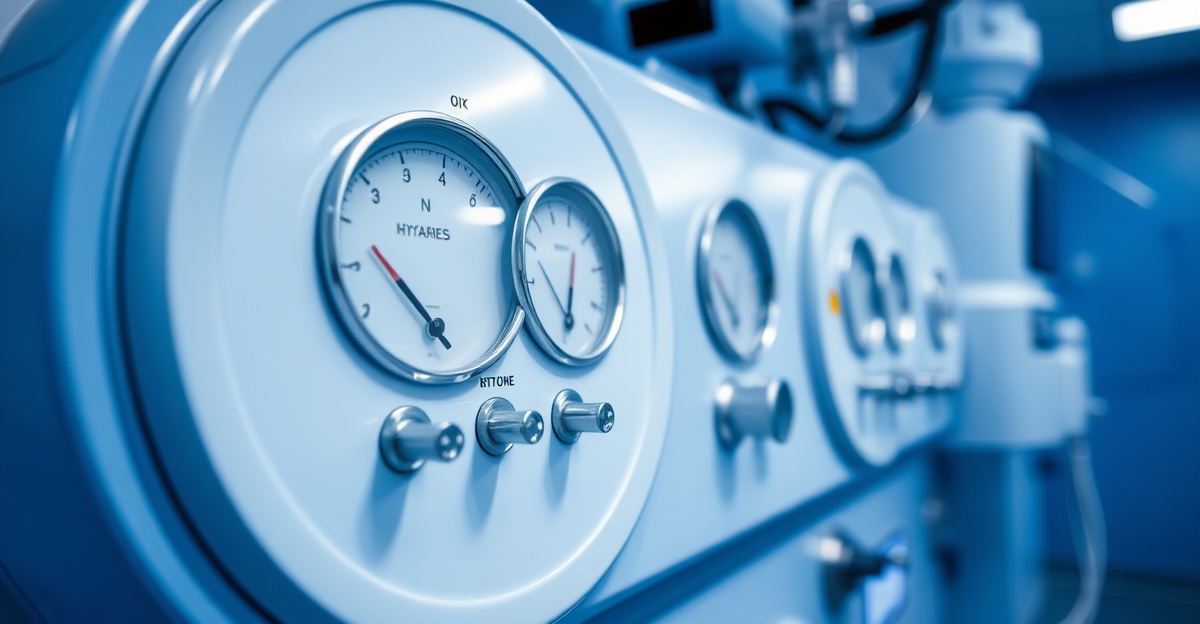
Research protocols for brain health generally use 60 sessions at 2.0 ATA, 90 minutes per session, five days per week over 12 weeks. This is the Efrati/Sagol protocol used in the only RCT showing significant cognitive effects in healthy aging.1 Hard-chamber facilities are required; soft chambers at 1.3 ATA have not been validated for cognitive enhancement in published research. You breathe 100% oxygen through a mask or hood while resting.
For a broader overview of sessions, see our HBOT sessions guide, and for related applications see HBOT for brain conditions, HBOT for brain injury, and HBOT for cognitive impairment. The strongest brain-injury dataset is summarized in our HBOT TBI and concussion data.
What are the limits of the evidence?
The findings are genuinely interesting but come with real caveats. The strongest human data comes almost entirely from a single research group at Tel Aviv University, and independent replication of the cognitive-enhancement results in healthy adults has not yet been published. The 2020 RCT, though well designed, enrolled only 63 participants and used a control condition rather than a true sham. Gains in attention and processing speed are real but are not the same as preventing dementia or reversing aging, and results in healthy older adults may not generalize to diagnosed cognitive conditions.
HBOT for general brain health is off-label and not covered by insurance. A 60-session course at a clinical facility typically costs $9,000 to $18,000 out of pocket. Anyone considering it should have a full medical evaluation and realistic expectations about what the research currently supports.
Who should not try HBOT?
HBOT is generally safe when administered by trained professionals, but it is not for everyone. Discuss your full medical history with your provider first.
Absolute contraindications include untreated pneumothorax (a collapsed lung), where pressure changes can be life-threatening, and certain chemotherapy drugs (bleomycin, cisplatin, doxorubicin, disulfiram) that can interact dangerously with high-oxygen environments.
Relative contraindications include upper respiratory infection or sinus congestion, seizure disorder, chronic obstructive pulmonary disease, high fever, a history of ear surgery, claustrophobia (which may call for a multiplace chamber), and pregnancy. Even without these, consult your physician before starting, especially if you take insulin, have an implanted device, or take other medications. For a full overview, see our HBOT side effects and risks guide.
Sources
- Hadanny A, Daniel-Kotovsky M, Suzin G, et al. Cognitive enhancement of healthy older adults using hyperbaric oxygen: a randomized controlled trial. Aging. 2020;12(13):13740-13761. DOI: 10.18632/aging.103571
- Shapira R, Gdalyahu A, Gottfried I, et al. Hyperbaric oxygen therapy alleviates vascular dysfunction and amyloid burden in an Alzheimer’s disease mouse model and in elderly patients. Aging. 2021;13(16):20935-20969. DOI: 10.18632/aging.203485
- Tal S, Hadanny A, Berkovitz N, et al. Hyperbaric oxygen may induce angiogenesis in patients suffering from prolonged post-concussion syndrome. Restor Neurol Neurosci. 2015;33(6):943-951. DOI: 10.3233/RNN-150585
- Gottfried I, Schottlender N, Ashery U. Hyperbaric oxygen treatment: from mechanisms to cognitive improvement. Biomolecules. 2021;11(10):1520. DOI: 10.3390/biom11101520
- Wang S, Chen B, Yuan M, et al. Enriched oxygen improves age-related cognitive impairment through enhancing autophagy. Front Aging Neurosci. 2024;16:1340117. DOI: 10.3389/fnagi.2024.1340117
- Hadanny A, Abbott S, Suzin G, et al. Hyperbaric oxygen can induce neuroplasticity and improve cognitive functions of patients with chronic anoxic brain damage. Restor Neurol Neurosci. 2015;33(4):471-486. DOI: 10.3233/RNN-150517
- Alashram AR, Padua E, Romagnoli C, Annino G. Hyperbaric oxygen therapy for cognitive impairments in patients with traumatic brain injury: a systematic review. Appl Neuropsychol Adult. 2022. DOI: 10.1080/23279095.2022.2041418
Medical Disclaimer
The content on BaricBoost.com is for informational purposes only and is not intended as a substitute for professional medical advice, diagnosis, or treatment. Always seek the advice of your physician or other qualified health provider with any questions you may have regarding a medical condition. Never disregard professional medical advice or delay in seeking it because of something you have read on this website.

Author
Seph Fontane Pennock is the founder of BaricBoost.com and Regenerated.com, a clinic directory for regenerative medicine serving 10,000+ providers across the United States. He previously built and sold PositivePsychology.com, which grew to 19 million users and became the largest evidence-based positive psychology resource on the web. Seph brings direct experience as an HBOT patient, having completed protocols at clinics across three continents while navigating mold illness, systemic inflammation, and autoimmune conditions. His treatment journey includes hyperbaric oxygen therapy, peptide protocols, NAD+ therapy, and consultations with specialists from Dubai to Cape Town to Mexico. This combination of entrepreneurial track record and lived patient experience shapes everything published on BaricBoost.com. Every article is grounded in peer-reviewed research, informed by real clinical encounters, and written for patients making high-stakes treatment decisions. Seph's focus is on bringing transparency, scientific rigor, and practical guidance to the hyperbaric oxygen therapy space.