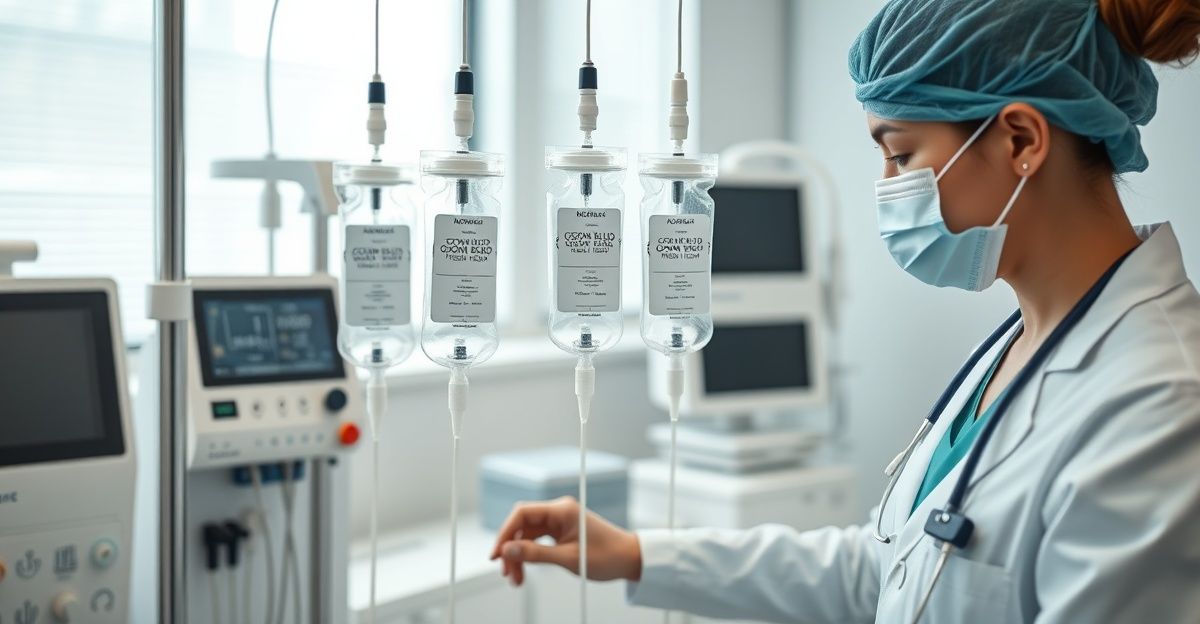
IV ozone therapy is a medical procedure where a small amount of your blood is drawn, mixed with ozone gas, and then returned to your body through an IV. The most common form is called major autohemotherapy (MAH), and it is one of the most widely practiced ozone treatments in integrative medicine clinics worldwide.
If you are new to ozone therapy, the concept of ozonating your blood can sound intimidating. This guide walks you through exactly what happens during a session, who performs it, what conditions it is used for, how much it costs, and what the safety profile looks like.
Key Takeaways
- IV ozone therapy (MAH) involves drawing blood, mixing it with ozone, and reinfusing it. The entire process takes 30 to 60 minutes.
- MAH stands for major autohemotherapy. “Auto” means your own blood; “hemo” means blood; “therapy” means treatment.
- It is used for chronic infections, autoimmune conditions, cardiovascular disease, chronic fatigue, and general health optimization.
- Sessions cost $150 to $400 each, and most protocols involve 6 to 20 sessions.
- IV ozone therapy must be performed by a trained medical professional in a clinical setting.
What Is Major Autohemotherapy (MAH)?
Major autohemotherapy is the clinical standard for IV ozone therapy. The name breaks down simply:
- Major: Distinguishes it from minor autohemotherapy (a smaller-volume version where ozonated blood is injected intramuscularly)
- Auto: Your own (blood)
- Hemo: Blood
- Therapy: Treatment
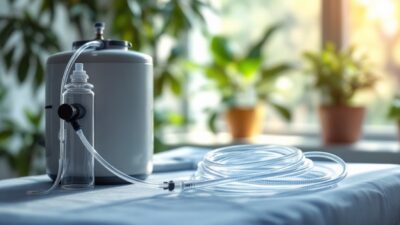
During MAH, 100 to 250 mL of your blood (about half a cup to one cup) is drawn into a sterile glass bottle or IV bag that contains an anticoagulant. Ozone gas at a specific concentration is then introduced into the bottle, where it mixes with your blood. The ozonated blood is then slowly reinfused back into your vein.
The entire process is a closed system, meaning your blood never contacts the open air. This maintains sterility throughout the procedure.
What Happens During a Session
Here is a step-by-step breakdown of a typical MAH session:
| Step | What Happens | Time |
|---|---|---|
| 1. IV access | A nurse or doctor inserts an IV line into a vein in your arm | 2 to 5 minutes |
| 2. Blood draw | 100 to 250 mL of blood flows into a sterile glass bottle with anticoagulant | 5 to 10 minutes |
| 3. Ozone mixing | Ozone gas (at 20 to 60 mcg/mL) is introduced into the bottle and gently mixed with blood | 2 to 5 minutes |
| 4. Reinfusion | The ozonated blood is slowly dripped back into your vein through the same IV line | 15 to 30 minutes |
| 5. Post-session | IV is removed, brief rest period. You can usually drive home immediately | 5 minutes |
Total session time is typically 30 to 60 minutes. Some clinics offer “10-pass” ozone therapy, which repeats the draw-ozonate-reinfuse cycle 10 times in a single session (using a hyperbaric ozone system). Ten-pass sessions take 60 to 90 minutes and deliver a much higher total ozone dose.
What Does It Feel Like?
Most patients report that MAH feels like a standard blood draw followed by a standard IV infusion. The ozone itself is not painful. Common experiences during and after a session include:
- During: Mild warmth or tingling during reinfusion. Some people feel nothing at all.
- Immediately after: Many patients report feeling energized, mentally clearer, or slightly lightheaded (temporary).
- Hours after: Increased energy is the most commonly reported effect. Some people feel tired if they are dealing with chronic infections (this can be a Herxheimer/die-off reaction).
“Most patients describe their first MAH session as anticlimactic. It feels like getting an IV drip. The effects are internal: better energy, clearer thinking, reduced inflammation over the following days.”
What Conditions Is IV Ozone Therapy Used For?
IV ozone therapy is used for a broad range of conditions in integrative and functional medicine. The most common include:
| Category | Conditions |
|---|---|
| Chronic infections | Lyme disease, chronic EBV, hepatitis B/C, herpes viruses, mold illness |
| Autoimmune | Rheumatoid arthritis, multiple sclerosis, lupus, Hashimoto’s |
| Cardiovascular | Peripheral artery disease, post-stroke recovery, atherosclerosis |
| Neurological | Chronic fatigue, fibromyalgia, brain fog, long COVID neurological symptoms |
| General health | Anti-aging, performance optimization, post-surgical recovery, detoxification |
It is important to note that IV ozone therapy is not FDA-approved for any specific condition in the United States. It is practiced under the umbrella of integrative medicine, and evidence levels vary by condition. For a comprehensive breakdown, see our guide on ozone blood therapy.
Who Performs IV Ozone Therapy?
IV ozone therapy must be performed by a licensed medical professional. Depending on the state, this may include:
- Medical doctors (MDs and DOs)
- Naturopathic doctors (NDs, in states where they have IV privileges)
- Nurse practitioners (NPs, under physician supervision)
- Registered nurses (RNs, under physician supervision)
Look for practitioners who have completed specific ozone therapy training through organizations like the American Academy of Ozonotherapy (AAO) or have trained under established ozone practitioners. Ozone therapy is not taught in standard medical school curricula, so specific training matters.
How Much Does IV Ozone Therapy Cost?
| Type | Cost Per Session | Typical Protocol |
|---|---|---|
| Standard MAH (single pass) | $150 to $300 | 10 to 20 sessions, 1 to 3x per week |
| 10-pass (hyperbaric MAH) | $800 to $1,500 | 6 to 10 sessions, 1 to 2x per week |
| Initial consultation | $150 to $400 | One-time |
Insurance does not cover IV ozone therapy in the US. Some patients use HSA or FSA funds with a letter of medical necessity from their practitioner.
Safety and Side Effects
IV ozone therapy has a strong safety record when performed correctly by trained practitioners. A review of over 5.5 million ozone therapy sessions in Germany found a complication rate of only 0.0007% (Jacobs, 1982).
Common side effects (mild, temporary):
- Fatigue or feeling “washed out” for a few hours (especially early in treatment)
- Mild Herxheimer reaction if treating chronic infections (temporary symptom flare from pathogen die-off)
- Slight bruising at the IV site
Rare risks:
- Air embolism (virtually eliminated with modern closed-system equipment)
- Hemolysis (destruction of red blood cells, prevented by proper ozone concentration dosing)
Contraindications include G6PD deficiency (a genetic enzyme disorder that makes red blood cells vulnerable to oxidative stress), active hyperthyroidism, acute alcohol intoxication, and pregnancy.
How to Find a Provider
Finding a qualified IV ozone therapy provider involves a few steps:
- Check practitioner training. Ask if they trained through the American Academy of Ozonotherapy, International Scientific Committee of Ozone Therapy (ISCO3), or under an experienced ozone practitioner.
- Ask about equipment. They should use a medical-grade ozone generator with precise concentration controls and a closed-system IV kit (not open-air methods).
- Confirm their experience. Ask how many MAH sessions they have performed and how long they have been offering ozone therapy.
- Look for integrative medicine credentials. Board certifications in integrative, functional, or naturopathic medicine are common among ozone practitioners.
IV Ozone vs. Other Ozone Methods
| Method | Systemic Effect | Requires Practitioner? | Cost Per Session |
|---|---|---|---|
| IV ozone (MAH) | Highest | Yes | $150 to $300 |
| 10-pass MAH | Very high | Yes | $800 to $1,500 |
| Rectal insufflation | ~80% of MAH | No (home use) | $5 to $10 (home) |
| Ozone sauna | Moderate | No (home use) | Varies |
The Bottom Line
IV ozone therapy (MAH) is a well-established procedure in integrative medicine that involves mixing your own blood with ozone and reinfusing it. Sessions take 30 to 60 minutes, feel similar to a standard IV drip, and cost $150 to $300 per session. It is used for chronic infections, autoimmune conditions, cardiovascular health, fatigue, and general optimization. While not FDA-approved, it has a strong safety record when performed by trained practitioners with proper equipment. If you are considering IV ozone, start by finding a practitioner with specific ozone therapy training and modern closed-system equipment.
References
- Bocci, V. (2011). Ozone: A New Medical Drug (2nd ed.). Springer. doi:10.1007/978-90-481-9234-2
- Jacobs, M.T. (1982). Untersuchung uber Zwischenfalle und typische Komplikationen in der Ozon-Sauerstoff-Therapie. OzoNachrichten, 1, 5.
- Smith, N.L., et al. (2017). Ozone therapy: an overview of pharmacodynamics, current research, and clinical utility. Medical Gas Research, 7(3), 212-219. doi:10.4103/2045-9912.215752
- Sagai, M., & Bocci, V. (2011). Mechanisms of action involved in ozone therapy: is healing induced via a mild oxidative stress? Medical Gas Research, 1(1), 29. doi:10.1186/2045-9912-1-29
- Elvis, A.M., & Ekta, J.S. (2011). Ozone therapy: a clinical review. Journal of Natural Science, Biology and Medicine, 2(1), 66-70. doi:10.4103/0976-9668.82319
Medical Disclaimer
The content on BaricBoost.com is for informational purposes only and is not intended as a substitute for professional medical advice, diagnosis, or treatment. Always seek the advice of your physician or other qualified health provider with any questions you may have regarding a medical condition. Never disregard professional medical advice or delay in seeking it because of something you have read on this website.

Author
Seph Fontane Pennock is the founder of BaricBoost.com and Regenerated.com, a clinic directory for regenerative medicine serving 10,000+ providers across the United States. He previously built and sold PositivePsychology.com, which grew to 19 million users and became the largest evidence-based positive psychology resource on the web. Seph brings direct experience as an HBOT patient, having completed protocols at clinics across three continents while navigating mold illness, systemic inflammation, and autoimmune conditions. His treatment journey includes hyperbaric oxygen therapy, peptide protocols, NAD+ therapy, and consultations with specialists from Dubai to Cape Town to Mexico. This combination of entrepreneurial track record and lived patient experience shapes everything published on BaricBoost.com. Every article is grounded in peer-reviewed research, informed by real clinical encounters, and written for patients making high-stakes treatment decisions. Seph's focus is on bringing transparency, scientific rigor, and practical guidance to the hyperbaric oxygen therapy space.