Rectal ozone insufflation is one of the most common forms of at-home ozone therapy, but doing it safely requires the right equipment, proper technique, and realistic expectations. This guide covers everything you need to know about setting up and performing rectal ozone therapy at home.
Key Takeaways
- A complete home rectal ozone setup costs $1,500-3,000 for quality medical-grade equipment.
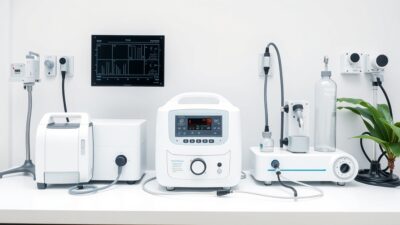
- You need an ozone generator, medical-grade oxygen tank, catheter kit, and silicone bag.
- The standard protocol uses 25-40 mcg/mL concentration at volumes of 100-250 mL, 2-3 times per week.
- Never inhale ozone gas. Ventilation is critical.
- Get professional training (4-8 supervised sessions) before starting at home.
What Is Rectal Ozone Insufflation?
Rectal ozone insufflation delivers a controlled mixture of ozone and oxygen gas into the colon via the rectum. The gas is absorbed through the intestinal lining and enters the bloodstream. Practitioners use this route because the colon has a large surface area and rich blood supply, making it an efficient absorption pathway.
Among the various ozone delivery methods, rectal insufflation is considered one of the safest and most accessible for home use. Unlike intravenous methods like major autohemotherapy, it does not require IV access or blood handling. Unlike clinic-based rectal ozone, the home version puts you in control of your own schedule and frequency.
Equipment You Need
A proper home ozone setup requires several components. Cutting corners on equipment quality is not worth the risk.
| Equipment | Purpose | Cost Range |
|---|---|---|
| Medical-grade ozone generator | Produces precise ozone concentrations | $1,000-2,000 |
| Oxygen tank (medical-grade) | Feeds the ozone generator | $150-300 + refills |
| Oxygen regulator (pediatric) | Controls flow rate (1/8-1/2 L/min) | $50-100 |
| Silicone ozone bag (500 mL) | Collects ozone/oxygen mixture | $20-40 |
| Rectal catheters (disposable) | Delivers gas into the rectum | $15-30 per box |
| Luer lock syringe (60 mL) | Pushes gas from bag into catheter | $5-10 |
| Water-based lubricant | Catheter insertion | $5-10 |
| Ozone destruct unit | Neutralizes excess ozone (safety) | $30-60 |
Total setup cost: $1,500-3,000, depending on the quality of the ozone generator. The generator is the most important investment. Cheap units produce inaccurate concentrations and break down quickly.
What Not to Buy
Do not use an oxygen concentrator instead of an oxygen tank. Concentrators produce only 90-95% oxygen, which means impure ozone output with potential nitrogen oxide byproducts. Medical-grade ozone generators require 99%+ pure oxygen from a tank.
Do not use industrial ozone generators. These are designed for water treatment or air purification and produce dangerously high concentrations with no medical-grade calibration.
Step-by-Step Protocol
Preparation
- Have a bowel movement before the session. An empty rectum allows better absorption. Some practitioners recommend a small warm water enema if needed.
- Set up your equipment in a well-ventilated room. Open a window or use a fan.
- Attach the oxygen tank to the regulator, connect the regulator to the ozone generator, and connect the generator output to the silicone bag.
- Set the ozone generator to your target concentration (typically 25-35 mcg/mL for beginners).
Filling the Bag
- Turn on the oxygen flow to 1/8 L/min.
- Power on the ozone generator and fill the silicone bag to your target volume (start with 100-150 mL).
- Turn off the generator and oxygen flow.
- Use the ozone within 20-30 minutes. Ozone degrades quickly in the bag.
Insufflation
- Lie on your left side with your right knee drawn toward your chest.
- Lubricate the catheter tip with water-based lubricant.
- Gently insert the catheter 2-4 inches (5-10 cm) into the rectum.
- Attach the filled syringe to the catheter and slowly push the gas in over 1-2 minutes. Do not rush.
- Remove the catheter and remain lying down for 20-30 minutes to allow absorption.
- You may feel mild fullness or the urge to pass gas. This is normal.
Concentration and Volume Settings
| Level | Concentration | Volume | Notes |
|---|---|---|---|
| Beginner | 20-25 mcg/mL | 100-150 mL | Start here for the first 2-4 weeks |
| Standard | 25-35 mcg/mL | 150-200 mL | Most common maintenance protocol |
| Advanced | 35-40 mcg/mL | 200-250 mL | Under practitioner guidance only |
Frequency: 2-3 sessions per week is standard. Some protocols call for daily sessions during an initial loading phase (first 2 weeks), then dropping to 2-3 times weekly. Do not exceed once per day.
“After professional training (typically 4-8 clinic sessions), patients routinely self-administer rectal insufflation at home with written protocols from their supervising practitioner.”
World Federation of Ozone Therapy guidelines
Critical Safety Rules
Never inhale ozone. Ozone is a lung irritant even in small amounts. Always work in a ventilated room and use a destruct unit to neutralize any gas that escapes. If you smell ozone (a sharp, chlorine-like smell), increase ventilation immediately.
Never use petroleum-based lubricants. Ozone reacts with petroleum products. Use only water-based lubricant.
Use only medical-grade oxygen. Industrial oxygen or ambient air fed through a generator produces harmful byproducts including nitrogen oxides.
Replace catheters after each use. Single-use disposable catheters prevent infection risk.
Stop if you experience pain, bleeding, or severe cramping. Mild fullness and gas are normal. Sharp pain is not.
When to Choose Clinic Treatment Instead
Home rectal ozone is appropriate for maintenance therapy and general wellness protocols. However, you should work with a clinic for:
- Your first several sessions (to learn proper technique under supervision)
- Active inflammatory bowel conditions (Crohn’s, ulcerative colitis flares)
- Conditions requiring higher-dose systemic ozone (IV methods like MAH or 10-pass)
- Any situation where your symptoms change or worsen
- If you need ozone combined with other therapies (prolozone injections, limb bagging)
Home insufflation is a complement to professional care, not a replacement for it. Start with a qualified ozone practitioner who can establish your protocol, train you on technique, and monitor your progress.
Cost Comparison: Home vs. Clinic
| Factor | Home Setup | Clinic Visits |
|---|---|---|
| Upfront cost | $1,500-3,000 | $0 |
| Per session cost | $3-5 (oxygen + supplies) | $75-200 |
| Break-even point | 15-30 sessions | N/A |
| Annual cost (2x/week) | $300-500 ongoing | $7,800-20,800 |
For anyone planning to do rectal ozone regularly, home setup pays for itself within a few months. The trade-off is the responsibility of proper technique and equipment maintenance.
The Bottom Line
Home rectal ozone insufflation is feasible, cost-effective, and relatively safe when done correctly. The non-negotiables are medical-grade equipment, proper training from a qualified practitioner, and strict adherence to safety protocols. Do not skip the supervised training phase. The equipment investment is modest compared to ongoing clinic costs, but the knowledge investment is what keeps you safe.
- Bocci V. Ozone: A New Medical Drug. 2nd ed. Springer; 2011. doi:10.1007/978-90-481-9234-2
- World Federation of Ozone Therapy. Review on Evidence Based Ozone Therapy. WFOT Scientific Advisory Committee. 2015.
- Elvis AM, Ekta JS. Ozone therapy: A clinical review. J Nat Sci Biol Med. 2011;2(1):66-70. doi:10.4103/0976-9668.82319
- Smith NL, Wilson AL, Gandhi J, et al. Ozone therapy: an overview of pharmacodynamics, current research, and clinical utility. Med Gas Res. 2017;7(3):212-219. doi:10.4103/2045-9912.215752
- Clavo B, Cespedes-Suarez J, Mendez C, et al. Ozone therapy in the management of persistent radiation-induced rectal bleeding in prostate cancer patients. Evid Based Complement Alternat Med. 2015;2015:480369. doi:10.1155/2015/480369
Medical Disclaimer
The content on BaricBoost.com is for informational purposes only and is not intended as a substitute for professional medical advice, diagnosis, or treatment. Always seek the advice of your physician or other qualified health provider with any questions you may have regarding a medical condition. Never disregard professional medical advice or delay in seeking it because of something you have read on this website.

Author
Seph Fontane Pennock is the founder of BaricBoost.com and Regenerated.com, a clinic directory for regenerative medicine serving 10,000+ providers across the United States. He previously built and sold PositivePsychology.com, which grew to 19 million users and became the largest evidence-based positive psychology resource on the web. Seph brings direct experience as an HBOT patient, having completed protocols at clinics across three continents while navigating mold illness, systemic inflammation, and autoimmune conditions. His treatment journey includes hyperbaric oxygen therapy, peptide protocols, NAD+ therapy, and consultations with specialists from Dubai to Cape Town to Mexico. This combination of entrepreneurial track record and lived patient experience shapes everything published on BaricBoost.com. Every article is grounded in peer-reviewed research, informed by real clinical encounters, and written for patients making high-stakes treatment decisions. Seph's focus is on bringing transparency, scientific rigor, and practical guidance to the hyperbaric oxygen therapy space.