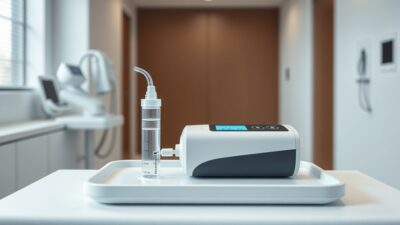
Ozone therapy introduces a controlled amount of ozone gas (O3) into the body to improve oxygen delivery, reduce inflammation, kill harmful microorganisms, and activate the body’s own antioxidant defenses. It does not add oxygen directly. Instead, it triggers a chain of biological responses that make your body better at using the oxygen it already has.
If you have heard about ozone therapy but are not sure what it actually does inside the body, this guide breaks it down in plain language. No medical degree required.
Key Takeaways
- Ozone therapy improves how your body delivers and uses oxygen at the cellular level.
- It kills bacteria, viruses, and fungi by oxidizing their cell walls.
- It reduces chronic inflammation by modulating the immune system (calming it down or ramping it up as needed).
- It activates your body’s own antioxidant production, including glutathione, the master antioxidant.
- These effects explain why ozone is used for such a wide range of health conditions.
What Is Ozone?
Ozone (O3) is a molecule made of three oxygen atoms. Regular oxygen (O2) has two. That extra oxygen atom makes ozone highly reactive, which is what gives it its therapeutic properties.
In nature, ozone is created when sunlight or lightning splits oxygen molecules apart, and the freed atoms recombine as O3. In medical settings, ozone is produced by passing medical-grade oxygen through an ozone generator that uses an electrical discharge to create the same reaction.
Ozone is unstable by nature. It wants to give up that extra oxygen atom, and when it does, it triggers a cascade of beneficial reactions in the body. That instability is not a weakness; it is the entire point.
Effect 1: Improves Oxygen Delivery
One of the most important things ozone does is improve how efficiently your red blood cells deliver oxygen to your tissues.
Here is how it works: when ozone contacts your blood (either directly through IV therapy or indirectly through rectal insufflation), it stimulates the production of a molecule called 2,3-DPG (2,3-diphosphoglycerate) inside red blood cells. 2,3-DPG causes hemoglobin to release oxygen more easily when blood reaches tissues that need it.
Think of it this way. Your red blood cells are delivery trucks carrying oxygen. Without ozone therapy, the trucks hold onto their cargo a little too tightly. After ozone therapy, the trucks drop off oxygen more efficiently at every stop.
This improved oxygen delivery is why many people feel more energetic, mentally sharper, and physically better after ozone sessions. Better tissue oxygenation supports everything from brain function to muscle recovery to wound healing (Bocci, 2011).
Effect 2: Kills Pathogens
Ozone is one of nature’s most powerful antimicrobial agents. It destroys bacteria, viruses, fungi, and parasites through a straightforward mechanism: it oxidizes their cell membranes.
Pathogenic organisms have much weaker defenses against oxidative stress than human cells do. When ozone contacts a bacterium or virus, it punches holes in the pathogen’s protective outer layer, causing it to break apart. Human cells, by contrast, have robust antioxidant systems (glutathione, SOD, catalase) that neutralize the oxidative stress before it causes damage.
“Ozone exploits the difference between human cells and pathogens. Our cells have antioxidant shields. Bacteria, viruses, and fungi do not. Ozone selectively destroys the invaders while leaving healthy cells intact.”
This selective antimicrobial action is why ozone is used for chronic infections, wound infections, dental infections, and gut dysbiosis. It is also why ozone has been effective against antibiotic-resistant bacteria and biofilm-protected infections that do not respond to conventional antibiotics.
Effect 3: Reduces Inflammation
Chronic inflammation is the underlying driver of most modern diseases, from heart disease to autoimmune conditions to neurodegeneration. Ozone therapy addresses inflammation through immune modulation.
When ozone enters the body at therapeutic doses, it influences the production of signaling molecules called cytokines. Specifically:
- It decreases pro-inflammatory cytokines like TNF-alpha, IL-6, and IL-1 beta
- It increases anti-inflammatory cytokines like IL-10
The net result is a shift away from chronic inflammation and toward a more balanced immune state. This is different from taking an anti-inflammatory drug, which simply suppresses one part of the inflammatory response. Ozone helps the immune system self-regulate, which is why its effects tend to be longer-lasting.
For people with autoimmune conditions, this is particularly relevant. Ozone does not suppress the immune system (which is what most autoimmune drugs do). Instead, it helps rebalance it, calming the overactive responses that drive autoimmune attacks while maintaining the immune system’s ability to fight actual infections.
Effect 4: Activates Your Antioxidant Defenses
This is the part that confuses most people. Ozone is an oxidant, so how can it improve antioxidant defenses?
The answer is a biological principle called hormesis: a small, controlled stress that makes the body stronger. When ozone creates a brief, mild oxidative stress, the body responds by ramping up its own antioxidant production. Specifically, ozone activates the Nrf2 pathway, which is the master switch for antioxidant gene expression.
After a single ozone session, your body produces more of these protective molecules:
| Antioxidant | What It Does |
|---|---|
| Glutathione | The body’s master antioxidant and primary detoxification molecule |
| Superoxide dismutase (SOD) | Neutralizes the most common free radicals in the body |
| Catalase | Breaks down hydrogen peroxide into water and oxygen |
| Heme oxygenase-1 (HO-1) | Protects cells from oxidative damage and has anti-inflammatory properties |
This upregulation lasts 24 to 72 hours after each session and builds cumulatively over a course of treatment. It is the reason ozone therapy benefits conditions driven by oxidative stress, including neurodegenerative diseases, cardiovascular disease, and chronic fatigue.
How Ozone Is Delivered
Ozone therapy is not a single procedure. There are several delivery methods, each suited to different conditions:
| Method | How It Works | Best For |
|---|---|---|
| Major autohemotherapy (MAH) | Blood is drawn, mixed with ozone, and returned via IV | Systemic conditions: infections, autoimmune, cardiovascular |
| Rectal insufflation | Ozone gas delivered to the colon via catheter | Gut health, systemic effects (most popular home method) |
| Topical / bagging | Ozone gas applied directly to wounds or skin | Wounds, skin infections, ulcers |
| Ozonated water | Ozone dissolved in water, used for drinking or rinsing | Gut health, dental infections, skin conditions |
| Ozone injection (prolozone) | Ozone injected into joints, muscles, or around nerves | Joint pain, disc herniation, musculoskeletal conditions |
| Ozone sauna | Ozone absorbed through the skin while in a steam cabinet | General health, detoxification support |
The delivery method determines how much ozone reaches systemic circulation and how much stays local. IV methods (MAH) and rectal insufflation provide the strongest systemic effects. Topical methods work best for localized issues.
What Ozone Does NOT Do
It is important to set realistic expectations:
- Ozone is not a cure for cancer. Some practitioners promote ozone as a cancer cure. There is no clinical evidence supporting this. Ozone may complement conventional cancer treatment (improving oxygenation, supporting immunity), but it is not a replacement.
- Ozone does not replace conventional medicine. For serious conditions, ozone therapy works best alongside standard medical care, not instead of it.
- Ozone effects are not immediate for chronic conditions. Most chronic health conditions require a series of sessions (10 to 20+) to see meaningful results. One session is unlikely to produce lasting change.
- Ozone is not safe for everyone. People with G6PD deficiency, active hyperthyroidism, or who are pregnant should not use ozone therapy.
Why It Is Used for So Many Conditions
If you look at the list of conditions people use ozone for, it might seem like snake oil. How can one therapy help with infections, autoimmune disease, heart disease, fatigue, wounds, and neurological conditions?
The answer is that ozone does not treat specific diseases. It improves fundamental biological processes that are relevant to almost every disease:
- Better oxygen delivery = every cell functions better
- Pathogen killing = infections clear faster
- Reduced inflammation = the root driver of most chronic disease improves
- Stronger antioxidant defenses = less cellular damage, better repair
These four effects are relevant whether you are dealing with Lyme disease, chronic fatigue, a diabetic wound, or cardiovascular disease. That is why ozone therapy appears across so many different treatment contexts.
For a deeper dive into how these mechanisms work at the molecular level, see our detailed article on ozone therapy.
The Bottom Line
Ozone therapy does four main things: it improves oxygen delivery to your tissues, kills harmful microorganisms, reduces chronic inflammation, and activates your body’s own antioxidant defenses. These are foundational biological processes, which is why ozone therapy shows up in treatment protocols for so many different conditions. It is not a miracle cure, and it works best as part of a comprehensive health plan. But for people dealing with chronic infections, inflammation-driven conditions, or impaired cellular function, ozone therapy addresses root-level biological processes that other treatments often miss.
References
- Bocci, V. (2011). Ozone: A New Medical Drug (2nd ed.). Springer. doi:10.1007/978-90-481-9234-2
- Sagai, M., & Bocci, V. (2011). Mechanisms of action involved in ozone therapy: is healing induced via a mild oxidative stress? Medical Gas Research, 1(1), 29. doi:10.1186/2045-9912-1-29
- Smith, N.L., et al. (2017). Ozone therapy: an overview of pharmacodynamics, current research, and clinical utility. Medical Gas Research, 7(3), 212-219. doi:10.4103/2045-9912.215752
- Elvis, A.M., & Ekta, J.S. (2011). Ozone therapy: a clinical review. Journal of Natural Science, Biology and Medicine, 2(1), 66-70. doi:10.4103/0976-9668.82319
- Bocci, V., & Valacchi, G. (2015). Nrf2 activation as target to implement therapeutic treatments. Frontiers in Chemistry, 3, 4. doi:10.3389/fchem.2015.00004
Medical Disclaimer
The content on BaricBoost.com is for informational purposes only and is not intended as a substitute for professional medical advice, diagnosis, or treatment. Always seek the advice of your physician or other qualified health provider with any questions you may have regarding a medical condition. Never disregard professional medical advice or delay in seeking it because of something you have read on this website.

Author
Seph Fontane Pennock is the founder of BaricBoost.com and Regenerated.com, a clinic directory for regenerative medicine serving 10,000+ providers across the United States. He previously built and sold PositivePsychology.com, which grew to 19 million users and became the largest evidence-based positive psychology resource on the web. Seph brings direct experience as an HBOT patient, having completed protocols at clinics across three continents while navigating mold illness, systemic inflammation, and autoimmune conditions. His treatment journey includes hyperbaric oxygen therapy, peptide protocols, NAD+ therapy, and consultations with specialists from Dubai to Cape Town to Mexico. This combination of entrepreneurial track record and lived patient experience shapes everything published on BaricBoost.com. Every article is grounded in peer-reviewed research, informed by real clinical encounters, and written for patients making high-stakes treatment decisions. Seph's focus is on bringing transparency, scientific rigor, and practical guidance to the hyperbaric oxygen therapy space.