10-pass ozone therapy delivers roughly 17 times more ozone than a standard major autohemotherapy (MAH) session. That intensity is the entire selling point. Clinics charge $500 to $900 per session for it. But does the higher dose actually translate to better clinical outcomes? The answer is more nuanced than most clinic marketing suggests.
This article breaks down the specific benefits claimed for 10-pass ozone therapy, what evidence exists for each, and when this premium treatment makes sense compared to standard MAH.
Key Takeaways
- 10-pass ozone therapy delivers approximately 140,000 mcg of ozone per session compared to roughly 8,000 mcg in standard MAH
- The strongest evidence-based benefit is improved mitochondrial function, documented in the Konig-Lahodny research
- Claims of deeper immune modulation and stronger antimicrobial effects are biologically plausible but lack robust clinical trial data
- Standard MAH has 70+ randomized controlled trials behind it. 10-pass has one mechanistic study
- The choice between 10-pass and MAH depends on condition severity, budget, and individual response
How 10-Pass Differs From Standard MAH
Standard MAH involves drawing about 200 mL of blood, mixing it with an ozone-oxygen gas mixture at a specific concentration, and reinfusing it. The total ozone dose is approximately 8,000 mcg. The procedure takes 30 to 60 minutes.
10-pass ozone therapy, developed by Dr. Johann Lahodny in Austria, uses a hyperbaric pressurized system (the Herrmann Hyper-Medozon device) to cycle blood through ozonation 10 times in a single session. Each pass processes approximately 200 mL of blood. The total volume treated is about 2,000 mL, and the total ozone dose reaches approximately 140,000 mcg.
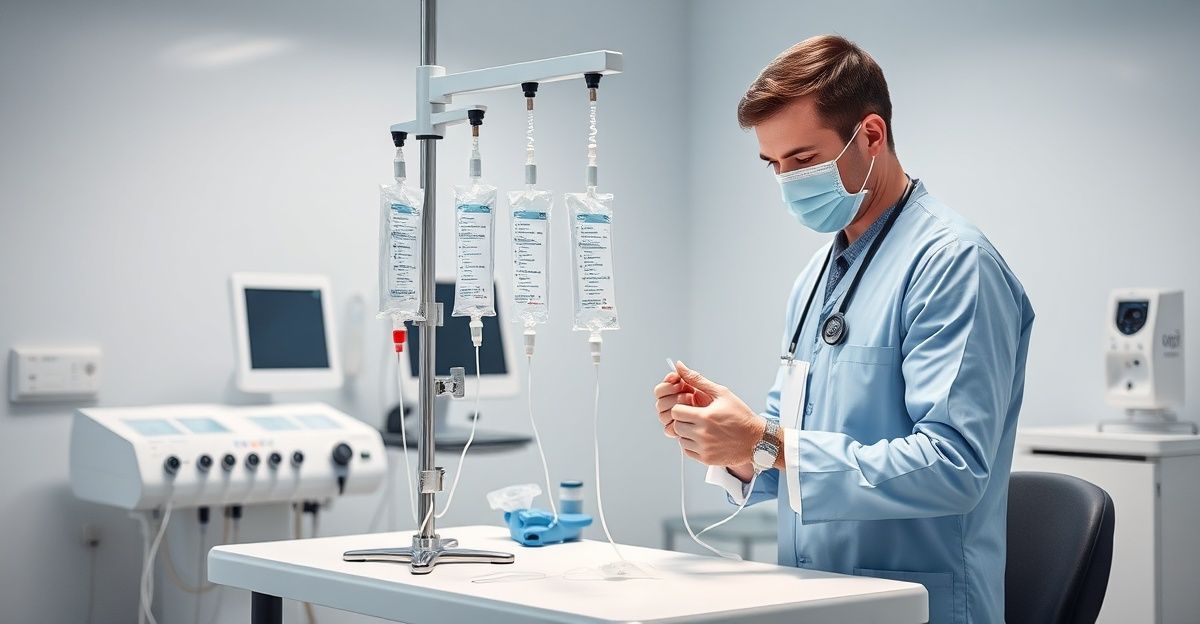
The session takes 60 to 90 minutes. An IV line is placed, and blood is drawn, ozonated under pressure, and returned in repeated cycles. The pressurized system allows higher ozone concentrations to dissolve into the blood than gravity-based MAH.
For a deeper look at what 10-pass ozone therapy involves, see our complete guide to 10-pass ozone therapy.
Claimed Benefits: What the Evidence Shows
1. Improved Mitochondrial Function
Evidence level: Moderate (one mechanistic study)
The strongest piece of evidence for 10-pass comes from research by Konig and Lahodny examining mitochondrial bioenergetics in peripheral blood mononuclear cells. The study found that mitochondrial reserve capacity significantly increased after just two sessions of high-dose ozone therapy (Konig et al., 2022, doi:10.1080/09546634.2022.2091101).
Mitochondrial reserve capacity is the difference between resting energy production and the maximum energy a cell can produce under stress. Higher reserve capacity means cells can better handle increased demands, whether from infection, inflammation, or physical exertion.
This finding is clinically relevant for patients with conditions involving mitochondrial dysfunction, including chronic fatigue syndrome, fibromyalgia, and post-infectious syndromes. However, it is a single study, and the results have not been independently replicated.
2. Deeper Immune Modulation
Evidence level: Theoretical (extrapolated from general ozone research)
Ozone therapy at any dose stimulates immune activity. It triggers the production of interferons, interleukins, and tumor necrosis factor. It activates natural killer cells and macrophages. The question is whether 10-pass produces a meaningfully stronger immune response than standard MAH.
The theoretical case is straightforward: more ozone exposure means more oxidative signaling, which means greater cytokine production and immune cell activation. Some clinicians report that patients with chronic infections (Lyme disease, Epstein-Barr virus, chronic mold illness) respond more dramatically to 10-pass than to standard MAH.
But no controlled study has directly compared immune markers after 10-pass versus MAH in the same patient population. The claims rest on clinical observation and biological plausibility rather than comparative data.
3. Stronger Antimicrobial Effect
Evidence level: Theoretical (dose-response extrapolation)
Ozone is a potent oxidizer that can damage the cell membranes of bacteria, viruses, and fungi. Higher ozone concentrations produce stronger antimicrobial effects in laboratory settings. The logic extends that 10-pass, delivering far more ozone systemically, would have a more powerful antimicrobial impact.
Clinicians treating chronic Lyme disease, co-infections, and persistent viral reactivations often prefer 10-pass for this reason. Anecdotal reports describe patients clearing infections that did not respond to standard MAH protocols.
“European ozone societies often regard multipass therapy skeptically, citing the absence of robust peer-reviewed evidence and the lack of clear advantage over well-documented MAH protocols.”
This reflects broader debates about optimal ozone dosing: the European ‘less is more’ approach versus the American ‘more is better’ philosophy.
4. Higher Oxidative Preconditioning
Evidence level: Theoretical (based on hormesis research)
Oxidative preconditioning is the process by which controlled oxidative stress upregulates the body’s antioxidant defenses. Ozone therapy works through this hormetic mechanism: a small stress triggers a disproportionately large protective response.
10-pass proponents argue that the higher ozone dose triggers stronger upregulation of superoxide dismutase (SOD), glutathione peroxidase, and catalase. If true, this would mean better protection against future oxidative damage from inflammation, toxins, or metabolic stress.
The ozone literature does support dose-dependent increases in antioxidant enzyme activity, but the dose-response curve is not linear. At some point, more ozone stops being beneficial and starts causing oxidative damage. The therapeutic window for 10-pass has not been rigorously defined.
5. Improved Circulation and Oxygen Delivery
Evidence level: Supported (consistent with general ozone research)
Ozone therapy improves red blood cell flexibility and increases 2,3-DPG levels, which enhances oxygen release from hemoglobin to tissues. These effects are well-documented for standard MAH and would logically be amplified with higher-dose protocols.
Patients with circulatory issues, diabetic complications, or tissue hypoxia may benefit from the enhanced oxygen delivery that 10-pass provides.
Who Reports the Best Results?
Based on clinical reports and practitioner consensus (not controlled trials), the patients who tend to report the most benefit from 10-pass versus standard MAH include:
- Chronic Lyme disease patients with persistent symptoms despite antibiotic treatment
- Chronic fatigue and fibromyalgia patients with suspected mitochondrial dysfunction
- Mold illness/CIRS patients needing immune modulation support during detoxification
- Post-viral syndrome patients (including long COVID) with lingering fatigue and inflammation
- Autoimmune patients seeking immune rebalancing rather than simple immune stimulation
- Cancer patients using ozone as adjunctive therapy alongside conventional treatment
Patients with mild or acute conditions may not need the intensity of 10-pass. Standard MAH, at a fraction of the cost, may produce equivalent results for less severe presentations.
10-Pass vs. Standard MAH: When Each Makes Sense
| Factor | Standard MAH | 10-Pass |
|---|---|---|
| Ozone dose | ~8,000 mcg | ~140,000 mcg |
| Session time | 30-60 minutes | 60-90 minutes |
| Cost per session | $150-$300 | $500-$900 |
| Published RCTs | 70+ | 0 (1 mechanistic study) |
| Best for | General wellness, mild-moderate conditions, maintenance | Complex chronic illness, treatment-resistant conditions |
| Accessibility | Widely available | Limited (requires specialized equipment) |
Limitations of the Evidence
The honest assessment is this: 10-pass ozone therapy has a strong theoretical basis, one supportive mechanistic study, and a large body of clinical anecdote. What it does not have is comparative clinical trial data.
No study has randomized patients to receive 10-pass versus standard MAH and measured clinical outcomes. Without this, it is impossible to know with certainty whether the higher dose produces proportionally better results or whether the additional cost is justified by superior outcomes.
The European ozone community’s skepticism is not unreasonable. Standard MAH has decades of research behind it. The assumption that “more ozone equals better results” oversimplifies a biological system where hormetic responses have optimal ranges, not linear dose-response curves.
Cost Considerations
A typical 10-pass protocol involves 6 to 10 sessions over several weeks, followed by periodic maintenance. At $500 to $900 per session, a full initial course costs $3,000 to $9,000. Monthly maintenance adds $500 to $900.
For comparison, a standard MAH protocol of 10 to 20 sessions costs $1,500 to $6,000. Monthly maintenance is $150 to $300.
Insurance does not cover either treatment in most cases. Patients should evaluate whether the additional cost of 10-pass is justified by their clinical response, ideally by trying a few sessions and assessing their improvement before committing to a full course.
The Bottom Line
10-pass ozone therapy delivers a substantially higher dose of ozone than standard MAH, and the mitochondrial research from Konig and Lahodny provides a legitimate mechanistic foundation for its use. But the gap between mechanistic plausibility and clinical proof remains wide.
For patients with complex, treatment-resistant conditions who have the budget, 10-pass may offer benefits beyond what standard MAH provides. For others, standard MAH with its far deeper evidence base and lower cost may be the more rational starting point. The best approach is often to start with standard MAH, assess response, and escalate to 10-pass if the clinical picture warrants it.
References
- Konig, J., et al. (2022). Ozone high dose therapy (OHT) improves mitochondrial bioenergetics in peripheral blood mononuclear cells. Journal of Dermatological Treatment, 33(4). doi:10.1080/09546634.2022.2091101
- Bocci, V. (2011). Ozone: A New Medical Drug. 2nd ed. Springer.
- Clavo, B., et al. (2018). Ozone Therapy as Adjuvant for Cancer Treatment: Is Further Research Warranted? Evidence-Based Complementary and Alternative Medicine. doi:10.1155/2018/7931849
- Sagai, M., & Bocci, V. (2011). Mechanisms of action involved in ozone therapy: is healing induced via a mild oxidative stress? Medical Gas Research, 1, 29.
- Lahodny, J. (2020). High-dose ozone therapy: 10-pass method. Clinical presentation, ISCO3 World Congress.
Medical Disclaimer
The content on BaricBoost.com is for informational purposes only and is not intended as a substitute for professional medical advice, diagnosis, or treatment. Always seek the advice of your physician or other qualified health provider with any questions you may have regarding a medical condition. Never disregard professional medical advice or delay in seeking it because of something you have read on this website.

Author
Seph Fontane Pennock is the founder of BaricBoost.com and Regenerated.com, a clinic directory for regenerative medicine serving 10,000+ providers across the United States. He previously built and sold PositivePsychology.com, which grew to 19 million users and became the largest evidence-based positive psychology resource on the web. Seph brings direct experience as an HBOT patient, having completed protocols at clinics across three continents while navigating mold illness, systemic inflammation, and autoimmune conditions. His treatment journey includes hyperbaric oxygen therapy, peptide protocols, NAD+ therapy, and consultations with specialists from Dubai to Cape Town to Mexico. This combination of entrepreneurial track record and lived patient experience shapes everything published on BaricBoost.com. Every article is grounded in peer-reviewed research, informed by real clinical encounters, and written for patients making high-stakes treatment decisions. Seph's focus is on bringing transparency, scientific rigor, and practical guidance to the hyperbaric oxygen therapy space.