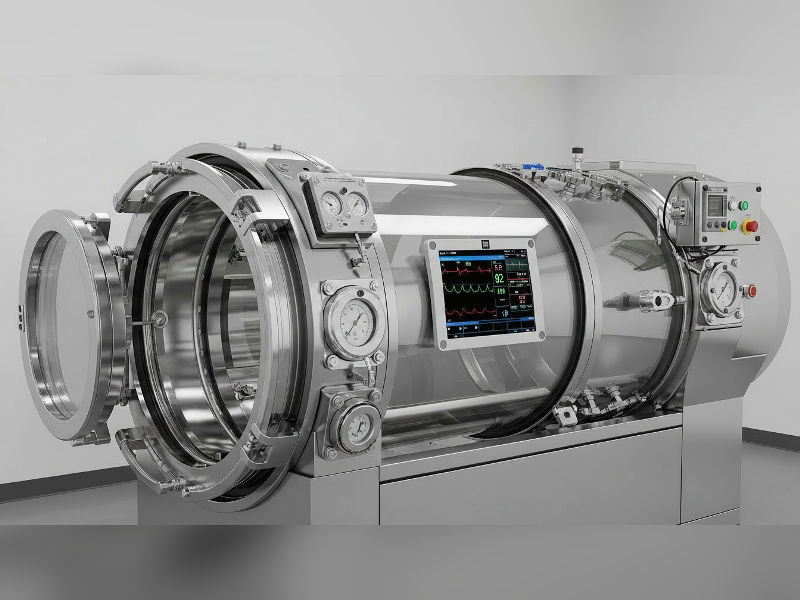
Hard hyperbaric chambers operate at 2.0 to 3.0 ATA with 100% medical-grade oxygen, delivering arterial oxygen levels of approximately 1,824 mmHg at 2.4 ATA.1 That is nearly eight times what a soft chamber achieves at 1.3 ATA with ambient air.2 This pressure gap determines whether treatment meets the thresholds required for the 14 conditions recognized by the Undersea and Hyperbaric Medical Society (UHMS).
Hard chambers are constructed from rigid materials. Steel, aluminum, or thick acrylic. Engineered to hold pressure safely for 20 to 30 years. They are the standard in hospitals and wound care centers. For serious clinical applications, nothing else qualifies.
What Sets Hard Chambers Apart
The defining feature is structural rigidity. Hard chambers are pressure vessels built to ASME PVHO-1 (Pressure Vessels for Human Occupancy) standards. The engineering gold standard for chambers holding human occupants under pressure.3 Soft chambers use flexible polyurethane or nylon bladders that cap out at 1.3 ATA. Hard chambers routinely operate at 2.0 to 3.0 ATA without material degradation.
At 2.0 ATA with 100% oxygen, the partial pressure of oxygen exceeds the bacteriostatic threshold of 1.5 ATA. The level at which oxygen actively suppresses bacterial and fungal growth.4 Soft chambers cannot reach this threshold regardless of what oxygen source is connected to them.
Pressure Capabilities and What They Mean Clinically
Pressure in hyperbaric medicine is measured in ATA (atmospheres absolute), not atm. At 2.4 ATA, the total ambient pressure forces additional oxygen to dissolve directly into plasma. Bypassing hemoglobin and reaching ischemic tissues that compromised circulation cannot otherwise oxygenate.1
| Pressure | O₂ Partial Pressure (100% O₂) | Primary Clinical Use |
|---|---|---|
| 1.3 ATA | 1.3 ATA | Soft chambers only. Altitude sickness clearance |
| 2.0 ATA | 2.0 ATA | Wounds, radiation injury, chronic osteomyelitis |
| 2.4 ATA | 2.4 ATA | Decompression illness, CO poisoning |
| 3.0 ATA | 3.0 ATA | Gas gangrene, necrotizing soft tissue infections |
A 2024 UHMS member survey found that 27.1% of respondents use 2.0 ATA exclusively, while 35% use 2.4 ATA as their standard. For radiation cystitis, diabetic foot ulcers, and chronic osteomyelitis, 68 to 75% of clinicians chose 2.0 ATA as their preferred treatment pressure.5
Monoplace vs Multiplace: Two Hard Chamber Configurations
Hard chambers come in two configurations. Monoplace chambers treat one patient in a 100% oxygen atmosphere. Multiplace chambers treat several patients simultaneously in compressed air, with oxygen delivered by mask or hood. And allow clinical staff to remain inside during treatment.
| Feature | Monoplace | Multiplace |
|---|---|---|
| Capacity | 1 patient | 2–20+ patients plus attendant |
| Chamber atmosphere | 100% O₂ | Compressed air. O₂ via mask or hood |
| Max pressure | Typically 3.0 ATA | Typically 6.0 ATA |
| Critical care capability | Limited. No inside attendant | Full ICU-level care possible |
| Cost | $50,000–$150,000 | $500,000–$2,000,000+ |
The multiplace chamber is better suited for critically ill patients because it allows ICU-grade equipment and trained staff inside the chamber during each session.
Lind, Diving and Hyperbaric Medicine, 2015
Safety and Regulatory Status
Clinical hard chambers are FDA-registered devices manufactured to ASME PVHO-1 and ISO 13485:2016 standards. Perry Baromedical (Riviera Beach, FL) and Sechrist Industries (Anaheim, CA) are the leading US manufacturers. No hyperbaric chamber is “FDA approved”. That distinction matters when evaluating marketing claims.
Adverse events at clinical pressures are well-characterized: temporary myopia (24.4%), ear barotrauma (14.9%), and confinement anxiety (11.5%) per UHMS survey data.5 Oxygen toxicity seizures are rare. One study of 1,000 sessions recorded zero events in the monoplace group versus one in the multiplace group, a non-significant difference.6
Choosing a Hard Chamber for Home or Clinic
For hospital and clinic use, Perry Baromedical and Sechrist set the standard. For serious home users, brands like OxyRevo (Space60, $42,999) and Zeugma reach 1.5 to 2.0 ATA in hard shell form. Below full clinical pressure but far above soft chamber thresholds. These carry CE certification, not FDA clearance.
If you need treatment for a UHMS-approved condition, a clinical-grade hard chamber at 2.0+ ATA is the only appropriate option. For general wellness at home, see our guide to the home hyperbaric chamber and portable hyperbaric chamber for a full comparison of what lower pressures deliver.
FAQs
What pressure do hard hyperbaric chambers operate at?
Clinical hard chambers operate at 2.0 to 3.0 ATA. Some home-use hard shell models reach 1.5 to 2.0 ATA. Soft chambers max out at 1.3 ATA.
Are hard chambers FDA approved?
No hyperbaric chamber is “FDA approved.” Clinical chambers are FDA-registered devices. Portable chambers are FDA-cleared via 510(k) for altitude sickness only.
What is the difference between monoplace and multiplace?
Monoplace chambers treat one patient in a 100% oxygen environment. Multiplace chambers treat several patients in compressed air with oxygen delivered via mask, allowing clinical staff inside during sessions.
References
References
- Burman F. Low-pressure fabric hyperbaric chambers. S Afr Med J. 2019;109(4). PMID: 31084683. https://doi.org/10.7196/SAMJ.2019.v109i4.13934
- Ke G et al. Assessment of oxygen saturation levels during mild hyperbaric chamber treatment. J Clin Intensive Care Med. 2018. https://doi.org/10.15761/jcis.1000108
- ASME PVHO-1. Safety Standard for Pressure Vessels for Human Occupancy. American Society of Mechanical Engineers. 2022.
- Sack RA et al. Transcutaneous oximetry in chronic ulcer patients at 1.4 vs 2.0 ATA. Undersea Hyperb Med. 2023. PMID: 38615347.
- Laspro M et al. HBOT regimens, treated conditions, and adverse effect profile: UHMS survey. Undersea Hyperb Med. 2024. PMID: 39821765.
- Bonnington S et al. Oxygen toxicity seizures during USN TT6 in monoplace chambers. Diving Hyperb Med. 2021. PMID: 34157732.
Medical Disclaimer
The content on BaricBoost.com is for informational purposes only and is not intended as a substitute for professional medical advice, diagnosis, or treatment. Always seek the advice of your physician or other qualified health provider with any questions you may have regarding a medical condition. Never disregard professional medical advice or delay in seeking it because of something you have read on this website.

Author
Seph Fontane Pennock is the founder of BaricBoost.com and Regenerated.com, a clinic directory for regenerative medicine serving 10,000+ providers across the United States. He previously built and sold PositivePsychology.com, which grew to 19 million users and became the largest evidence-based positive psychology resource on the web. Seph brings direct experience as an HBOT patient, having completed protocols at clinics across three continents while navigating mold illness, systemic inflammation, and autoimmune conditions. His treatment journey includes hyperbaric oxygen therapy, peptide protocols, NAD+ therapy, and consultations with specialists from Dubai to Cape Town to Mexico. This combination of entrepreneurial track record and lived patient experience shapes everything published on BaricBoost.com. Every article is grounded in peer-reviewed research, informed by real clinical encounters, and written for patients making high-stakes treatment decisions. Seph's focus is on bringing transparency, scientific rigor, and practical guidance to the hyperbaric oxygen therapy space.