Affiliate Disclosure
This article contains affiliate links. If you purchase through these links, we may earn a commission at no additional cost to you. This does not influence our evaluations or rankings.
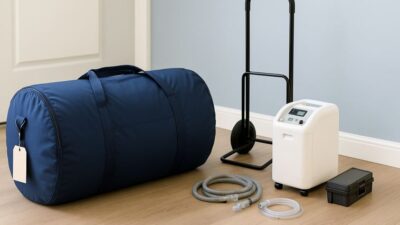
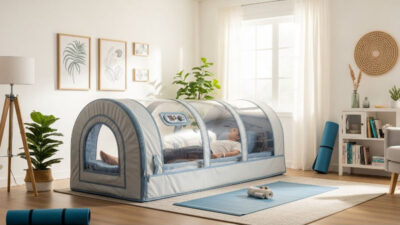
A home hyperbaric chamber is a Class II medical device that delivers pressurized air or supplemental oxygen at 1.3 ATA. The maximum for FDA-cleared portable models. It is not the same as clinical HBOT, which delivers 100% medical-grade oxygen at 2.0 to 3.0 ATA.1 Arterial oxygen at home chamber pressure is approximately 230 mmHg versus approximately 1,824 mmHg at clinical settings. An 8x difference.2
That said, a home chamber is a real device with a real physiological effect. This guide covers what it actually delivers, what to buy, and how to decide between purchasing, renting, and going to a clinic.
What Home HBOT Actually Delivers
Home chambers operate at 1.3 ATA with ambient air (approximately 21% O₂) or with a concentrator providing 90 to 95% O₂ via mask. At 1.3 ATA with ambient air, the South African Underwater and Hyperbaric Medical Association states plainly: the oxygen delivery is no greater than breathing supplemental oxygen by mask at sea-level pressure.2
- ~230 mmHg arterial oxygen
- FDA-cleared for altitude sickness
- No staff required, portable
- $4,000-$25,000 purchase price
- ~1,824 mmHg arterial oxygen
- 14 FDA-cleared medical indications
- Physician supervised
- $250-$500/session at clinic
Adding a concentrator improves this. But the effective dose still falls well below the 1.5 ATA bacteriostatic threshold and the 2.0+ ATA required for any UHMS-approved clinical indication. Home chambers are wellness devices, not clinical treatment devices.
FDA Status and What It Means
Three brands hold FDA 510(k) clearance for home hyperbaric chambers: OxyHealth, Summit to Sea, and Newtowne Hyperbarics. “FDA cleared” means the device is substantially equivalent to a previously cleared device for a specific indication. In this case, altitude sickness. It is not the same as “FDA approved” and does not validate any therapeutic claim beyond altitude sickness.3
Every other chamber brand sold online. Through Amazon, Alibaba, or international distributors. Lacks this clearance. CE certification (the European standard) is a separate regulatory framework and does not satisfy FDA requirements.
Home Chamber Buying Guide
| Budget | Best Option | Price | FDA | Pressure |
|---|---|---|---|---|
| Under $5,000 | Newtowne C4-27 or Summit to Sea Shallow Dive | $4,000–$4,495 | Yes | 1.3 ATA |
| $5,000–$9,000 | Summit to Sea The Dive | ~$6,500–$8,500 | Yes | 1.3 ATA |
| $9,000–$12,000 | OxyRevo Apex32 | $8,499 | No (CE) | 1.5 ATA |
| $12,000–$25,000 | OxyHealth Vitaeris 320 | ~$18,000–$23,000 | Yes | 1.3 ATA |
| $25,000+ | OxyRevo Space60 | $42,999 | No (CE) | 2.0 ATA |
A $6,000 home chamber breaks even vs clinic visits after 12–30 sessions. But it delivers 1.3 ATA with air. Not 2.0 ATA with 100% O₂. You’re buying convenience and unlimited access, not equivalent treatment.
Space Requirements
| Chamber Diameter | Floor Space Needed | Best For |
|---|---|---|
| 27″ | 4 × 8 ft | Single user, small rooms |
| 32–34″ | 5 × 9 ft | Single user with comfort |
| 40″ | 5 × 10 ft | Two users simultaneously |
| 54–60″ | 6 × 10 ft | Family use |
Buy, Rent, or Use a Clinic?
Buy a home chamber if you plan to use it three or more times per week for months, want wellness or recovery benefits with unlimited access, or have already completed clinical HBOT and want home maintenance sessions.
Rent instead if you are trying HBOT for the first time or need short-term use. Rentals run $300 to $700 per month for soft chambers.
Go to a clinic if you have a specific medical condition requiring 2.0+ ATA, need a UHMS-approved indication treated, or require 100% medical oxygen delivery. See the hospital hyperbaric chamber guide for clinical options.
What Are the Side Effects and Risks?
Home chambers at 1.3 ATA are safe for most adults. A 2023 study at 1.45 ATA found adverse events in 7.1% of sessions, with all barotrauma being subjective earache and zero eardrum damage.4 Main contraindications: untreated pneumothorax, active congestion or respiratory infections, pregnancy, and certain medications (doxorubicin, bleomycin, cisplatin). Consult a physician before use.
For more on available brands, see the portable hyperbaric chamber guide. For understanding the pressure difference between home and clinical units, see the hard shell vs soft shell hyperbaric chamber comparison.
FAQs
Is a home hyperbaric chamber as effective as a clinic?
No. Home chambers deliver 1.3 ATA with air. Clinical chambers deliver 2.0 to 3.0 ATA with 100% oxygen. The oxygen delivery difference is approximately 8x.
What conditions can a home chamber treat?
FDA clearance covers altitude sickness only. All other uses are off-label. For diagnosed medical conditions, clinical HBOT at a proper facility is the appropriate choice.
Do I need a prescription for a home chamber?
Technically no for altitude sickness-cleared devices. Reputable sellers recommend physician consultation regardless.
References
References
- UHMS Indications for Hyperbaric Oxygen Therapy. 14th edition. 2021. uhms.org
- Burman F. Low-pressure fabric hyperbaric chambers. S Afr Med J. 2019;109(4). PMID: 31084683. https://doi.org/10.7196/SAMJ.2019.v109i4.13934
- FDA 510(k) clearance K051759. Newtowne Hyperbarics. accessdata.fda.gov
- Monge G et al. Safety of HBOT and evaluation of associated clinical parameters. Int J Transl Med Res Public Health. 2023. https://doi.org/10.21106/ijtmrph.430
- Sack RA et al. Transcutaneous oximetry in chronic ulcer patients at 1.4 vs 2.0 ATA. Undersea Hyperb Med. 2023. PMID: 38615347.
Medical Disclaimer
The content on BaricBoost.com is for informational purposes only and is not intended as a substitute for professional medical advice, diagnosis, or treatment. Always seek the advice of your physician or other qualified health provider with any questions you may have regarding a medical condition. Never disregard professional medical advice or delay in seeking it because of something you have read on this website.

Author
Seph Fontane Pennock is the founder of BaricBoost.com and Regenerated.com, a clinic directory for regenerative medicine serving 10,000+ providers across the United States. He previously built and sold PositivePsychology.com, which grew to 19 million users and became the largest evidence-based positive psychology resource on the web. Seph brings direct experience as an HBOT patient, having completed protocols at clinics across three continents while navigating mold illness, systemic inflammation, and autoimmune conditions. His treatment journey includes hyperbaric oxygen therapy, peptide protocols, NAD+ therapy, and consultations with specialists from Dubai to Cape Town to Mexico. This combination of entrepreneurial track record and lived patient experience shapes everything published on BaricBoost.com. Every article is grounded in peer-reviewed research, informed by real clinical encounters, and written for patients making high-stakes treatment decisions. Seph's focus is on bringing transparency, scientific rigor, and practical guidance to the hyperbaric oxygen therapy space.
Why Trust Our Evaluations
Our rankings are based on hands-on testing, published clinical data, and verified manufacturer specifications. We apply the same criteria to every product regardless of affiliate status. Editorial Process · Evaluation Methodology