Intra-articular ozone injections for TMJ disorders have shown promise in small trials. In a randomized study of 60 patients with TMJ disc displacement, 87% of those given ozone gas injections either fully recovered (37%) or improved (50%), outperforming drug therapy (Daif, 2012). A 2026 systematic review of five randomized trials found ozone consistently reduced TMJ pain and improved jaw movement (Macek et al., 2026). The evidence is early but points one direction.
What is TMJ dysfunction?
The temporomandibular joint connects the jawbone to the skull and is one of the most complex joints in the body. TMJ disorders (TMD) cover a range of conditions affecting the joint, muscles, and surrounding structures. Symptoms include:
- Pain or tenderness in the jaw, especially when chewing
- Clicking, popping, or grinding when opening or closing the mouth
- Limited range of motion or locking of the jaw
- Headaches, earaches, and facial pain
- Difficulty chewing or a sudden uncomfortable bite
Causes range from disc displacement and osteoarthritis within the joint to muscle tension, bruxism, and trauma. Many cases involve inflammation of the joint capsule and synovial membrane, which is the target ozone injections aim at.
What are the limits of conventional TMJ treatments?
| Treatment | How It Works | Limitations |
|---|---|---|
| Oral splints/night guards | Reduce clenching forces and reposition the jaw | Address the muscle component only; do not treat joint pathology |
| NSAIDs/muscle relaxants | Reduce inflammation and muscle spasm | Temporary relief; GI side effects with long-term use |
| Physical therapy | Stretching, manual therapy, posture correction | Requires ongoing commitment; less effective for structural issues |
| Corticosteroid injection | Strong anti-inflammatory effect in the joint | Cartilage degradation with repeated use; temporary |
| Arthrocentesis | Joint lavage to remove inflammatory debris | Invasive; requires sedation; not always effective |
| Arthroscopy/open surgery | Repair or replace damaged joint structures | Significant risk; long recovery; last resort |
The gap between conservative measures (splints, medication, physical therapy) and surgery is where ozone injections are being explored.
How do ozone injections work for TMJ?
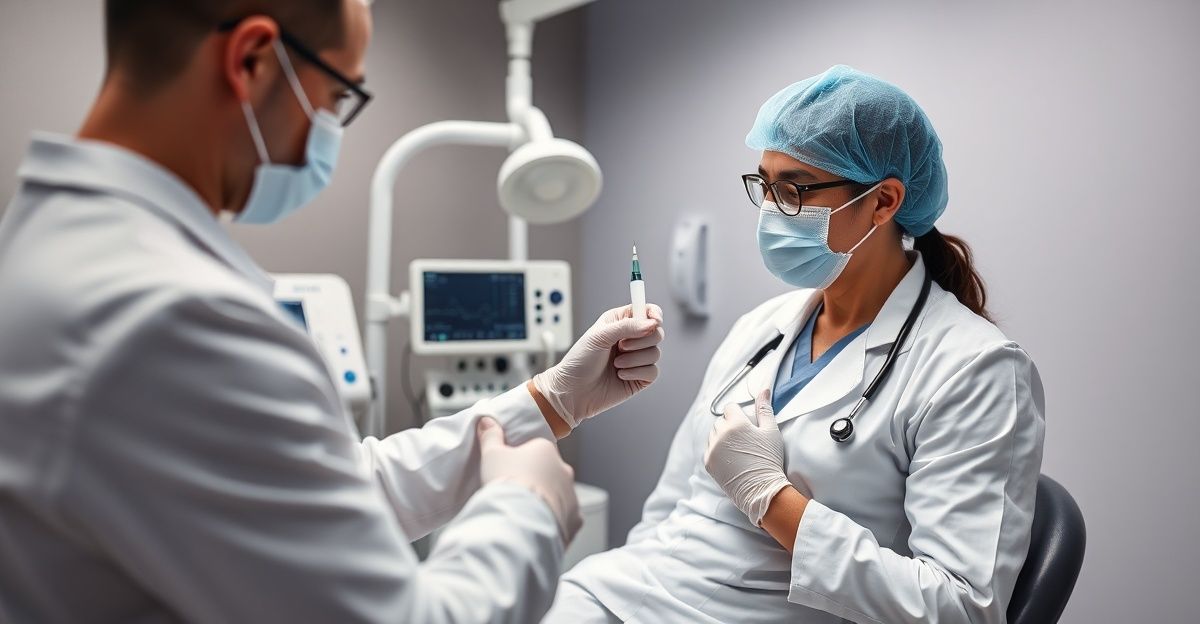
The procedure injects a small volume (1 to 3 mL) of ozone-oxygen gas at 10 to 30 mcg/mL directly into the joint space, under local anesthesia and often with ultrasound or fluoroscopic guidance for accurate needle placement. It takes 15 to 30 minutes on an outpatient basis. Most patients receive 1 to 3 injections spaced 1 to 2 weeks apart, and some protocols combine ozone with hyaluronic acid or PRP.
Proposed mechanisms include:
- Anti-inflammatory: Ozone modulates NF-kB signaling and reduces pro-inflammatory cytokines (IL-1beta, TNF-alpha) in the joint
- Analgesic: Pain reduction through modulation of inflammatory mediators
- Improved lubrication: Ozone may stimulate synovial cells to produce hyaluronic acid
- Cartilage protection: Nrf2 activation upregulates antioxidant enzymes that protect cartilage from oxidative damage (Sagai and Bocci, 2011)
Unlike corticosteroid injections, which provide temporary relief but can degrade cartilage over repeated use, ozone injections are proposed to reduce inflammation while potentially protecting joint structures. For a small, complex joint like the TMJ, that distinction is part of the appeal, though the cartilage-protection claim rests mainly on laboratory and knee-joint data rather than TMJ trials.
Do ozone injections actually work for TMJ?
From knee osteoarthritis, the strongest evidence base: A 2018 meta-analysis of randomized trials found that intra-articular oxygen-ozone injections reduced pain and improved function in knee OA, performing comparably to hyaluronic acid (Li et al., 2018). Because ozone’s action on an inflamed synovial joint should be similar across joints, this knee data is the main reason clinicians consider it for the TMJ.
TMJ-specific studies:
- Daif (2012) randomized 60 patients with TMJ disc displacement to ozone gas injection (2 mL, 10 mcg/mL, twice weekly for 3 weeks) or drug therapy. In the ozone group, 87% recovered or improved on Helkimo’s dysfunction index, well above the drug group (Daif, 2012).
- A 2026 systematic review pooled five randomized controlled trials (230 patients) of intra-TMJ ozone injection at 10 to 30 mcg/mL. Every included trial reported reduced pain and improved mandibular mobility, though the review rated overall certainty as low and called for larger trials (Macek et al., 2026).
The evidence is encouraging but limited by small samples, variable blinding, and short follow-up. Larger, longer trials are still needed to confirm how durable the benefit is.
How much do TMJ ozone injections cost?
| Procedure | Typical Cost | Sessions Needed |
|---|---|---|
| TMJ ozone injection | $200 to $500 per injection | 1 to 3 |
| TMJ corticosteroid injection | $300 to $600 per injection | 1 to 3 (limited by cartilage risk) |
| Arthrocentesis | $1,500 to $3,000 | 1 to 2 |
| TMJ arthroscopy | $5,000 to $15,000 | 1 |
Ozone injections are not covered by insurance for TMJ. Even so, the relatively low per-session cost and small number of sessions make it one of the more affordable interventional options for someone stuck between conservative care and surgery.
Who is a good candidate?
Ozone injections for TMJ may be worth considering if you have imaging-confirmed joint pathology (disc displacement or osteoarthritis), have not responded to conservative treatment, want to avoid or delay surgery, cannot tolerate repeated corticosteroid injections, or have signs of active joint inflammation. The procedure is less useful for purely muscular TMJ pain (myofascial pain syndrome), where physical therapy, trigger-point work, and ozone for joint pain elsewhere are not the right fit.
Finding a qualified provider
TMJ ozone injections require specific skill. Look for a practitioner trained in both TMJ anatomy and ozone therapy (oral surgeons, maxillofacial specialists, or experienced integrative dentists), image-guided injection capability, medical-grade ozone equipment with precise concentration control, and willingness to coordinate with your existing TMJ specialist. Review the general ozone therapy safety guidance before proceeding.
The evidence in one line
Ozone injections for TMJ are a minimally invasive, affordable option that sits between conservative care and surgery. The knee osteoarthritis data is reasonably strong, and the TMJ-specific data, while early, consistently points to reduced pain and better jaw movement. For patients stuck between splints and surgery, a trial of 1 to 3 ozone injections may be a reasonable next step, provided the clinician knows both the joint and the technique.
Sources
- Daif ET. Role of intra-articular ozone gas injection in the management of internal derangement of the temporomandibular joint. Oral Surgery, Oral Medicine, Oral Pathology and Oral Radiology, 2012;113(6):e10-e14. doi:10.1016/j.tripleo.2011.08.006
- Macek W, Checinski M, Hop A, et al. Intra-articular ozone injections for temporomandibular joint disorders: a systematic review. Journal of Clinical Medicine, 2026;15(8):2955. doi:10.3390/jcm15082955
- Li LY, Qi J, Zhang P, et al. Intra-articular oxygen-ozone versus hyaluronic acid in knee osteoarthritis: a meta-analysis of randomized controlled trials. International Journal of Surgery, 2018;58:75-86. doi:10.1016/j.ijsu.2018.08.007
- Sagai M, Bocci V. Mechanisms of action involved in ozone therapy: is healing induced via a mild oxidative stress? Medical Gas Research, 2011;1:29. doi:10.1186/2045-9912-1-29
Medical Disclaimer
The content on BaricBoost.com is for informational purposes only and is not intended as a substitute for professional medical advice, diagnosis, or treatment. Always seek the advice of your physician or other qualified health provider with any questions you may have regarding a medical condition. Never disregard professional medical advice or delay in seeking it because of something you have read on this website.

Author
Seph Fontane Pennock is the founder of BaricBoost.com and Regenerated.com, a clinic directory for regenerative medicine serving 10,000+ providers across the United States. He previously built and sold PositivePsychology.com, which grew to 19 million users and became the largest evidence-based positive psychology resource on the web. Seph brings direct experience as an HBOT patient, having completed protocols at clinics across three continents while navigating mold illness, systemic inflammation, and autoimmune conditions. His treatment journey includes hyperbaric oxygen therapy, peptide protocols, NAD+ therapy, and consultations with specialists from Dubai to Cape Town to Mexico. This combination of entrepreneurial track record and lived patient experience shapes everything published on BaricBoost.com. Every article is grounded in peer-reviewed research, informed by real clinical encounters, and written for patients making high-stakes treatment decisions. Seph's focus is on bringing transparency, scientific rigor, and practical guidance to the hyperbaric oxygen therapy space.