Over 280 million people worldwide have depression, and roughly one-third do not respond adequately to conventional antidepressants. Ozone therapy targets neuroinflammation and oxidative stress, two mechanisms increasingly linked to treatment-resistant depression. In animal models, ozone modulates brain cytokines and oxidative stress, but not in any human trial. The human evidence is essentially absent: no published randomized controlled trials have tested ozone therapy for depression.
This article covers how ozone therapy is proposed to work for depression, what the current evidence shows, and how it compares to oxygen therapy for depression, including hyperbaric oxygen therapy (HBOT).
How is inflammation linked to depression?
The connection between inflammation and depression is well established in psychiatric research. Patients with major depressive disorder consistently show elevated inflammatory markers, including C-reactive protein, interleukin-6, and tumor necrosis factor-alpha. A meta-analysis of cytokine studies found these markers reliably raised in depressed patients compared with controls (Dowlati et al., 2010).
Inflammation reaches the brain through several pathways:
- Tryptophan diversion. Inflammation activates indoleamine 2,3-dioxygenase (IDO), which diverts tryptophan away from serotonin production and toward kynurenine, a neurotoxic metabolite.
- Blood-brain barrier disruption. Chronic inflammation increases barrier permeability, letting peripheral inflammatory signals reach the brain.
- Microglial activation. Neuroinflammation activates the brain’s immune cells, which release cytokines that impair neuroplasticity.
- Reduced BDNF. Inflammation suppresses brain-derived neurotrophic factor, a protein central to neuroplasticity and mood regulation.
This framework is the basis for the proposed use of ozone therapy in depression: if ozone reduces systemic inflammation, the downstream effects on the brain could in theory ease depressive symptoms.
How might ozone therapy affect depression?
Ozone’s proposed mechanisms for depression center on inflammation and oxygenation. When delivered at controlled therapeutic doses, ozone triggers a mild, transient oxidative signal that activates the Nrf2 pathway and upregulates the body’s antioxidant enzymes (Bocci and Valacchi, 2015). In multiple sclerosis patients, medical ozone was shown to promote Nrf2 activation and reduce oxidative stress and pro-inflammatory cytokines (Delgado-Roche et al., 2017).
| Mechanism | How it works | Relevance to depression |
|---|---|---|
| Anti-inflammatory modulation | Activates the Nrf2 pathway, upregulates antioxidant enzymes, reduces NF-kB-driven inflammation | May reduce the systemic inflammation linked to depression |
| Improved oxygenation | Increases 2,3-DPG in red blood cells, improving oxygen release to tissue including the brain | Brain hypoperfusion is observed in some depressed patients |
| Oxidative preconditioning | Low-dose oxidative stress trains cells to handle future oxidative challenges | May protect neurons from oxidative damage implicated in depression |
| Mitochondrial support | May improve mitochondrial function and ATP production | Mitochondrial dysfunction is increasingly linked to treatment-resistant depression |
What does the research say?
The evidence for ozone therapy in depression is limited to preclinical studies and indirect clinical observation:
- Animal models. In rodent models of depression, ozone exposure has reduced neuroinflammation markers and improved depression-like behaviors, such as immobility time in forced-swim tests. These provide mechanistic plausibility but do not translate directly to human outcomes.
- Indirect clinical evidence. Patients receiving ozone for other conditions sometimes report mood improvement. These reports are anecdotal and confounded by improvement in the primary condition.
- No human trials. As of the current literature, no published randomized controlled trials have tested ozone therapy for major depressive disorder, bipolar depression, or treatment-resistant depression.
The neuroinflammation hypothesis provides a plausible rationale for ozone in depression, but a plausible mechanism and a proven clinical benefit are different things. Until human trials exist, ozone for depression remains theoretical.
Ozone therapy or HBOT: which has better evidence for depression?
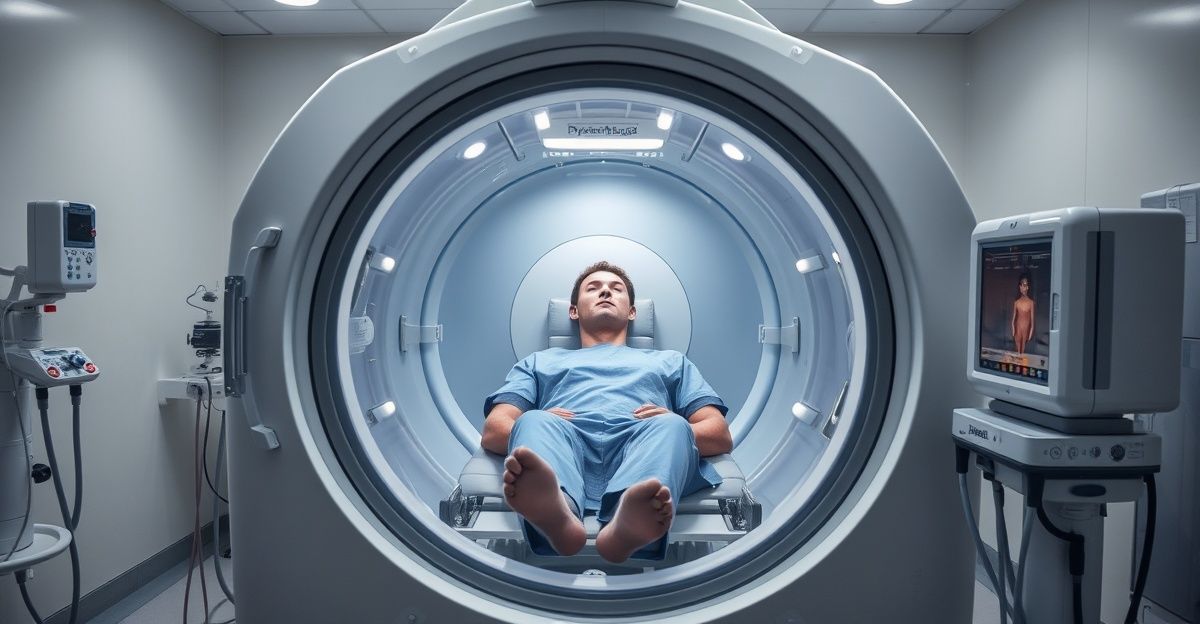
HBOT delivers 100% oxygen at increased atmospheric pressure. Both therapies aim to improve oxygenation and reduce inflammation, but HBOT has a meaningfully stronger evidence base for depression, mostly in depression that follows stroke or brain injury.
| Factor | Ozone Therapy | HBOT |
|---|---|---|
| Human clinical trials for depression | None published | Multiple, including sham-controlled RCTs |
| Strongest evidence | Animal models only | Post-stroke and post-TBI depression (RCT data) |
| Biomarker evidence | None in a depression context | BDNF increases correlated with symptom improvement |
| Cost per session | $100 to $300 | $200 to $400 |
| Typical protocol | 10 to 20 sessions (no established protocol) | 20 to 40 sessions (emerging protocols from trials) |
| FDA status for depression | Not approved | Not approved |
A 2026 sham-controlled randomized trial found that HBOT reduced depression scores in post-stroke patients, with improvement correlated to increases in brain-derived neurotrophic factor (Tang et al., 2026). A 2026 systematic review in the World Journal of Psychiatry concluded that HBOT reduced depressive symptoms across the trials it examined, while calling the overall evidence base early and heterogeneous (Ahsan et al., 2026). Ozone therapy has no comparable human evidence for depression.
What does ozone for depression cost?
Ozone therapy for depression is not covered by insurance. Out-of-pocket costs vary by modality:
- Major autohemotherapy (MAH): $150 to $300 per session
- Rectal insufflation: $75 to $150 per session
- IV ozone: $200 to $400 per session
- 10-pass ozone: $750 to $1,500 per session
A course of 10 to 20 sessions would run $1,000 to $6,000 depending on modality and frequency. There are no established dose-response data or standardized protocols for depression, so plans vary entirely by practitioner.
Is ozone therapy safe for depression?
Ozone carries specific risks depending on delivery. It should never be inhaled directly, as it is a potent respiratory irritant. IV ozone carries a rare but serious risk of air embolism. MAH and rectal insufflation are generally well tolerated when performed by trained practitioners; the general ozone therapy protocols page covers dosing and delivery in detail.
For anyone with depression, the most important safety point is not to substitute ozone for evidence-based care. Continue prescribed psychiatric medication and do not stop antidepressants abruptly, which can trigger withdrawal and relapse. The same caution applies to ozone therapy for PTSD and other mental-health uses where human data is thin.
The evidence in one line
Ozone therapy for depression has a plausible biological rationale built on the neuroinflammation hypothesis, but no human clinical trials support it. The mechanisms are real: ozone modulates inflammation, improves oxygenation, and activates antioxidant defenses. Whether that translates into meaningful symptom relief is unknown. If you are drawn to oxygen-based approaches, HBOT for depression has the stronger evidence base, especially for depression secondary to stroke or brain injury. For primary depression, psychotherapy, antidepressants, exercise, and options like ketamine and TMS remain first line.
Sources
- Dowlati Y, Herrmann N, Swardfager W, et al. A meta-analysis of cytokines in major depression. Biological Psychiatry, 2010;67(5):446-457. doi:10.1016/j.biopsych.2009.09.033
- Bocci V, Valacchi G. Nrf2 activation as target to implement therapeutic treatments. Frontiers in Chemistry, 2015;3:4. doi:10.3389/fchem.2015.00004
- Delgado-Roche L, Riera-Romo M, Mesta F, et al. Medical ozone promotes Nrf2 phosphorylation reducing oxidative stress and pro-inflammatory cytokines in multiple sclerosis patients. European Journal of Pharmacology, 2017;811:148-154. doi:10.1016/j.ejphar.2017.06.017
- Tang M, Zhang S, Chen J, et al. Hyperbaric oxygen therapy upregulates neurotrophic factors to ameliorate post-stroke depression: a randomized sham-controlled trial. Neuropsychiatric Disease and Treatment, 2026. doi:10.2147/NDT.S573494
- Ahsan M, Ahmed S, Shaik S, et al. Efficacy of hyperbaric oxygen therapy in the treatment of depression. World Journal of Psychiatry, 2026;16(3). doi:10.5498/wjp.v16.i3.113572
Medical Disclaimer
The content on BaricBoost.com is for informational purposes only and is not intended as a substitute for professional medical advice, diagnosis, or treatment. Always seek the advice of your physician or other qualified health provider with any questions you may have regarding a medical condition. Never disregard professional medical advice or delay in seeking it because of something you have read on this website.

Author
Seph Fontane Pennock is the founder of BaricBoost.com and Regenerated.com, a clinic directory for regenerative medicine serving 10,000+ providers across the United States. He previously built and sold PositivePsychology.com, which grew to 19 million users and became the largest evidence-based positive psychology resource on the web. Seph brings direct experience as an HBOT patient, having completed protocols at clinics across three continents while navigating mold illness, systemic inflammation, and autoimmune conditions. His treatment journey includes hyperbaric oxygen therapy, peptide protocols, NAD+ therapy, and consultations with specialists from Dubai to Cape Town to Mexico. This combination of entrepreneurial track record and lived patient experience shapes everything published on BaricBoost.com. Every article is grounded in peer-reviewed research, informed by real clinical encounters, and written for patients making high-stakes treatment decisions. Seph's focus is on bringing transparency, scientific rigor, and practical guidance to the hyperbaric oxygen therapy space.