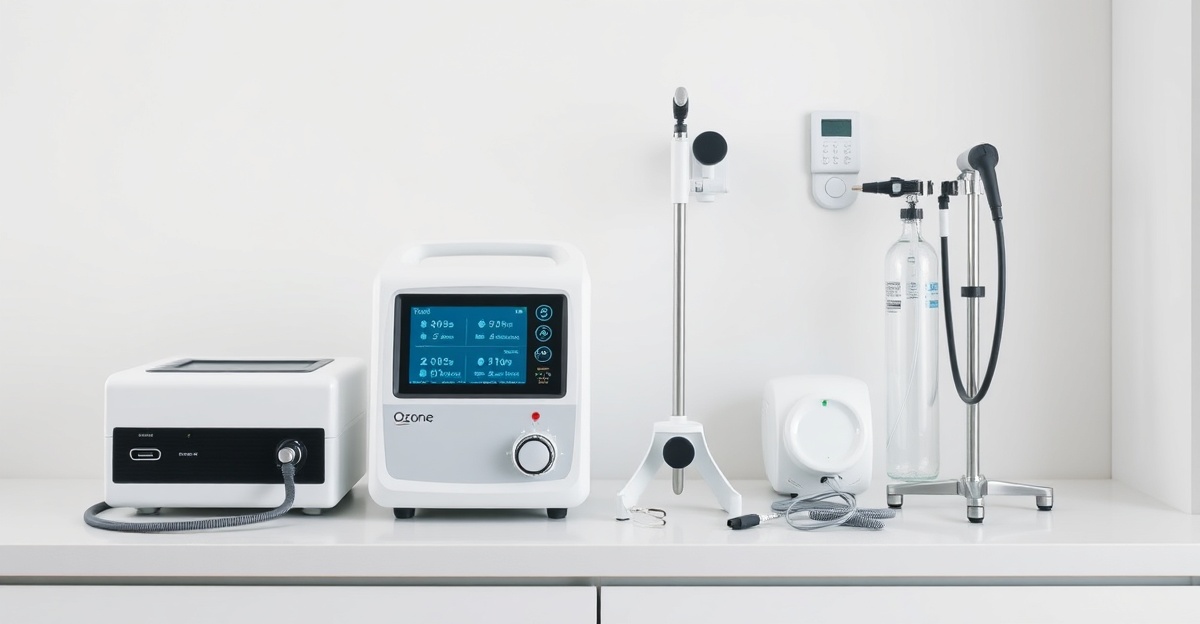
Hyperbaric oxygen therapy (HBOT) is a UHMS-approved and Medicare-covered treatment for select diabetic foot ulcers. The positive anchor is the Londahl 2010 randomized trial, where 52% of HBOT patients reached complete healing versus 29% on standard care. The picture is mixed, though: two later randomized trials (Fedorko 2016 and the DAMO2CLES trial, Santema 2018) found no significant benefit. HBOT helps most in Wagner grade 3 or higher ulcers that have failed 30 days of standard wound care.
Why do diabetic foot ulcers not heal?
Diabetic foot ulcers (DFUs) resist healing because diabetes disrupts wound repair at several points at once. Peripheral neuropathy blunts the pain that would normally signal an injury, so ulcers form and progress unnoticed. Peripheral arterial disease starves the wound of blood and oxygen. High blood glucose impairs white blood cell function, and diabetic microangiopathy damages the small vessels that deliver oxygen at the tissue level.
The result is a wound stuck in a cycle of hypoxia, infection, and failed repair. Standard wound care (offloading, debridement, moist dressings, infection control) heals roughly 60% of DFUs within 20 weeks. The rest become chronic wounds that can persist for months or years, and non-healing ulcers precede the majority of diabetes-related lower-limb amputations.
Does HBOT heal diabetic foot ulcers?
HBOT can improve healing in chronic, hypoxic diabetic foot ulcers, but the randomized evidence is mixed rather than settled. It delivers 100% oxygen at 2.0 to 2.4 atmospheres absolute (ATA), raising dissolved plasma oxygen roughly 10 to 15-fold and driving oxygen into hypoxic tissue even where local blood flow is poor. It is a second-line option, not a first-line one.
How HBOT acts on a diabetic wound
- Reverses wound hypoxia: tissue oxygen tension in the wound bed rises from typical DFU levels of 5 to 15 mmHg into the 200 to 400 mmHg range during treatment.
- Stimulates angiogenesis: intermittent hyperoxia triggers vascular endothelial growth factor (VEGF) release, supporting new vessel formation over a course of treatment.
- Restores white blood cell killing: neutrophils need tissue oxygen above about 30 mmHg for effective bacterial killing, and HBOT restores that threshold.
- Reduces edema: hyperoxia causes mild vasoconstriction that lowers swelling while the oxygen dissolved in plasma maintains delivery.
- Mobilizes stem/progenitor cells: Thom et al. found circulating CD34+ stem cells roughly doubled after one HBOT session and rose about eightfold by the twentieth (Thom et al., 2006).
What does the research say?
The DFU evidence is among the most studied in hyperbaric medicine, and it is genuinely mixed. The 2010 Londahl trial and the 2015 Cochrane review found improved healing, while two later randomized trials (Fedorko 2016 and Santema 2018) did not. Reading them together, HBOT looks most useful in the specific patients the positive trials enrolled: chronic, hypoxic, Wagner grade 3 or higher ulcers with adequate large-vessel inflow. For deeper trial breakdowns, see our HBOT diabetic foot ulcer data analysis and the broader HBOT wound healing statistics.
Randomized and pooled evidence for HBOT in diabetic foot ulcers
| Study | Design | Key finding |
|---|---|---|
| Londahl et al., 2010 (Diabetes Care) | RCT, 94 patients | Complete healing 52% HBOT vs 29% control at 1 year (positive) |
| Fedorko et al., 2016 (Diabetes Care) | RCT, 103 patients | No reduction in amputation indications or healing at 12 weeks (negative) |
| Santema et al., 2018, DAMO2CLES (Diabetes Care) | RCT, 120 patients with ischemia | No significant improvement in amputation-free survival or complete healing (null) |
| Kranke et al., 2015 (Cochrane) | Meta-analysis, 12 trials | Improved healing at 6 weeks (RR 2.35), no clear long-term benefit, low certainty |
| Brouwer et al., 2020 (J Vasc Surg) | Systematic review/meta-analysis | HBOT may improve healing in DFU with arterial insufficiency; evidence quality limited |
The practical takeaway from these trials is patient selection. HBOT performs best in Wagner grade 3 or higher ulcers that have failed 30 days of standard care and where the patient has adequate vascular inflow (for example, a transcutaneous oxygen pressure above 200 mmHg while breathing 100% oxygen). Selected that way, the healing numbers are meaningful. Applied to well-perfused or early-grade ulcers, the benefit largely disappears.
What does the HBOT protocol look like?
The standard HBOT protocol for DFUs follows Medicare and UHMS guidance:
- Pressure: 2.0 to 2.4 ATA (most protocols use 2.0 to 2.2 ATA).
- Duration: about 90 minutes of oxygen breathing per session, with short air breaks.
- Frequency: 5 days per week.
- Total sessions: 30 to 40 sessions over 6 to 8 weeks.
- Reassessment: after 20 sessions the wound must show measurable improvement to justify continuing.
Is topical oxygen therapy an alternative to HBOT?
Topical oxygen wound therapy delivers oxygen directly to the wound surface through a sealed chamber or dressing, at near-atmospheric pressure, without a full-body chamber. It is the main alternative for patients who cannot access or tolerate HBOT. The strongest evidence comes from the TWO2 randomized trial.
The TWO2 study, a multinational double-blind randomized trial published in Diabetes Care, found that cyclical topical wound oxygen therapy increased complete closure of chronic DFUs to 41.7% at 12 weeks versus 13.5% with sham dressings plus standard care (Frykberg et al., 2020). Devices such as the NATROX and TransCu O2 systems provide localized oxygen rather than the systemic exposure of HBOT.
Does insurance cover HBOT for diabetic foot ulcers?
Medicare covers HBOT for diabetic foot ulcers that meet specific criteria (Wagner grade 3 or higher, failure of 30+ days of standard care, and documented improvement after 20 sessions). Coverage for topical oxygen devices is less consistent and varies by plan. The figures below are typical US ranges and should be confirmed with the treating facility and insurer before starting.
Cost and coverage overview (typical US ranges)
| Treatment | Typical cost | Insurance coverage |
|---|---|---|
| HBOT (30-40 sessions) | $20,000 to $40,000 total | Medicare covers for Wagner 3+ after 30 days of standard care |
| Topical oxygen device (per course) | $1,500 to $8,000 | Some Medicare Advantage and commercial plans cover; varies by insurer |
| Standard wound care (comparison) | $5,000 to $30,000+ over the healing period | Generally covered |
| Below-knee amputation (comparison) | $30,000 to $60,000+ plus downstream costs | Covered, but with large ongoing costs for rehabilitation and prosthetics |
Medicare coverage for HBOT in DFUs requires meeting all of the following:
- Wagner grade 3 or higher classification.
- Failure to heal after 30 or more days of standard wound care.
- No untreated osteomyelitis.
- Adequate vascular status (for example, an ankle-brachial index above 0.7 or transcutaneous oxygen pressure above 30 mmHg on room air).
- Documented measurable improvement after 20 sessions to continue treatment.
When should you consider HBOT for a foot ulcer?
Consider oxygen therapy when a diabetic foot ulcer has not responded to 30 days of appropriate standard care, including offloading, debridement, infection management, and moist wound healing. It is not a first-line treatment. The strongest case is a Wagner grade 3 or higher ulcer with demonstrable wound hypoxia (transcutaneous oxygen pressure below 40 mmHg on room air).
Patients also need adequate large-vessel blood flow to the foot, because HBOT cannot compensate for severe macrovascular disease. If the ankle-brachial index is below 0.5, vascular assessment and revascularization should come before HBOT. For the list of conditions HBOT is formally approved to treat, see our guide to FDA-cleared indications for HBOT, and for the wider wound context, the pillar on hyperbaric chambers for wound healing.
Key terms
| Term | Meaning |
|---|---|
| Wagner grade | A 0 to 5 scale for ulcer depth and severity; grade 3+ involves deep infection or abscess. |
| TcPO2 | Transcutaneous oxygen pressure, a skin-surface measure of tissue oxygenation used to predict healing. |
| ABI | Ankle-brachial index, the ratio of ankle to arm blood pressure, used to gauge arterial blood flow. |
The bottom line
Among oxygen therapies, diabetic foot ulcers have one of the larger evidence bases, but it is mixed rather than uniformly positive. HBOT is approved and Medicare-covered for qualifying Wagner grade 3+ ulcers, and one randomized trial plus a Cochrane review support short-term healing, while two later trials did not. Topical oxygen adds a more accessible, device-based option with its own randomized support. For a patient with a chronic, hypoxic, non-healing ulcer who has already failed standard care and has adequate blood flow, oxygen therapy is a reasonable, evidence-informed next step that can help preserve a limb.
Sources
- Londahl M, Katzman P, Nilsson A, Hammarlund C. Hyperbaric oxygen therapy facilitates healing of chronic foot ulcers in patients with diabetes. Diabetes Care. 2010;33(5):998-1003. doi:10.2337/dc09-1754
- Fedorko L, Bowen JM, Jones W, et al. Hyperbaric oxygen therapy does not reduce indications for amputation in patients with diabetes with nonhealing ulcers of the lower limb: a prospective, double-blind, randomized controlled clinical trial. Diabetes Care. 2016;39(3):392-399. doi:10.2337/dc15-2001
- Santema KTB, Stoekenbroek RM, Koelemay MJW, et al. Hyperbaric oxygen therapy in the treatment of ischemic lower-extremity ulcers in patients with diabetes: results of the DAMO2CLES multicenter randomized clinical trial. Diabetes Care. 2018;41(1):112-119. doi:10.2337/dc17-0654
- Kranke P, Bennett MH, Martyn-St James M, Schnabel A, Debus SE, Weibel S. Hyperbaric oxygen therapy for chronic wounds. Cochrane Database of Systematic Reviews. 2015;(6):CD004123. doi:10.1002/14651858.CD004123.pub4
- Brouwer RJ, Lalieu RC, Hoencamp R, van Hulst RA, Ubbink DT. A systematic review and meta-analysis of hyperbaric oxygen therapy for diabetic foot ulcers with arterial insufficiency. Journal of Vascular Surgery. 2020;71(2):682-692.e1. doi:10.1016/j.jvs.2019.07.082
- Frykberg RG, Franks PJ, Edmonds M, et al. A multinational, multicenter, randomized, double-blinded, placebo-controlled trial to evaluate the efficacy of cyclical topical wound oxygen (TWO2) therapy in the treatment of chronic diabetic foot ulcers: the TWO2 study. Diabetes Care. 2020;43(3):616-624. doi:10.2337/dc19-0476
- Thom SR, Bhopale VM, Velazquez OC, Goldstein LJ, Thom LH, Buerk DG. Stem cell mobilization by hyperbaric oxygen. American Journal of Physiology-Heart and Circulatory Physiology. 2006;290(4):H1378-H1386. doi:10.1152/ajpheart.00888.2005
Medical Disclaimer
The content on BaricBoost.com is for informational purposes only and is not intended as a substitute for professional medical advice, diagnosis, or treatment. Always seek the advice of your physician or other qualified health provider with any questions you may have regarding a medical condition. Never disregard professional medical advice or delay in seeking it because of something you have read on this website.

Author
Seph Fontane Pennock is the founder of BaricBoost.com and Regenerated.com, a clinic directory for regenerative medicine serving 10,000+ providers across the United States. He previously built and sold PositivePsychology.com, which grew to 19 million users and became the largest evidence-based positive psychology resource on the web. Seph brings direct experience as an HBOT patient, having completed protocols at clinics across three continents while navigating mold illness, systemic inflammation, and autoimmune conditions. His treatment journey includes hyperbaric oxygen therapy, peptide protocols, NAD+ therapy, and consultations with specialists from Dubai to Cape Town to Mexico. This combination of entrepreneurial track record and lived patient experience shapes everything published on BaricBoost.com. Every article is grounded in peer-reviewed research, informed by real clinical encounters, and written for patients making high-stakes treatment decisions. Seph's focus is on bringing transparency, scientific rigor, and practical guidance to the hyperbaric oxygen therapy space.