Zero randomized controlled trials have tested ozone therapy for cosmetic skin rejuvenation. The evidence is borrowed from wound-healing research, where ozonated oils have moderate support across several studies. The proposed mechanism is real: ozone triggers controlled oxidative stress that activates antioxidant defenses and, in animal models, stimulates fibroblast activity and collagen synthesis (Valacchi et al., 2011). Whether that translates into fewer wrinkles or firmer skin in healthy people has not been demonstrated.
Does ozone therapy actually rejuvenate skin?
Ozone interacts with skin through controlled oxidative stress. When it contacts skin or enters the bloodstream, it reacts with lipids and proteins to form reactive oxygen species and lipid oxidation products. At therapeutic doses, this triggers protective responses rather than damage (Bocci, 2011). The mechanisms most relevant to skin:
- Nrf2 pathway activation. Ozone activates nuclear factor erythroid 2-related factor 2 (Nrf2), which upregulates endogenous antioxidants including superoxide dismutase, catalase, and glutathione peroxidase, protecting skin cells from the oxidative damage that drives aging (Re et al., 2008).
- Collagen stimulation. In animal wound models, ozonated oil increased fibroblast activity and collagen deposition, accelerating tissue repair (Valacchi et al., 2011). Fibroblasts produce the collagen and elastin that keep skin firm.
- Improved microcirculation. Ozone increases red blood cell flexibility and oxygen delivery, which may improve nutrient supply to skin (Smith et al., 2017).
- Antimicrobial effects. Ozone kills bacteria, fungi, and viruses on contact, which is relevant for acne-prone or infection-susceptible skin (Ugazio et al., 2020).
Every one of these mechanisms is documented, but each was established in wound healing, infection, or laboratory settings, not in trials measuring wrinkles or skin tone in healthy people.
What types of ozone skin treatments exist?
Three main approaches are used for skin-focused ozone therapy, and they differ sharply in how much evidence supports them.
Ozone skin treatment types and evidence
| Treatment | Method | Cost per session | Evidence level |
|---|---|---|---|
| Ozonated oils | Topical oil infused with ozone (olive, sunflower, jojoba) | $15-60 (product) | Moderate (wound healing); weak (cosmetic) |
| Ozone facial | Steam or bagging delivering ozone gas to facial skin | $100-300 | None (no studies) |
| Systemic ozone | IV ozone, major autohemotherapy, or 10-pass for whole-body effects | $150-1,500 | Weak (for skin specifically) |
Do ozonated oils work for skin?
Ozonated oils are the most accessible and best-studied ozone skin product. The oil is made by bubbling ozone through a carrier oil until it reaches a target peroxide value. Published research focuses on wound healing and skin infection, not cosmetic anti-aging:
- A 2019 review found ozonated oils effective for wound healing, with antimicrobial and anti-inflammatory properties that accelerate tissue repair (Lim, 2019).
- Ozonated sunflower oil outperformed the antifungal ketoconazole for tinea pedis (athlete’s foot) in a controlled trial (Menendez et al., 2002).
- In an animal wound model, ozonated sesame oil enhanced cutaneous wound healing and collagen deposition (Valacchi et al., 2011).
For cosmetic use, people apply ozonated oils as a moisturizer or serum and report smoother texture and better hydration. Those reports are anecdotal and have not been validated in controlled cosmetic trials.
Are ozone facials worth it?
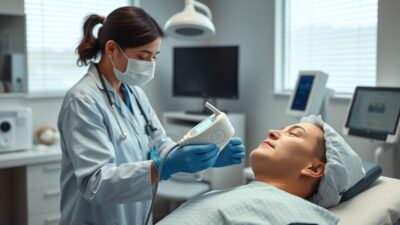
Ozone facials use either ozone steam (ozone mixed into a facial steamer) or ozone bagging (a small bag over the face filled with ozone gas), sometimes combined with LED light, microdermabrasion, or hyaluronic acid. There are no published clinical studies evaluating ozone facials for anti-aging or cosmetic outcomes. The treatment lives in the spa and aesthetics market, supported by practitioner claims and testimonials rather than data.
Ozone’s documented ability to stimulate collagen and activate antioxidant defenses comes almost entirely from wound-healing research. Direct evidence for cosmetic anti-aging remains limited to mechanism and clinical extrapolation, which is the core reason to be skeptical of premium ozone facial pricing.
How does ozone compare to proven anti-aging treatments?
Context matters when weighing ozone for skin. Several established treatments have decades of clinical evidence.
Ozone versus established anti-aging treatments
| Treatment | Mechanism | Evidence for anti-aging | Cost |
|---|---|---|---|
| Retinoids (tretinoin) | Increases cell turnover, stimulates collagen | Strong (multiple RCTs) | $20-150/month |
| Vitamin C serum | Antioxidant, collagen synthesis, photoprotection | Strong (multiple RCTs) | $15-80/month |
| Sunscreen | UV protection (prevents photoaging) | Strong (decades of evidence) | $10-40/month |
| Microneedling | Controlled micro-injury, collagen induction | Moderate (multiple studies) | $200-700/session |
| Ozone therapy | Oxidative stress response, Nrf2 activation, collagen stimulation | Weak (mechanistic only) | $100-1,500/session |
The gap is significant. Retinoids have decades of randomized-trial data showing measurable wrinkle reduction and collagen restoration. Ozone therapy has plausible mechanisms but no direct clinical evidence for cosmetic outcomes, at a higher per-session price.
What are the side effects and risks?
Topical ozone applications (ozonated oils, ozone facials) carry relatively low risk. The main concerns:
- Skin irritation or allergic reactions to carrier oils.
- Ozone inhalation during facial treatments (ozone is a respiratory irritant and should never be inhaled directly).
- Inconsistent product quality in ozonated oils, where peroxide values vary widely between manufacturers.
Systemic ozone therapy adds risks including air embolism (IV ozone), hemolysis, and injection-site infection. These apply to all systemic ozone applications, not just skin-focused protocols. General guidance is in our ozone therapy safety overview.
What does the research actually show?
The honest assessment is that ozone therapy for skin rejuvenation sits between established biology and unproven application. The mechanisms are real: ozone stimulates collagen in animal models, activates antioxidant pathways, and improves microcirculation, the same mechanisms that drive wound healing. But wound healing and cosmetic anti-aging are different endpoints. A therapy that helps a diabetic ulcer close faster does not automatically produce fewer wrinkles in healthy skin, because the dose, delivery, and target tissue differ. Until controlled trials measure cosmetic outcomes (wrinkle depth, elasticity, collagen density) directly, the rejuvenation claims stay theoretical. Ozone applied to scars faces the same evidence gap.
Key terms by evidence tier
| Modality | Best-supported use | Evidence tier for that use |
|---|---|---|
| Ozonated oil | Wound healing, skin infection | Moderate |
| Ozonated oil | Cosmetic anti-aging | Emerging / weak |
| Ozone facial | Cosmetic anti-aging | None |
| Systemic ozone | Skin rejuvenation | Weak |
The bottom line
Ozone therapy has legitimate biological mechanisms that could support skin health: collagen stimulation, antioxidant activation, antimicrobial action, and improved circulation. Ozonated oils have the most evidence, primarily for wound healing and skin infection rather than cosmetic anti-aging. Ozone facials and systemic ozone for rejuvenation lack any published clinical evidence. If skin rejuvenation is the goal, retinoids, vitamin C, and sunscreen have far stronger evidence at lower cost. Ozone may earn a role in anti-aging skincare as research matures, but it is not there yet. Those weighing a chamber-based alternative can compare our page on hyperbaric chambers for skin rejuvenation.
Sources
- Valacchi G, Lim Y, Belmonte G, et al. Ozonated sesame oil enhances cutaneous wound healing in SKH1 mice. Wound Repair and Regeneration. 2011;19(1):107-115. doi:10.1111/j.1524-475X.2010.00649.x
- Lim Y, Phung AD, Corbacho AM, et al. Ozonated oils and cutaneous wound healing. Current Pharmaceutical Design. 2019;25(20):2264-2278. doi:10.2174/1381612825666190702100504
- Ugazio E, Tullio V, Binello A, Tagliapietra S, Dosio F. Ozonated oils as antimicrobial systems in topical applications. Molecules. 2020;25(2):334. doi:10.3390/molecules25020334
- Menendez S, Falcon L, Simon DR, Landa N. Efficacy of ozonized sunflower oil in the treatment of tinea pedis. Mycoses. 2002;45(8):329-332. doi:10.1046/j.1439-0507.2002.00780.x
- Re L, Mawsouf MN, Menendez S, Leon OS, Sanchez GM, Hernandez F. Ozone therapy: clinical and basic evidence of its therapeutic potential. Archives of Medical Research. 2008;39(1):17-26. doi:10.1016/j.arcmed.2007.07.005
- Smith NL, Wilson AL, Gandhi J, Vatsia S, Khan SA. Ozone therapy: an overview of pharmacodynamics, current research, and clinical utility. Medical Gas Research. 2017;7(3):212-219. doi:10.4103/2045-9912.215752
- Bocci V. Ozone: A New Medical Drug. 2nd ed. Springer; 2011. doi:10.1007/978-90-481-9234-2
Medical Disclaimer
The content on BaricBoost.com is for informational purposes only and is not intended as a substitute for professional medical advice, diagnosis, or treatment. Always seek the advice of your physician or other qualified health provider with any questions you may have regarding a medical condition. Never disregard professional medical advice or delay in seeking it because of something you have read on this website.

Author
Seph Fontane Pennock is the founder of BaricBoost.com and Regenerated.com, a clinic directory for regenerative medicine serving 10,000+ providers across the United States. He previously built and sold PositivePsychology.com, which grew to 19 million users and became the largest evidence-based positive psychology resource on the web. Seph brings direct experience as an HBOT patient, having completed protocols at clinics across three continents while navigating mold illness, systemic inflammation, and autoimmune conditions. His treatment journey includes hyperbaric oxygen therapy, peptide protocols, NAD+ therapy, and consultations with specialists from Dubai to Cape Town to Mexico. This combination of entrepreneurial track record and lived patient experience shapes everything published on BaricBoost.com. Every article is grounded in peer-reviewed research, informed by real clinical encounters, and written for patients making high-stakes treatment decisions. Seph's focus is on bringing transparency, scientific rigor, and practical guidance to the hyperbaric oxygen therapy space.