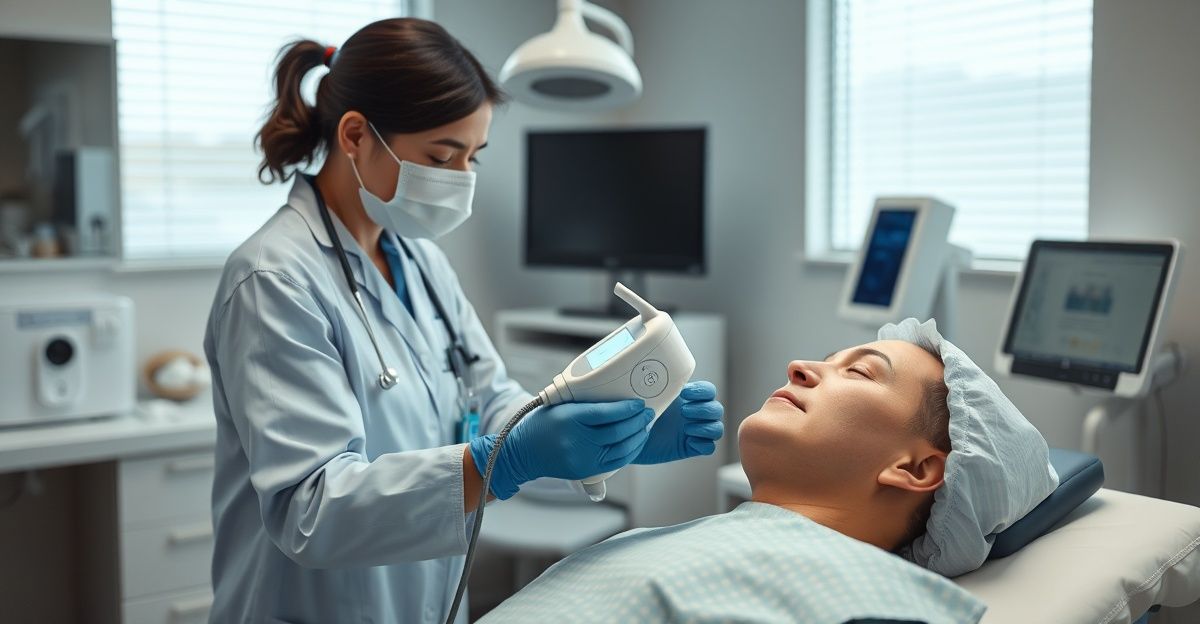
Ozonated oils and direct ozone injections are the two main ozone approaches for scars. In a controlled pilot study, ozonated oil applied to fresh surgical scars improved scar appearance, color, and pliability compared with standard care (Ruiz-Vall et al., 2025). Injections are used for thicker hypertrophic and keloid scars. The overall evidence is limited to case series and small trials, but the biological rationale for fresh scars is reasonable.
How does ozone affect scar tissue?
Scar formation is a normal part of wound healing, but when the body overproduces collagen the result can be raised, thickened, or discolored scars. Ozone interacts with scar tissue through several mechanisms that influence how collagen is deposited and remodeled.
When ozone contacts biological tissue, it reacts with lipids and proteins to form reactive oxygen species and lipid oxidation products. These compounds trigger a mild, controlled oxidative signal that activates the Nrf2 pathway, upregulating antioxidant enzymes and modulating the inflammatory response (Sagai and Bocci, 2011). In scar tissue, the aim is to shift the balance from excessive collagen deposition toward more organized remodeling.
Ozone also increases local oxygen delivery by improving red blood cell flexibility and 2,3-DPG production. Better oxygenation supports the activity of matrix metalloproteinases, the enzymes that break down and reorganize collagen fibers in maturing scars (Travagli et al., 2010).
Does ozonated oil actually improve scars?
Ozonated oils are made by bubbling ozone gas through a carrier oil, usually olive, sunflower, or coconut, creating a gel-like substance rich in ozonides and peroxides. They are the most accessible form of ozone therapy for scars, and the topical evidence is the strongest part of this picture, though it is still early.
In a controlled pilot study of patients undergoing bilateral breast surgery, ozonated oil applied to one side improved surgical wound and scar healing compared with the untreated side in the same patient, a design that controls for individual healing differences (Ruiz-Vall et al., 2025). Earlier reviews of ozonated oils in skin conditions describe similar improvements in appearance and pliability, while noting the data is dominated by small studies and case series (Travagli et al., 2010).
How to use ozonated oil on scars
The typical protocol is to apply a thin layer of ozonated oil directly to the scar 2 to 3 times daily on clean, dry skin, continuing for at least 8 to 12 weeks before assessing results. This works best on fresh scars; the more mature and established the scar, the less topical ozone tends to do.
What ozonated oil can and cannot do
| Scar Type | Expected Benefit | Evidence Level |
|---|---|---|
| Fresh surgical scars (under 6 months) | Improved color, texture, and flexibility | Moderate (small controlled studies) |
| Acne scars (atrophic) | Mild improvement in texture | Low (case reports) |
| Hypertrophic scars | Some reduction in thickness over time | Low (case series) |
| Keloid scars | Minimal benefit as a standalone treatment | Very low |
| Mature scars (over 2 years) | Limited improvement | Very low |
Do ozone injections work for thick scars?
For thicker scars, some practitioners inject an ozone-oxygen gas mixture directly into the scar tissue. This delivers higher ozone concentrations to the target, aiming to break down excess collagen and stimulate remodeling. The technique typically uses a fine needle to deliver ozone-oxygen at 10 to 30 mcg/mL, with sessions spaced 1 to 2 weeks apart and most protocols calling for 6 to 10 sessions.
Intralesional ozone injection is proposed as a way to target the underlying problem in problematic scars, which is disorganized collagen architecture, by inducing controlled oxidative stress inside the scar to activate remodeling. The reality is that human evidence for this is thin. It rests on small case series rather than controlled trials, and keloids in particular respond poorly to any single modality. Ozone injection for keloids should be viewed as experimental, not a reliable fix.
How does ozone compare to other scar treatments?
| Treatment | Mechanism | Cost per Course | Evidence Strength | Best For |
|---|---|---|---|---|
| Ozonated oil (topical) | Collagen remodeling, anti-inflammatory | $50 to $120 | Low to moderate | Fresh surgical scars |
| Ozone injections | Direct collagen breakdown | $1,000 to $3,000 | Low | Hypertrophic scars |
| Silicone sheets or gel | Hydration, occlusion | $20 to $60 | High | Prevention and early treatment |
| Corticosteroid injections | Anti-inflammatory, collagen suppression | $300 to $1,200 | High | Keloids, hypertrophic scars |
| Laser therapy (fractional) | Controlled micro-damage, collagen remodeling | $1,000 to $3,000 | High | Atrophic scars, texture |
| Cryotherapy | Tissue destruction | $100 to $500 | Moderate | Small keloids |
How much does ozone scar treatment cost?
Cost varies widely by method.
Ozonated oil products typically cost $15 to $40 per jar or tube, with most containing enough for 4 to 8 weeks of daily use. A full 12-week course usually needs 2 to 3 products, bringing the total to roughly $50 to $120.
Ozone injection sessions usually cost $150 to $400 each. A typical course of 6 to 10 sessions puts the total at about $1,000 to $3,000. These treatments are not covered by insurance in the United States, since ozone therapy for scars is considered experimental.
What are the side effects and risks?
Ozonated oil is generally well tolerated. The most common effects are mild skin irritation, temporary redness, and a slight warming sensation at the site, usually resolving within 30 minutes. Ozone injections carry more risk, including injection-site pain, swelling, and bruising, and some patients report temporary worsening of scar appearance around sessions 2 to 4 before any improvement.
Contraindications for ozone scar treatment include active skin infection at the site, G6PD deficiency, pregnancy, and hyperthyroidism. Anyone on blood thinners should discuss injection-based treatment with a clinician first. The general ozone therapy safety guidance applies here as well, and ozone for burns and skin rejuvenation follows similar principles.
The evidence in one line
Ozone therapy for scars is low risk and shows early promise, mainly for fresh surgical scars treated with ozonated oils and, more tentatively, hypertrophic scars treated with injections. The evidence base remains thin, with no large randomized controlled trials and most data from small studies. For patients who have not responded to first-line options (silicone, pressure therapy, corticosteroid injections), ozone may be worth trying as a complementary approach. It should add to, not replace, proven treatments.
Sources
- Ruiz-Vall A, Altamirano-Faus M, Bedmar-Gonzalez B, Andres-Lencina JJ, et al. Improvement of surgical wound healing with ozonated oil in bilateral breast surgery: a pilot intra-patient comparative study. Cureus, 2025. doi:10.7759/cureus.85829
- Travagli V, Zanardi I, Valacchi G, Bocci V. Ozone and ozonated oils in skin diseases: a review. Mediators of Inflammation, 2010;2010:610418. doi:10.1155/2010/610418
- Sagai M, Bocci V. Mechanisms of action involved in ozone therapy: is healing induced via a mild oxidative stress? Medical Gas Research, 2011;1:29. doi:10.1186/2045-9912-1-29
- Bocci V. Ozone: A New Medical Drug (2nd ed.). Springer, 2011. doi:10.1007/978-90-481-9234-2
Medical Disclaimer
The content on BaricBoost.com is for informational purposes only and is not intended as a substitute for professional medical advice, diagnosis, or treatment. Always seek the advice of your physician or other qualified health provider with any questions you may have regarding a medical condition. Never disregard professional medical advice or delay in seeking it because of something you have read on this website.

Author
Seph Fontane Pennock is the founder of BaricBoost.com and Regenerated.com, a clinic directory for regenerative medicine serving 10,000+ providers across the United States. He previously built and sold PositivePsychology.com, which grew to 19 million users and became the largest evidence-based positive psychology resource on the web. Seph brings direct experience as an HBOT patient, having completed protocols at clinics across three continents while navigating mold illness, systemic inflammation, and autoimmune conditions. His treatment journey includes hyperbaric oxygen therapy, peptide protocols, NAD+ therapy, and consultations with specialists from Dubai to Cape Town to Mexico. This combination of entrepreneurial track record and lived patient experience shapes everything published on BaricBoost.com. Every article is grounded in peer-reviewed research, informed by real clinical encounters, and written for patients making high-stakes treatment decisions. Seph's focus is on bringing transparency, scientific rigor, and practical guidance to the hyperbaric oxygen therapy space.