A 2020 Tel Aviv University trial found that 60 sessions of hyperbaric oxygen therapy lengthened telomeres by more than 20% and reduced senescent immune cells by up to 37% in adults over 64. Those are the largest cellular-aging biomarker shifts documented from any single intervention, but they come from one uncontrolled trial. Here is what the longevity and performance research actually supports, and what it does not.
What Changed in the Anti-Aging Studies
| Biomarker | Reported change | Study | Evidence caveat |
|---|---|---|---|
| Telomere length (immune cells) | +20% or more | Hachmo 2020 | Single uncontrolled trial, n=35 |
| Senescent T-helper cells | -37% | Hachmo 2020 | No sham control, not replicated |
| Skin collagen density | Large increase (effect size 1.10) | Hachmo 2021 | Skin biopsy study, n=13, no control |
| Cardiac blood flow | Effect size 0.80 | Hadanny 2024 | Randomized controlled trial, n=63 |
What Does the Science Say About HBOT and Cellular Aging?
At 2.0 ATA, the lungs absorb far more oxygen than normal breathing allows. Oxygen dissolves directly into blood plasma, cerebrospinal fluid, and lymph, not just red blood cells. This saturation triggers biological responses that influence how cells age, primarily through the hyperoxic-hypoxic paradox: high oxygen during a session followed by a return to normal pressure creates a cycling signal that behaves like a training stimulus.
Most of the anti-aging data comes from the Sagol Center at Shamir Medical Center in Israel. Hachmo, Hadanny, and colleagues ran a series of studies on healthy adults over 64 using a 60-session protocol at 2.0 ATA, reporting telomere lengthening above 20% across immune cell types and a 37% drop in senescent T helper cells (Hachmo et al., Aging, 2020).1 The original telomere study had no sham control group and has not been independently replicated as of 2026. It is promising preliminary evidence, not established fact.
Does HBOT Actually Lengthen Telomeres?
One uncontrolled trial reported telomere lengthening above 20% after 60 HBOT sessions, the largest magnitude documented in humans. No sham-controlled trial has confirmed it, so the finding should be read as a signal to investigate, not a proven anti-aging effect.
Telomeres are protective sequences at the ends of chromosomes that shorten with each cell division. When they shorten enough, cells enter senescence or die, which is why telomere length is a common biomarker of biological age. In the 2020 prospective trial by Hachmo and colleagues,1 35 healthy adults over 64 underwent 60 sessions at 2.0 ATA. Telomere length increased by more than 20% in T helper, T cytotoxic, natural killer, and B cells, with B cells showing a 37.63% increase (p=0.007). The detailed breakdown is covered in our telomere study data analysis.
Before this study, no intervention had shown telomere lengthening of this magnitude in humans. Exercise, meditation, and dietary changes slow attrition modestly but do not actively lengthen at 20% or more. The caveats are real: no control group, high standard deviations (23 to 53% on some measures), and only 35 participants. Independent replication is needed before this can be considered established.
Can HBOT Improve Mitochondrial Function?
Mitochondria convert nutrients into ATP and become less efficient with age, contributing to fatigue and cognitive decline. Laboratory data shows HBOT can stimulate mitochondrial biogenesis, but the same research warns it can worsen function in cells that are already damaged.
A 2025 study in the Journal of Applied Physiology by Young and colleagues2 found that hyperbaric oxygen exposure increased mitochondrial biogenesis through the PGC-1alpha and Nrf2 pathways, raised mitochondrial oxygen consumption, and elevated ATP production. Importantly, in cells with pre-existing mitochondrial dysfunction, hyperbaric oxygen worsened function rather than improving it. That is a clinically relevant caveat for anyone with significant metabolic disease. Mild pro-oxidant stress appears to trigger protective adaptations in healthy cells, similar to how exercise stress triggers strength adaptations.
Does HBOT Clear Senescent Cells and Lower Inflammation?
The 2020 Hachmo trial reported a 37% reduction in senescent T helper cells alongside the telomere changes. Senescent cells drive chronic low-grade inflammation (sometimes called inflammaging) by secreting pro-inflammatory cytokines through the senescence-associated secretory phenotype.
In that trial, senescent T helper cells fell by 37.30% (p<0.0001) and senescent T cytotoxic cells by 10.96% (p=0.0004).1 The proposed mechanism is that senescent cells, already under metabolic stress, are pushed past their threshold by elevated oxygen demand during HBOT, triggering selective programmed cell death while healthy cells tolerate the same environment. This positions HBOT as a possible non-pharmacological senolytic, though the mechanism has not been validated in controlled trials.
Can HBOT Improve Skin and Collagen?
A companion skin study offers the clearest structural evidence, with large effect sizes for collagen density and elastic fiber length, though it too lacked a control group. This is the most direct data behind HBOT’s cosmetic anti-aging claims.
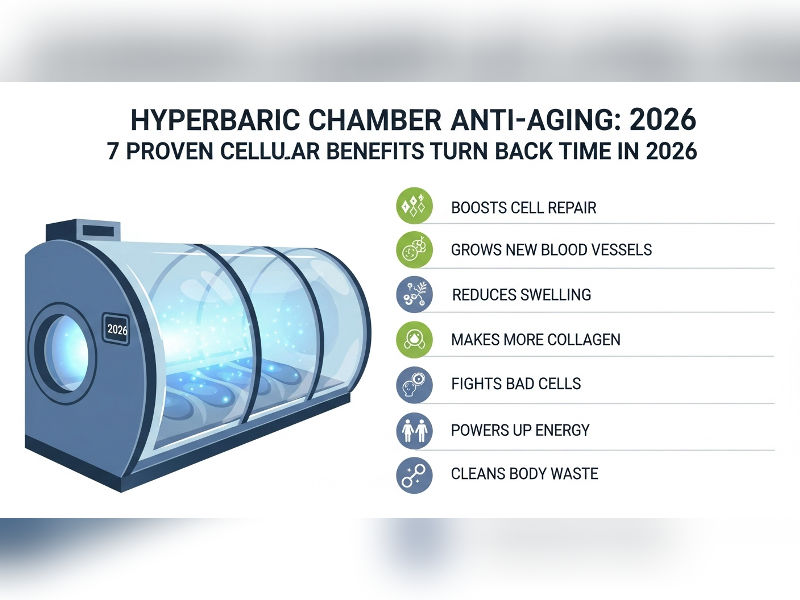
A 2021 study from the same research group examined skin biopsies from 13 men (mean age 68) before and after 60 HBOT sessions (Hachmo et al., Aging, 2021).3 Collagen density increased significantly (p<0.001, effect size 1.10), elastic fiber length increased (p<0.0001, effect size 2.71), blood vessel formation increased (p=0.02), and tissue senescent cells decreased (p=0.03). It was the first human study to show HBOT can modulate the pathophysiology of skin aging. The small sample and absent control group limit conclusions, but the effect sizes are large and biologically plausible given HBOT’s established role in angiogenesis. For how this connects to cosmetic outcomes, see our guide to HBOT for skin rejuvenation.
Does HBOT Support Brain and Cognitive Aging?
The brain uses roughly 20% of the body’s oxygen supply. Research from the Shamir aging program reported improvements in attention and information processing speed in elderly adults after 60 HBOT sessions, associated with increased cerebral blood flow. The 2024 Hadanny randomized controlled trial4 added controlled evidence that HBOT improves cardiac perfusion and aerobic capacity in older adults, which has downstream cognitive relevance.
A 2021 review by Balasubramanian and colleagues5 examined HBOT’s effect on cerebral microcirculation and age-related vascular cognitive impairment, concluding that HBOT raises brain oxygen partial pressure and may ameliorate microvascular pathologies linked to dementia. This is mechanistic and preliminary, not clinical trial data.
Does HBOT Improve Cardiovascular Fitness?
The strongest controlled evidence in the entire anti-aging program is cardiovascular. In the 2024 Hadanny randomized controlled trial,4 63 adults over 64 were randomized to 60 HBOT sessions or control. The HBOT group showed:
- VO2Max/kg: +1.91 ml/kg/min, effect size 0.455 (p=0.003)
- VO2 at first ventilatory threshold: +160 ml/min, effect size 0.617 (p<0.001)
- Cardiac blood flow (MBF): effect size 0.797 (p=0.008)
- Cardiac blood volume (MBV): effect size 0.896 (p=0.009)
These are large effect sizes from a randomized design, which makes this the most compelling evidence for a physical anti-aging effect. The proposed mechanism is stimulation of endothelial progenitor cells and angiogenesis, improving vascular function in a way that supports both performance and organ health.
What Does an Anti-Aging HBOT Protocol Involve?
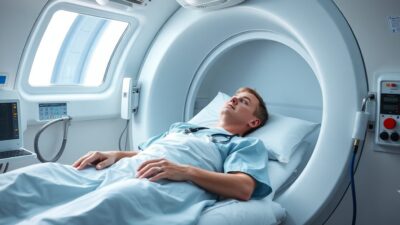
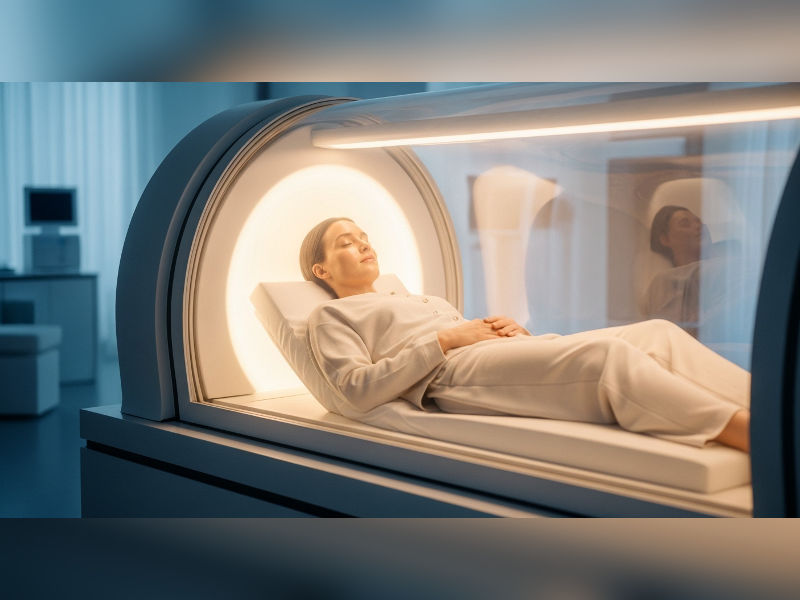
Every positive anti-aging study used the same demanding protocol: 60 sessions, 5 days per week, over 12 weeks at 2.0 ATA, with each session running about 90 minutes and including intermittent air breaks. This is a significant time and financial commitment.
Clinical settings typically charge $150 to $300 per session, so a 60-session course runs $9,000 to $18,000. HBOT is not FDA-approved for anti-aging, so insurance will not cover it, though some people use HSA or FSA funds. Soft chambers at 1.3 to 1.5 ATA have not been studied for any anti-aging endpoint. Every telomere, skin, and cardiovascular finding above used hard chambers at 2.0 ATA. For the pressure differences that matter here, see our comparison of hard-shell versus soft-shell chambers and the soft versus hard clinical data.
Frequently Asked Questions
How long before you see anti-aging results from HBOT?
In the research, the cellular changes were measured over the full 60-session course (about 3 months). Telomere length in the Hachmo 2020 trial was assessed at 30 sessions, 60 sessions, and 1 to 2 weeks after treatment ended, with the largest changes at the end of the protocol. No study has shown meaningful anti-aging biomarker change after a handful of sessions.
Can HBOT actually reverse biological aging?
The 2020 telomere study reported reversal of specific aging biomarkers (telomere length and senescent cell populations) in a single uncontrolled trial. Whether that translates to reversal of biological age or any clinical outcome has not been demonstrated. The claim that HBOT reverses aging goes beyond what the current evidence supports, and no sham-controlled trial has confirmed the telomere finding.
Do mild soft-shell chambers work for anti-aging?
There is no anti-aging research on soft chambers. Every positive study used hard chambers at 2.0 ATA with 100% oxygen. Mild soft chambers at 1.3 to 1.5 ATA deliver substantially less dissolved oxygen. If the mechanism depends on the hyperoxic-hypoxic paradox at therapeutic intensity, lower-pressure chambers are unlikely to reproduce these effects.
Who Should Not Try HBOT
HBOT is generally safe under qualified supervision, but it is not appropriate for everyone. Absolute contraindications include untreated pneumothorax and certain drugs (bleomycin, cisplatin, doxorubicin, disulfiram). Relative contraindications include upper respiratory infection or sinus congestion, seizure disorder, COPD, high fever, prior ear surgery or chronic ear problems, claustrophobia, and pregnancy. The 2025 mitochondrial data is a reminder that people with significant metabolic disease should be cautious, since hyperbaric oxygen can worsen function in already-damaged cells.2 Discuss your history with a physician before starting.
Sources
- Hachmo Y, Hadanny A, Abu Hamed R, et al. Hyperbaric oxygen therapy increases telomere length and decreases immunosenescence in isolated blood cells: a prospective trial. Aging. 2020;12(22):22445-22456. DOI: 10.18632/aging.202188. PMID: 33206062.
- Young HY, Zucker MR, et al. Hyperbaric oxygen increases mitochondrial biogenesis and function in a redox-dependent manner. J Appl Physiol. 2025. DOI: 10.1152/japplphysiol.00428.2024. PMID: 40402925.
- Hachmo Y, Hadanny A, Mendelovic S, et al. The effect of hyperbaric oxygen therapy on the pathophysiology of skin aging: a prospective clinical trial. Aging. 2021;13(22):24500-24510. DOI: 10.18632/aging.203701. PMID: 34784294.
- Hadanny A, Sasson E, Copel L, et al. Physical enhancement of older adults using hyperbaric oxygen: a randomized controlled trial. BMC Geriatrics. 2024;24:537. DOI: 10.1186/s12877-024-05146-3. PMID: 38961397.
- Balasubramanian P, Delfavero J, Nyul-Toth A, et al. Integrative role of hyperbaric oxygen therapy on healthspan, age-related vascular cognitive impairment, and dementia. Frontiers in Aging. 2021;2:678543. DOI: 10.3389/fragi.2021.678543. PMID: 35821996.
- Fu Q, Duan R, Sun Y, Li Q. Hyperbaric oxygen therapy for healthy aging: from mechanisms to therapeutics. Redox Biology. 2022;53:102352. DOI: 10.1016/j.redox.2022.102352. PMID: 35649312.
- Fisher SM, Sherif RD, Borab ZM, et al. Hyperbaric oxygen therapy in aesthetic medicine and anti-aging: a systematic review. Aesthetic Plast Surg. 2025. DOI: 10.1007/s00266-024-04553-6. PMID: 39733047.
- Kamat SM, Mendelsohn AR, Larrick JW. Rejuvenation through oxygen, more or less. Rejuvenation Research. 2021;24(2):158-163. DOI: 10.1089/rej.2021.0014. PMID: 33784834.
- Godman CA, Joshi R, Giardina C, et al. Hyperbaric oxygen treatment induces antioxidant gene expression. Ann N Y Acad Sci. 2010;1197:178-183. DOI: 10.1111/j.1749-6632.2009.05393.x. PMID: 20536847.
Medical Disclaimer
The content on BaricBoost.com is for informational purposes only and is not intended as a substitute for professional medical advice, diagnosis, or treatment. Always seek the advice of your physician or other qualified health provider with any questions you may have regarding a medical condition. Never disregard professional medical advice or delay in seeking it because of something you have read on this website.

Author
Seph Fontane Pennock is the founder of BaricBoost.com and Regenerated.com, a clinic directory for regenerative medicine serving 10,000+ providers across the United States. He previously built and sold PositivePsychology.com, which grew to 19 million users and became the largest evidence-based positive psychology resource on the web. Seph brings direct experience as an HBOT patient, having completed protocols at clinics across three continents while navigating mold illness, systemic inflammation, and autoimmune conditions. His treatment journey includes hyperbaric oxygen therapy, peptide protocols, NAD+ therapy, and consultations with specialists from Dubai to Cape Town to Mexico. This combination of entrepreneurial track record and lived patient experience shapes everything published on BaricBoost.com. Every article is grounded in peer-reviewed research, informed by real clinical encounters, and written for patients making high-stakes treatment decisions. Seph's focus is on bringing transparency, scientific rigor, and practical guidance to the hyperbaric oxygen therapy space.