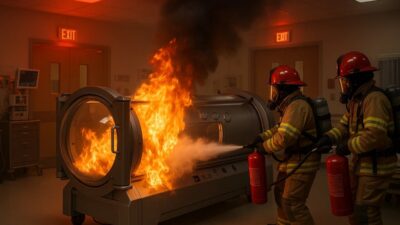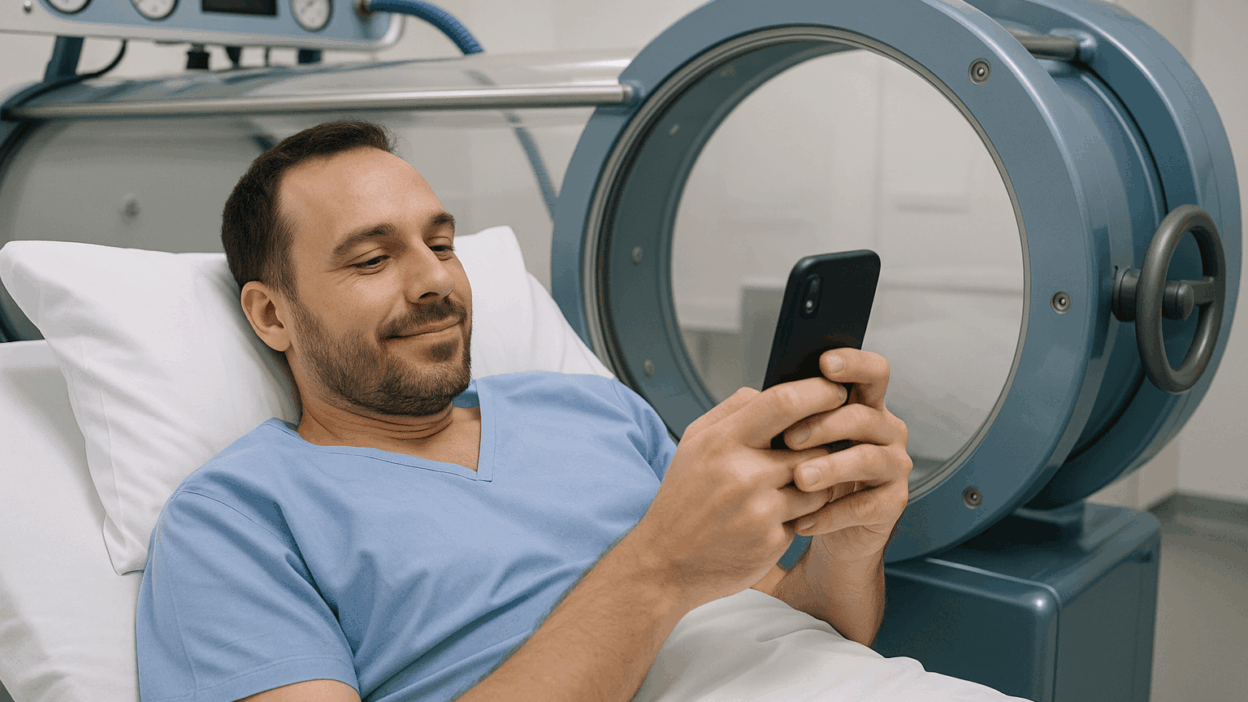
You cannot bring your phone into a hyperbaric chamber. No exceptions. Smartphones, smartwatches, tablets, Bluetooth headphones, and all other battery-powered electronics are prohibited. In a chamber filled with 100% oxygen under elevated pressure, a lithium-ion battery that overheats or sparks becomes a potential ignition source for a fire that can spread in seconds. This rule is not bureaucratic inconvenience. It exists because people have died.
What About Soft-Shell Home Chambers?
Soft-shell home chambers at 1.3 ATA operate with either ambient air (~21% oxygen) or an oxygen concentrator delivering ~90–95% oxygen via a mask. The fire risk differs depending on which method is used.
With ambient air only (no concentrator), the oxygen concentration remains similar to room air, and fire risk is comparable to other contexts. However, electronics still carry EMI risks and general caution remains appropriate.
With an oxygen concentrator, the local oxygen concentration around the patient’s breathing mask and within the chamber can be significantly elevated. The same electronics prohibitions apply when oxygen is actively being delivered to the patient. Any spark source near elevated-oxygen areas is a fire risk.
Regardless of setup, the UHMS recommends following the same prohibited item protocols for home use that clinical facilities require. The consequences of a fire in an enclosed pressurized fabric chamber are severe even at 1.3 ATA.
What You Can Do Instead of Using Your Phone
Sessions last 60–90 minutes. Here is what most patients do:
- Listen to music or podcasts: Many facilities pipe audio into the chamber through the facility’s approved speaker system. Ask if this is available.
- Sleep or nap: The most common activity. Many patients find HBOT deeply relaxing and naturally doze off.
- Meditate or practice breathing exercises
- Listen to an audiobook through the facility’s audio system
- Simply rest
For patients with genuine accessibility needs (hearing aids, CGM devices, insulin pumps), discuss device compatibility with your provider before your first session. Some devices have been evaluated for hyperbaric use; others have not. The Dexcom G6 has published safety data in multiplace chambers.[4] The G7 does not. See our Dexcom G7 hyperbaric guide for details.
Frequently Asked Questions
Can I bring my phone in a soft-shell home chamber?
If your chamber is pressurized with ambient air only (no oxygen concentrator), the fire risk from your phone is lower than in a clinical 100% oxygen chamber. However, using electronics in any pressurized environment carries risk, and most manufacturers recommend following the same prohibitions. If you use an oxygen concentrator, treat your home chamber with the same restrictions as a clinical facility.
What if I need my hearing aid?
Discuss this with your provider before your first session. Hearing aids are electronic devices with batteries. Most standard hearing aids are not approved for hyperbaric use. Some newer models have been assessed; check with your hearing aid manufacturer and your HBOT provider.
Can I watch a video through a window from inside the chamber?
Some facilities position approved screens outside the chamber visible through the viewport. The device itself remains outside the chamber. This is an acceptable arrangement because the electronics are not in the oxygen-enriched environment.
References
- centrehyperbare.com: Prohibition of Electronic Devices in Hyperbaric Oxygen Therapy; noahclinics.com: Things You Should Never Bring Into an HBOT Session
- NFPA 99 Health Care Facilities Code, Chapter 14. 2024 Edition. nfpa.org
- Sheffield PJ, Desautels DA. Hyperbaric and hypobaric chamber fires: a 73-year analysis. Undersea & Hyperbaric Medicine. 1997;24(3):153-164. PMID: 9308138
- Published study on Dexcom G6 transmitter safety in hyperbaric conditions. 2020. PMID: 32176942
Medical Disclaimer
The content on BaricBoost.com is for informational purposes only and is not intended as a substitute for professional medical advice, diagnosis, or treatment. Always seek the advice of your physician or other qualified health provider with any questions you may have regarding a medical condition. Never disregard professional medical advice or delay in seeking it because of something you have read on this website.

Author
Seph Fontane Pennock is the founder of BaricBoost.com and Regenerated.com, a clinic directory for regenerative medicine serving 10,000+ providers across the United States. He previously built and sold PositivePsychology.com, which grew to 19 million users and became the largest evidence-based positive psychology resource on the web. Seph brings direct experience as an HBOT patient, having completed protocols at clinics across three continents while navigating mold illness, systemic inflammation, and autoimmune conditions. His treatment journey includes hyperbaric oxygen therapy, peptide protocols, NAD+ therapy, and consultations with specialists from Dubai to Cape Town to Mexico. This combination of entrepreneurial track record and lived patient experience shapes everything published on BaricBoost.com. Every article is grounded in peer-reviewed research, informed by real clinical encounters, and written for patients making high-stakes treatment decisions. Seph's focus is on bringing transparency, scientific rigor, and practical guidance to the hyperbaric oxygen therapy space.