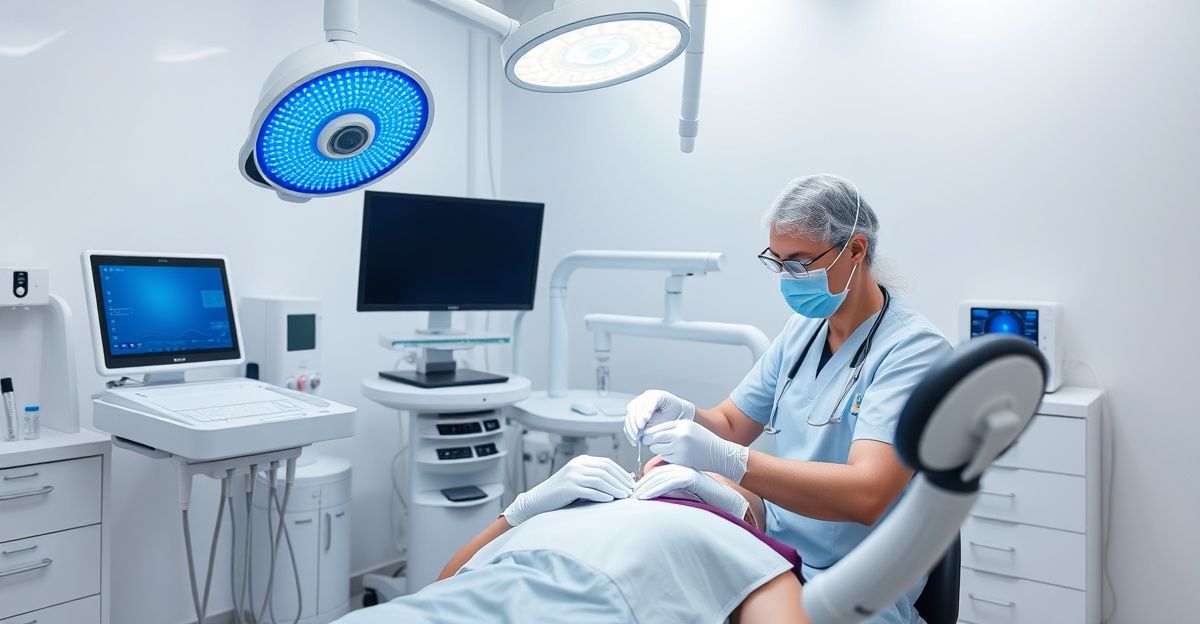
Dental ozone therapy costs between $50 and $600 per procedure depending on the application, making it competitive with many conventional dental treatments while offering a minimally invasive, drug-free alternative. Dentists use ozone to sterilize cavities before filling, treat gum disease, support root canals, and prepare implant sites. The treatment kills bacteria, viruses, and fungi on contact without damaging surrounding healthy tissue, which is why it has gained traction among biological and holistic dentists.
This guide breaks down the cost of dental ozone therapy by procedure, compares it with conventional dental costs, explains what insurance will and will not cover, and helps you determine whether dental ozone therapy is worth the investment for your specific situation.
Key Takeaways
- Ozone cavity treatment costs $50 to $150 per tooth, often added to the cost of a standard filling
- Ozone gum disease treatment runs $100 to $200 per quadrant, comparable to traditional scaling and root planing
- Root canal procedures with ozone cost $300 to $600 total, similar to conventional root canals
- Insurance rarely covers the ozone component specifically, though the underlying dental procedure may be covered
- Ozone treatment adds 5 to 15 minutes to a standard dental procedure
Cost by Dental Procedure
Cavity Treatment with Ozone ($50-$150 per tooth)
Ozone is applied to a cavity before filling it. The gas penetrates the decayed tooth structure and kills the bacteria that cause decay. This allows the dentist to be more conservative with drilling, preserving more healthy tooth structure.1
The ozone component adds $50 to $150 to the cost of a standard filling. Some dentists include it as part of their filling fee, while others list it as a separate line item.
| Procedure | Without Ozone | With Ozone | Ozone Add-on Cost |
|---|---|---|---|
| Small composite filling | $150-$300 | $200-$450 | $50-$150 |
| Large composite filling | $250-$450 | $300-$600 | $50-$150 |
| Early decay (remineralization) | N/A (monitor or fill) | $50-$100 | $50-$100 (standalone) |
For early-stage cavities (incipient lesions), some dentists use ozone as a standalone treatment to halt decay progression and promote remineralization without drilling at all. This costs $50 to $100 per tooth and may eliminate the need for a filling entirely, which represents a potential cost saving.1
Gum Disease Treatment ($100-$200 per quadrant)
Ozone is used to treat periodontal disease by delivering ozone gas or ozonated water directly into periodontal pockets after scaling and root planing (deep cleaning). The ozone kills bacteria deep within the pockets where conventional cleaning alone may not reach.
| Gum Treatment | Conventional Cost | With Ozone | Ozone Add-on |
|---|---|---|---|
| Scaling & root planing (per quadrant) | $200-$400 | $300-$600 | $100-$200 |
| Full-mouth deep cleaning (4 quadrants) | $800-$1,600 | $1,200-$2,400 | $400-$800 |
| Periodontal maintenance (per visit) | $150-$300 | $200-$400 | $50-$100 |
A 2020 systematic review by Srikanth et al. found that ozone-assisted periodontal treatment showed additional reductions in pocket depth and bacterial counts compared to scaling and root planing alone, suggesting the added cost may be justified by improved outcomes.2
“The added cost of ozone in periodontal treatment is modest compared to the potential benefit of avoiding more expensive surgical interventions down the road. If ozone helps control pocket depth and bacterial load, it may reduce the need for periodontal surgery.” Srikanth A et al., Journal of Indian Society of Periodontology, 2020
Root Canal with Ozone ($300-$600)
During root canal therapy, ozone gas is used to disinfect the root canal system after mechanical cleaning and before filling. The canal system has tiny tubules and branches that are difficult to reach with conventional irrigants like sodium hypochlorite alone. Ozone gas penetrates these areas more effectively.3
| Root Canal Procedure | Conventional Cost | With Ozone | Ozone Add-on |
|---|---|---|---|
| Front tooth root canal | $600-$900 | $700-$1,100 | $100-$200 |
| Premolar root canal | $700-$1,000 | $800-$1,200 | $100-$200 |
| Molar root canal | $1,000-$1,400 | $1,100-$1,600 | $100-$200 |
Implant Preparation ($75-$150)
Before placing a dental implant, ozone is used to sterilize the implant site, the socket, and sometimes the implant surface itself. This reduces the risk of peri-implantitis (infection around the implant) and may improve osseointegration (the process of bone bonding to the implant).
The ozone add-on for implant preparation typically costs $75 to $150 on top of the implant procedure cost ($3,000 to $6,000 for implant + abutment + crown).
Other Dental Ozone Applications
| Application | Cost | Notes |
|---|---|---|
| Tooth sensitivity treatment | $50-$100 | Ozone applied to exposed dentin |
| Canker sore / aphthous ulcer | $50-$75 | Speeds healing, reduces pain |
| TMJ/jaw joint treatment | $100-$200 | Ozone injection into TMJ |
| Post-extraction socket treatment | $50-$100 | Reduces dry socket risk |
For more on dental ozone therapy applications and how it works, see our complete guide to ozone therapy for teeth.
Insurance Coverage
Dental insurance rarely covers ozone therapy as a separate procedure. However, the underlying dental procedures (fillings, root canals, periodontal treatment) may be covered under your plan. The ozone component is typically the out-of-pocket portion.
Some strategies to manage costs:
- Ask if ozone is bundled: Some dentists include ozone in their procedure fee rather than charging separately
- Use FSA/HSA funds: Dental ozone therapy generally qualifies as a medical expense for flexible spending or health savings accounts
- Dental discount plans: Some plans offer reduced rates at participating holistic dental practices
- Compare total costs: Factor in the potential cost savings from avoiding more invasive procedures. If ozone halts early decay, you save the cost of a filling ($150-$300)
Is Dental Ozone Therapy Worth the Extra Cost?
The value proposition depends on your specific situation:
- High value: Early-stage cavities where ozone may prevent the need for drilling; periodontal patients who have not responded fully to conventional deep cleaning; patients with compromised immune systems or heightened infection risk
- Moderate value: Root canal disinfection (ozone adds an extra layer of sterilization); implant preparation (may reduce peri-implantitis risk)
- Lower value: Routine dental cleanings in healthy patients; large cavities that already require extensive restoration (ozone helps but does not change the treatment plan)
Finding a Dentist Who Offers Ozone Therapy
Dental ozone therapy is primarily offered by biological, holistic, and integrative dentists. Look for practitioners affiliated with:
- International Academy of Oral Medicine and Toxicology (IAOMT)
- Holistic Dental Association (HDA)
- American Academy of Ozone Therapy (AAOT) dental division
Ask about their ozone equipment (medical-grade ozone generator with concentration monitoring), training credentials, and how many ozone dental procedures they perform regularly.
The Bottom Line
Dental ozone therapy adds $50 to $200 to most standard dental procedures. The total cost is generally competitive with conventional dental treatment, and in some cases (early decay treatment, avoided procedures), ozone can save money in the long run. Insurance rarely covers the ozone component, but FSA/HSA funds can be used. The strongest value proposition is for patients with early-stage decay, periodontal disease, or increased infection risk.
References
- Holmes J. Clinical reversal of root caries using ozone, double-blind, randomised, controlled 18-month trial. Gerodontology. 2003;20(2):106-114. doi:10.1111/j.1741-2358.2003.00106.x
- Srikanth A, Sathish M, Sri Harsha AV. Application of ozone in the treatment of periodontal disease. Journal of Pharmacy and Bioallied Sciences. 2013;5(Suppl 1):S89-S94. doi:10.4103/0975-7406.113304
- Huth KC, Erguclu E, During A, et al. Effectiveness of ozone against endodontopathogenic microorganisms in a root canal biofilm model. International Endodontic Journal. 2009;42(1):3-13. doi:10.1111/j.1365-2591.2008.01460.x
Medical Disclaimer
The content on BaricBoost.com is for informational purposes only and is not intended as a substitute for professional medical advice, diagnosis, or treatment. Always seek the advice of your physician or other qualified health provider with any questions you may have regarding a medical condition. Never disregard professional medical advice or delay in seeking it because of something you have read on this website.

Author
Seph Fontane Pennock is the founder of BaricBoost.com and Regenerated.com, a clinic directory for regenerative medicine serving 10,000+ providers across the United States. He previously built and sold PositivePsychology.com, which grew to 19 million users and became the largest evidence-based positive psychology resource on the web. Seph brings direct experience as an HBOT patient, having completed protocols at clinics across three continents while navigating mold illness, systemic inflammation, and autoimmune conditions. His treatment journey includes hyperbaric oxygen therapy, peptide protocols, NAD+ therapy, and consultations with specialists from Dubai to Cape Town to Mexico. This combination of entrepreneurial track record and lived patient experience shapes everything published on BaricBoost.com. Every article is grounded in peer-reviewed research, informed by real clinical encounters, and written for patients making high-stakes treatment decisions. Seph's focus is on bringing transparency, scientific rigor, and practical guidance to the hyperbaric oxygen therapy space.