What if a dentist could stop tooth decay without drilling? That was the promise behind HealOzone, a clinical device developed in the early 2000s that applied ozone gas directly to early-stage cavities. The idea was straightforward: kill the bacteria causing the decay, neutralize the acid environment, and give the tooth a chance to remineralize on its own. Multiple clinical studies showed it worked for early lesions. Then the device was pulled from the market. But the science behind ozone for tooth decay did not disappear, and practitioners are still using the principle today.
Here is what the research actually demonstrated, where ozone works for caries, where it does not, and what is available now.
Key Takeaways
- Ozone kills cariogenic bacteria (primarily Streptococcus mutans) on contact and oxidizes the acid byproducts that dissolve tooth enamel.
- The HealOzone device demonstrated reversal of early root caries in 100% of treated teeth at 12-month follow-up when combined with a remineralizing solution (Holmes, 2003).
- Ozone works for early-stage, non-cavitated lesions (white spot lesions, incipient enamel and root caries). It does not work for deep cavities that have already destroyed significant tooth structure.
- The HealOzone is no longer manufactured, but other dental ozone generators deliver the same mechanism. Availability depends on your dentist.
- Cost ranges from $50-200 per tooth treated, typically not covered by dental insurance.
How Ozone Kills Decay-Causing Bacteria
Tooth decay begins when bacteria in dental plaque metabolize sugars and produce acids that dissolve the mineral structure of enamel and dentin. The primary culprit is Streptococcus mutans, an acid-producing bacterium that thrives in low-pH environments.
Ozone (O3) attacks this process at multiple levels:
- Direct bacterial killing: Ozone oxidizes the cell walls and membranes of bacteria, causing rapid cell death. S. mutans and other cariogenic species are highly susceptible to ozone at concentrations used clinically (2,100 ppm for 10-40 seconds).
- Acid neutralization: Ozone oxidizes the organic acids (lactic acid, acetic acid) produced by bacterial metabolism, raising the local pH. This shifts the chemical equilibrium from demineralization toward remineralization.
- Protein denaturation: Ozone breaks down bacterial proteins and enzymes, preventing surviving organisms from immediately recolonizing the treated surface.
- Biofilm disruption: Ozone penetrates and disrupts the biofilm matrix that protects bacterial colonies, making them vulnerable to both the ozone itself and subsequent antimicrobial agents.
Once bacteria are eliminated and the acid environment neutralizes, calcium and phosphate ions from saliva can redeposit into the demineralized enamel or dentin. This natural remineralization process is enhanced when a remineralizing solution (containing fluoride, calcium, phosphate, and zinc) is applied immediately after ozone treatment.
The HealOzone Research
The most robust evidence for ozone in caries management comes from studies using the HealOzone device (CurOzone USA/KaVo), which delivered a standardized dose of ozone (2,100 ppm for 10-40 seconds) through a sealed silicone cup placed over the lesion.
| Study | Design | Key Finding |
|---|---|---|
| Holmes, 2003 | Double-blind RCT, 89 patients, root caries | 100% of ozone-treated root caries lesions reversed or arrested at 12 months vs 37% control. p<0.001 |
| Baysan & Lynch, 2004 | RCT, primary root caries | Ozone + remineralizing solution produced significantly harder lesion surfaces (indicating mineral gain) vs control |
| Baysan & Lynch, 2006 | 18-month follow-up study | Reversal rates maintained at 18 months. Treated lesions continued to show remineralization. |
| Dahnhardt et al., 2006 | RCT, pit and fissure caries | Ozone treatment reduced bacterial counts in fissure caries. Clinical reversal observed in early lesions. |
| Abu-Naba’a et al., 2003 | Clinical study, children | Ozone effectively reduced salivary S. mutans counts in pediatric patients with active caries |
The Holmes (2003) study remains the most cited: a double-blind randomized controlled trial showing that every single ozone-treated root caries lesion either reversed or arrested over 12 months, compared to 37% in the control group. These results were remarkable and generated significant interest in minimally invasive caries management.
In a double-blind randomized controlled trial, 100% of early root caries lesions treated with ozone reversed or arrested at 12-month follow-up, compared to 37% in the control group. The key limitation: this only works for lesions caught early, before significant structural breakdown occurs.
When Ozone Works and When It Does Not
The critical distinction is lesion stage. Ozone is effective for early, non-cavitated decay. It is not effective for advanced cavities.
| Lesion Type | Ozone Effective? | Explanation |
|---|---|---|
| White spot lesions (enamel only) | Yes | Enamel is demineralized but intact. Ozone + remineralization can reverse the process. |
| Incipient root caries | Yes | The strongest evidence base. Soft, discolored root surfaces respond well to ozone treatment. |
| Pit and fissure caries (early) | Likely yes | Limited but positive data for non-cavitated fissure lesions. |
| Shallow dentin caries (non-cavitated) | Possibly | Some evidence for arrest but less data than enamel/root lesions. |
| Cavitated enamel lesions | No | Once the enamel surface has physically broken, remineralization cannot rebuild the lost structure. |
| Deep dentin caries | No | Too much structural loss. Requires excavation and restoration. |
| Pulpal involvement | No | Decay reaching the pulp requires root canal or extraction. Ozone cannot treat pulpitis. |
This limitation is not a weakness of ozone per se. It is the fundamental biology of tooth structure. Once enamel or dentin has physically cavitated (the surface has broken and collapsed), no antimicrobial treatment can rebuild it. The mineral framework is gone. Ozone works by preserving and remineralizing a weakened but structurally intact tooth surface.
The HealOzone Story: What Happened?
HealOzone was developed by Professor Edward Lynch at Queen’s University Belfast and commercialized by KaVo (a major dental equipment manufacturer). It received regulatory approval in Europe and was used in dental practices across the UK and Europe in the mid-2000s.
The device was eventually discontinued for commercial reasons rather than safety or efficacy concerns. Contributing factors included:
- Cost: The device and its consumable cups were expensive relative to the reimbursement available for minimally invasive treatments.
- Dental insurance: Most insurance systems did not have billing codes for ozone treatment, making it a cash-pay procedure.
- Practice change resistance: Many dentists were more comfortable with the drill-and-fill approach they were trained in.
- FDA hurdles: The device did not receive FDA clearance in the US, limiting its largest potential market.
The discontinuation of HealOzone did not invalidate the research. The mechanism of action, ozone killing bacteria and enabling remineralization, is not device-specific. Other dental ozone generators deliver the same therapeutic effect, though without the standardized dosing and sealed cup system that made HealOzone unique.
What Is Available Today
Several dental ozone generators are currently available for practitioners who want to incorporate ozone into caries management:
- Promolife dental ozone units: Produce controlled ozone concentrations for dental applications.
- Longevity Resources EXT120-T: A medical-grade ozone generator with dental-specific attachments.
- OzoneDTA: Designed specifically for dental applications including caries treatment, periodontal care, and endodontic disinfection.
These devices deliver ozone gas through specialized handpieces or cannulas. While they lack the HealOzone’s sealed-cup design, experienced practitioners achieve comparable results by managing the ozone delivery technique carefully.
The Treatment Process
Ozone treatment for tooth decay is straightforward and painless:
- Diagnosis: The dentist identifies early lesions using visual examination, DIAGNOdent (laser fluorescence), or other diagnostic tools. Radiographs help determine lesion depth.
- Isolation: The tooth is isolated and dried.
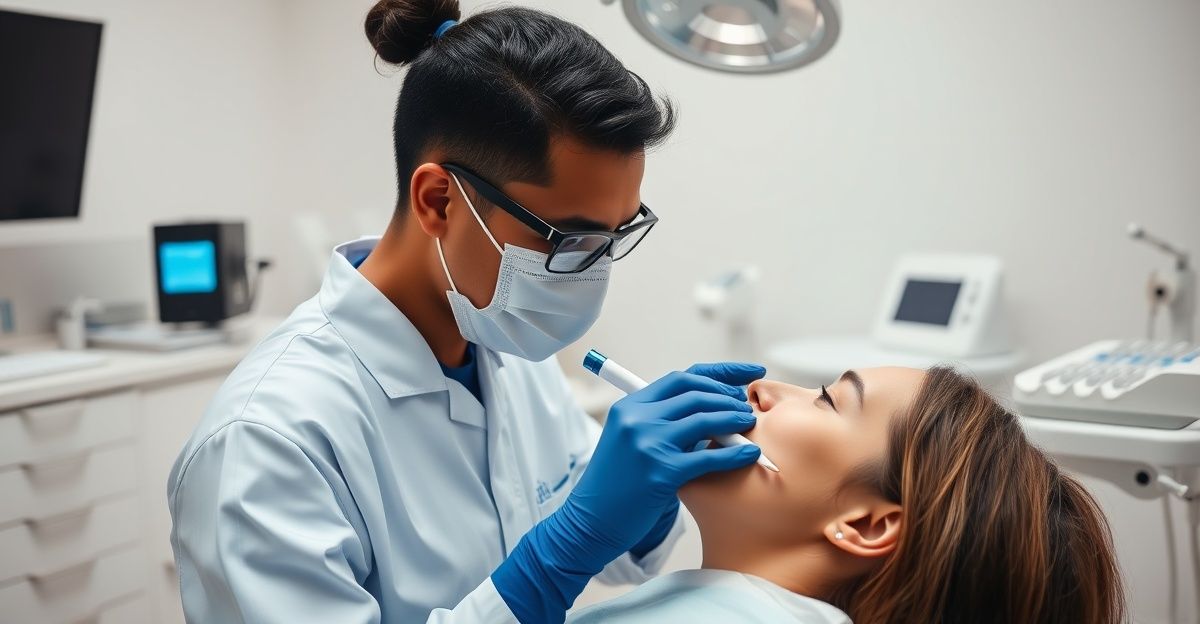
- Ozone application: Ozone gas is applied to the lesion surface for 10-60 seconds (protocol varies by device and lesion type).
- Remineralizing agent: A remineralizing solution or paste (containing fluoride, calcium, phosphate, and often xylitol) is applied to the treated surface.
- Follow-up: The lesion is monitored at subsequent visits (typically 3-6 months) to assess whether remineralization has occurred.
The entire procedure takes 5-10 minutes per tooth. No drilling. No anesthesia. No pain. For pediatric patients and dental-phobic adults, this is a significant advantage.
Cost and Availability
- Cost per tooth: $50-200, depending on the practice and geographic area.
- Insurance: Generally not covered by dental insurance in the US. Some international plans may cover it.
- Availability: Limited. Biological dentists and integrative dental practices are the most likely to offer ozone caries treatment. Check the IAOMT and IABDM practitioner directories.
- Repeat treatments: Some lesions require 2-3 treatments over several months to achieve full remineralization.
Limitations and Honest Assessment
The ozone-for-caries evidence, while positive, has limitations worth noting:
- Small study sizes. Most RCTs had fewer than 100 participants. Larger multi-center trials have not been conducted.
- Single research group. Much of the strongest evidence comes from Professor Lynch’s group. Independent replication at scale is limited.
- No FDA clearance. The treatment and devices are used off-label in the US.
- Patient compliance matters. Remineralization requires adequate saliva flow, fluoride exposure, and dietary modification. Ozone alone without follow-up care is less effective.
- Detection challenges. The approach works best when decay is caught very early. Many patients do not visit the dentist until lesions have progressed beyond the ozone-treatable stage.
The Bottom Line
Ozone therapy for tooth decay is a promising minimally invasive approach with solid evidence for early-stage lesions, particularly root caries. The HealOzone research demonstrated that ozone combined with remineralization can reverse decay that would otherwise require drilling and filling. The limitation is clear: this only works when decay is caught early, before the tooth surface has physically cavitated. For early lesions, it offers a painless, drill-free alternative that preserves natural tooth structure. For deep cavities, conventional treatment remains necessary. If you are interested, seek out a biological or integrative dentist who has specific training in dental ozone therapy and realistic expectations about which lesions are treatable.
- Holmes J. Clinical reversal of root caries using ozone, double-blind, randomised, controlled 18-month trial. Gerodontology. 2003;20(2):106-114. doi:10.1111/j.1741-2358.2003.00106.x
- Baysan A, Lynch E. Effect of ozone on the oral microbiota and clinical severity of primary root caries. Am J Dent. 2004;17(1):56-60.
- Baysan A, Lynch E. Clinical reversal of root caries using ozone: 6-month results. Am J Dent. 2006;19(1):60-64.
- Dahnhardt JE, et al. Treating occlusal caries lesions in primary and permanent teeth with HealOzone. Am J Dent. 2006;19(5):303-308.
- Abu-Naba’a L, et al. Effect of ozone on caries-like enamel lesion in permanent teeth. Am J Dent. 2003;16(Spec No):A13-17.
- Nogales CG, et al. Ozone therapy in medicine and dentistry. J Contemp Dent Pract. 2008;9(4):75-84. doi:10.5005/jcdp-9-4-75
- Bocci V. Ozone: A New Medical Drug. 2nd ed. Dordrecht: Springer; 2011. doi:10.1007/978-90-481-9234-2
Medical Disclaimer
The content on BaricBoost.com is for informational purposes only and is not intended as a substitute for professional medical advice, diagnosis, or treatment. Always seek the advice of your physician or other qualified health provider with any questions you may have regarding a medical condition. Never disregard professional medical advice or delay in seeking it because of something you have read on this website.

Author
Seph Fontane Pennock is the founder of BaricBoost.com and Regenerated.com, a clinic directory for regenerative medicine serving 10,000+ providers across the United States. He previously built and sold PositivePsychology.com, which grew to 19 million users and became the largest evidence-based positive psychology resource on the web. Seph brings direct experience as an HBOT patient, having completed protocols at clinics across three continents while navigating mold illness, systemic inflammation, and autoimmune conditions. His treatment journey includes hyperbaric oxygen therapy, peptide protocols, NAD+ therapy, and consultations with specialists from Dubai to Cape Town to Mexico. This combination of entrepreneurial track record and lived patient experience shapes everything published on BaricBoost.com. Every article is grounded in peer-reviewed research, informed by real clinical encounters, and written for patients making high-stakes treatment decisions. Seph's focus is on bringing transparency, scientific rigor, and practical guidance to the hyperbaric oxygen therapy space.