Affiliate Disclosure
This article contains affiliate links. If you purchase through these links, we may earn a commission at no additional cost to you. This does not influence our evaluations or rankings.
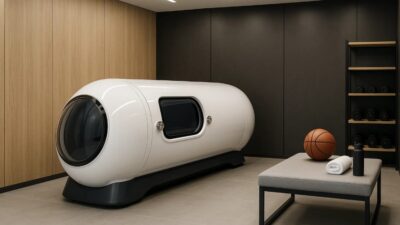
A hard shell hyperbaric chamber is the clinical gold standard for hyperbaric oxygen therapy (HBOT). These rigid-walled pressure vessels operate at 2.0 to 3.0 ATA with 100% medical-grade oxygen, meeting the thresholds required for all 14 UHMS-approved medical indications.1 Soft chambers operate at 1.3 ATA maximum and are cleared only for altitude sickness, a fundamentally different device category.
Understanding what hard shell chambers actually do, and how they differ from soft shells, helps patients, clinics, and buyers make decisions grounded in evidence rather than marketing.
Construction and Design
Clinical hard-shell operating pressure
Arterial oxygen at 2.4 ATA (vs ~230 mmHg soft shell)
UHMS-approved indications (all require hard shell)
Tissue oxygen at 2.0 vs 1.4 ATA in wound patients
Hard shell chambers are built from steel, aerospace-grade aluminum, or thick acrylic designed to sustain repeated pressurization cycles for 20 to 30 years. They are engineered to ASME PVHO-1 (Pressure Vessels for Human Occupancy) standards, the voluntary but widely-followed engineering benchmark for pressure vessels holding human occupants.2
Clinical monoplace models from Perry Baromedical and Sechrist Industries are FDA-registered, ISO 13485:2016 certified, and built to handle pressures up to 3.0 ATA or higher. Multiplace chambers can operate up to 6.0 ATA for emergency decompression protocols.
At 2.4 ATA with 100% oxygen, a hard shell chamber achieves arterial oxygen levels of approximately 1,824 mmHg, nearly 8 times the oxygen delivery of a soft shell at 1.3 ATA.
Oxygen Delivery: The Core Clinical Difference
The therapeutic mechanism of HBOT depends on dissolving oxygen directly into plasma under pressure. At 2.4 ATA with 100% O₂, arterial oxygen reaches approximately 1,824 mmHg, oxygen that diffuses into ischemic tissue, promotes angiogenesis, and activates wound-healing pathways that lower pressures cannot trigger.3
A 2023 clinical study measured transcutaneous oxygen (TcPO₂) in chronic wound patients at 1.4 ATA versus 2.0 ATA. Mean TcPO₂ at 1.4 ATA was 161 mmHg. At 2.0 ATA it was 333 mmHg, more than double, with statistical significance (p<0.001). The authors concluded there was no evidence that 1.4 ATA benefits chronic ulcer patients.4
Clinical Applications: The 14 UHMS-Approved Indications
All clinical evidence for UHMS-approved conditions comes from studies using hard shell chambers at 2.0 ATA or higher. Key applications include:
| Condition | Typical Pressure | Evidence Level |
|---|---|---|
| Diabetic foot ulcers | 2.0–2.4 ATA | Strong, multiple RCTs |
| Radiation injury (late effects) | 2.0–2.4 ATA | Strong, systematic reviews |
| Decompression illness | 2.4–2.8 ATA | Standard of care |
| CO poisoning | 2.4–3.0 ATA | Strong, multiple RCTs |
| Gas gangrene / NSTI | 2.5–3.0 ATA | Adjunctive standard |
| Chronic osteomyelitis | 2.0–2.4 ATA | Established adjunct |
Hard Shell vs Soft Shell: Key Differences
The comparison is not between two similar products at different price points. It is between two different device categories with different regulatory status, different oxygen delivery physics, and different evidence bases.
| Feature | Hard Shell | Soft Shell |
|---|---|---|
| Max pressure | 2.0–3.0 ATA (clinical) | 1.3 ATA |
| Oxygen source | 100% medical-grade O₂ | Ambient air or concentrator (~90–95% via mask) |
| Arterial O₂ | ~1,824 mmHg at 2.4 ATA | ~230 mmHg at 1.3 ATA |
| FDA status | Registered (clinical) / Cleared (home) | Cleared for altitude sickness only |
| UHMS conditions treatable | All 14 | None |
| Bacteriostatic capability | Yes, exceeds 1.5 ATA threshold | No |
The UHMS has issued a formal consumer warning about soft-sided bag chambers, stating they do not meet the clinical standards required for hyperbaric oxygen therapy.
UHMS Consumer Warning, uhms.org
Who Should Use a Hard Shell Chamber
Hard shell chambers are the appropriate choice when treating any UHMS-approved condition, when clinical supervision is available, or when a home user requires pressures above 1.5 ATA. For purely wellness-oriented home use without a diagnosed condition, a soft hyperbaric chamber is lower cost and lower complexity, with the understanding that it is a different treatment category.
For a full comparison of chamber types, see our guide to the hard shell vs soft shell hyperbaric chamber. For clinical monoplace options, see the hospital hyperbaric chamber guide.
FAQs
What pressure does a hard shell hyperbaric chamber operate at?
Clinical hard shell chambers operate at 2.0 to 3.0 ATA. Some home-grade hard shell models reach 1.5 to 2.0 ATA. All UHMS-approved indications require at least 2.0 ATA.
Is a hard shell chamber required for medical HBOT?
Yes. All clinical trials for FDA-recognized HBOT indications used hard shell chambers at 2.0 ATA or higher. Soft shells cannot replicate these conditions.
How long does a hard shell chamber last?
With proper maintenance, clinical hard shell chambers typically last 20 to 30 years. Perry Baromedical and Sechrist offer certified pre-owned programs for used clinical chambers.
References
References
- UHMS Indications for Hyperbaric Oxygen Therapy. 14th edition. Undersea and Hyperbaric Medical Society. 2021. uhms.org
- ASME PVHO-1. Safety Standard for Pressure Vessels for Human Occupancy. 2022. asme.org
- Burman F. Low-pressure fabric hyperbaric chambers. S Afr Med J. 2019;109(4). PMID: 31084683. https://doi.org/10.7196/SAMJ.2019.v109i4.13934
- Sack RA et al. Transcutaneous oximetry in chronic ulcer patients at 1.4 vs 2.0 ATA. Undersea Hyperb Med. 2023. PMID: 38615347.
- Laspro M et al. HBOT regimens, treated conditions, and adverse effect profile: UHMS survey. Undersea Hyperb Med. 2024. PMID: 39821765.
Medical Disclaimer
The content on BaricBoost.com is for informational purposes only and is not intended as a substitute for professional medical advice, diagnosis, or treatment. Always seek the advice of your physician or other qualified health provider with any questions you may have regarding a medical condition. Never disregard professional medical advice or delay in seeking it because of something you have read on this website.

Author
Seph Fontane Pennock is the founder of BaricBoost.com and Regenerated.com, a clinic directory for regenerative medicine serving 10,000+ providers across the United States. He previously built and sold PositivePsychology.com, which grew to 19 million users and became the largest evidence-based positive psychology resource on the web. Seph brings direct experience as an HBOT patient, having completed protocols at clinics across three continents while navigating mold illness, systemic inflammation, and autoimmune conditions. His treatment journey includes hyperbaric oxygen therapy, peptide protocols, NAD+ therapy, and consultations with specialists from Dubai to Cape Town to Mexico. This combination of entrepreneurial track record and lived patient experience shapes everything published on BaricBoost.com. Every article is grounded in peer-reviewed research, informed by real clinical encounters, and written for patients making high-stakes treatment decisions. Seph's focus is on bringing transparency, scientific rigor, and practical guidance to the hyperbaric oxygen therapy space.
Why Trust Our Evaluations
Our rankings are based on hands-on testing, published clinical data, and verified manufacturer specifications. We apply the same criteria to every product regardless of affiliate status. Editorial Process · Evaluation Methodology