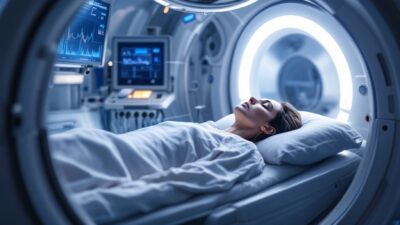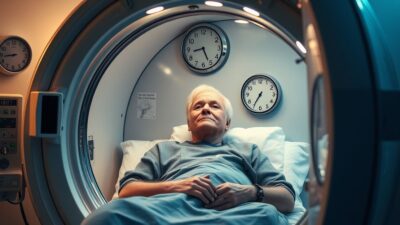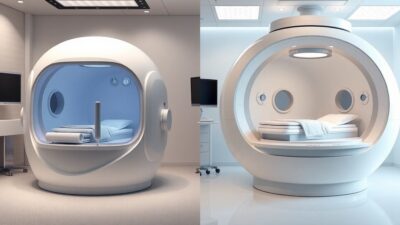
Hyperbaric Oxygen Therapy (HBOT) reduced fatigue severity in long COVID patients across multiple clinical trials, with the most rigorous evidence coming from a sham-controlled RCT showing significant Chalder Fatigue Scale improvements after 40 sessions at 2.0 atmospheres absolute (ATA). A 232-patient registry found 56-63% of patients achieved clinically meaningful improvement, with fatigue among the most responsive symptom domains. But 13-19% worsened, and the treatment requires 40+ sessions at $6,000-$16,000.
Fatigue Is the Defining Symptom of Long COVID
Fatigue is the most commonly reported long COVID symptom, affecting approximately 72% of patients according to meta-analyses of post-COVID symptoms1. This is not ordinary tiredness. Long COVID fatigue is a profound exhaustion that does not improve with rest, is often worsened by physical or cognitive exertion (post-exertional malaise), and is functionally disabling. Many patients cannot work, maintain relationships, or manage basic daily activities like cooking or showering without triggering crashes that last hours or days.
The distinction between normal tiredness and long COVID fatigue matters clinically. Normal fatigue improves with sleep. Long COVID fatigue persists after 12 hours of sleep. Normal fatigue is proportional to exertion. Long COVID fatigue can be triggered by walking to the mailbox or reading for 15 minutes. This disproportionate response is the hallmark of the condition.
The biological basis involves three overlapping mechanisms:
Mitochondrial dysfunction. COVID-19 damages mitochondria, the energy-producing structures within every cell. Mitochondria convert oxygen and glucose into ATP (adenosine triphosphate), the body’s energy currency. When mitochondria are damaged, ATP production drops. Every system slows down. Muscles fatigue faster. The brain cannot sustain attention. Recovery from minimal activity takes hours or days instead of minutes. Studies of long COVID patients have found reduced Complex I activity (the first enzyme in the mitochondrial electron transport chain) and decreased overall oxidative phosphorylation capacity.
Chronic inflammation. Elevated IL-6, TNF-alpha, and other pro-inflammatory cytokines persist months after infection. This chronic inflammatory state diverts metabolic resources toward the immune response and away from normal cellular function. The body is essentially running a low-grade immune activation at all times, which consumes energy. A 2026 review of seven studies confirmed that long COVID patients maintain elevated inflammatory markers that correlate with fatigue severity2.
Reduced oxygen delivery. Endothelial damage from COVID-19 impairs blood flow to muscles and organs. Microclots in small vessels further restrict oxygen delivery. The result is a body running on reduced oxygen supply, which directly limits energy production. Even if mitochondria were functioning normally, they cannot produce ATP without adequate oxygen. This creates a compounding problem: damaged mitochondria plus reduced oxygen supply means severely compromised energy production.
How Does HBOT Work for Long COVID Fatigue?
HBOT at 2.0 ATA with 100% oxygen addresses all three pathways simultaneously. This multi-mechanism approach is why HBOT shows broader effects than single-target interventions.
Mitochondrial biogenesis. Repeated hyperoxygenation stimulates the growth of new mitochondria and repairs existing ones. The mechanism involves a process called the hyperoxic-hypoxic paradox: cells exposed to high oxygen levels during HBOT sessions, followed by normal oxygen levels between sessions, trigger repair pathways similar to those activated by intermittent fasting or high-intensity exercise. This is not theoretical. The Bhaiyat et al. (2022) case report documented a 34% increase in VO2max (the gold standard measure of oxygen utilization capacity) after 60 HBOT sessions. VO2max improvement directly reflects improved mitochondrial function because it measures how efficiently the body can convert oxygen into energy3.
Anti-inflammatory shift. HBOT reduces IL-6 and TNF-alpha while increasing IL-10 (anti-inflammatory). The 2026 Soedarsono review confirmed that HBOT modulates the inflammatory balance toward resolution rather than chronicity. CRP (C-reactive protein) and ferritin levels also improved. This reduction in systemic inflammation means less metabolic energy diverted to immune activation, leaving more energy available for normal function2.
Oxygen saturation restoration. Breathing 100% oxygen at 2.0 ATA produces arterial oxygen levels of approximately 1,824 mmHg, roughly 12 times normal. This floods tissues with oxygen through plasma diffusion, bypassing damaged blood vessels and reaching areas that red blood cells cannot access due to microclotting. Over repeated sessions, this hyperoxygenation also stimulates the growth of new blood vessels (angiogenesis), creating permanent improvements in oxygen delivery infrastructure.
Endothelial repair. The lining of blood vessels (endothelium) is directly damaged by COVID-19. Damaged endothelium promotes clotting, restricts blood flow, and impairs the delivery of nutrients and oxygen to tissues. HBOT stimulates endothelial progenitor cells, which are stem-cell-like cells that migrate to damaged vessel walls and participate in repair. Over a 40-session protocol, this endothelial repair gradually restores normal blood flow patterns. The cardiac sub-analysis from the Tel Aviv trial (Leitman et al., 2023) provides indirect evidence of this: the reversal of subclinical cardiac dysfunction likely reflects improved coronary endothelial function alongside direct myocardial oxygenation.
What the Fatigue-Specific Data Shows
Zilberman-Itskovich et al. (2022), the Tel Aviv RCT. 73 long COVID patients, sham-controlled, 40 sessions at 2.0 ATA. The HBOT group showed significant improvement on the Chalder Fatigue Scale compared to sham. The Chalder scale measures both physical and mental fatigue across 11 items, with scores ranging from 0 to 33. The improvement was statistically significant and clinically meaningful, representing a real functional change that patients could feel in daily life. This is the strongest evidence because the sham group allowed researchers to rule out placebo effect4.
Van Berkel et al. (2025), 232-patient registry. In the largest real-world cohort, fatigue was among the most improved symptoms. SF-36 physical component scores (which capture fatigue impact on daily function) improved by clinically relevant amounts in 56% of patients. However, 19% had clinically relevant worsening on the physical component. This registry provides the most honest picture of real-world outcomes because it includes patients of varying severity, not just those selected for a clinical trial5.
Ha Nguyen Thi Hai et al. (2026), Vietnamese study. 51 patients, 14 sessions at 2.2 ATA. DASS-21 stress scores dropped from 18.31 to 13.31 (p<0.05). Quality of life (EQ-5D-5L) improved from 0.749 to 0.942 (p<0.001), a substantial gain that reflects meaningful improvement in daily function. SOD antioxidant activity increased from 51.87% to 73.23%, directly countering the oxidative stress contributing to fatigue. Normal cerebral blood flow increased from 37.3% to 78.4% of patients, showing that even the brain’s oxygen supply improved measurably6.
Wu et al. (2024), systematic review. Reviewed 10 clinical studies published between January 2019 and October 2023. Most studies found HBOT improves fatigue alongside cognition, neuropsychiatric symptoms, and cardiopulmonary function. The consistency across different study designs, different countries, and different patient populations strengthens the overall evidence7.
Leitman et al. (2023), cardiac function sub-analysis. This study from the Tel Aviv RCT found that 48.3% of long COVID patients had reduced global longitudinal strain (GLS) at baseline, indicating subclinical cardiac dysfunction that standard tests would miss. HBOT reversed this cardiac dysfunction. This matters for fatigue because subclinical heart problems reduce exercise tolerance and contribute to the feeling of exhaustion during minimal activity.
HBOT vs Other Treatments for Long COVID Fatigue
Pacing and energy management. The most widely recommended approach from long COVID clinics. Involves carefully budgeting energy expenditure to avoid post-exertional malaise crashes. Free. Does not reverse the underlying pathology. Manages symptoms rather than treating the cause. Should be used alongside any treatment, including HBOT.
Graded exercise therapy (GET). Controversial. Historically recommended for chronic fatigue, but many long COVID and ME/CFS patients report worsening with structured exercise programs. The UK’s NICE guidelines removed GET as a recommendation for ME/CFS in 2021 after evidence that it harmed some patients. HBOT is fundamentally different from GET because it does not require physical exertion. The patient lies in a chamber and breathes.
Low-dose naltrexone (LDN). $30-60/month from compounding pharmacies. Small pilot studies suggest benefit for long COVID fatigue through neuroinflammation modulation via opioid receptor antagonism. No RCTs published as of 2026. Can be combined with HBOT. Some practitioners prescribe both concurrently.
CoQ10 and mitochondrial supplements. $30-100/month for combinations of CoQ10, NAD+ precursors (NR/NMN), PQQ, and alpha-lipoic acid. Targets the same mitochondrial dysfunction HBOT addresses, but through supplementation rather than oxygen delivery. Limited evidence in long COVID specifically, though CoQ10’s role in mitochondrial function is well-established in other contexts.
B12 injections. Some long COVID clinics offer intramuscular B12 injections for fatigue. B12 is a cofactor in mitochondrial energy production. Evidence for B12 specifically in long COVID is anecdotal. Cost: $25-75 per injection.
HBOT’s advantage for fatigue specifically: It is the only intervention that simultaneously addresses mitochondrial dysfunction (via biogenesis), inflammation (via cytokine modulation), and oxygen delivery (via hyperoxygenation and angiogenesis). No other single intervention targets all three mechanisms with RCT-level evidence.
What Improvement Looks Like in Practice
Based on published trial endpoints and registry data, here is what fatigue improvement actually means in daily life.
Early changes (sessions 10-20): Patients may notice they can stay awake longer during the day or that recovery time after mild activity shortens. Post-exertional malaise crashes may become less severe, though not necessarily less frequent. Some patients report sleeping more deeply, which is a positive early sign even if daytime fatigue has not yet changed.
Mid-protocol (sessions 20-30): Some patients report being able to take short walks, cook meals, or engage in light household tasks without triggering multi-day crashes. The “energy envelope” (the total amount of activity possible before symptoms flare) begins to expand. The Vietnamese study found significant quality-of-life improvements as early as 14 sessions, suggesting metabolic improvements are accumulating.
Full protocol (sessions 30-40): The Tel Aviv trial’s Chalder Fatigue Scale improvements reflect meaningful functional gains. Patients who respond may return to part-time work, resume hobbies, or increase physical activity without the disproportionate fatigue response that characterized their illness. VO2max improvements (as documented in the Bhaiyat case) translate to measurably better exercise tolerance. Some patients describe the change as moving from “existing” to “living.”
Post-treatment durability: The one-year follow-up (Catalogna et al., 2024) found that improvements persisted at 12 months without additional HBOT sessions. This suggests HBOT induces durable physiological changes (new mitochondria, new blood vessels, reduced baseline inflammation) rather than a temporary boost that fades when treatment stops8.
The Honest Assessment
HBOT for long COVID fatigue works for the majority of patients who complete a full protocol. The data supports this claim with sham-controlled evidence, biomarker changes, cardiac function improvement, and one-year follow-up data.
But “works” needs qualification:
- 56-63% achieve clinically meaningful improvement. This is good, but it means 37-44% do not reach that threshold.
- 13-19% get worse. This is a real risk that patients should understand before committing $6,000-$16,000.
- The improvements are significant but rarely total. Most patients improve from severely disabled to moderately functional, not from disabled to fully recovered. If your expectation is complete resolution of all fatigue, the data suggests this is unlikely for most patients.
- 40 sessions is the minimum effective dose. Shorter protocols have failed to show benefit in controlled trials. There is no shortcut.
- The treatment is physically passive but logistically demanding. Traveling to a clinic 5 days per week for 8 weeks is itself exhausting for patients with severe fatigue. Plan for this.
The answer to “does HBOT actually work for long COVID fatigue” is: yes, for most patients who complete the full protocol, but not for all, and the improvement is meaningful rather than total.
Sources
- Katz A, Wainwright S, Kelly M, et al. “Hyperbaric oxygen effectively addresses the pathophysiology of long COVID: clinical review.” Frontiers in Medicine, 2024;11:1354088. DOI: 10.3389/fmed.2024.1354088
- Soedarsono S, Wijaya RA, Biutifasari V. “Potential Biomarkers and Inflammatory Modulation of HBOT in Long COVID.” Jurnal Respirasi, 2026. DOI: 10.20473/jr.v12-i.1.2026.90-96
- Bhaiyat A, Sasson E, Wang Z, et al. “Hyperbaric oxygen treatment for long coronavirus disease-19: a case report.” Journal of Medical Case Reports, 2022;16:80. DOI: 10.1186/s13256-022-03287-w
- Zilberman-Itskovich S, Catalogna M, Sasson E, et al. “Hyperbaric oxygen therapy improves neurocognitive functions and symptoms of post-COVID condition.” Scientific Reports, 2022;12:11252. DOI: 10.1038/s41598-022-15565-0
- van Berkel J, et al. “Hyperbaric oxygen therapy for long COVID.” Scientific Reports, 2025. DOI: 10.1038/s41598-025-11539-0
- Ha Nguyen Thi Hai et al. “Behavioral and Mental Disorders in Patients after COVID-19 and Results of HBOT.” Journal of Marine Medical Society, 2026. DOI: 10.4103/jmms.jmms_59_25
- Wu BQ, Liu DY, Shen TC, et al. “Effects of Hyperbaric Oxygen Therapy on Long COVID: A Systematic Review.” Life, 2024;14(4):438. DOI: 10.3390/life14040438
- Hadanny A, Zilberman-Itskovich S, Catalogna M, et al. “Long term outcomes of hyperbaric oxygen therapy in post COVID condition.” Scientific Reports, 2024;14:3604. DOI: 10.1038/s41598-024-53091-3
Medical Disclaimer
The content on BaricBoost.com is for informational purposes only and is not intended as a substitute for professional medical advice, diagnosis, or treatment. Always seek the advice of your physician or other qualified health provider with any questions you may have regarding a medical condition. Never disregard professional medical advice or delay in seeking it because of something you have read on this website.

Author
Seph Fontane Pennock is the founder of BaricBoost.com and Regenerated.com, a clinic directory for regenerative medicine serving 10,000+ providers across the United States. He previously built and sold PositivePsychology.com, which grew to 19 million users and became the largest evidence-based positive psychology resource on the web. Seph brings direct experience as an HBOT patient, having completed protocols at clinics across three continents while navigating mold illness, systemic inflammation, and autoimmune conditions. His treatment journey includes hyperbaric oxygen therapy, peptide protocols, NAD+ therapy, and consultations with specialists from Dubai to Cape Town to Mexico. This combination of entrepreneurial track record and lived patient experience shapes everything published on BaricBoost.com. Every article is grounded in peer-reviewed research, informed by real clinical encounters, and written for patients making high-stakes treatment decisions. Seph's focus is on bringing transparency, scientific rigor, and practical guidance to the hyperbaric oxygen therapy space.