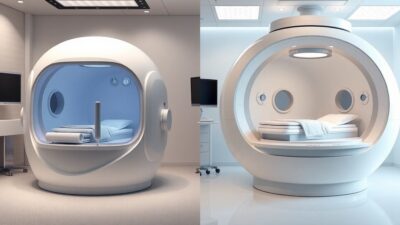
Hyperbaric Oxygen Therapy (HBOT) has substantially stronger evidence for long COVID than for ME/CFS (myalgic encephalomyelitis/chronic fatigue syndrome). For long COVID, 10 randomized controlled trials and 8 systematic reviews support its use as of 2026. For ME/CFS, the evidence is limited to small uncontrolled studies and case series. The conditions overlap significantly in symptoms and proposed mechanisms, but the research gap between them is wide.
How Long COVID and ME/CFS Overlap
The similarities between these conditions are not coincidental. An estimated 50% of long COVID patients meet diagnostic criteria for ME/CFS, according to multiple post-pandemic studies. Both conditions share core features that suggest related, possibly identical, underlying pathology. Understanding this overlap is essential for evaluating whether HBOT evidence from one condition can reasonably be applied to the other.
Shared symptoms:
- Disabling fatigue unrelieved by rest
- Post-exertional malaise (symptom flares after physical or cognitive activity, often delayed 24-72 hours)
- Cognitive dysfunction (“brain fog”): difficulty concentrating, memory problems, word-finding difficulties, reduced processing speed
- Unrefreshing sleep (sleeping 10-12 hours and waking exhausted)
- Orthostatic intolerance (symptoms worsening when standing, including dizziness, rapid heart rate, and pre-syncope)
- Widespread musculoskeletal pain and headaches
- Autonomic dysfunction (heart rate irregularities, temperature dysregulation, gastrointestinal problems)
- Immune dysregulation (frequent infections, reactivation of latent viruses like EBV)
The overlap is so substantial that some researchers have proposed long COVID is simply post-viral ME/CFS triggered specifically by SARS-CoV-2, rather than a distinct condition. If this is true, the implications for HBOT are significant: effective treatment for one should logically work for the other.
Shared biological mechanisms:
Mitochondrial dysfunction. Both conditions show impaired cellular energy production. Long COVID research has documented reduced Complex I activity and decreased ATP output. ME/CFS research has found similar mitochondrial abnormalities for decades, including reduced oxidative phosphorylation, impaired fatty acid metabolism, and abnormal lactate accumulation during minimal exercise. The specific pattern of mitochondrial damage may differ between conditions, but the functional consequence (insufficient energy production) is identical.
Neuroinflammation. Elevated pro-inflammatory cytokines (IL-6, TNF-alpha, IL-1beta) and reduced anti-inflammatory cytokines (IL-10) characterize both conditions. A 2026 review confirmed that HBOT modulates this exact cytokine profile in long COVID patients, reducing IL-6 and TNF-alpha while increasing IL-101. ME/CFS research has found similar cytokine elevations, particularly in the first three years of illness. Neuroimaging studies using PET scans have found activated microglia (the brain’s immune cells) in ME/CFS patients, confirming that neuroinflammation is not just peripheral but present within the central nervous system.
Reduced cerebral blood flow. Brain perfusion imaging shows hypoperfusion in both long COVID and ME/CFS patients, particularly in the brainstem, prefrontal cortex, and temporal regions. The Tel Aviv long COVID RCT confirmed that HBOT increases perfusion in multiple brain regions including the supramarginal gyrus, insula, and frontal areas2. ME/CFS research dating back to the 1990s has documented similar perfusion deficits, with a 2020 study using arterial spin labeling MRI showing reduced blood flow in the brainstem that correlated with symptom severity.
Endothelial dysfunction. Damage to blood vessel lining cells has been documented in both conditions, leading to microclotting, reduced oxygen delivery, and impaired blood flow regulation. Long COVID research has found elevated levels of Von Willebrand factor and fibrinogen, indicating endothelial activation and clotting tendency. Similar findings have been reported in ME/CFS subgroups.
Autonomic nervous system dysfunction. Both conditions feature dysautonomia, with many patients meeting criteria for postural orthostatic tachycardia syndrome (POTS). Heart rate variability is reduced in both conditions, indicating impaired parasympathetic function. This autonomic dysfunction contributes to exercise intolerance, orthostatic symptoms, and the boom-bust energy pattern that characterizes both illnesses.
The HBOT Evidence for Long COVID
The long COVID evidence base is substantial and growing. A comprehensive 2026 literature analysis (Zoccali et al.) identified 21 studies: 10 RCTs, 8 systematic reviews, and 3 mechanistic studies3.
The key positive findings:
- The Tel Aviv sham-controlled RCT (n=73, 40 sessions at 2.0 ATA) showed significant improvements in cognition, fatigue, sleep, pain, and psychiatric symptoms, with MRI-confirmed brain perfusion changes2
- A 232-patient registry found 56-63% achieved clinically meaningful improvement at 3 months. Cognitive symptoms responded most strongly4
- Biomarker studies confirm HBOT reduces IL-6 and TNF-alpha, increases IL-10, and boosts SOD antioxidant activity1
- One-year follow-up data shows improvements persist after treatment completion5
- Cardiac sub-analysis found HBOT reversed subclinical heart damage (global longitudinal strain) in 48% of patients who had it at baseline6
The important caveats:
- Two RCTs using only 10 sessions found no benefit, establishing a dose-response relationship (40+ sessions needed)
- 13-19% of registry patients worsened, indicating HBOT does not help everyone
- Most positive RCTs come from the same Israeli research group (Efrati/Hadanny), awaiting independent replication
The HBOT Evidence for ME/CFS
The evidence base for ME/CFS is thin compared to long COVID. There are no large sham-controlled RCTs specifically for ME/CFS, and the studies that exist are difficult to interpret due to methodological limitations.
What exists:
Small case series and pilot studies have reported improvements in fatigue, cognitive function, and quality of life in ME/CFS patients receiving HBOT. However, these studies lack sham controls, adequate sample sizes, and standardized outcome measures. Without a sham group, it is impossible to know whether improvements are from HBOT itself or from the placebo effect of a compelling medical intervention.
A 2025 study by D’hoore et al. published in Diving and Hyperbaric Medicine examined HBOT in the context of post-COVID fatigue syndromes that overlap with ME/CFS diagnostic criteria. The results were mixed, with some patients improving and others not responding. The study design did not allow separation of patients who had ME/CFS-like presentation from those with other long COVID phenotypes7.
The Harch 2022 systematic review of HBOT for mild traumatic brain injury found positive results at 1.5 ATA with oxygen. This is relevant because TBI, ME/CFS, and long COVID share overlapping symptom profiles and mechanisms (neuroinflammation, cerebral hypoperfusion, cognitive dysfunction). However, TBI evidence cannot be directly applied to ME/CFS without dedicated trials8.
Historical case reports from the 1990s and early 2000s described individual ME/CFS patients improving with HBOT, but these are anecdotal and subject to publication bias (improvements get published, failures do not).
Why the evidence gap exists:
ME/CFS has historically been one of the most underfunded diseases relative to its burden. The NIH allocated approximately $15 million per year to ME/CFS research prior to the pandemic. For comparison, multiple sclerosis (which affects fewer people) received $1.15 billion. Diabetes research received $1.1 billion. Even hay fever research received more funding than ME/CFS. This chronic underfunding means fewer clinical trials for any intervention, including HBOT.
Additionally, ME/CFS has faced decades of stigma within the medical community, with some practitioners dismissing it as psychological. This stigma reduced research funding applications, made it harder to recruit for clinical trials, and led to treatment guidelines (like graded exercise therapy) that many patients found harmful.
The COVID-19 pandemic paradoxically created momentum for ME/CFS research because long COVID brought similar symptoms to millions of previously healthy, often younger people, generating political and funding urgency that ME/CFS advocates had sought for decades. NIH funding for ME/CFS-related research increased significantly after 2020.
Why Long COVID Evidence May Apply to ME/CFS
The mechanistic overlap between these conditions suggests that HBOT’s demonstrated effects in long COVID may be relevant to ME/CFS patients. The logical chain is specific:
The pathways are the same. HBOT’s mechanism of action (increased cerebral perfusion, anti-inflammatory cytokine modulation, mitochondrial biogenesis, antioxidant restoration) targets biological processes that are dysfunctional in both conditions. If HBOT increases cerebral blood flow in long COVID patients with brain hypoperfusion, it should logically have a similar effect on the same brain hypoperfusion documented in ME/CFS patients. The oxygen does not discriminate based on what caused the hypoperfusion.
The symptoms respond similarly. Both conditions feature fatigue, brain fog, and post-exertional malaise as core symptoms. The long COVID trials showed improvements in exactly these domains. The Chalder Fatigue Scale, used in the Tel Aviv RCT, was originally developed and validated for ME/CFS. The same measurement tool showed improvement in both populations.
The limitation of this reasoning: Mechanistic plausibility is not proof. ME/CFS may have triggers, subtypes, or perpetuating factors that differ from long COVID in ways that affect HBOT response. For example, some ME/CFS patients have evidence of autoimmune attacks on autonomic nervous system receptors. If autoimmunity is a primary driver in a given patient’s ME/CFS, HBOT’s anti-inflammatory effects may not be sufficient to overcome the ongoing autoimmune process. The only way to confirm HBOT works for ME/CFS is through dedicated sham-controlled trials in ME/CFS patients.
Different Response Rates: What to Expect
Based on available data, response rates likely differ between the two conditions.
Long COVID response rate: 56-63% clinically meaningful improvement (van Berkel registry, n=232). This is reasonably well-established from a large prospective cohort4.
ME/CFS response rate: Unknown. No comparable registry or large trial exists. Small studies suggest some patients improve, but without sham controls, the placebo contribution is impossible to separate. ME/CFS has a well-documented placebo response rate of approximately 20-30% in clinical trials, which means improvements in uncontrolled studies may be partially or entirely explained by placebo effect.
Why long COVID patients may respond better:
- Shorter disease duration. Most long COVID patients are 3-18 months post-infection when they start HBOT. ME/CFS patients often have had the condition for years or decades. Longer disease duration may result in more entrenched pathological changes that are harder to reverse: more established microclotting networks, more chronic neuroinflammation, more advanced deconditioning.
- Clearer trigger. Long COVID has an identifiable viral insult (SARS-CoV-2). ME/CFS triggers are diverse (EBV, enterovirus, surgery, trauma, or no identifiable trigger at all). This heterogeneity means ME/CFS likely encompasses multiple subtypes with different underlying mechanisms, some of which may respond to HBOT and others may not.
- Less deconditioning. Long COVID patients who are months (not years) into their illness typically have less secondary deconditioning, less psychological adaptation to illness, and more physiological reserve to build upon.
- Less immune exhaustion. A shorter disease course means the immune system has been dysfunctional for a shorter period, potentially making it more responsive to intervention.
Why some ME/CFS patients might respond well:
- Post-viral ME/CFS (triggered by EBV, enterovirus, or other infections) shares the closest mechanistic overlap with long COVID. These patients may respond similarly.
- ME/CFS patients with documented hypoperfusion on brain imaging may be more likely to respond to a treatment that specifically increases cerebral blood flow
- ME/CFS patients with elevated inflammatory markers (IL-6, CRP) might respond to HBOT’s anti-inflammatory effects
- Patients earlier in their disease course (first 2-3 years) may respond better than those with decades of illness
- Patients whose primary symptoms are cognitive (brain fog, processing speed) rather than pain or autonomic dysfunction may respond best, since cognition showed the strongest improvement in long COVID trials
Practical Considerations for ME/CFS Patients Considering HBOT
Post-exertional malaise risk. The HBOT sessions themselves are physically passive (you lie in a chamber and breathe). However, the daily travel to a clinic five days per week for 8 weeks can trigger post-exertional malaise in ME/CFS patients. This is a practical barrier that may be less relevant for long COVID patients with milder functional limitations. Strategies to manage this include: scheduling sessions early in the day when energy is highest, arranging rides to eliminate the exertion of driving, resting for 30-60 minutes before and after each session, and reducing all other activities during the treatment period.
Financial risk is higher. Without RCT-level evidence for ME/CFS specifically, spending $6,000-$16,000 on a 40-session protocol carries more uncertainty than for a long COVID patient, where the evidence is stronger. An ME/CFS patient is essentially making a decision based on extrapolation, which is reasonable but riskier than making a decision based on direct evidence.
Trial access. Current clinical trials for HBOT overwhelmingly recruit long COVID patients, not ME/CFS patients. ME/CFS patients may have difficulty qualifying for trials even if their symptoms are identical to long COVID. Some trials specifically exclude patients diagnosed with ME/CFS prior to COVID-19. This creates an inequitable situation that advocacy groups are working to address.
Protocol considerations. The positive long COVID studies used 40 sessions at 2.0 ATA. There is no evidence that ME/CFS requires a different protocol, but there is also no evidence that this specific protocol is optimal for ME/CFS. Some ME/CFS clinicians have anecdotally reported using slightly lower pressures (1.5-1.75 ATA) to reduce the risk of exacerbating symptoms, but this is not evidence-based.
Assessment strategy. Given the uncertainty, a practical approach might be: commit to 20 sessions initially. Assess symptom changes using a standardized tool like the Chalder Fatigue Scale or SF-36 at baseline and at session 20. If measurable improvement is present, continue to 40 sessions. If no change or worsening has occurred by session 20, the probability of benefit from an additional 20 sessions is lower (though not zero, since the Tel Aviv trial showed the biggest gains in sessions 20-40).
The Current State and What Comes Next
As of mid-2026, the evidence clearly supports HBOT for long COVID based on multiple RCTs, systematic reviews, and real-world registry data. The evidence for ME/CFS is insufficient to make a firm recommendation, though the mechanistic rationale is strong and the symptom overlap is extensive.
What would change this picture:
- A sham-controlled RCT of HBOT specifically in ME/CFS patients (none currently registered on ClinicalTrials.gov as of mid-2026)
- Sub-group analysis of existing long COVID trials that separates patients who meet ME/CFS criteria from those who do not. This data likely already exists in the Tel Aviv trial dataset but has not been published.
- Biomarker studies that identify which ME/CFS patients are most likely to respond based on their inflammatory profile, brain perfusion pattern, or mitochondrial function
- Registry data from clinics treating ME/CFS patients with HBOT, using standardized outcome measures and reporting both improvements and failures
Until those studies are completed, ME/CFS patients considering HBOT are making a decision based on mechanistic plausibility and extrapolation from long COVID data rather than direct evidence for their specific condition. That does not mean the decision is wrong. It means the level of certainty is lower, and the financial risk should be weighed accordingly.
Sources
- Soedarsono S, Wijaya RA, Biutifasari V. “Potential Biomarkers and Inflammatory Modulation of HBOT in Long COVID.” Jurnal Respirasi, 2026. DOI: 10.20473/jr.v12-i.1.2026.90-96
- Zilberman-Itskovich S, Catalogna M, Sasson E, et al. “Hyperbaric oxygen therapy improves neurocognitive functions and symptoms of post-COVID condition.” Scientific Reports, 2022;12:11252. DOI: 10.1038/s41598-022-15565-0
- Zoccali F, Fratini C, et al. “Hyperbaric Oxygen Therapy on Long COVID Symptoms: A Breath of Fresh Air.” Diseases, 2026;14(2):60. DOI: 10.3390/diseases14020060
- van Berkel J, et al. “Hyperbaric oxygen therapy for long COVID.” Scientific Reports, 2025. DOI: 10.1038/s41598-025-11539-0
- Hadanny A, Zilberman-Itskovich S, Catalogna M, et al. “Long term outcomes of hyperbaric oxygen therapy in post COVID condition.” Scientific Reports, 2024;14:3604. DOI: 10.1038/s41598-024-53091-3
- Leitman M, et al. “The effect of hyperbaric oxygen therapy on myocardial function in post-COVID-19 syndrome patients.” Scientific Reports, 2023;13:9579. DOI: 10.1038/s41598-023-36570-x
- D’hoore L, et al. “Hyperbaric oxygen therapy for post-COVID fatigue.” Diving and Hyperbaric Medicine, 2025;55(2):104-113. DOI: 10.28920/dhm55.2.104-113
- Harch P. “Systematic Review and Dosage Analysis: HBOT Efficacy in mTBI Persistent Postconcussion Syndrome.” Frontiers in Neurology, 2022. PMID: 35370898.
Medical Disclaimer
The content on BaricBoost.com is for informational purposes only and is not intended as a substitute for professional medical advice, diagnosis, or treatment. Always seek the advice of your physician or other qualified health provider with any questions you may have regarding a medical condition. Never disregard professional medical advice or delay in seeking it because of something you have read on this website.

Author
Seph Fontane Pennock is the founder of BaricBoost.com and Regenerated.com, a clinic directory for regenerative medicine serving 10,000+ providers across the United States. He previously built and sold PositivePsychology.com, which grew to 19 million users and became the largest evidence-based positive psychology resource on the web. Seph brings direct experience as an HBOT patient, having completed protocols at clinics across three continents while navigating mold illness, systemic inflammation, and autoimmune conditions. His treatment journey includes hyperbaric oxygen therapy, peptide protocols, NAD+ therapy, and consultations with specialists from Dubai to Cape Town to Mexico. This combination of entrepreneurial track record and lived patient experience shapes everything published on BaricBoost.com. Every article is grounded in peer-reviewed research, informed by real clinical encounters, and written for patients making high-stakes treatment decisions. Seph's focus is on bringing transparency, scientific rigor, and practical guidance to the hyperbaric oxygen therapy space.