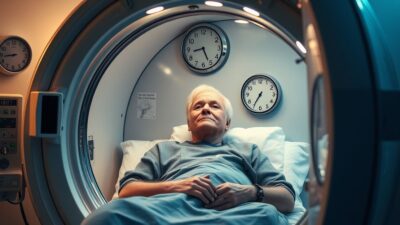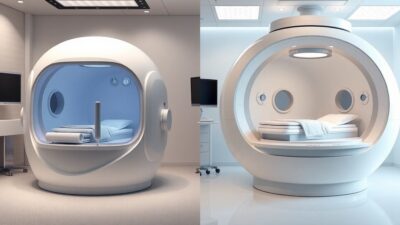
As of mid-2026, researchers have published 10 randomized controlled trials, 8 systematic reviews, and a 232-patient prospective registry on Hyperbaric Oxygen Therapy (HBOT) for long COVID. The evidence spans 21 studies from 7 countries, catalogued in a comprehensive 2026 literature analysis. The trajectory is clear: HBOT improves cognition, fatigue, and quality of life in most patients who complete a full protocol, but dose matters (40+ sessions required), not everyone responds, and the field still needs larger multi-center trials.
Timeline of Key Studies
2022: The Breakthrough RCT
Zilberman-Itskovich et al. (2022), published in Scientific Reports. This is the foundational study that put HBOT for long COVID on the map1.
- Design: Randomized, sham-controlled, double-blind trial
- Sample: 73 patients with post-COVID condition (at least 3 months post-infection)
- Protocol: 40 sessions at 2.0 ATA, 100% oxygen, 90 minutes each (including 5-minute air breaks every 20 minutes)
- Sham: Room air at 1.0 ATA with simulated pressurization sounds and sensations. Patients could not reliably distinguish real treatment from sham, which is critical for a valid placebo control.
- Primary outcomes: Neuropsychological testing battery covering attention, memory, executive function, and information processing speed
- Results: Significant improvements in global cognitive function, energy, sleep, psychiatric symptoms, and pain. Brain MRI showed increased perfusion in the supramarginal gyrus, left supplementary motor area, right insula, and multiple frontal regions. Clinical improvements correlated with objective perfusion changes, which is important because it means the cognitive gains have a measurable biological basis, not just subjective reporting.
- Why it matters: First sham-controlled RCT for HBOT in long COVID. Double-blind design. Objective imaging endpoints. Published in a high-impact Nature portfolio journal. This is the study that subsequent reviews and meta-analyses consistently cite as the strongest evidence.
Bhaiyat et al. (2022), published in Journal of Medical Case Reports. Detailed case report with advanced imaging2.
- 55-year-old man, 3 months post-severe COVID with persistent cognitive, respiratory, and functional limitations
- 60 sessions at 2.0 ATA (20 more than the Tel Aviv protocol)
- Perfusion MRI showed improved blood flow to previously hypoperfused brain regions
- Diffusion tensor imaging showed microstructural improvements in white matter tracts
- 34% increase in VO2max (aerobic capacity), 44% improvement in forced vital capacity (lung function)
- Memory (especially nonverbal), executive function, attention, information processing speed, and cognitive flexibility all improved on standardized testing
- Why it matters: The most detailed single-patient documentation of HBOT for long COVID. The combination of neuroimaging, pulmonary function testing, VO2max measurement, and cognitive testing provides a comprehensive picture of multi-system improvement.
2023: Cardiac Evidence Emerges
Leitman et al. (2023), published in Scientific Reports. Sub-analysis of the original Tel Aviv RCT focusing on cardiac function3.
- Sample: 60 patients from the original Tel Aviv RCT who underwent echocardiography
- Key finding at baseline: 48.3% had reduced global longitudinal strain (GLS), indicating subclinical cardiac dysfunction. These patients had normal ejection fractions on standard echocardiography, meaning routine cardiac testing would have missed the damage.
- Treatment result: HBOT group: GLS improved from -17.8 to -20.2 (p=0.0001). A GLS of -20 or better is considered normal. The sham group showed no improvement. Significant group-by-time interaction (p=0.041).
- Why it matters: This was the first evidence that long COVID causes hidden heart damage detectable only with advanced echocardiographic techniques, and that HBOT can reverse it. This finding expanded the understanding of HBOT’s benefit beyond neurological and fatigue symptoms. It also suggests that many long COVID patients have undiagnosed cardiac involvement contributing to their exercise intolerance and fatigue.
2024: Follow-Up Data, Systematic Reviews, and Mechanistic Reviews
Catalogna/Hadanny et al. (2024), published in Scientific Reports. One-year follow-up of the original Tel Aviv RCT participants4.
- Assessed patients 12 months after completing the 40-session HBOT protocol
- Cognitive and symptom improvements persisted at one year without any additional HBOT sessions
- This is critical because it demonstrates the brain changes are durable structural changes (new blood vessels, new neural connections), not temporary effects of acute oxygenation
- Validates the neuroplasticity and angiogenesis mechanisms proposed in the original trial
- Addresses the common concern that “benefits will disappear once you stop treatment”
Wu et al. (2024), published in Life. Systematic review covering January 2019 to October 20235.
- Identified 10 clinical studies: 1 case report, 5 pretest-posttest studies, 1 safety report, 3 complete RCTs
- Conclusion: Most studies found HBOT improves quality of life, fatigue, cognition, neuropsychiatric symptoms, and cardiopulmonary function
- Noted the heterogeneity in study designs and protocols as a limitation
- Called for more RCTs with larger sample sizes and standardized protocols
Katz et al. (2024), published in Frontiers in Medicine. Clinical review of HBOT’s pathophysiological rationale for long COVID6.
- Systematically mapped each known long COVID pathological mechanism to a corresponding HBOT mechanism of action
- Endothelial dysfunction is addressed by HBOT-induced angiogenesis and endothelial repair
- Neuroinflammation is addressed by cytokine modulation (IL-6 down, IL-10 up)
- Microclotting is addressed by improved tissue oxygenation that bypasses clotted vessels
- Mitochondrial dysfunction is addressed by mitochondrial biogenesis
- Concluded that HBOT “effectively addresses” the core pathophysiology of long COVID
- Why it matters: This paper provides the mechanistic framework that explains WHY HBOT works for long COVID, complementing the clinical trials that show THAT it works
2025: Large Registry Data and Critical Negative RCTs
Van Berkel et al. (2025), published in Scientific Reports. The largest real-world cohort to date7.
- Design: Prospective registry with SF-36 and EQ-5D at baseline, post-treatment, and 3-month follow-up
- Sample: 232 long COVID patients treated at clinical HBOT facilities
- Results: 56-63% achieved clinically relevant improvement (defined as >10 point increase in SF-36 mental component score or physical component score). Cognitive domain improved most strongly. Work ability improved in a subset of patients who had been unable to work.
- Critical finding: 13-19% experienced clinically relevant deterioration. This is the most honest real-world data available. Unlike clinical trials with strict inclusion criteria, a registry captures the full range of patient responses including those who do not benefit.
- Why it matters: This study bridges the gap between controlled trials and real-world practice. The 56-63% improvement rate in a non-selected population is a realistic expectation for patients considering HBOT. The 13-19% worsening rate is essential for informed consent.
Zamora et al. (2025), published in Undersea and Hyperbaric Medicine. PROSPERO-registered systematic review focused specifically on cognitive outcomes8.
- 7 studies, 199 participants, 7 countries (Israel, Vietnam, USA, Netherlands, Belgium, UK, Brazil)
- Protocols: 100% oxygen at 2.0-2.5 ATA, 10-60 sessions depending on study and comorbidities
- Memory, executive function, attention, fatigue, and pain all improved
- Minimal side effects, none serious (ear barotrauma was the most common, resolving spontaneously)
- GRADE quality assessment was performed (quality varied by study)
- PROSPERO registration (CRD42024530421) ensures the review methodology was pre-specified, reducing risk of cherry-picking
Two negative RCTs (2025). Referenced in the Zoccali 2026 comprehensive review. Both used only 10 HBOT sessions and found no significant benefit over sham9. These studies are arguably as important as the positive ones because they establish the dose-response relationship: 10 sessions is not enough. This finding aligns with the biology. Angiogenesis (new blood vessel formation) requires weeks of repeated stimulus. Neuroplasticity (new neural connections) requires dozens of exposures. Ten sessions over two weeks simply does not provide enough time for these structural changes to occur.
2026: The Most Comprehensive Analyses and Biomarker Breakthroughs
Zoccali et al. (2026), published in Diseases. The most comprehensive review to date9.
- Scope: Literature from January 2021 to October 2025
- Found 21 studies total: 1 case report, 10 RCTs, 8 systematic reviews, 3 molecular/mechanistic studies
- This is the first review to capture the full breadth of the evidence base, including the negative RCTs
- Conclusion: HBOT improves quality of life, fatigue, cognition, neuropsychiatric symptoms, and cardiopulmonary function in long COVID patients. The treatment is safe. Larger trials are needed for protocol standardization.
- Specifically noted that dose (session count) is the critical variable separating positive from negative trials
Ha Nguyen Thi Hai et al. (2026), published in Journal of Marine Medical Society. Vietnamese study with biomarker data10.
- 51 patients, 14 sessions at 2.2 ATA
- Psychiatric outcomes (DASS-21 scale):
- Anxiety: 10.08 to 7.13 (p<0.05)
- Depression: 11.73 to 8.82 (p<0.05)
- Stress: 18.31 to 13.31 (p<0.05)
- Quality of life (EQ-5D-5L): 0.749 to 0.942 (p<0.001). This is a large effect size reflecting meaningful functional improvement.
- Cerebral blood flow: Proportion of patients with normal cerebral blood flow increased from 37.3% to 78.4%
- SOD antioxidant activity: 51.87% to 73.23% (p<0.05)
- Why it matters: This is the first study to combine psychiatric outcomes, quality of life, cerebral perfusion, and antioxidant biomarkers in a single long COVID HBOT study. It confirms that HBOT’s benefits span multiple biological systems, not just one.
Soedarsono et al. (2026), published in Jurnal Respirasi. Review of inflammatory biomarker changes with HBOT11.
- Reviewed 7 primary studies spanning 2020-2025
- Consistent findings across studies:
- HBOT reduces IL-6 (key driver of cytokine storm and chronic inflammation)
- HBOT reduces TNF-alpha (central pro-inflammatory mediator)
- HBOT increases IL-10 (the body’s primary anti-inflammatory cytokine)
- CRP and ferritin improved (systemic inflammation markers)
- ROS (reactive oxygen species) decreased
- Mitochondrial function improved
- Immune balance shifted from pro-inflammatory to regulatory
- Why it matters: This provides the molecular evidence that HBOT is not just making patients “feel better” through a non-specific mechanism. It is measurably changing the inflammatory and oxidative parameters that drive long COVID symptoms.
What the Evidence Collectively Shows
Across all published studies, several patterns are consistent and clinically actionable.
Dose matters. 40+ sessions produces positive results. 10 sessions does not. This is the single most important finding from the research. If a clinic offers 10-20 HBOT sessions for long COVID and promises results, the trial data does not support that claim. Patients should plan for a minimum of 40 sessions and budget accordingly.
Cognition responds best. Both the van Berkel registry and the Zamora systematic review found that cognitive symptoms (brain fog, memory, attention, processing speed) show the greatest improvement. Fatigue and pain also improve, but cognition is the standout. This has practical implications: patients whose primary complaint is brain fog have the strongest evidence-based reason to pursue HBOT.
Not everyone benefits. The registry data is the most important reality check: 56-63% improve meaningfully, but 13-19% worsen. This means roughly one patient in six may have a negative experience. There are currently no reliable predictors for who will respond and who will not.
The improvements last. One-year follow-up data shows sustained benefits without additional treatment, suggesting HBOT creates durable physiological changes (neuroplasticity, angiogenesis, mitochondrial biogenesis) rather than temporary symptomatic relief. Patients do not need to continue indefinite HBOT sessions.
The mechanisms are measurable. This is not a “we feel better” finding. Brain MRI perfusion changes, diffusion tensor imaging white matter improvements, inflammatory biomarker shifts, antioxidant enzyme activity increases, VO2max gains, cardiac strain normalization, and cerebral blood flow restoration have all been objectively documented. This convergence of evidence from multiple measurement modalities makes the case substantially stronger than any single line of evidence alone.
Limitations of the Current Evidence
An honest assessment of what the evidence does not yet tell us is essential for informed decision-making.
Most positive RCTs come from one research group. The Efrati/Hadanny group at the Sagol Center (Tel Aviv) produced the landmark RCT, the cardiac sub-analysis, and the one-year follow-up. Their work is rigorous, published in peer-reviewed journals (primarily the Nature portfolio), and uses gold-standard methodology. But independent replication from other centers would substantially strengthen the evidence. The biomarker studies from Vietnam and Indonesia provide some independent confirmation.
Sample sizes are small. The largest RCT had 73 patients. The registry had 232. For a condition affecting tens of millions globally, larger multi-center trials with 500+ patients are needed. Larger samples would also allow sub-group analysis to identify predictors of treatment response.
Protocol standardization is lacking. Studies used different pressures (2.0-2.5 ATA), session counts (10-60), session durations (60-90 minutes), and air break intervals. The 40-session, 2.0 ATA, 90-minute protocol has the most support, but the optimal protocol is not definitively established. Is 2.0 ATA better than 2.2? Would 50 sessions be better than 40? Would 3 sessions per week over a longer period work as well as 5 sessions per week? These questions are unanswered.
Long-term follow-up is limited. Only one study has published follow-up beyond 3 months (the Catalogna one-year data). Whether benefits persist at 2, 5, or 10 years is unknown. Long-term natural history studies of long COVID suggest some patients improve spontaneously over 2-3 years, complicating the interpretation of any treatment benefit.
Patient selection criteria are unclear. The registry showed that some patients worsen. Identifying biomarkers, imaging features, or clinical characteristics that predict response would help patients make better-informed decisions about whether to invest $6,000-$16,000 in treatment. A baseline brain MRI showing hypoperfusion might predict response, but this has not been formally tested.
Active and Upcoming Trials
The research pipeline continues to grow. Key areas to watch:
- Multi-center replication. Independent trials replicating the Tel Aviv protocol at different centers in different countries would significantly strengthen the evidence
- Dose-optimization studies. Trials comparing 20 vs 40 vs 60 sessions to define the minimum effective dose more precisely
- Biomarker-guided patient selection. Studies using baseline inflammatory markers, brain imaging, or mitochondrial function testing to predict treatment response before patients commit to 40 sessions
- Combination approaches. Trials combining HBOT with other long COVID interventions (cognitive rehabilitation, LDN, anti-inflammatory protocols) to assess synergistic effects
- Cost-effectiveness analyses. Health economic studies comparing HBOT costs with the societal costs of untreated long COVID (lost productivity, disability, ongoing healthcare utilization)
Current trials can be searched at ClinicalTrials.gov using the search terms “hyperbaric oxygen long COVID.” As of mid-2026, multiple trials are actively recruiting across several countries.
What This Means for Patients
The evidence supports considering HBOT for long COVID if you meet these criteria:
- Persistent symptoms for 3+ months after COVID infection
- Cognitive symptoms and/or fatigue as primary complaints (these respond best to HBOT based on current data)
- Ability to commit to a 40-session protocol (5 days/week for 8 weeks)
- Budget of $6,000-$16,000 out of pocket (or access to a clinical trial)
- Access to a clinic with a hard chamber operating at 2.0 ATA with 100% medical-grade oxygen
- No contraindications to HBOT (untreated pneumothorax, certain ear conditions, recent ear surgery)
The evidence does not support abbreviated protocols of 10-20 sessions, soft chamber use at 1.3 ATA, or treatment by facilities that cannot provide 2.0 ATA with 100% oxygen. The positive results in the literature were generated under specific conditions, and deviating from those conditions means deviating from the evidence.
Sources
- Zilberman-Itskovich S, Catalogna M, Sasson E, et al. “Hyperbaric oxygen therapy improves neurocognitive functions and symptoms of post-COVID condition.” Scientific Reports, 2022;12:11252. DOI: 10.1038/s41598-022-15565-0
- Bhaiyat A, Sasson E, Wang Z, et al. “Hyperbaric oxygen treatment for long coronavirus disease-19: a case report.” Journal of Medical Case Reports, 2022;16:80. DOI: 10.1186/s13256-022-03287-w
- Leitman M, et al. “The effect of hyperbaric oxygen therapy on myocardial function in post-COVID-19 syndrome patients.” Scientific Reports, 2023;13:9579. DOI: 10.1038/s41598-023-36570-x
- Hadanny A, Zilberman-Itskovich S, Catalogna M, et al. “Long term outcomes of hyperbaric oxygen therapy in post COVID condition.” Scientific Reports, 2024;14:3604. DOI: 10.1038/s41598-024-53091-3
- Wu BQ, Liu DY, Shen TC, et al. “Effects of Hyperbaric Oxygen Therapy on Long COVID: A Systematic Review.” Life, 2024;14(4):438. DOI: 10.3390/life14040438
- Katz A, Wainwright S, Kelly M, et al. “Hyperbaric oxygen effectively addresses the pathophysiology of long COVID: clinical review.” Frontiers in Medicine, 2024;11:1354088. DOI: 10.3389/fmed.2024.1354088
- van Berkel J, et al. “Hyperbaric oxygen therapy for long COVID.” Scientific Reports, 2025. DOI: 10.1038/s41598-025-11539-0
- Zamora F, Santos AC, Zamora AV, et al. “Hyperbaric Oxygen Treatment for Long-COVID syndrome: A Systematic Review.” Undersea & Hyperbaric Medicine, 2025. DOI: 10.22462/748
- Zoccali F, Fratini C, et al. “Hyperbaric Oxygen Therapy on Long COVID Symptoms: A Breath of Fresh Air.” Diseases, 2026;14(2):60. DOI: 10.3390/diseases14020060
- Ha Nguyen Thi Hai et al. “Behavioral and Mental Disorders in Patients after COVID-19 and Results of HBOT.” Journal of Marine Medical Society, 2026. DOI: 10.4103/jmms.jmms_59_25
- Soedarsono S, Wijaya RA, Biutifasari V. “Potential Biomarkers and Inflammatory Modulation of HBOT in Long COVID.” Jurnal Respirasi, 2026. DOI: 10.20473/jr.v12-i.1.2026.90-96
Medical Disclaimer
The content on BaricBoost.com is for informational purposes only and is not intended as a substitute for professional medical advice, diagnosis, or treatment. Always seek the advice of your physician or other qualified health provider with any questions you may have regarding a medical condition. Never disregard professional medical advice or delay in seeking it because of something you have read on this website.

Author
Seph Fontane Pennock is the founder of BaricBoost.com and Regenerated.com, a clinic directory for regenerative medicine serving 10,000+ providers across the United States. He previously built and sold PositivePsychology.com, which grew to 19 million users and became the largest evidence-based positive psychology resource on the web. Seph brings direct experience as an HBOT patient, having completed protocols at clinics across three continents while navigating mold illness, systemic inflammation, and autoimmune conditions. His treatment journey includes hyperbaric oxygen therapy, peptide protocols, NAD+ therapy, and consultations with specialists from Dubai to Cape Town to Mexico. This combination of entrepreneurial track record and lived patient experience shapes everything published on BaricBoost.com. Every article is grounded in peer-reviewed research, informed by real clinical encounters, and written for patients making high-stakes treatment decisions. Seph's focus is on bringing transparency, scientific rigor, and practical guidance to the hyperbaric oxygen therapy space.