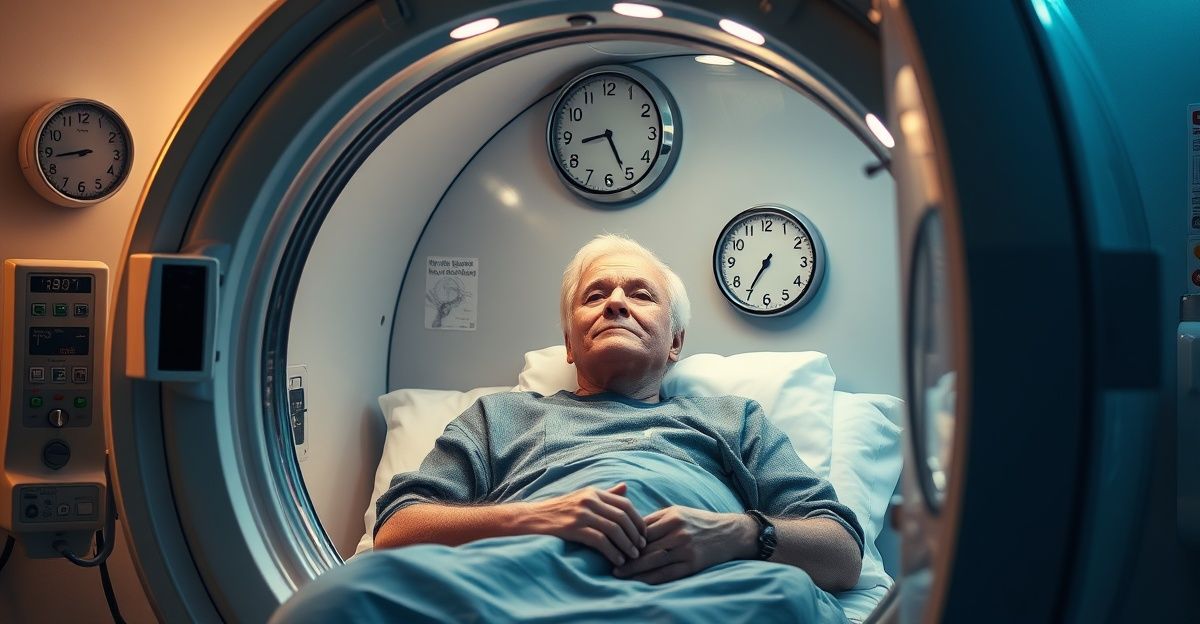
The best available evidence suggests that Hyperbaric Oxygen Therapy (HBOT) is more effective in the chronic phase of stroke recovery (3+ months post-event) than during the acute phase. A randomized controlled trial of 74 chronic stroke patients found significant neurological improvements after 40 sessions at 2.0 ATA (atmospheres absolute), with brain imaging confirming reactivation of dormant tissue. Meanwhile, a Cochrane Review of 11 acute stroke trials found no clear benefit from early HBOT. Timing matters, but the data also shows it is rarely “too late.”
Why Timing Is the Most Important Variable in Stroke HBOT
Stroke recovery follows a well-documented biological timeline. The brain goes through distinct phases after a stroke, and the mechanisms of HBOT interact differently with each phase. Understanding these phases is essential for anyone considering HBOT as part of a recovery plan.
The three phases that matter for HBOT decision-making are: the acute phase (0 to 72 hours), the subacute phase (72 hours to 3 months), and the chronic phase (3 months onward). The evidence base for each is dramatically different.
The Acute Phase: 0 to 72 Hours Post-Stroke
During the acute phase, the priority is restoring blood flow. Standard-of-care treatments like tissue plasminogen activator (tPA) and mechanical thrombectomy are the frontline interventions. These have strong evidence behind them and operate within a narrow therapeutic window, typically 3 to 4.5 hours for tPA and up to 24 hours for thrombectomy in select patients.
HBOT during this window has been studied, but the results are not encouraging. The 2014 Cochrane Review by Bennett et al. analyzed 11 randomized controlled trials involving 705 acute stroke patients. The findings: no significant difference in case fatality at six months (risk ratio 0.97, 95% CI 0.34 to 2.75). Only 4 of 14 disability measures showed improvement.
A more recent 2024 meta-analysis by Li et al. examined 8 RCTs with 493 acute ischemic stroke patients. It found no significant differences in NIHSS scores or Barthel index. One measure, the modified Rankin score, showed a small but statistically significant improvement (MD 0.10, 95% CI 0.03 to 0.17). The authors noted that HBOT did not increase adverse events.
Animal studies suggest that HBOT may help if delivered within 1 to 6 hours of stroke onset. That window is extremely narrow and rarely achievable in clinical practice. Most patients are still undergoing diagnostic imaging and acute interventions during that time.
Bottom Line on Acute HBOT
HBOT is not an established treatment for acute stroke. It should never delay or replace standard stroke protocols. The evidence does not support rushing to a hyperbaric chamber during the first 72 hours.
The Subacute Phase: 72 Hours to 3 Months
The subacute phase is the period of most active natural recovery. The brain is already engaged in repair: swelling is resolving, neuroplasticity mechanisms are activating, and rehabilitation typically begins.
HBOT data for this specific window is limited. A 2026 pilot RCT by Yadav et al. studied 30 patients at 3 to 6 months post-stroke. The HBOT group received 24 sessions alongside conventional physiotherapy. Within the HBOT group, NIHSS scores improved from 7.27 to 5.46, and MMSE scores improved from 24.8 to 26.73. The between-group comparison with physiotherapy alone was not statistically significant.
This does not mean HBOT is ineffective during the subacute window. It means the evidence base is thin. Most studies have focused on either the acute phase or the chronic phase, leaving this middle period understudied.
Some clinicians and researchers argue that beginning HBOT during the subacute phase could be beneficial because the brain is already in a heightened state of plasticity. The theory is that supplemental oxygen could amplify the natural recovery processes already underway. This is plausible but unproven by rigorous trials.
The Chronic Phase: 3 Months and Beyond
This is where the strongest HBOT evidence exists for stroke recovery. The conventional view held that meaningful neurological recovery was unlikely beyond 6 to 12 months post-stroke. Research from the Sagol Center for Hyperbaric Medicine and Research in Israel has challenged that assumption.
The Efrati 2013 Study: A Turning Point
The landmark study is a 2013 prospective randomized crossover trial by Efrati et al., published in PLoS ONE. It enrolled 74 chronic stroke patients (59 completed) who were 6 to 36 months post-stroke. Patients received 40 HBOT sessions at 2.0 ATA, 90 minutes per session, five days per week over two months.
The results were significant. Patients showed meaningful improvements in NIHSS (National Institutes of Health Stroke Scale), activities of daily living, and quality of life scores. The crossover design was key: patients who served as controls for the first two months showed no improvement during that period, but then improved when they crossed over to receive HBOT.
SPECT brain imaging showed increased metabolic activity in regions where anatomy and physiology were mismatched, meaning areas of the brain that still had viable tissue but were not functioning. HBOT appeared to reactivate these dormant neurons in what is known as the ischemic penumbra.
The Hadanny 2020 Retrospective: Larger Numbers
A 2020 retrospective analysis by Hadanny et al., published in Restorative Neurology and Neuroscience, examined 162 chronic stroke patients (75.3% male, mean age 60.75). The protocol was 40 to 60 sessions at 2.0 ATA.
The headline finding: 86% of patients achieved clinically significant cognitive improvement, defined as greater than 0.5 standard deviation improvement in cognitive scores. Improvements were documented across all cognitive domains, including memory, attention, information processing speed, and executive function.
Notably, there was no significant difference in outcomes between cortical and subcortical strokes. Hemorrhagic stroke patients actually showed greater improvement in information processing speed than ischemic stroke patients. Baseline cognitive function was the strongest predictor of improvement across all domains.
Imaging Confirmation: Khairy 2025 Case Report
A 2025 case report by Khairy et al., published in the Journal of Medical Case Reports, documented a 45-year-old man with hemorrhagic stroke who began HBOT 15 months post-event. After 83 sessions over 16 weeks at 2.0 ATA, he progressed from wheelchair dependence to ambulation with a cane.
Brain imaging told the story: SPECT showed a 15.83% increase in right motor cortex perfusion and a 15.92% increase in right frontal lobe perfusion. Diffusion tensor imaging (DTI) showed increased fractional anisotropy in major white matter tracts, indicating improved structural connectivity. Cognitive testing confirmed improvements in attention, verbal memory, and processing speed.
Is It Ever “Too Late” for HBOT After Stroke?
The data suggests it is rarely too late. The Hadanny 2020 study included patients up to 190 months (nearly 16 years) post-stroke who still showed cognitive improvement. The Efrati 2013 trial enrolled patients up to 36 months post-stroke. The Khairy 2025 case involved a patient 15 months post-stroke.
The mechanism explains why. HBOT does not reverse dead brain tissue. It targets the ischemic penumbra, a zone of brain cells that survived the stroke but are metabolically suppressed. These neurons are alive but not functioning. The increased oxygen delivery and pressure from HBOT can reactivate them, a process called late neuroplasticity.
As long as viable but dormant tissue exists, there is a theoretical basis for HBOT to help. Brain imaging (SPECT, perfusion MRI) can sometimes identify whether a patient has this kind of recoverable tissue before starting treatment.
That said, the earlier someone begins HBOT in the chronic phase, the more viable tissue is likely to remain. Waiting years is not ideal, but the evidence shows it is not necessarily a barrier.
What the Optimal Protocol Looks Like
Based on the published clinical evidence, the most studied and effective protocol for chronic stroke involves:
- Pressure: 2.0 ATA with 100% medical-grade oxygen
- Session duration: 90 minutes (including air breaks)
- Frequency: 5 sessions per week
- Total sessions: 40 sessions minimum, some protocols extend to 60 or more
- Treatment duration: Approximately 8 weeks for a 40-session course
This protocol is consistent across the Efrati 2013 RCT, the Hadanny 2020 retrospective, and the Khairy 2025 case report. It requires a hard chamber in a clinical setting, not a home soft chamber operating at 1.3 ATA.
A Realistic Decision Framework
If you or a family member is considering HBOT for stroke recovery, here is how to think about timing:
- During the acute phase (0 to 72 hours): Focus on standard stroke care (tPA, thrombectomy). HBOT is not supported by evidence at this stage.
- During the subacute phase (72 hours to 3 months): Prioritize inpatient and outpatient rehabilitation. HBOT data is limited for this window, but could be discussed with your neurologist.
- During the chronic phase (3 months onward): This is where the strongest evidence sits. If conventional rehabilitation has plateaued, HBOT may offer additional improvement, particularly in cognitive function. Consider the published recovery statistics and discuss with a provider experienced in neurological HBOT applications.
- Years later: It is not too late. Studies show benefits in patients up to 16 years post-stroke. The results may be more modest, but imaging data supports that dormant brain tissue can still be reactivated.
Animal Model Evidence: What the Preclinical Data Shows
Much of the early HBOT-stroke research came from animal models, and these studies help explain why timing matters so much. In rodent models of ischemic stroke, HBOT delivered within 1 to 6 hours of stroke onset consistently reduced infarct size (the area of dead brain tissue). The mechanisms included reduced apoptosis (programmed cell death), decreased blood-brain barrier disruption, and lower levels of inflammatory markers.
A key finding from animal research is the concept of the “therapeutic window.” In rats, HBOT delivered at 3 hours post-stroke reduced infarct volume by approximately 30 to 50% in several studies. At 6 hours, the benefit diminished. By 12 to 24 hours, the acute neuroprotective effect was largely gone.
These animal findings created early optimism about acute HBOT for stroke. But translating a 3-hour window from a rat lab to a human emergency department proved impractical. By the time most stroke patients are diagnosed, stabilized, and receive standard interventions (tPA, thrombectomy), the narrow acute HBOT window has passed.
Animal models also support the chronic-phase mechanism. Rodent studies have shown that delayed HBOT (days to weeks after stroke induction) still promotes angiogenesis, reduces chronic inflammation, and enhances neurogenesis. These effects align with the clinical findings in human chronic stroke studies.
The Role of Brain Imaging in Timing Decisions
One emerging approach to the timing question is using brain imaging to guide treatment decisions rather than relying on a fixed timeline. SPECT (single-photon emission computed tomography) and perfusion MRI can identify whether a patient has recoverable penumbral tissue, the dormant neurons that HBOT targets.
In the Efrati 2013 study, the patients who showed the most improvement on HBOT were those whose SPECT scans revealed a mismatch between anatomical structure (intact tissue on CT) and metabolic function (suppressed activity on SPECT). This mismatch indicates tissue that is alive but not working, the ideal target for HBOT.
The practical implication: rather than asking “how many months has it been since the stroke?”, a more useful question may be “does this patient still have recoverable tissue?” A patient at 3 months with extensive core damage and no penumbra may be a poorer candidate than a patient at 3 years who still has substantial penumbral tissue visible on imaging.
Not all HBOT clinics offer pre-treatment brain imaging. If you are considering HBOT for chronic stroke recovery, requesting a SPECT scan or perfusion MRI from your neurologist before starting can help set realistic expectations and identify whether recoverable tissue exists.
What Happens If You Start During the Subacute Phase?
The 72-hour to 3-month window is the least studied period for HBOT in stroke. This is partly because the subacute phase is already a period of active recovery, making it difficult to isolate the effect of HBOT from natural improvement.
The Yadav 2026 pilot study is one of the few that specifically targeted this window (3 to 6 months post-stroke). While the between-group comparison did not reach statistical significance, the within-group improvements in the HBOT arm were clinically meaningful. NIHSS improved by nearly 2 points, and MMSE improved by about 2 points, both in a group of only 15 patients.
Some rehabilitation specialists advocate for starting HBOT during the subacute phase precisely because the brain is already in a heightened state of plasticity. The theory is that HBOT could amplify the natural recovery processes underway. This is a reasonable hypothesis, but it lacks the rigorous trial evidence that exists for the chronic phase.
If a patient has the resources and access, beginning HBOT during the subacute phase (while continuing standard rehabilitation) is unlikely to be harmful and may add benefit. But the evidence base is stronger for waiting until the chronic phase, when the contribution of HBOT can be more clearly distinguished from natural recovery.
Practical Considerations for Starting HBOT
Beyond the biological timing, several practical factors influence when patients actually begin HBOT:
- Medical clearance: Patients need to be medically stable. Active cardiac issues, uncontrolled seizures, or untreated pneumothorax are contraindications. Most patients are not ready for HBOT until they have been discharged from acute care and stabilized.
- Access to a qualified facility: The evidence-based protocol requires a hard chamber at 2.0 ATA with 100% medical-grade oxygen. Not all areas have HBOT clinics, and finding one with experience in neurological applications may take time.
- Financial planning: HBOT for stroke is not covered by insurance (stroke is not among the 15 Medicare-covered indications). A 40-session protocol costs $6,000 to $20,000 out of pocket depending on the facility. This financial barrier often delays treatment.
- Coordination with ongoing rehabilitation: Ideally, HBOT is integrated with physical therapy, occupational therapy, and speech therapy. Setting up this coordinated approach takes time.
The good news from the research is that delay, while not ideal, does not eliminate the potential for benefit. Starting at 6 months is not significantly worse than starting at 3 months based on current data. Starting at 3 years is still viable based on the Hadanny 2020 study, which included patients up to nearly 16 years post-stroke.
Important Caveats
Several important limitations apply to the current evidence base:
- Most of the positive chronic stroke data comes from one research group (Efrati/Hadanny at the Sagol Center in Israel). Independent replication with sham-controlled designs is needed.
- HBOT for stroke is not FDA-cleared. It is considered an off-label, investigational use. Medicare does not cover it for stroke.
- The 86% improvement figure comes from a retrospective study at a single center, not a multi-site randomized trial.
- A sham-controlled chronic stroke trial (Harrison et al., 2024) has been conducted, but full published results should be reviewed for additional context.
- HBOT is adjunctive. It should not replace physical therapy, occupational therapy, speech therapy, or any other standard rehabilitation approach.
For more on the financial considerations, see our guide to HBOT research and evidence.
Sources
- Efrati S, Fishlev G, Bechor Y, et al. “Hyperbaric Oxygen Induces Late Neuroplasticity in Post Stroke Patients – Randomized, Prospective Trial.” PLoS ONE. 2013;8(1):e53716. DOI: 10.1371/journal.pone.0053716
- Hadanny A, et al. “Hyperbaric oxygen therapy improves neurocognitive functions of post-stroke patients.” Restorative Neurology and Neuroscience. 2020;38(1):93-108.
- Bennett MH, Weibel S, Wasiak J, et al. “Hyperbaric oxygen therapy for acute ischaemic stroke.” Cochrane Database of Systematic Reviews. 2014;(11):CD004954. DOI: 10.1002/14651858.CD004954.pub3
- Li X, et al. “Efficacy and safety of hyperbaric oxygen therapy in acute ischaemic stroke: a systematic review and meta-analysis.” BMC Neurology. 2024;24:51. DOI: 10.1186/s12883-024-03555-w
- Yadav R, et al. “Role of HBOT in Rehabilitation of Stroke Patients: A Randomized Controlled Pilot Study.” Annals of African Medicine. 2026. DOI: 10.4103/aam.aam_804_25
- Khairy S, et al. “Anatomical and metabolic brain imaging correlation of neurological improvements following HBOT.” Journal of Medical Case Reports. 2025;19:87. DOI: 10.1186/s13256-025-05577-5
- Harrison DW, Brasher PM, Eng J, et al. “Hyperbaric Oxygen Post Established Stroke.” 2024.
- Carson S, McDonagh M, Russman B, Helfand M. “Hyperbaric oxygen therapy for stroke: a systematic review.” Clinical Rehabilitation. 2005;19(8):819-833. DOI: 10.1191/0269215505cr907oa
Medical Disclaimer
The content on BaricBoost.com is for informational purposes only and is not intended as a substitute for professional medical advice, diagnosis, or treatment. Always seek the advice of your physician or other qualified health provider with any questions you may have regarding a medical condition. Never disregard professional medical advice or delay in seeking it because of something you have read on this website.

Author
Seph Fontane Pennock is the founder of BaricBoost.com and Regenerated.com, a clinic directory for regenerative medicine serving 10,000+ providers across the United States. He previously built and sold PositivePsychology.com, which grew to 19 million users and became the largest evidence-based positive psychology resource on the web. Seph brings direct experience as an HBOT patient, having completed protocols at clinics across three continents while navigating mold illness, systemic inflammation, and autoimmune conditions. His treatment journey includes hyperbaric oxygen therapy, peptide protocols, NAD+ therapy, and consultations with specialists from Dubai to Cape Town to Mexico. This combination of entrepreneurial track record and lived patient experience shapes everything published on BaricBoost.com. Every article is grounded in peer-reviewed research, informed by real clinical encounters, and written for patients making high-stakes treatment decisions. Seph's focus is on bringing transparency, scientific rigor, and practical guidance to the hyperbaric oxygen therapy space.