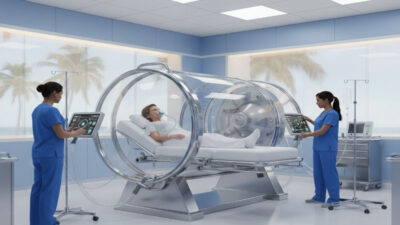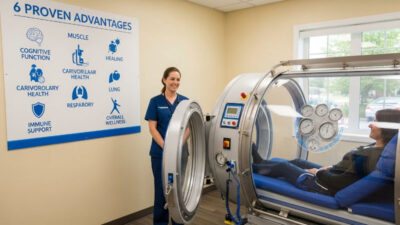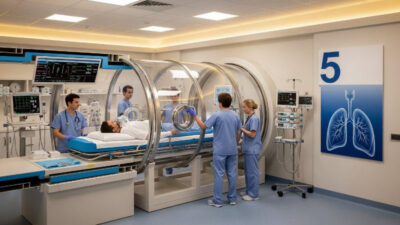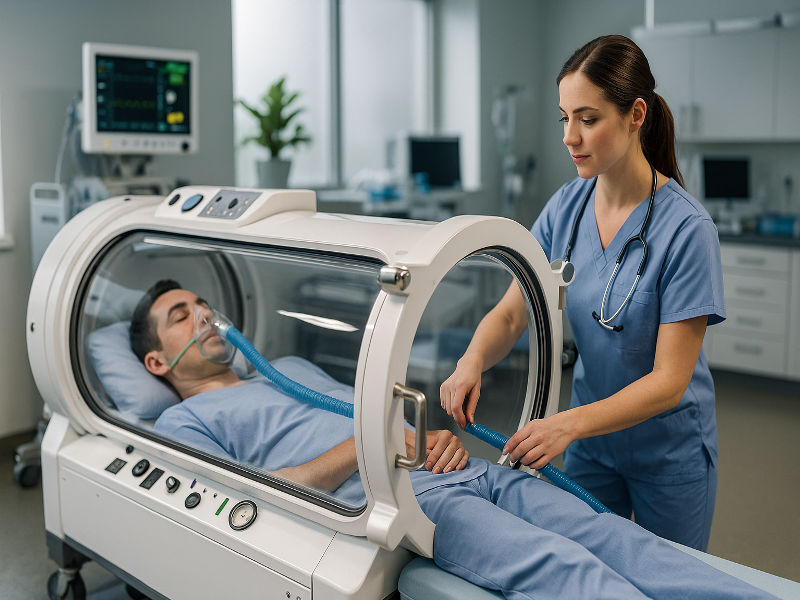
Houston has over 20 hyperbaric oxygen therapy providers, ranging from major hospital wound care programs at Memorial Hermann and Houston Methodist to independent clinics offering off-label treatments. This guide covers the key facilities, what they treat, and how to evaluate them.
Now there are lots of places offering everything from hospital-grade hard shell chambers to those softer, portable versions.
Maybe you’re dealing with wounds that just won’t heal, or you’re an athlete looking into recovery options, or honestly just curious about the wellness side of things. Whatever brings you here, knowing what sets these Houston facilities apart will save you headaches down the road.
Chamber quality, whether they’ve got the right certifications, staff who actually know what they’re doing, these things aren’t just boxes to check; they legitimately change how well your treatment works.
Table of Contents
Types of Hyperbaric Chambers Available in Houston
According to the Undersea and Hyperbaric Medical Society, HBOT is recognized for 14 FDA-cleared medical indications, with over 1.5 million treatments administered annually in the United States.
Undersea and Hyperbaric Medical Society (UHMS)
Okay, so with hyperbaric chamber Houston places, they’re definitely not interchangeable. Most clinics in town have two main categories.
Hard shell chambers, those are the ones you’ll see at hospitals and medical centers. Think steel or clear acrylic tubes that push pressure up to 2.0, even 3.0 atmospheres absolute (ATA) while pumping 100% oxygen.
Memorial Hermann has this massive multi-place chamber at their Texas Medical Center spot, six feet across, 34 feet long, that fits a dozen people at once (Memorial Hermann, 2019).
Studies back up that these hard shell units hit oxygen levels the inflatable ones just can’t touch, which becomes critical when you’re treating something serious (Ortega et al., 2021).
Soft shell chambers? Picture those inflatable tunnels, kind of like a bouncy castle but medical. They’re easier to move around and feel less claustrophobic for people who get anxious.
But pressure stops at around 1.3 to 1.5 ATA max, and the oxygen concentration isn’t even close to what hard shells deliver. You’ll find these at some wellness spots around Houston for general recovery things, but the Undersea and Hyperbaric Medical Society (UHMS) doesn’t recognize them for actual medical treatment.
Key differences between chamber types:
- Hard shell units push to 2.0-3.0 ATA, soft shell versions usually stay below 1.5 ATA
- Medical-grade hard shells pump nearly 100% oxygen, soft shells deliver way less
- UHMS gives the green light to hard-shell chambers for legit therapeutic conditions
- Hard shell setups need specialized spaces and operators who’ve had proper training
- Soft shell chambers travel easier, but don’t have medical credentials
What to Expect During Treatment at Houston Facilities
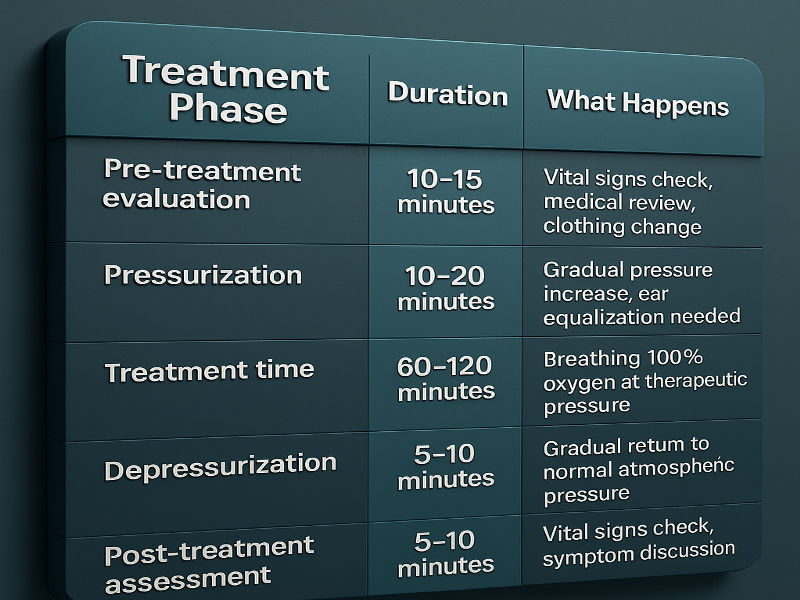
Walking into your first hyperbaric chamber Houston session? They’ll start with checking your health.
The staff runs through your medical background, takes vitals, and walks you through what’s coming, and honestly, this part helps reduce anxiety.
You’ll change into cotton clothing, 100% cotton (they usually hand you some), because anything synthetic gets risky in oxygen-heavy spaces. Phone, watch, rings, all that stays in a locker.
Places like Houston Hyperbaric Oxygen Center, over in Humble, use ASME and PVHO-1 certified single-person chambers. You lie on a cushioned pad inside a see-through acrylic cylinder (Houston Hyperbaric Oxygen Center, 2024).
The chamber pressurizes slowly., and this takes maybe 15 minutes.. Your ears will probably pop. The same sensation you feel in an airplane. Most people yawn or swallow to reduce this sensation.
At treatment pressure, you’re breathing regularly for anywhere from an hour to two hours. Depending on what your doctor ordered. Most people find it relaxing. They stream something or zone out to music.
Medical Conditions Treated with Hyperbaric Therapy in Houston
The certified hyperbaric chamber Houston places mainly sticks to what UHMS approves. Why does this matter? Because your insurance company basically follows what’s evidence-backed.
Wound treatment takes up most of the schedule. Diabetic foot ulcers, surgeries that aren’t healing right, tissue damage from radiation, skin grafts that aren’t taking, all these improve with extra oxygen getting to the area.
Memorial Hermann’s wound centers have been doing this for almost 25 years now, so they’ve seen pretty much everything (Memorial Hermann, 2019).
That additional oxygen kicks collagen production into gear, grows new blood vessels, amps up your infection-fighting white blood cells, basically everything damaged tissue needs.
Emergency things like carbon monoxide poisoning, conditions from diving, air bubbles in your blood, these need hyperbaric treatment right away. Memorial Hermann-Texas Medical Center runs Houston’s only round-the-clock emergency hyperbaric setup, even registered with the Diver Alert Network for scuba accidents.
Newer studies are looking past the traditional list. They’re testing HBOT for COVID-related brain fog and some head injuries. These ideas are still experimental (Zilberman-Itskovich et al., 2022).
Hard Shell vs. Soft Shell: Making the Right Choice
Chamber type genuinely changes how effective treatment is, especially if you’re dealing with medical issues. Houston clinics with medical-grade hard shell chambers hit pressures that science actually validates.
Hard shell chambers squeeze atmospheric pressure up past 2.0 ATA while feeding you 100% oxygen. At those levels, your blood plasma carries massively more dissolved oxygen.
This part really matters. Damaged tissue with bad circulation can still pull oxygen from plasma. And research shows the benefits appear at higher pressures (Ortega et al., 2021).
Soft shell chambers barely crack 1.3 to 1.5 ATA and can’t match oxygen purity. You might need something like 20 to 40 soft shell sessions just to equal one hard shell treatment.
This obviously puts a strain on both your schedule and your wallet. UHMS doesn’t give soft shell chambers medical recognition, and insurance companies usually won’t touch them.
Comparison factors to consider:
- Therapeutic pressure range (hard shell dominates for medical things)
- Oxygen delivery purity (hard shell delivers almost 100%)
- Treatment efficiency (one hard shell session versus multiple soft shell visits)
- Insurance coverage (usually only covers hard shell for approved conditions)
- Research backing for specific medical uses
Costs and Insurance Coverage for Houston Hyperbaric Treatment
What you’ll pay for hyperbaric chamber Houston treatments varies depending on chamber style, which facility, and whether insurance picks up the tab.
Medical treatments at hospital-connected places like Memorial Hermann usually process through insurance if you’re treating UHMS-approved conditions.
You’ll cover your normal copays and whatever your deductible is. Going self-pay? Houston Hyperbaric Oxygen Center calls itself “the most affordable self-pay hospital-grade facility in the Houston area.”
Though they don’t post exact numbers online (Houston Hyperbaric Oxygen Center, 2024). Wellness treatments at places with soft shell chambers or experimental uses generally don’t get insurance coverage.
These run $100 to $300 per session based on where you go and how long you’re in there. Some places bundle sessions together to drop the per-visit cost.
| Facility Feature | Why It Matters | What to Look For |
| UHMS Accreditation | Ensures evidence-based protocols and safety standards | Ask if the facility holds current UHMS accreditation |
| Chamber Certification | Verifies equipment meets pressure vessel safety requirements | Look for ASME and PVHO-1 certifications |
| Staff Credentials | Guarantees trained operators. | Certified Hyperbaric Technologists. Board-certified physicians |
| Emergency Protocols | Critical for handling complications | 24/7 availability. Emergency equipment on-site |
Standard treatment runs 20 to 60 sessions spread over weeks, typically five sessions weekly. So you’re committing serious time and money either way. First step: get written coverage proof. Ask your insurer.
What Are the Side Effects and Risks?
Hyperbaric treatment is generally safe. But it helps to know the possible hiccups. Most common issue? Vision changes that don’t stick around.
Around 20% of patients get temporary nearsightedness from how oxygen affects the eye lens. This might last weeks or months after you’re done, but it reverses (Leach et al., 1998).
Ear and sinus problems from pressure hit 15-20% of people, basically, discomfort or minor injury when pressure shifts. Got a cold or stuffy sinuses on treatment day? Tell staff immediately.
They’ll probably reschedule or give you something to clear things up first. Serious effects like seizures from too much oxygen happen in maybe 1-2% of patients and don’t usually cause lasting problems (Leach et al., 1998).
Some conditions need extra caution. A collapsed lung that hasn’t been treated is a total dealbreaker; trapped air can expand dangerously when pressure drops.
What Research Actually Supports
Let’s cut through marketing hype and talk actual science. Wound healing has rock-solid evidence backing it. Studies repeatedly show hyperbaric therapy kicks off new blood vessel growth, bumps up collagen building, and strengthens infection defense (Bhutani & Vishwanath, 2012).
For diabetic foot ulcers and radiation-damaged tissue, benefits are thoroughly documented.
Brain-related uses look promising. But we still need more solid evidence. One controlled trial showed improved thinking and symptoms in COVID long-haulers three months after infection.
For stroke recovery? Evidence goes both ways. Those anti-aging claims floating around come from early studies that haven’t been repeated much.
FAQs
- What’s the difference between hard shell and soft shell hyperbaric chambers available in Houston?
Hard-shell chambers hit 2.0–3.0 ATA and deliver 100% oxygen in a medical-grade steel or acrylic unit. Soft-shell versions are inflatable and portable. They only reach about 1.3–1.5 ATA and provide weaker oxygen levels.
- How much does hyperbaric chamber treatment cost in Houston, and will insurance cover it?
Hospital centers like Memorial Hermann bill insurance for UHMS-approved conditions. So you just pay normal copays and deductibles. Self-pay medical treatments vary by facility. Wellness soft-shell sessions cost about $100–$300+ per visit and aren’t covered by insurance
- Which Houston facilities have accredited hyperbaric chambers?
Houston’s only UHMS-accredited multi-place chamber and 24/7 emergency hyperbaric unit are at Memorial Hermann–Texas Medical Center. Choose centers with UHMS accreditation and ASME/PVHO-1 certified chambers. Also, confirm they employ Certified Hyperbaric Technologists.
- What medical conditions can be treated with hyperbaric chambers in Houston?
UHMS-approved uses include chronic wounds. Also, diabetic foot ulcers, radiation damage, CO poisoning, and decompression sickness. Arterial gas embolism is also covered. Some Houston centers also treat post-COVID symptoms and traumatic brain injuries.
- Are there any side effects or risks with hyperbaric oxygen therapy?
Around 20% of patients notice short-term vision changes. This fades in weeks or months. About 15–20% get ear or sinus barotrauma. Serious complications like seizures are very rare, 1–2%. And usually cause no permanent harm.
References
Bhutani, S., & Vishwanath, G. (2012). Hyperbaric oxygen and wound healing. Indian Journal of Plastic Surgery. Published Study (DOI)
Houston Hyperbaric Oxygen Center. (2024). About Houston Hyperbaric Oxygen Center. Houstonhbocenter.com
Leach, R. M., Rees, P. J., & Wilmshurst, P. (1998). Hyperbaric oxygen therapy. BMJ. Published Study (DOI)
Memorial Hermann. (2019). Hyperbaric oxygen therapy. Memorialhermann.org
Ortega, M. A., Fraile-Martinez, O., García-Montero, C., Callejón-Peláez, E., Sáez, M. A., Álvarez-Mon, M. A., García-Honduvilla, N., Bujan, J., Álvarez-Mon, M., & Canals, M. L. (2021). A general overview of the hyperbaric oxygen therapy: Applications, mechanisms, and translational opportunities. Published Study (DOI)
Zilberman-Itskovich, S., Catalogna, M., Sasson, E., Elman-Shina, K., Hadanny, A., Lang, E., Finci, S., Polak, N., Fishlev, G., Korin, C., Shorer, R., Parag, Y., Sova, M., & Efrati, S. (2022). Hyperbaric oxygen therapy improves neurocognitive functions and symptoms of post-COVID condition: Randomized controlled trial. Published Study (DOI)
References
- Undersea and Hyperbaric Medical Society. (2023). Indications for Hyperbaric Oxygen Therapy. UHMS. uhms.org
- Thom, S. R. (2011). Hyperbaric oxygen: Its mechanisms and efficacy. Plastic and Reconstructive Surgery, 127(Suppl 1), 131S-141S. doi.org
- Centers for Medicare and Medicaid Services. (2024). Hyperbaric Oxygen Therapy Coverage Criteria. CMS.gov. cms.gov
References
- Undersea and Hyperbaric Medical Society. “Hyperbaric Oxygen Therapy Indications.” 14th Edition, 2019. uhms.org
- Thom SR. “Hyperbaric oxygen: its mechanisms and efficacy.” Plastic and Reconstructive Surgery, 2011;127(Suppl 1):131S-141S. DOI: 10.1097/PRS.0b013e3181fbe2bf
- Centers for Medicare & Medicaid Services. “National Coverage Determination for Hyperbaric Oxygen Therapy.” NCD 20.29. cms.gov
Medical Disclaimer
The content on BaricBoost.com is for informational purposes only and is not intended as a substitute for professional medical advice, diagnosis, or treatment. Always seek the advice of your physician or other qualified health provider with any questions you may have regarding a medical condition. Never disregard professional medical advice or delay in seeking it because of something you have read on this website.

Author
Seph Fontane Pennock is the founder of BaricBoost.com and Regenerated.com, a clinic directory for regenerative medicine serving 10,000+ providers across the United States. He previously built and sold PositivePsychology.com, which grew to 19 million users and became the largest evidence-based positive psychology resource on the web. Seph brings direct experience as an HBOT patient, having completed protocols at clinics across three continents while navigating mold illness, systemic inflammation, and autoimmune conditions. His treatment journey includes hyperbaric oxygen therapy, peptide protocols, NAD+ therapy, and consultations with specialists from Dubai to Cape Town to Mexico. This combination of entrepreneurial track record and lived patient experience shapes everything published on BaricBoost.com. Every article is grounded in peer-reviewed research, informed by real clinical encounters, and written for patients making high-stakes treatment decisions. Seph's focus is on bringing transparency, scientific rigor, and practical guidance to the hyperbaric oxygen therapy space.