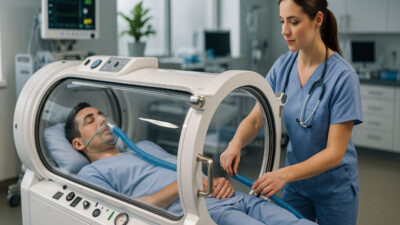
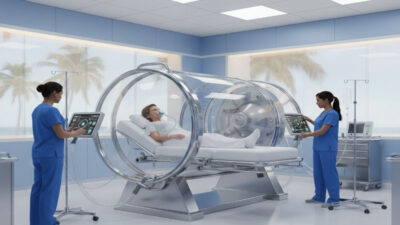
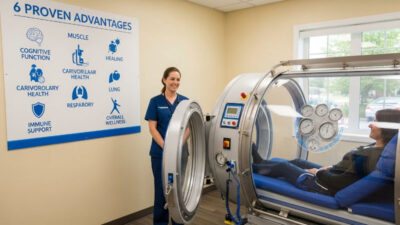
Ireland has a small but established network of hyperbaric oxygen therapy providers. The main options include hospital-based programs, charity-run MS therapy centres operating multiplace chambers, and a growing number of private clinics offering mild hyperbaric treatments. Here is where to find them and what each type offers.
Your GP might’ve brought it up, or maybe you’ve spent hours online looking for better ways to heal a wound that just won’t close or deal with some ongoing health problem. Whatever brought you here, you’re wondering what Ireland actually has to offer. The whole thing feels a bit much at first.
Here’s what to know: Ireland has quite a few places doing hyperbaric oxygen therapy Ireland treatments now, scattered from Dublin down to Cork and over to Galway.
We’re going to cover how you access this treatment. Which health problems actually benefit from it, what you should look for when picking a clinic, and also what you’ll end up spending.
Table of Contents
Where You Can Find Hyperbaric Chambers Across Ireland
According to the Undersea and Hyperbaric Medical Society, HBOT is recognized for 14 FDA-cleared medical indications, with over 1.5 million treatments administered annually in the United States.
Undersea and Hyperbaric Medical Society (UHMS)
Hyperbaric chamber Ireland availability has really grown over the last ten years or so. There are choices in different counties these days, which helps depending on where you live.
Dublin has several spots. The National Hyperbaric Centre sits right in the city center (easy to reach by Luas or bus), then there’s Amber Oxygen up in Malahide, Swords Hyperbaric Oxygen Centre on the north side, and Oxycare over in Santry.
That Oxycare place? It’s the only one in Ireland with UHMS accreditation, the Undersea and Hyperbaric Medical Society, which is basically their stamp of approval.
Beyond Dublin, there are places like:
- Adare Medical Centre in Limerick, with its Henshaw chamber
- Bandon Hyperbaric Oxygen Centre down in Cork
- Live5DHealth in Boyle, County Roscommon
- Zing True Health Clinic in Kildare
- National Hyperbaric Medicine Unit at University Hospital Galway (this one deals with emergencies like decompression sickness)
Something interesting, these places run different kinds of chambers. Some use monoplace units, which are those one-person tubes where you’re lying down solo.
Others have multiplace chambers fitting maybe 10 or 11 people at a time. Those group ones can feel less isolating ’cause there are other people around, but if you prefer your own space, the single chambers give you that privacy.
Medical Conditions That Respond to Hyperbaric Treatment in Ireland
Here’s the fascinating part., and in a hyperbaric chamber, you breathe 100% oxygen.. This is done under increased pressure. This combination gives impressive healing effects.
Places around Ireland handle both FDA-cleared conditions and what they label “off-label” uses. Just know your insurance probably won’t pay for the off-label things (we’ll hit that topic later).
Diabetic foot ulcers are probably the most common thing treated at Irish HBOT spots, and there’s actually solid research backing this up. Multiple studies demonstrate that HBOT really does boost healing and drops the chance of major amputations (Sharma et al., 2021).
The data shows hyperbaric treatment improves complete healing while slashing major amputations by roughly 40% versus regular care by itself (Sharma et al., 2021).
Radiation damage is another major area. Say you went through radiation for cancer, pelvic cancers especially, and ended up with problems like hemorrhagic cystitis, hyperbaric chamber Ireland can make a real difference.
The RICH-ART trial study showed individuals getting hyperbaric oxygen had way better symptom improvement than the standard treatment group, and those gains stuck around for more than five years (Oscarsson et al., 2019; Oscarsson et al., 2025).
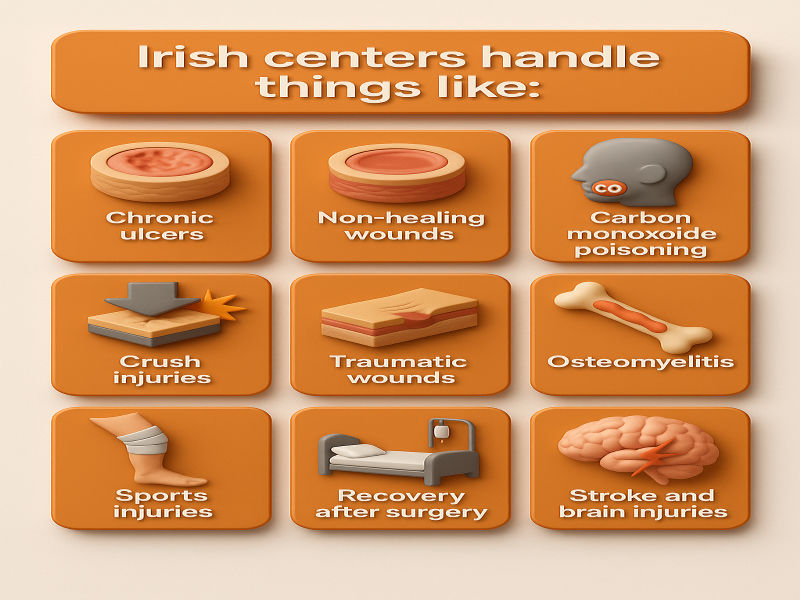
Now, some places will do treatments for multiple sclerosis, chronic fatigue, even long COVID, but here’s the deal: those fall under “experimental.” The science isn’t nearly as solid, so keep your expectations grounded going in.
| Condition Category | Examples | Evidence Level | Coverage |
| FDA-Approved | Diabetic foot ulcers and radiation injuries. Carbon monoxide poisoning | Strong clinical evidence | Often covered |
| Hospital Emergency | Decompression sickness, gas embolism | Established protocols | Typically covered |
| Off-Label Approved | Sports injuries, wound healing | Moderate evidence | Rarely covered |
| Experimental | MS, autism, chronic fatigue | Limited evidence | Not covered |
How to Choose the Right Hyperbaric Facility
With all these choices, where do you even start? Start by checking whether they use proper medical-grade oxygen. Oxycare in Santry uses 100% BOC medical oxygen, the exact same quality hospitals use.
Some wellness spots use oxygen concentrators, which are not comparable. Chamber specifications matter too. Real therapeutic chambers need to hit at least 2.0 to 2.4 ATA (that’s atmospheres absolute).
The National Hyperbaric Centre runs its chambers at different pressures based on what condition they’re addressing. Sessions need to run 60 to 90 minutes at a minimum. Anything less probably won’t give you proper therapeutic value.
Staff credentials are huge. You should ask whether they have certified hyperbaric doctors on staff, if the chamber operators hold CHOP certification, whether medical personnel stay on-site during your sessions, and what their emergency plans look like.
The National Hyperbaric Centre says their physician are trained in hyperbaric medicine in Canada, while Oxycare keeps a doctor there for every treatment. That level of medical supervision matters a lot.
Think about accessibility too. Is it easy to get there? You may need 20–40 sessions. Maybe even more. That’s a serious commitment travel-wise. The National Hyperbaric Centre, being close to the Luas, makes life easier.
Places like Bandon have wheelchair access, which could be essential if moving around isn’t easy for you. The best advice is to call and ask questions. A good clinic won’t rush you.
They’ll explain their process clearly. They’ll be honest about whether HBOT fits your condition. And they’ll set realistic expectations.
Understanding Treatment Costs and Insurance in Ireland
Hyperbaric oxygen therapy cost bounces around quite a bit across Ireland. They range from €25 per session up to €150 or more at certain Dublin locations. Most fall between €70 and €120 each session.
Here’s what individual places charge:
- Bandon: €65 your first time (covers mask and gear), then €25 each session after
- Adare Medical Centre: €70 per session, or €630 if you buy 10 sessions upfront
- Live5DHealth in Boyle: Suggested donation runs €80-€120
- Dublin centers: Usually €80-€150 each session
| Cost Factor | Range | Notes |
| Single session | €25-€150 | Varies by facility and location |
| Package deals | 10% – 15% discount | Most facilities offer blocks of 10-20 sessions |
| Total treatment cost | €1,500 – €6,000+ | Depends on the number of sessions needed |
Insurance coverage? That’s complicated. Oxycare works with all the big Irish insurers (VHI, Laya, Irish Life Health), but what they’ll actually pay depends completely on your plan details and what you’re getting treated for.
FDA-cleared conditions like diabetic foot ulcers or radiation cystitis have better reimbursement odds. Adare Medical Centre states that VHI/Laya/AXA don’t reimburse for their treatments currently.
Off-label conditions, like sports recovery or just general wellness, almost never get covered. That’s coming out of your pocket.
Before you commit to anything, definitely call your insurer with the exact diagnosis codes, grab a referral from your doctor or consultant (some places won’t see you without one), ask the HBOT center about their track record with insurance claims, and plan financially for possibly paying everything yourself.
What the Research Actually Says About Effectiveness
Everyone wants to know, does this actually do anything? For specific conditions, the research is pretty convincing. For others, not so much. Diabetic foot ulcers have multiple large reviews showing HBOT genuinely improves healing.
One analysis covering 768 people found HBOT worked for complete healing and cut major amputations by 40% (Sharma et al., 2021).
Another review with 1,263 trials showed HBOT boosted healing rates, sped up healing time, and lowered major amputation rates (Chen et al., 2021).
For radiation cystitis, the RICH-ART trial stands out as probably the key recent research. Hyperbaric oxygen led to major symptom improvement over standard care (Oscarsson et al., 2019).
These benefits lasted for years. A five-year follow-up confirmed the relief remained (Oscarsson et al., 2025). But a hyperbaric chamber Ireland doesn’t fix everything. Some conditions just don’t have good evidence behind them.
Things like autism, fibromyalgia, and certain brain conditions. The research is pretty underwhelming. I’m not saying it definitely won’t help you, but go in with your eyes open about what’s realistic.
Understanding the Treatment Experience
What’s it actually like? Most people say it’s pretty relaxing. At least after the first couple of sessions. You’ll either lie down or sit (depending on the chamber type), and when they start pressurizing, your ears will feel it, similar to a plane ascending.
You’ll have to equalize the pressure in your ears now and then, which is why they won’t treat you if you have bad sinus congestion. Sessions last about 60–90 minutes.
Sometimes they stretch to two hours. You can bring a book or something to read. Some chambers have windows so you’re not stuck looking at blank walls.
Staff watch you constantly, and there’s communication gear so you can signal if something feels wrong. You have to wear cotton. Synthetic fabrics build static in high amounts of oxygen.
Also, no phones., and no lotions or perfumes.. And definitely no jewelry.They’re strict about safety for good reason., and most plans run 20 to 40 sessions.. Sometimes more. You might go five days a week, or they’ll tailor the schedule to you.
FAQs
- What conditions can be treated with hyperbaric chambers in Ireland?
Clinics in Ireland handle FDA-cleared conditions. This includes diabetic foot ulcers and radiation damage. Also, carbon monoxide poisoning and decompression sickness.
- How much does hyperbaric oxygen therapy cost in Ireland, and will insurance cover it?
Sessions run €25 to €150., and this depends on where you go.. Whether insurance pays also varies. Some big insurers work with places like Oxycare for approved medical conditions. But experimental treatments rarely get covered.
- How do I choose between monoplace and multiplace hyperbaric chambers?
Monoplace chambers handle one person. Usually, in a private, fully pressurized oxygen setup. Multiplace chambers fit several people who breathe oxygen through masks in a pressurized air space. Both work fine; it’s really about what you prefer.
- How many hyperbaric oxygen therapy sessions will I need?
Most plans call for 20 to 40 sessions. This changes based on the condition. Your doctor will figure out a specific plan depending on what you’re dealing with and how you respond early on.
- Are there any risks or side effects of hyperbaric oxygen therapy?
HBOT’s generally safe when done right. The biggest thing people notice is temporary ear pressure. Or discomfort. Serious complications like oxygen toxicity or barotrauma are rare. Places with trained medical staff keep risks low.
References
Oscarsson, N., Arnell, P., Lodding, P., Ricksten, S. E., & Seeman-Lodding, H. (2019). Radiation-induced cystitis treated with hyperbaric oxygen therapy (RICH-ART): A randomized, controlled, phase 2-3 trial. Published Study (DOI)
Oscarsson, N., Rosén, A., Müller, B., Koskela, L. R., Giglio, D., Kjellberg, A., Ettala, O., & Seeman-Lodding, H. (2025). Radiation-induced cystitis treated with hyperbaric oxygen therapy (RICH-ART): Long-term follow-up of a randomized controlled, phase 2-3 trial. Published Study (DOI)
Sharma, S. K., Jha, A. K., Dabla, P. K., & Kumar, V. (2021). Efficacy of hyperbaric oxygen therapy for diabetic foot ulcer, a systematic review and meta-analysis of controlled clinical trials. Published Study (DOI)
References
- Undersea and Hyperbaric Medical Society. (2023). Indications for Hyperbaric Oxygen Therapy. UHMS. uhms.org
- Thom, S. R. (2011). Hyperbaric oxygen: Its mechanisms and efficacy. Plastic and Reconstructive Surgery, 127(Suppl 1), 131S-141S. doi.org
- Centers for Medicare and Medicaid Services. (2024). Hyperbaric Oxygen Therapy Coverage Criteria. CMS.gov. cms.gov
References
- Undersea and Hyperbaric Medical Society. “Hyperbaric Oxygen Therapy Indications.” 14th Edition, 2019. uhms.org
- Thom SR. “Hyperbaric oxygen: its mechanisms and efficacy.” Plastic and Reconstructive Surgery, 2011;127(Suppl 1):131S-141S. DOI: 10.1097/PRS.0b013e3181fbe2bf
- Centers for Medicare & Medicaid Services. “National Coverage Determination for Hyperbaric Oxygen Therapy.” NCD 20.29. cms.gov
Medical Disclaimer
The content on BaricBoost.com is for informational purposes only and is not intended as a substitute for professional medical advice, diagnosis, or treatment. Always seek the advice of your physician or other qualified health provider with any questions you may have regarding a medical condition. Never disregard professional medical advice or delay in seeking it because of something you have read on this website.

Author
Seph Fontane Pennock is the founder of BaricBoost.com and Regenerated.com, a clinic directory for regenerative medicine serving 10,000+ providers across the United States. He previously built and sold PositivePsychology.com, which grew to 19 million users and became the largest evidence-based positive psychology resource on the web. Seph brings direct experience as an HBOT patient, having completed protocols at clinics across three continents while navigating mold illness, systemic inflammation, and autoimmune conditions. His treatment journey includes hyperbaric oxygen therapy, peptide protocols, NAD+ therapy, and consultations with specialists from Dubai to Cape Town to Mexico. This combination of entrepreneurial track record and lived patient experience shapes everything published on BaricBoost.com. Every article is grounded in peer-reviewed research, informed by real clinical encounters, and written for patients making high-stakes treatment decisions. Seph's focus is on bringing transparency, scientific rigor, and practical guidance to the hyperbaric oxygen therapy space.