Looking for a hyperbaric chamber Miami offer? You’ve probably hit a wall with standard treatments.
It could be a wound refusing to close up, maybe you’re recovering from something persistent, or perhaps a friend mentioned these chambers, and now you’re curious what Miami’s got.
This city has turned into quite the spot for hyperbaric oxygen therapy; we’ve got medical facilities, wellness spots, and hospital programs scattered everywhere.
But here’s the catch: chambers and how they run treatments? They’re not all the same deal. Picking the right one actually matters more than you’d think.
On paper, it’s simple. Breathe 100% oxygen with the pressure turned up. In reality? The way it works is surprisingly more detailed.
Table of Contents
Understanding How Hyperbaric Chambers Work in Miami
According to the Undersea and Hyperbaric Medical Society, HBOT is recognized for 14 FDA-cleared medical indications, with over 1.5 million treatments administered annually in the United States.
Undersea and Hyperbaric Medical Society (UHMS)
Inside a hyperbaric chamber, atmospheric pressure increases to 1.5 to 3.0 times normal levels.
(Jones & Cooper, 2023). The body absorbs significantly more oxygen under pressure.
That extra oxygen dissolves directly into your blood plasma. Not just your red blood cells.
All that extra oxygen reaches tissue that’s been basically starving, beat-up areas, inflamed tissue, spots where your blood flow’s just not cutting it.
The National Institutes of Health published research showing how this oxygen boost kicks off this whole chain reaction of healing processes throughout your body (Vishwanath, 2012).
It’s not simply about more oxygen floating around; it’s what that oxygen lets your cells actually do. You’ve got collagen production jumping, brand new blood vessels sprouting up, inflammation backing off, and your immune system getting this serious upgrade.
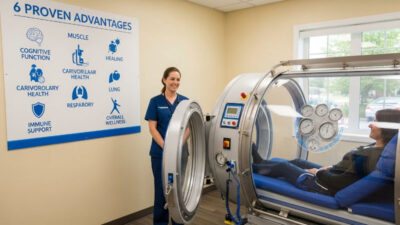
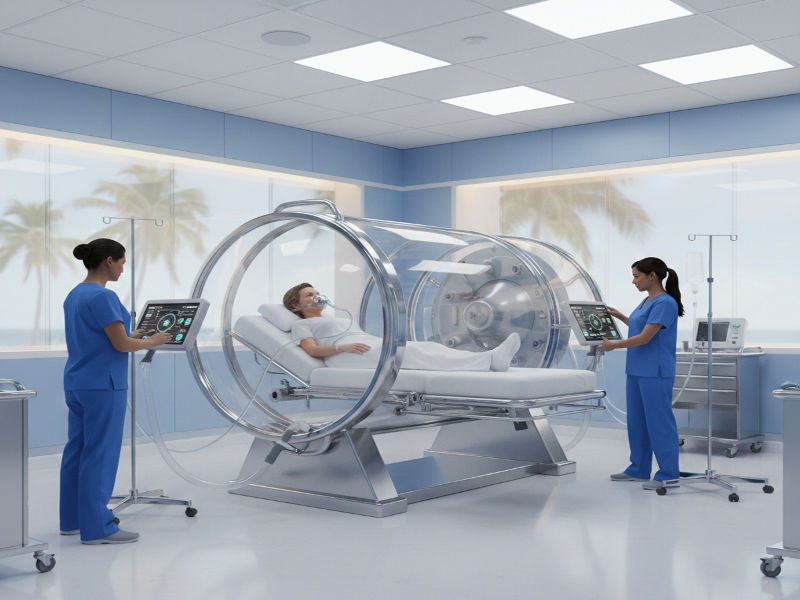
Most hyperbaric chamber Miami places use one of two chamber types. There are monoplace chambers, picture a clear tube where you lie down alone on the chamber bed, and then multiplace chambers that hold multiple people, almost like a small room.
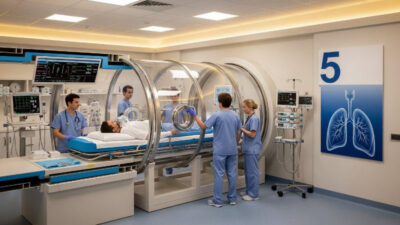
Baptist Health South Florida and HCA Florida Mercy Hospital both run multiplace setups, meaning medical staff can be right in there with you when necessary.
Types of Conditions Treated at Miami HBOT Centers
Let’s discuss what people are actually showing up for. The FDA has approved hyperbaric oxygen therapy for 14 conditions. Local clinics often treat far more. Newer research keeps expanding the list.
FDA-Approved Conditions:
- Non-healing diabetic wounds (diabetes complications are everywhere in Miami)
- Carbon monoxide poisoning
- Decompression sickness (major one for the diving crowd around here)
- Radiation tissue damage from cancer treatment
- Crushing injuries
- Compartment syndrome
- Gas gangrene
- Necrotizing infections
- Compromised skin grafts and flaps
- Thermal burns
University of Miami research groups have been researching HBOT for ulcerative colitis, traumatic brain injuries, and even post-concussion syndrome (Damas, 2020).
There’s a study that came out in the Journal of International Medical Research showing hyperbaric oxygen therapy could potentially help neurological recovery for severe traumatic brain injury patients.
And that’s hitting thousands of South Florida people every year with our crazy traffic and active lifestyle scene (Zhong et al., 2020).
Several Miami facilities now offer athletic injuries and recovery boosting for high-performance types. These applications are not FDA-cleared, but research is accumulating.
What to Expect at Miami Hyperbaric Treatment Facilities
Walking into a Miami HBOT center for the first time feels clinical; I won’t sugarcoat it. Most places have figured out how to make it less intimidating, though. Here’s basically what goes down.
Sessions run somewhere between 60-90 minutes. You’ll swap into cotton clothes. No phones allowed, zero electronics, nothing with petroleum in it.
Inside, the tech raises the pressure., and your ears pop like on a plane.. Swallow or yawn, it fixes it.Some read., and some watch movies.. Some just nap. It’s actually relaxing once you get over the weirdness of sitting in a pressurized tube.
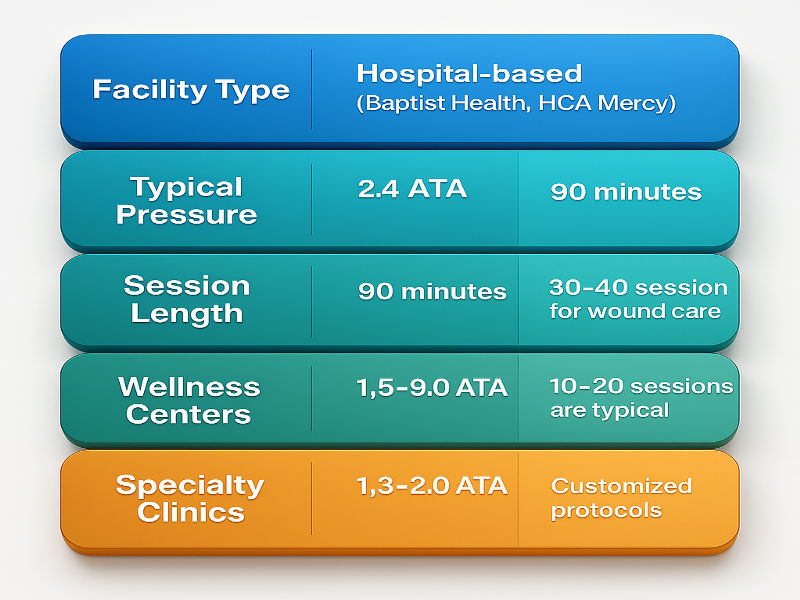
Here’s where Miami facilities split. Standard wound healing runs maybe 30-40 sessions, five days weekly. Baptist Health South Florida follows evidence-based protocols at 2.0 to 2.4 atmospheres absolute.
This takes around two hours for each session. But wellness centers? Different ballgame, sessions might be shorter, pressures vary, everything’s bundled into broader health optimization packages.
Research-Backed Benefits Specific to Miami Residents
Miami has this unique mix of demographics and lifestyle that creates some genuinely interesting opportunities for HBOT. Let’s get specific.
Diabetic Wound Healing
South Florida ranks among the highest diabetes rates nationwide. A study in Advances in Skin and Wound Care showed 61% of chronic wounds completely healed when HBOT was added to standard care (Lalieu et al., 2023).
That’s pretty significant. The same study also found patients hitting fewer than 30 sessions had worse outcomes, indicating treatment adherence matters.
Findings in the Indian Journal of Plastic Surgery talk about how hyperbaric oxygen pumps up tissue oxygenation in diabetic foot ulcers by triggering vascular endothelial growth factor; your body starts growing new blood vessels to feed that damaged area (Vishwanath, 2012).
For Miami’s older population wrestling with diabetes complications, this means literally saving limbs.
Diving-Related Injuries
Miami’s coastal geography means decompression sickness cases are common. The condition occurs when divers ascend too fast and nitrogen bubbles form in the bloodstream.
HCA Florida Mercy Hospital serves as the Divers Alert Network’s regional hub for Florida and the Caribbean. Their chambers can recreate depths of 66 feet and handle serious dive emergencies.
If you’re part of Miami’s massive diving scene, knowing your nearest chamber location? That’s basic safety advice.
Post-Traumatic Brain Injury Recovery
Here’s something that’s both fascinating and controversial still. NIH studies hint that HBOT might actually help brain injury recovery even years after the original injury happened (Harch et al., 2020).
One randomized controlled trial showed improvements in memory, cognitive function, and quality of life for patients with lingering post-concussion syndrome.
Now, the research splits opinions, and the FDA hasn’t greenlighted it for TBI, though several Miami centers are offering it as an off-label treatment.
Choosing the Right Miami Hyperbaric Center
Miami offers everything from major hospital facilities to boutique wellness centers. Quality varies.
Questions You Should Ask:
- Is the facility accredited?
- Specifically, does it hold UHMS approval?
- Are staff actually certified in hyperbaric medicine?
- What does their safety record look like?
- Do they stick to evidence-based protocols for your specific condition?
- What pressure do they actually use, and how long are sessions?
Baptist Health South Florida and the University of Miami’s program? Hospital-based operations, medically supervised, following tight protocols.
You’re getting evidence-backed care from certified hyperbaric docs. Other spots lean more wellness-oriented, still legit, just different focus and protocols.
For serious medical conditions (diabetic wounds, radiation damage, decompression sickness), use hospital-based or UHMS-accredited medical centers.
The evidence base for these indications is strong. For performance optimization or conditions without FDA clearance,
That’s more personal choice territory, and you’ll need to weigh costs against what research actually demonstrates.
| Condition Type | Research Level | Recommended Facility | Insurance Coverage |
| Diabetic wounds | Strong evidence | Hospital-based | Usually covered |
| Radiation damage | Strong evidence | Hospital-based | Usually covered |
| Decompression sickness | Strong evidence | Hospital-based | Usually covered |
| Brain injury | Emerging evidence | Medical center | Rarely covered |
| Athletic recovery | Limited evidence | Wellness center | Not covered |
| General wellness | Minimal evidence | Wellness center | Not covered |
What Are the Side Effects and Risks?
Things can go sideways. Let’s talk about the risks. HBOT’s generally safe, but calling them risk-free would be lying. The most common complication is ear and sinus barotrauma.
That’s basically damage from pressure shifts, similar to what scuba divers deal with. Most people manage fine using equalization techniques, though some folks just can’t handle it.
Research in Advances in Skin and Wound Care found that HBOT can cause mild, temporary side effects: fatigue, brief vision changes, and middle-ear pressure (Lalieu et al., 2023).
Serious complications are rare. Oxygen toxicity can cause seizures if sessions run too long or pressure is too high. In very rare cases, the high-oxygen environment can create a fire risk if there’s an ignition source.
The only absolute contraindication is an untreated pneumothorax. Relative risks include uncontrolled seizures, certain medications, severe COPD, and claustrophobia. Pregnancy is also considered a gray area.
Research is limited. Most facilities avoid treating pregnant patients unless it’s an emergency. Miami’s reputable spots screen thoroughly and run tight safety protocols.
Making an Informed Decision About HBOT in Miami
Start with your condition and what the research supports.
FDA-cleared indications have decades of evidence and insurance coverage. Off-label evidence quality varies widely.
Do your homework on facilities. Fire questions at them. Don’t get sucked in by marketing that sounds too perfect. And honestly? Loop in your primary care doctor or specialist.
A solid doctor helps you figure out whether HBOT makes sense for your situation or if you’re better off checking other routes.
Miami hands you options: university medical centers running active research programs, community clinics with decades under their belt, wellness facilities taking more holistic angles. That’s actually pretty rare for a city.
FAQs
- What conditions does insurance typically cover for hyperbaric therapy in Miami?
Insurance generally covers FDA-approved conditions like diabetic wounds, radiation tissue damage, carbon monoxide poisoning, and decompression sickness when your physician documents them properly. Off-label or wellness uses aren’t covered. You’ll pay out of pocket.
- How long does it take to see results from HBOT treatment?
It depends on what you’re treating. Acute issues like carbon monoxide poisoning can improve in a few days. Chronic wounds may show progress after 10–15 sessions. They often need 30–40 sessions for full healing.
- Are there any Miami facilities that specialize in specific HBOT applications?
HCA Florida Mercy Hospital specializes in diving medicine. They also serve as the regional DAN coordinator. The University of Miami focuses on wound healing and researches inflammatory bowel disease. Baptist Health South Florida runs comprehensive HBOT programs across several locations.
- Can HBOT help with athletic recovery or performance enhancement?
Research here is honestly pretty thin. Some athletes say they recover faster and have less inflammation, but big clinical trials proving performance benefits basically don’t exist yet. Several Miami facilities offer these services, though it’s not FDA-approved for this.
- What should I bring to my first hyperbaric session in Miami?
Most clinics give you cotton clothes to change into. Leave electronics, jewelry, synthetics, and anything petroleum-based at home. Come with clean skin. Skip makeup, nail polish, and hair products. If you wear contacts, switch to glasses for the session.
References
Damas, O. (2020). Hyperbaric oxygen therapy for ulcerative colitis. University of Miami Miller School of Medicine. University of Miami Health News
Harch, P. G., Andrews, S. R., Rowe, C. J., Lischka, J. R., Townsend, M. H., Yu, Q., & Mercante, D. E. (2020). Hyperbaric oxygen therapy for mild traumatic brain injury persistent postconcussion syndrome: a randomized controlled trial. Published Study (DOI)
Jones, M. W., & Cooper, J. S. (2023). Hyperbaric therapy for wound healing. In StatPearls. StatPearls Publishing. National Library of Medicine
Lalieu, R. C., Bol Raap, R. D., Smit, C., Dubois, E. F. L., & van Hulst, R. A. (2023). Hyperbaric oxygen therapy for nonhealing wounds. Published Study (DOI)
Vishwanath, G. (2012). Hyperbaric oxygen and wound healing. Indian Journal of Plastic Surgery. Published Study (DOI)
Zhong, X., Shan, A., Xu, J., Liang, J., Long, Y., & Du, B. (2020). Hyperbaric oxygen for severe traumatic brain injury: A randomized trial. Published Study (DOI)
References
- Undersea and Hyperbaric Medical Society. (2023). Indications for Hyperbaric Oxygen Therapy. UHMS. uhms.org
- Thom, S. R. (2011). Hyperbaric oxygen: Its mechanisms and efficacy. Plastic and Reconstructive Surgery, 127(Suppl 1), 131S-141S. doi.org
- Centers for Medicare and Medicaid Services. (2024). Hyperbaric Oxygen Therapy Coverage Criteria. CMS.gov. cms.gov
References
- Undersea and Hyperbaric Medical Society. “Hyperbaric Oxygen Therapy Indications.” 14th Edition, 2019. uhms.org
- Thom SR. “Hyperbaric oxygen: its mechanisms and efficacy.” Plastic and Reconstructive Surgery, 2011;127(Suppl 1):131S-141S. DOI: 10.1097/PRS.0b013e3181fbe2bf
- Centers for Medicare & Medicaid Services. “National Coverage Determination for Hyperbaric Oxygen Therapy.” NCD 20.29. cms.gov
Medical Disclaimer
The content on BaricBoost.com is for informational purposes only and is not intended as a substitute for professional medical advice, diagnosis, or treatment. Always seek the advice of your physician or other qualified health provider with any questions you may have regarding a medical condition. Never disregard professional medical advice or delay in seeking it because of something you have read on this website.

Author
Seph Fontane Pennock is the founder of BaricBoost.com and Regenerated.com, a clinic directory for regenerative medicine serving 10,000+ providers across the United States. He previously built and sold PositivePsychology.com, which grew to 19 million users and became the largest evidence-based positive psychology resource on the web. Seph brings direct experience as an HBOT patient, having completed protocols at clinics across three continents while navigating mold illness, systemic inflammation, and autoimmune conditions. His treatment journey includes hyperbaric oxygen therapy, peptide protocols, NAD+ therapy, and consultations with specialists from Dubai to Cape Town to Mexico. This combination of entrepreneurial track record and lived patient experience shapes everything published on BaricBoost.com. Every article is grounded in peer-reviewed research, informed by real clinical encounters, and written for patients making high-stakes treatment decisions. Seph's focus is on bringing transparency, scientific rigor, and practical guidance to the hyperbaric oxygen therapy space.