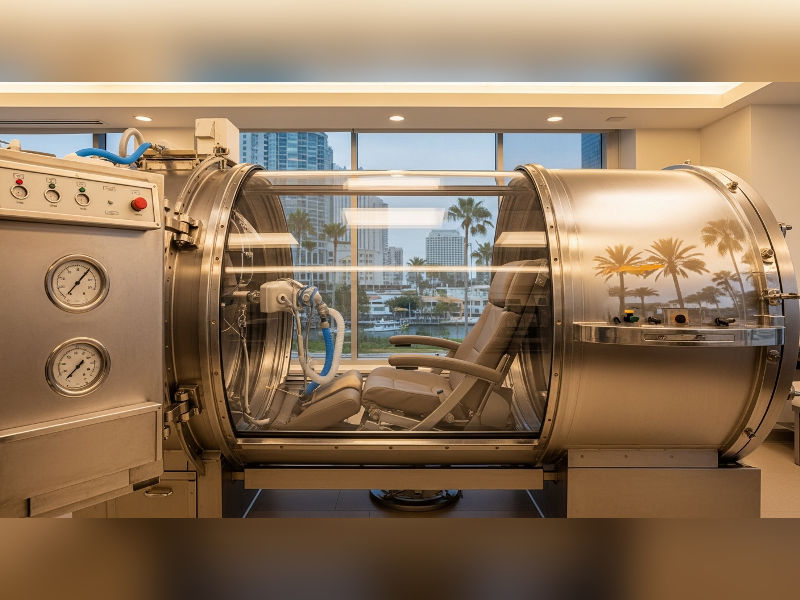
Tampa Bay has five hyperbaric oxygen therapy facilities, including hospital wound-care centers and private clinics. Session costs run $100 to $300, with clinical chambers operating at 2.0 to 2.4 ATA for FDA-cleared conditions and off-label use.
Each clinic uses different equipment., and each clinic follows different protocols.. Each clinic has different levels of expertise. You’ll want centers that use FDA-cleared chambers and employ certified technicians.
This guide walks you through Tampa’s top five HBOT locations. We’ll explain what makes each option stand out. Knowing your local options helps you decide, and it helps you make informed choices about your care.
Table of Contents
Why Tampa Residents Seek Hyperbaric Oxygen Therapy
According to the Undersea and Hyperbaric Medical Society, HBOT is recognized for 14 FDA-cleared medical indications, with over 1.5 million treatments administered annually in the United States.
Undersea and Hyperbaric Medical Society (UHMS)
People across Tampa Bay turn to HBOT for many conditions. These range from diabetic foot ulcers to radiation tissue damage. The therapy delivers 100% oxygen at higher-than-normal pressures. This saturates your blood plasma. It reaches tissues that standard circulation can’t support (Thom, 2011).
Local physicians frequently refer patients to hyperbaric chamber Tampa centers. This happens after conventional treatments stop working. Many conditions respond well to this therapy:
- Non-healing wounds that resist antibiotics and traditional care
- Post-surgical complications where tissue won’t close
- Carbon monoxide poisoning requires immediate help
- Radiation cystitis and late effects from cancer treatment
The evidence for these uses comes from rigorous research. Studies show HBOT improves wound healing in diabetic patients. Some trials show up to 60% better outcomes. These results outperform standard care (Kranke et al., 2015). That’s not just numbers. It means people keep limbs they might otherwise lose.
Tampa’s humid climate creates unique wound care challenges. Heat and moisture increase risk. Active lifestyles add strain. Infections can progress faster here. Access to quality HBOT matters more. This is especially true for wound healing.
Tampa General Hospital Wound Care & Hyperbaric Center
Tampa General runs one of the region’s most established hyperbaric programs. It sits within their comprehensive wound care department. They operate multiple monoplace chambers. These are clear acrylic tubes where you lie alone during treatment. They also have a multiplace chamber that fits several patients at once.
What sets this facility apart is the Level 1 trauma center connection. If you develop complications during therapy, you’re already in a hospital equipped to handle anything. Their staff includes board-certified wound care specialists. These physicians monitor tissue response closely. They adjust treatment as healing progresses.
The center treats about 1,200 patients each year., and this volume builds deep experience.. Technicians gain extensive hands-on skills. They follow strict Undersea and Hyperbaric Medical Society protocols. Your sessions match evidence-based standards.
Insurance coverage tends to run more smoothly here. Hospitals maintain detailed records that satisfy Medicare. You’ll still need prior authorization for most conditions. Their billing team manages insurance workflows. They understand the approval process. They reduce administrative friction.
Comprehensive Wound & Hyperbaric Center at St. Joseph’s Hospital
St. Joseph’s operates their hyperbaric program through a partnership model. It blends hospital resources with specialized wound care expertise. This center focuses heavily on diabetic wound care. They’ve built strong ties with local endocrinologists and podiatrists.
Their chamber setup includes both monoplace and multiplace options. This creates scheduling flexibility. Some patients prefer enclosed monoplace chambers. Others like multiplace environments where you can read during 90-minute sessions.
| Feature | Tampa General | St. Joseph’s | BayCare Outpatient |
| Chamber Types | Mono & multiplace | Mono & multiplace | Monoplace only |
| Hospital Link | Level 1 trauma | Full hospital | Outpatient network |
| Average Wait | 2-3 weeks | 1-2 weeks | 3-4 weeks |
| Weekend Hours | Limited | No | No |
St. Joseph’s excels at coordinating care across specialties. If you’re dealing with radiation injury plus surgical wounds, they loop in plastic surgeons and oncologists. That coordination makes a big difference in complex cases.
BayCare’s Outpatient Hyperbaric Medicine Program
BayCare runs multiple outpatient locations., and these sites serve the Tampa Bay region.. They improve access and convenience. This makes them convenient for suburban residents. These standalone clinics focus only on hyperbaric therapy and wound care. You won’t face emergency department chaos.
The outpatient model works well for stable patients. You skip parking garages and crowded waiting rooms. Most hyperbaric chamber Miami and hyperbaric chamber Atlanta programs use similar structures.
BayCare uses newer monoplace chambers with better entertainment systems. When you spend 90 minutes in a tube five days weekly, upgrades matter. The chambers reach 2.4 atmospheres absolute (ATA). This meets standard wound care protocols.
Their staff stays exceptionally patient-focused. You’ll see the same technicians throughout treatment. For anyone anxious about enclosed spaces, that familiarity helps tremendously.
Florida Hyperbaric Centers – South Tampa Location
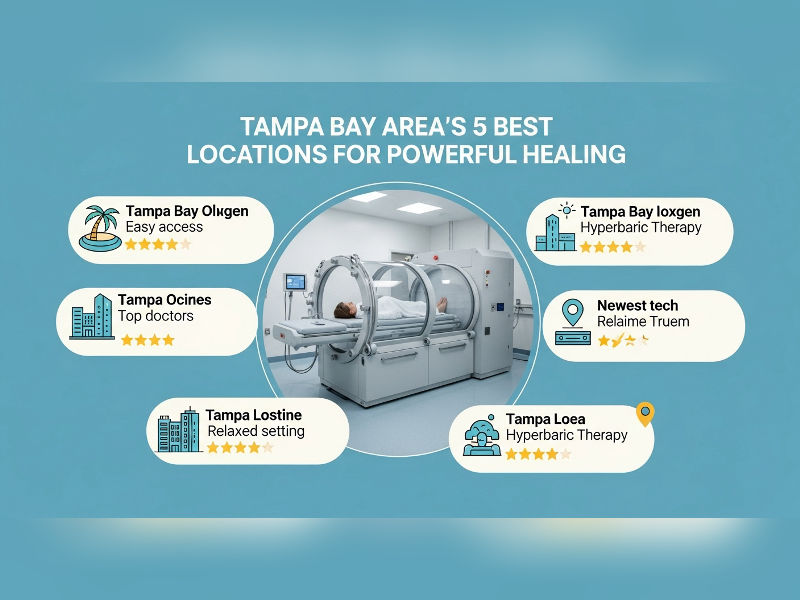
This independent clinic operates outside the hospital system. It takes a more boutique approach to hyperbaric therapy. They’ve invested in top-tier equipment. The atmosphere feels calmer and spa-like.
Florida Hyperbaric Centers treats standard Medicare-approved conditions. They also offer therapy for off-label uses like sports recovery. Insurance won’t cover those. You’d pay out of pocket, typically $150-300 per session.
The medical director has published HBOT research. He stays current with emerging protocols. They sometimes adopt new techniques faster than larger hospital systems.
Their scheduling flexibility beats most hospital programs. Need evening appointments or Saturday sessions? They usually accommodate that. The hyperbaric chamber Houston market has similar independent clinics.
Selecting the Right Tampa Hyperbaric Facility for Your Needs
Choosing between centers takes careful thought., and several factors matter.. Insurance coverage should come first. Call your provider. Ask specifically about hyperbaric oxygen therapy benefits. Some policies exclude HBOT even when covering other wound treatments.
Next, consider your condition’s severity. Straightforward diabetic ulcers? Any accredited center works well. But radiation damage plus surgical complications? You’ll want Tampa General or St. Joseph’s comprehensive resources.
Visit potential facilities before committing., and ask to see the chambers.. Meet the staff. Talk with current patients if possible. Red flags include dirty equipment or vague certification answers.
Check whether the center participates in national quality registries. Facilities tracking outcomes generally maintain higher standards. It’s a meaningful sign of professional commitment.
Understanding Tampa’s Hyperbaric Treatment Protocols
Most wound care protocols involve 20-40 sessions., and they’re delivered five days weekly.. Your specific plan depends on the diagnosis. Each session lasts about 90 minutes. Pressure ranges from 2.0 to 2.4 ATA. These levels deliver therapeutic oxygen safely.
You breathe 100% oxygen during treatment., and oxygen flows through a hood or mask.. Delivery remains controlled and consistent. Technicians monitor from outside. The pressure increase feels like descending in an airplane. You’ll equalize your ears by yawning. Most people adapt within a few sessions.
| Condition | Typical Sessions | Pressure (ATA) | Success Rate |
| Diabetic foot ulcer | 30-40 | 2.0-2.4 | 60-85% |
| Radiation damage | 30-60 | 2.4 | 70-90% |
| CO poisoning | 3-5 | 2.8-3.0 | 80-95% |
| Crush injury | 10-20 | 2.4 | 65-80% |
100% oxygen under pressure changes circulation., and blood plasma carries far more oxygen.. Levels increase up to twentyfold. This oxygen reaches damaged tissue (Mathieu et al., 2017).
Tampa facilities follow standardized safety protocols. Strict rules govern what you bring inside. No petroleum products.No electronics., and no synthetic fabrics.. These restrictions prevent fire hazards.
Cost Considerations and Insurance Coverage in Tampa
Medicare covers 14 specific conditions for hyperbaric therapy. These include diabetic wounds and radiation injuries. Most commercial plans follow Medicare guidelines. Prior authorization requirements vary between carriers.
Out-of-pocket costs for uncovered treatments run $200-400 per session. Multiply by 30-40 sessions. You’re looking at $6,000-16,000 for complete treatment. Some centers offer payment plans. The hyperbaric chamber cost.
Hospital programs typically charge more than independent clinics. Insurance companies may reimburse hospital claims more readily. Paying cash? Negotiate upfront. Many centers discount self-pay rates 20-30%.
Check whether your chosen facility participates in Medicare. Participation affects more than billing. It shows the center meets certain quality standards.
Preparing for Your First Tampa HBOT Session
Your initial appointment involves extensive paperwork. You’ll get a physical exam. Staff explain what to expect.Wear comfortable cotton clothing., and most centers supply cotton scrubs.. Synthetic fabrics increase fire risk.
Remove all jewelry and watches., and take off electronics beforehand.. Phones and tablets are not allowed inside. Plan on two hours total at the facility. This covers check-in, changing, treatment, and post-session monitoring.
Eat a light meal first., and hunger can increase nausea.. Pressure changes worsen the effect.Avoid carbonated drinks before treatment., and trapped gas expands at pressure.. Claustrophobic? Mention that during intake.
The hyperbaric chamber Nashville facilities use similar protocols. Tampa centers follow the same baseline safety requirements.
Taking the Next Step Toward Healing in Tampa
Hyperbaric oxygen therapy requires thought., and start with your primary physician.. Medical guidance is essential. They can provide referrals to reputable hyperbaric chamber Tampa centers.
Don’t rush the selection process., and visit multiple facilities.. Ask clear, detailed questions.Pay attention to how the space feels., and trust your instincts.. Tampa offers strong options. These range from hospitals to independent clinics.
FAQs
- What conditions do Tampa hyperbaric centers commonly treat?
Tampa facilities primarily treat diabetic foot ulcers and radiation tissue damage. Most centers also treat carbon monoxide poisoning. They treat surgical wounds as well. These wounds often resist standard care.
- How long does a typical hyperbaric treatment course last in Tampa?
Most protocols involve 20 to 40 sessions., and treatment spans four to eight weeks.. Each session lasts about 90 minutes. Preparation time adds extra minutes.
- Does insurance cover hyperbaric oxygen therapy in Tampa?
Medicare covers HBOT for 14 conditions., and most commercial insurers do as well.. Coverage depends on the diagnosis.You’ll need prior authorization., and off-label treatments are different.. Insurance usually does not apply. Patients pay out of pocket.
- Are there risks associated with hyperbaric oxygen therapy?
Common side effects are mild., and they include ear pressure.. Temporary vision changes may occur. Serious complications are rare.
- Can I receive hyperbaric treatment if I live outside Tampa?
Yes, treatment is possible., and you will need weekday appointments.. Attendance must be consistent. Some patients temporarily relocate during treatment.
References
Kranke, P. A., Debus, S. E., & Weibel, S. (2015). Hyperbaric oxygen therapy for chronic wounds. Published Study (DOI)
Mathieu, D., Marroni, A., & Kot, J. (2017).Recommendations for accepted and non-accepted clinical indications and practice of hyperbaric oxygen treatment. PubMed: PMID 28357821
Thom, S. R. (2011). Hyperbaric oxygen: Its mechanisms and efficacy. Published Study (DOI)
References
- Undersea and Hyperbaric Medical Society. (2023). Indications for Hyperbaric Oxygen Therapy. UHMS. uhms.org
- Thom, S. R. (2011). Hyperbaric oxygen: Its mechanisms and efficacy. Plastic and Reconstructive Surgery, 127(Suppl 1), 131S-141S. doi.org
- Centers for Medicare and Medicaid Services. (2024). Hyperbaric Oxygen Therapy Coverage Criteria. CMS.gov. cms.gov
References
- Undersea and Hyperbaric Medical Society. “Hyperbaric Oxygen Therapy Indications.” 14th Edition, 2019. uhms.org
- Thom SR. “Hyperbaric oxygen: its mechanisms and efficacy.” Plastic and Reconstructive Surgery, 2011;127(Suppl 1):131S-141S. DOI: 10.1097/PRS.0b013e3181fbe2bf
- Centers for Medicare & Medicaid Services. “National Coverage Determination for Hyperbaric Oxygen Therapy.” NCD 20.29. cms.gov
Medical Disclaimer
The content on BaricBoost.com is for informational purposes only and is not intended as a substitute for professional medical advice, diagnosis, or treatment. Always seek the advice of your physician or other qualified health provider with any questions you may have regarding a medical condition. Never disregard professional medical advice or delay in seeking it because of something you have read on this website.

Author
Seph Fontane Pennock is the founder of BaricBoost.com and Regenerated.com, a clinic directory for regenerative medicine serving 10,000+ providers across the United States. He previously built and sold PositivePsychology.com, which grew to 19 million users and became the largest evidence-based positive psychology resource on the web. Seph brings direct experience as an HBOT patient, having completed protocols at clinics across three continents while navigating mold illness, systemic inflammation, and autoimmune conditions. His treatment journey includes hyperbaric oxygen therapy, peptide protocols, NAD+ therapy, and consultations with specialists from Dubai to Cape Town to Mexico. This combination of entrepreneurial track record and lived patient experience shapes everything published on BaricBoost.com. Every article is grounded in peer-reviewed research, informed by real clinical encounters, and written for patients making high-stakes treatment decisions. Seph's focus is on bringing transparency, scientific rigor, and practical guidance to the hyperbaric oxygen therapy space.