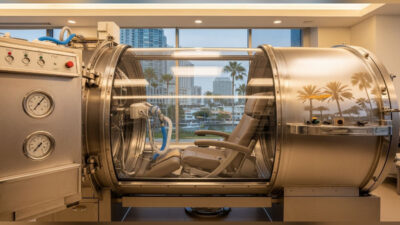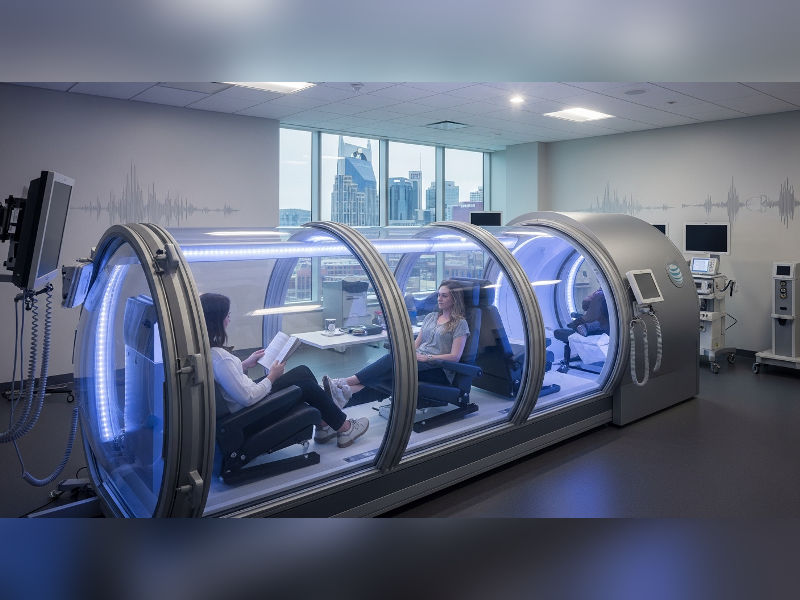
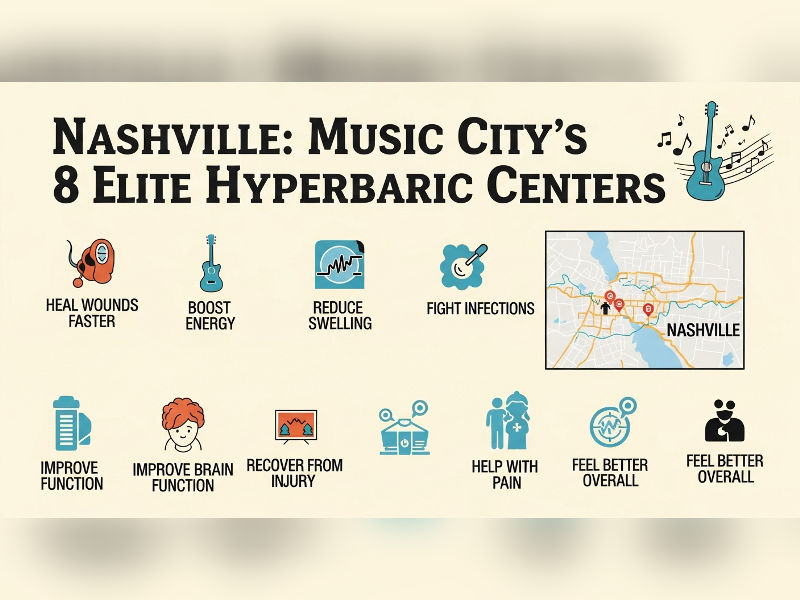
Nashville has eight hyperbaric oxygen therapy centers, with strong hospital-based programs and a growing number of private clinics. The city’s medical infrastructure, centered on the HCA Healthcare corridor, gives it more clinical HBOT capacity than most comparably sized metros.
HBOT Nashville delivers pressurized oxygen therapy. This therapy speeds healing at the cellular level. The city supports medical-grade treatments. It also supports wellness-focused sessions. This gives residents different ways to benefit from higher oxygen levels. These facilities employ trained techs and doctors. They know how pressure and oxygen work together. They understand tissue repair and inflammation reduction.
Table of Contents
Nashville’s Premier Hyperbaric Treatment Facilities
According to the Undersea and Hyperbaric Medical Society, HBOT is recognized for 14 FDA-cleared medical indications, with over 1.5 million treatments administered annually in the United States.
Undersea and Hyperbaric Medical Society (UHMS)
The hyperbaric chamber Nashville landscape includes eight major centers. Each brings something unique. Vanderbilt University Medical Center runs a multi-place chamber. It treats multiple patients at once. This works well for complex cases needing close medical watch. TriStar Centennial Medical Center operates a wound care program. It combines hyperbaric therapy with surgical care. They create full treatment plans for diabetic ulcers and radiation injuries.
Ascension Saint Thomas Hospital maintains chambers for dive emergencies and carbon monoxide cases. They also handle chronic conditions. Nashville General Hospital’s wound clinic offers HBOT Nashville as outpatient care. You don’t need hospital admission. Private wellness spots like Restore Hyper Wellness provide mHBOT. That’s mild hyperbaric oxygen therapy. Athletes and performance-seekers use these rather than medical patients.
Each facility follows different rules. Hospital chambers run at 2.0 to 3.0 ATA.That’s the atmosphere’s absolute., and they deliver 100% oxygen through masks or hoods.. Wellness centers cap pressure at 1.3 ATA. They use regular air enriched with oxygen. This matters a lot. Insurance coverage, treatment time, and results vary based on pressure and oxygen levels (Gesell, 2008).
Understanding Treatment Protocols and Session Structure
A typical hyperbaric chamber Nashville session runs 60 to 120 minutes. Duration depends on your condition and the facility’s approach. You breathe 100% oxygen while pressure builds gradually. This creates an environment where your blood carries way more oxygen than normal air allows. It’s not just about getting more air into your lungs. It’s about reaching tissues that regular breathing can’t supply.
The science is simple but powerful. At high pressure, oxygen dissolves directly into blood plasma. It doesn’t rely only on hemoglobin transport. Areas with poor blood flow can still get oxygen. Think diabetic wounds or radiation-damaged tissue. They receive what’s needed for cellular repair and new blood vessel growth (Thom, 2011). Similar methods appear at Atlanta’s advanced oxygen therapy centers. Research places there refine protocols.
| Treatment Phase | Duration | Pressure Level | Key Activities |
| Compression | 10-15 min | 0 to 2.4 ATA | Equalize ears, settle in |
| Treatment | 60-90 min | 2.0-2.4 ATA | Breathe oxygen, rest |
| Decompression | 10-15 min | 2.4 to 0 ATA | Gradual pressure drop |
Side effects exist., and ear pressure is most common.. It’s like airplane descent but stronger.Most people adapt after a few sessions., and they learn proper equalization tricks.. Temporary vision changes can happen. Oxygen affects the lens. These go away after treatment ends. Serious problems like oxygen seizures are rare when protocols are followed.
Medical Conditions Treated Through Hyperbaric Therapy
Hyperbaric chamber Nashville providers treat FDA-approved conditions. The list includes decompression sickness and carbon monoxide poisoning. Gas gangrene and crush injuries also qualify. Problem wounds and radiation tissue damage make the cut, too. Real-world uses extend beyond this official list. Doctors use HBOT off-label for traumatic brain injury. Stroke recovery gets treatment. Lyme disease and some autoimmune conditions get help, too. Insurance coverage for these stays is hit-or-miss.
Wound healing represents most hyperbaric work in Nashville. Diabetic foot ulcers that resist normal care often respond to pressurized oxygen. They develop new tissue and better circulation. Radiation necrosis benefits from HBOT’s ability to grow new blood vessels. That’s tissue death from cancer treatment. Chronic bone infections that don’t respond to antibiotics alone improve when combined with oxygen therapy. It boosts white blood cell function.
Sports medicine uses are growing. Pro athletes now add HBOT Nashville sessions to recovery plans. This happens especially after surgeries or major soft tissue injuries. The athlete-focused hyperbaric approach targets inflammation reduction and faster tissue repair. Research on performance gains in healthy people remains mixed, though.
What to Expect During Your First Nashville HBOT Session
Walking into a hyperbaric chamber Nashville facility feels scary at first. Chambers range from clear acrylic tubes to walk-in rooms. Some barely fit your body. Others fit wheelchairs and medical gear. You’ll complete paperwork covering medical history and current meds. Any conditions that might prevent treatment are documented. Pregnancy and certain lung diseases are the main concerns. Untreated pneumothorax and recent ear surgeries also matter.
Before entering, you change into 100% cotton clothing. Synthetic fabrics create static risks in oxygen-rich spaces. No electronics are allowed inside. No petroleum products or flammable items either. The tech explains ear equalization. They cover what sensations to expect as pressure builds. Some places provide movies or music to pass the treatment time.
- Pressure change feels like an airplane descent
- The temperature inside rises a bit during compression
- You hear air rushing as pressure adjusts
- Staff communication remains possible throughout
The actual treatment feels boring once you’re at depth. You breathe normally. Just oxygen instead of regular air.Pressure stays constant during treatment., and reading works fine.. Sleeping or watching videos all work too. Treatment ends with a gradual pressure decrease. This prevents barotrauma. The whole process runs about two hours for a 90-minute treatment.
Cost Considerations and Insurance Coverage in Nashville
Money matters for hyperbaric chamber Nashville treatments vary a lot. It depends on FDA-approved versus off-label uses. Hospital programs for approved conditions bill insurance directly. Medicare covers up to 40 sessions for chronic wounds. Acute conditions like carbon monoxide poisoning get unlimited treatments. Private insurance follows similar paths but with more variation.
Out-of-pocket costs for hospital sessions range from $200 to $500 in Nashville. You rarely pay full price with insurance. Wellness centers offering mHBOT charge $50 to $150 per session. These need an upfront payment. Insurance doesn’t cover wellness stuff. Package deals lower per-session costs. Twenty sessions might run $1,500 to $2,000 at wellness spots.
Money access stays tough for many Nashville residents seeking HBOT Nashville outside approved uses. Therapy for Lyme disease treatment or post-concussion syndrome needs self-pay. You can document medical need and fight for coverage. Some facilities offer payment plans. Others do sliding fees based on income. Ask about help programs.
| Facility Type | Average Session Cost | Insurance Accepted | Package Pricing |
| Hospital-Based | $350-500 | Yes (approved only) | Rare |
| Outpatient Clinic | $200-350 | Sometimes | Occasional |
| Wellness Center | $75-150 | Rarely | Common (10-30% off) |
Comparing Nashville Options to Regional Treatment Centers
Checking out the hyperbaric chamber Nashville facilities against regional alternatives involves several factors. Proximity isn’t everything. Nashville’s hospital systems offer clinical-grade chambers with immediate emergency access. This matters for acute conditions or complex medical histories. Medical expertise in Nashville’s academic centers means teams who’ve handled thousands of cases.
Houston treatment centers and Miami hyperbaric facilities often have longer histories. They see larger patient loads for certain specialties. Houston’s dive medicine programs handle more decompression cases. The offshore oil industry drives this. Miami’s radiation oncology integration with HBOT runs deeper. Their cancer treatment setup supports it better.
Nashville holds strong in wound care and sports medicine. The city’s growing healthcare innovation rep means research protocols appear here early. They spread to smaller markets later. Vanderbilt researchers work with clinical practitioners. This creates access to emerging protocols not yet standard care. If you’re in Tennessee, thinking about travel to Tampa’s programs, Nashville likely matches or beats what you’d find for most conditions.
Safety Protocols and Regulatory Oversight
Hyperbaric chamber Nashville operations follow strict rules. The Undersea and Hyperbaric Medical Society sets clinical practice guidelines. State health departments monitor facility compliance. The Joint Commission does too. Chambers gets regular checks for structural integrity. Oxygen delivery systems and fire suppression get inspected. Staff certification ensures operators understand pressure physics. They know oxygen toxicity risks. Emergency procedures stay current.
Fire remains the top safety worry. 100% oxygen environments support fire way better than normal air. Even small sparks become potentially deadly. Nashville facilities follow tough protocols. They ban spark-generating materials inside chambers. Industry-wide safety improvements have been adopted. Nashville providers follow these standards fully (Kindwall & Whelan, 2008).
Patient screening catches most problems before they start. Active chemo disqualifies candidates. So do certain seizure disorders and untreated collapsed lungs. Some meds interact badly with hyperbaric oxygen. These need stopping or timing changes. Your Nashville provider should review your medical history carefully. They communicate with your primary doctor before starting therapy.
Long-Term Benefits and Treatment Duration Expectations
HBOT Nashville treatment courses vary a lot. A single emergency session treats carbon monoxide poisoning. Radiation tissue damage might need 60 or more sessions. Most chronic wound protocols run 30 to 40 treatments over 6 to 8 weeks. You attend five days weekly. Some facilities offer weekend slots for work schedules. Consistency matters. Skipping treatments or spacing them too far reduces benefits.
Body changes from hyperbaric oxygen take time. New blood vessel formation takes weeks to show. Tissue remodeling continues months after treatment ends. Early improvements, like reduced swelling, appear within the first week. Complete wound closure or bone healing needs patience. Some Nashville patients report more energy during treatment. Mental sharpness, too. These benefits lack strong research backing, though.
Long-term outcomes depend on underlying conditions. Lifestyle choices also play a role. A diabetic patient with poor glucose control faces a higher risk. That patient will likely develop new wounds over time. This happens despite healing the original ulcer with HBOT. Someone recovering from radiation damage might need periodic maintenance years later. Your Nashville provider should set real expectations. Hyperbaric therapy is powerful but not magic for complex medical problems.
Begin Your Hyperbaric Journey in Nashville
Finding the right hyperbaric chamber Nashville facility starts with understanding your needs. Schedule visits at two or three centers. Compare approaches and staff know-how. Check out the facility atmosphere. Ask about their experience with your condition. Get details on typical protocols and outcome tracking. An insurance check should happen before committing. This especially matters for off-label stuff.
Nashville’s hyperbaric community includes research programs and established clinical services. You’ve got university-affiliated centers pushing boundaries. Practical wound care clinics focus on getting diabetic patients healed and mobile. The variety means most residents find good providers within a reasonable distance. Whether you need emergency decompression or wellness stuff, Nashville supports your journey from start to completion and follow-up.
FAQs
- How many hyperbaric chamber Nashville sessions will I need for wound healing?
Most chronic wound protocols need 30 to 40 sessions over 6 to 8 weeks. Your provider checks your healing progress weekly. They adjust the plan based on tissue response and development.
- Does insurance cover HBOT Nashville treatments for all conditions?
Insurance covers FDA-approved stuff like diabetic wounds and carbon monoxide poisoning. Off-label uses usually need out-of-pocket payment. Some providers help with prior authorization appeals for necessary cases.
- What’s the difference between hospital chambers and wellness center facilities in Nashville?
Hospital chambers operate at higher pressures with 100% oxygen for medical conditions. Wellness centers use lower pressure with enriched air for recovery goals. They lack medical supervision or insurance billing.
- Can I bring my phone into a hyperbaric chamber Nashville facility?
No electronics are allowed due to fire risks in oxygen-rich environments. Most facilities provide entertainment systems inside. Personal electronics must stay outside during sessions.
- How quickly will I see results from hyperbaric oxygen therapy?
Acute conditions like carbon monoxide poisoning show immediate improvement. Chronic wounds show progress within 2-3 weeks. Complete healing takes the full treatment course. Tissue changes continue months after sessions end.
References
Gesell, L. B. (2008). Hyperbaric oxygen therapy indications (13th ed.) Undersea & Hyperbaric Medical Society.
Kindwall, E. P., & Whelan, H. T. (2008). Hyperbaric medicine practice (3rd ed.).
Thom, S. R. (2011). Hyperbaric oxygen: Its mechanisms and efficacy. Published Study (DOI)
References
- Undersea and Hyperbaric Medical Society. (2023). Indications for Hyperbaric Oxygen Therapy. UHMS. uhms.org
- Thom, S. R. (2011). Hyperbaric oxygen: Its mechanisms and efficacy. Plastic and Reconstructive Surgery, 127(Suppl 1), 131S-141S. doi.org
- Centers for Medicare and Medicaid Services. (2024). Hyperbaric Oxygen Therapy Coverage Criteria. CMS.gov. cms.gov
References
- Undersea and Hyperbaric Medical Society. “Hyperbaric Oxygen Therapy Indications.” 14th Edition, 2019. uhms.org
- Thom SR. “Hyperbaric oxygen: its mechanisms and efficacy.” Plastic and Reconstructive Surgery, 2011;127(Suppl 1):131S-141S. DOI: 10.1097/PRS.0b013e3181fbe2bf
- Centers for Medicare & Medicaid Services. “National Coverage Determination for Hyperbaric Oxygen Therapy.” NCD 20.29. cms.gov
Medical Disclaimer
The content on BaricBoost.com is for informational purposes only and is not intended as a substitute for professional medical advice, diagnosis, or treatment. Always seek the advice of your physician or other qualified health provider with any questions you may have regarding a medical condition. Never disregard professional medical advice or delay in seeking it because of something you have read on this website.

Author
Seph Fontane Pennock is the founder of BaricBoost.com and Regenerated.com, a clinic directory for regenerative medicine serving 10,000+ providers across the United States. He previously built and sold PositivePsychology.com, which grew to 19 million users and became the largest evidence-based positive psychology resource on the web. Seph brings direct experience as an HBOT patient, having completed protocols at clinics across three continents while navigating mold illness, systemic inflammation, and autoimmune conditions. His treatment journey includes hyperbaric oxygen therapy, peptide protocols, NAD+ therapy, and consultations with specialists from Dubai to Cape Town to Mexico. This combination of entrepreneurial track record and lived patient experience shapes everything published on BaricBoost.com. Every article is grounded in peer-reviewed research, informed by real clinical encounters, and written for patients making high-stakes treatment decisions. Seph's focus is on bringing transparency, scientific rigor, and practical guidance to the hyperbaric oxygen therapy space.