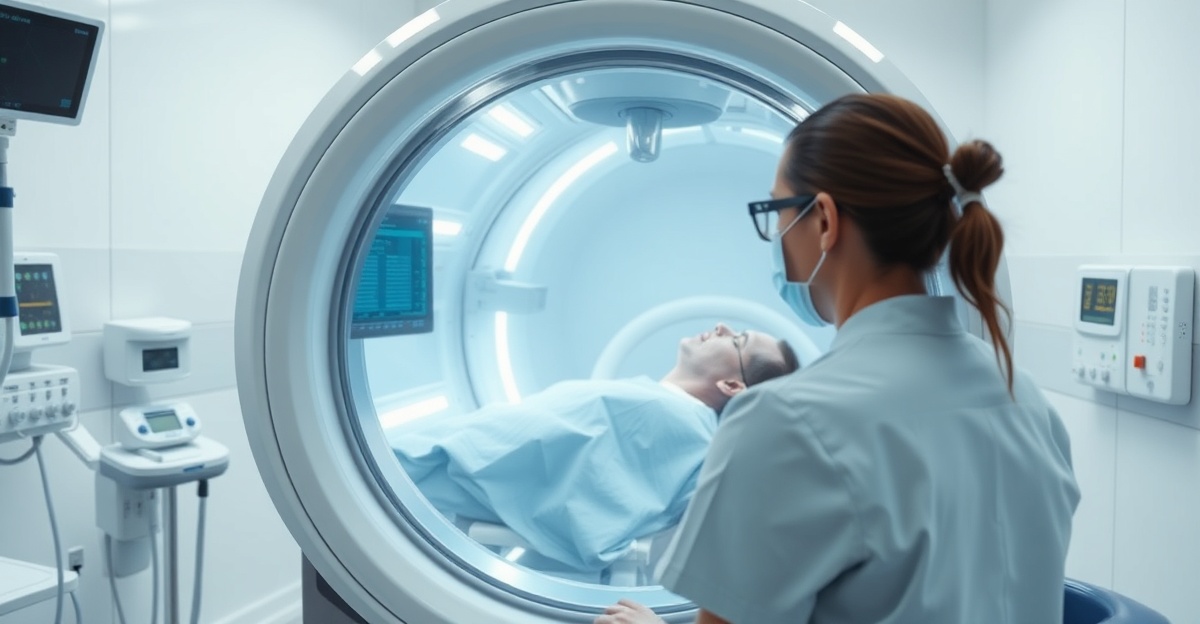
The idea that oxygen therapy could treat depression sounds improbable until you look at what depression actually does to the brain. Neuroimaging studies consistently show reduced cerebral blood flow, impaired neuroplasticity, elevated neuroinflammation, and mitochondrial dysfunction in depressed patients. Hyperbaric oxygen therapy (HBOT) directly addresses every one of these mechanisms, and a growing body of research, led primarily by the Efrati group at Tel Aviv University, suggests it may produce meaningful improvements in treatment-resistant cases.
Depression affects over 280 million people worldwide and remains one of the most treatment-resistant conditions in psychiatry. Roughly 30% of patients do not respond adequately to antidepressants, therapy, or their combination. This has driven interest in novel interventions like ketamine, transcranial magnetic stimulation (TMS), psilocybin, and now HBOT. The question is whether the oxygen-based approach has enough evidence to justify the cost and time commitment.
Key Takeaways
- HBOT targets depression’s biological roots: Reduced cerebral blood flow, neuroinflammation, impaired neuroplasticity, and mitochondrial dysfunction are all addressable by hyperbaric oxygen
- The Efrati studies are the strongest evidence: Multiple publications from Tel Aviv University show significant improvements in depression scores after HBOT protocols of 40-60 sessions
- Evidence quality is still preliminary: Most studies are small, and depression has not been tested in a large, multicenter randomized controlled trial for HBOT
- Not FDA-approved for depression: HBOT is used off-label for mood disorders, and insurance will not cover it for this indication
- Cost is $8,000-24,000 for a full course: Without insurance, 40-60 sessions at $200-400 each represents a significant financial commitment
How HBOT Could Affect Depression
The biological case for HBOT in depression rests on four well-documented mechanisms that overlap with depression’s known pathophysiology.
Neuroplasticity
Depression is associated with reduced brain-derived neurotrophic factor (BDNF), a protein critical for neuronal growth, survival, and synaptic plasticity. HBOT has been shown to upregulate BDNF expression and promote neurogenesis in animal models. The Efrati group’s imaging studies have demonstrated increased brain metabolic activity in regions associated with mood regulation (prefrontal cortex, anterior cingulate) after HBOT protocols.
This is the same mechanism that makes ketamine and psilocybin promising for depression: they both promote rapid neuroplastic changes. HBOT appears to do something similar, though likely at a slower pace requiring multiple sessions.
Neuroinflammation Reduction
Elevated inflammatory markers (IL-6, TNF-alpha, CRP) are consistently found in depressed patients, particularly those with treatment-resistant depression. HBOT has well-documented anti-inflammatory effects, reducing pro-inflammatory cytokines and modulating microglial activation. A 2022 study in Translational Psychiatry demonstrated that HBOT reduced neuroinflammatory markers in patients with post-concussion depression.
Cerebral Blood Flow
SPECT and fMRI studies show that depressed patients often have reduced perfusion in the prefrontal cortex, a region critical for emotional regulation, decision-making, and executive function. HBOT increases cerebral blood flow both acutely (during sessions) and chronically (through angiogenesis over repeated sessions). Improved perfusion to hypoperfused brain regions may restore function that depression has impaired.
Mitochondrial Function
Mitochondrial dysfunction is increasingly recognized as a contributor to depression. Impaired cellular energy production affects neurotransmitter synthesis, synaptic function, and neuronal resilience. HBOT enhances mitochondrial function by providing the substrate (oxygen) that mitochondria need to produce ATP via oxidative phosphorylation.
HBOT does not work like an antidepressant. It does not target a single neurotransmitter. Instead, it addresses the biological infrastructure that depression degrades: blood flow, inflammation, neuroplasticity, and cellular energy production.
What the Research Shows
The Efrati Studies
The most significant body of evidence comes from Shai Efrati’s group at the Sagol Center for Hyperbaric Medicine and Research, Tel Aviv University. Their work has demonstrated:
- A 2015 study showed that HBOT significantly improved depression scores in fibromyalgia patients, with improvements correlating with changes in brain activity on SPECT imaging (Efrati et al., PLoS One)
- A 2020 study on healthy aging adults receiving 60 HBOT sessions showed improvements in attention, information processing speed, and overall cognitive function, with depression and anxiety scores also improving (Hadanny et al., Aging)
- The long COVID randomized controlled trial (Zilberman-Itskovich et al., 2022, Scientific Reports) found that HBOT significantly improved depression and anxiety scores in long COVID patients, with brain imaging showing corresponding improvements in cerebral perfusion
Post-TBI Depression
Several HBOT studies in traumatic brain injury (TBI) patients have measured depression as a secondary outcome. Boussi-Gross et al. (2013) found significant reductions in depression scores among post-concussion patients treated with HBOT. A 2022 military veteran study by Hadanny et al. showed improved PTSD and depression scores after 60 HBOT sessions at 2.0 ATA.
These studies are notable because post-TBI depression shares many biological features with primary depression (neuroinflammation, reduced perfusion, impaired neuroplasticity), suggesting the mechanism may be transferable.
Limitations of Current Evidence
- No large (>200 patient) multicenter RCT specifically designed to test HBOT for major depressive disorder
- Most positive findings come from a single research group (Efrati/Sagol Center)
- Depression improvements are often secondary outcomes in studies designed for other conditions (TBI, fibromyalgia, long COVID)
- Placebo effect is a major concern: lying in a pressurized chamber for 60-90 minutes, 5 days a week, with dedicated clinical attention is itself a powerful intervention
- No sham-controlled HBOT depression trial has been published with a convincing sham protocol
For more detail on the brain-specific research, see the full guide on hyperbaric chamber for depression.
HBOT vs. Other Novel Depression Treatments
| Treatment | Mechanism | Speed of Response | Evidence Level | Cost Per Course | FDA Status |
|---|---|---|---|---|---|
| HBOT | Neuroplasticity, anti-inflammatory, perfusion | Gradual (weeks) | Preliminary | $8,000-24,000 | Not approved for depression |
| Ketamine / Esketamine | NMDA antagonism, rapid neuroplasticity | Hours to days | Strong (FDA-approved: esketamine) | $3,000-6,000 | Esketamine (Spravato) approved |
| TMS | Magnetic stimulation of prefrontal cortex | 2-6 weeks | Strong (FDA-cleared) | $6,000-12,000 | FDA-cleared |
| Psilocybin | 5-HT2A agonism, neuroplasticity | Days to weeks | Strong (Phase 3 trials) | $5,000-10,000 | Breakthrough therapy designation |
HBOT is currently the least evidence-supported option in this group for depression specifically. However, it has a better safety profile than ketamine, no risk of substance dependence, and addresses multiple biological mechanisms simultaneously rather than targeting a single receptor system.
Clinical Trials in Progress
Several clinical trials are currently investigating HBOT for depression and mood disorders. ClinicalTrials.gov lists active studies examining HBOT for treatment-resistant depression, bipolar depression, and depression comorbid with post-concussion syndrome. Results from these trials, expected in the next 2 to 3 years, will significantly clarify whether HBOT has a genuine role in psychiatric treatment or whether existing positive findings are artifacts of small samples and enthusiastic research groups.
Cost and Practical Considerations
A typical depression-focused HBOT protocol involves 40 to 60 sessions at 2.0 ATA, delivered 5 days per week. At $200 to $400 per session, the total cost ranges from $8,000 to $24,000. Insurance does not cover HBOT for depression, and this is unlikely to change without larger trials and FDA recognition.
The time commitment is also substantial: 8 to 12 weeks of daily 90-minute sessions plus travel time. For someone with severe depression, maintaining this schedule is itself a challenge.
Who Might Consider HBOT for Depression
- Patients with treatment-resistant depression who have not responded to multiple medication trials, therapy, or both
- Patients with depression comorbid with conditions that HBOT already benefits (TBI, long COVID, fibromyalgia, chronic inflammation)
- Patients who cannot tolerate or prefer to avoid pharmaceutical interventions
- Patients who have the financial resources and time to commit to a 40-60 session protocol
HBOT should not be considered a first-line treatment for depression. The evidence does not support replacing established treatments with HBOT. It is best positioned as an adjunctive or alternative option for patients who have not found relief through conventional approaches.
Frequently Asked Questions
How many HBOT sessions does it take to help depression?
Published studies showing benefits have used 40 to 60 sessions. Some patients report mood improvements after 15 to 20 sessions, but the full neuroplastic effects appear to build over longer courses.
Can HBOT replace antidepressants?
There is no evidence supporting HBOT as a replacement for antidepressants. Patients in HBOT depression studies typically continued their existing medications. Do not stop or change psychiatric medications based on HBOT treatment without consulting your prescriber.
Does mild HBOT (1.3 ATA soft chamber) help depression?
The studies showing benefits for depression used medical-grade HBOT at 1.5 to 2.0 ATA. There are no published studies on mild HBOT (1.3 ATA, soft chamber) for depression specifically. The neuroplasticity and perfusion changes observed at higher pressures may not occur at 1.3 ATA.
Sources
- Efrati S, et al. “Hyperbaric oxygen therapy can diminish fibromyalgia syndrome: prospective clinical trial.” PLoS One, 2015. DOI: 10.1371/journal.pone.0127012
- Zilberman-Itskovich S, et al. “Hyperbaric oxygen therapy improves neurocognitive functions and symptoms of post-COVID condition: randomized controlled trial.” Scientific Reports, 2022. DOI: 10.1038/s41598-022-15565-0
- Hadanny A, et al. “Hyperbaric oxygen therapy improves neurocognitive functions of post-stroke patients.” Restorative Neurology and Neuroscience, 2020. DOI: 10.3233/RNN-201033
- Boussi-Gross R, et al. “Hyperbaric oxygen therapy can improve post concussion syndrome years after mild traumatic brain injury.” PLoS One, 2013. DOI: 10.1371/journal.pone.0079995
- Duman RS, Aghajanian GK. “Synaptic dysfunction in depression: potential therapeutic targets.” Science, 2012. DOI: 10.1126/science.1222939
Medical Disclaimer
The content on BaricBoost.com is for informational purposes only and is not intended as a substitute for professional medical advice, diagnosis, or treatment. Always seek the advice of your physician or other qualified health provider with any questions you may have regarding a medical condition. Never disregard professional medical advice or delay in seeking it because of something you have read on this website.

Author
Seph Fontane Pennock is the founder of BaricBoost.com and Regenerated.com, a clinic directory for regenerative medicine serving 10,000+ providers across the United States. He previously built and sold PositivePsychology.com, which grew to 19 million users and became the largest evidence-based positive psychology resource on the web. Seph brings direct experience as an HBOT patient, having completed protocols at clinics across three continents while navigating mold illness, systemic inflammation, and autoimmune conditions. His treatment journey includes hyperbaric oxygen therapy, peptide protocols, NAD+ therapy, and consultations with specialists from Dubai to Cape Town to Mexico. This combination of entrepreneurial track record and lived patient experience shapes everything published on BaricBoost.com. Every article is grounded in peer-reviewed research, informed by real clinical encounters, and written for patients making high-stakes treatment decisions. Seph's focus is on bringing transparency, scientific rigor, and practical guidance to the hyperbaric oxygen therapy space.