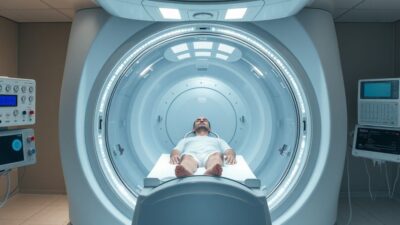
Across 5.5 million treatments surveyed by Jacobs in 1982, ozone therapy carried a complication rate of 0.0007%, or 7 complications per million sessions. That makes it statistically safer than most pharmaceutical interventions. The one absolute rule: ozone gas must never be inhaled, because pulmonary exposure causes acute lung injury. Every other delivery route, properly administered with medical-grade equipment, carries minimal documented risk.
The 4 Rules of Safe Ozone Therapy
| Rule | Why it matters |
|---|---|
| Never inhale the gas | Ozone is directly toxic to lung tissue at any therapeutic concentration |
| Screen for G6PD deficiency | Oxidative stress can trigger hemolytic anemia in deficient patients |
| Respect the contraindications | Pregnancy, active hemorrhage, recent MI, and severe anemia are exclusions |
| Use medical-grade equipment | Industrial generators cannot deliver accurate, safe medical concentrations |
What does the Jacobs safety survey actually show?
In 1982, Dr. J. Jacobs published a survey of German ozone therapy practitioners covering 5,579,238 treatments given to 384,775 patients. Of those 5.5 million treatments, 40 cases of serious side effects were reported, a complication rate of 0.0007%.1
Two caveats matter. This survey is more than four decades old, and it relied on voluntary practitioner reporting, which tends to undercount. It should be read as a large historical signal, not a modern audit. More recent work is consistent with it: a 2026 umbrella review of systematic reviews found ozone therapy generally well tolerated when administered by trained practitioners, with serious adverse events uncommon (Cacciatore et al.), and Bocci’s clinical texts report similarly low complication rates with proper technique.62
For perspective on scale, adverse drug reactions accounted for 6.5% of hospital admissions in a prospective study of 18,820 patients (Pirmohamed et al., 2004).7 Ozone’s documented complication rate sits far below the everyday risk profile of common pharmaceuticals, though the two datasets are not directly comparable.
Why must you never inhale ozone?
Ozone is toxic to lung tissue. This is not debated and not something technique can mitigate. Ozone gas must never be inhaled directly. It is the single most important safety principle in ozone therapy, and every legitimate modality is designed to avoid pulmonary exposure:
- Major autohemotherapy (MAH): Blood is drawn, mixed with ozone in a closed system, and reinfused. No gas enters the lungs.
- Rectal insufflation: Gas enters the colon, not the respiratory system.
- Ozone sauna: The head stays outside the enclosure, breathing room air.
- Limb bagging: A sealed bag around the extremity prevents gas escape.
- Ozonated water or oil: Ozone is dissolved or bound, so no gas phase reaches the airways.
Any provider who uses ozone in a way that lets the patient inhale the gas is operating unsafely, full stop. If you smell ozone during treatment (a sharp, chlorine-like odor) and your head or face is near the source, alert your provider immediately. Every serious complication in the literature traces back to this rule being broken, a missed contraindication, or untrained administration.
What are the common side effects?
Most side effects are mild, temporary, and well understood:
| Side effect | Frequency | Duration | Management |
|---|---|---|---|
| Herxheimer reaction (flu-like symptoms) | Common in early sessions | 24 to 48 hours | Hydration, rest, lower starting doses |
| Mild fatigue | Occasional | Several hours | Rest; usually self-resolving |
| Cramping or bloating (rectal insufflation) | Common | Minutes to hours | Slower gas introduction, reduced volume |
| Bruising at IV site (MAH) | Occasional | Days | Standard IV site care |
| Lightheadedness (MAH) | Occasional | Minutes | Stay seated, hydrate, eat beforehand |
| Vagal response | Rare | Minutes | Lie down, elevate legs, provider monitors |
The Herxheimer reaction deserves attention. When ozone kills pathogens, die-off releases endotoxins that temporarily worsen symptoms, especially in chronic infections like Lyme disease. It is uncomfortable but not dangerous, and starting low and increasing gradually minimizes it. Our guides to the Herxheimer reaction and detailed ozone therapy side effects cover this in more depth.
Who should not have ozone therapy?
Certain conditions make ozone therapy unsafe. Elvis and Ekta (2011) and Bocci (2011) both catalog these contraindications:5
- G6PD deficiency: This genetic enzyme deficiency (more common in people of African, Mediterranean, and Asian descent) leaves red blood cells vulnerable to oxidative stress, and ozone can trigger severe hemolytic anemia. Every patient should be tested before MAH or any IV ozone therapy.
- Pregnancy: Safety data is insufficient; the precautionary principle applies.
- Active hyperthyroidism: Ozone can stimulate metabolic activity and worsen hyperthyroid symptoms.
- Severe anemia: Patients with hemoglobin below 8 g/dL should not receive MAH.
- Recent myocardial infarction: The hemodynamic changes during MAH are contraindicated in the acute post-MI period.
- Active hemorrhage: Ozone’s effect on clotting factors makes it unsafe during active bleeding.
- Ozone allergy: Rare but documented; patients who react with hives or breathing difficulty should not continue.
What does a safe ozone clinic look like?
A properly run ozone therapy clinic should have the right equipment, qualified providers, and real screening.
Equipment standards
- Medical-grade ozone generator with precise concentration control (not industrial units built for water treatment, which cannot produce accurate medical concentrations)
- Oxygen source: Medical-grade oxygen tank or concentrator (ozone must be generated from pure oxygen, never ambient air)
- Catalytic destructor: A device that breaks down excess ozone before it reaches room air
- Ozone-resistant tubing: Silicone or PTFE (Teflon) that does not degrade on contact with ozone
Provider qualifications
- Licensed healthcare professional (MD, DO, ND, DC, DDS, or equivalent)
- Specific training in ozone protocols (AAO, ISCO3, or equivalent)
- Knowledge of contraindications and screening procedures
- Emergency protocols for adverse reactions
Patient screening
- G6PD testing before any blood-based procedure
- Complete medical history including medications
- Assessment of contraindications
- Informed consent documenting risks, benefits, and alternatives
The concentrations and volumes a safe clinic uses come from established ozone therapy protocols, and dosing should follow condition-specific frequency guidelines rather than a one-size-fits-all schedule.
Red flags: when to walk away
Leave a clinic if you see any of these:
- No G6PD testing offered before MAH
- Ozone administered in a way that could be inhaled (a head tent without proper ventilation, or an ozone nebulizer)
- Provider cannot explain the specific concentration and volume being used
- Industrial-grade equipment designed for water purification, not medicine
- Claims that ozone therapy is 100% safe with no risks or contraindications
- No informed consent form
- The provider is not a licensed healthcare professional
- You smell ozone in the treatment room, which indicates poor ventilation or equipment
Does ozone interact with medications?
Ozone therapy can interact with certain medications:
- Anticoagulants (warfarin, heparin): Ozone has mild anticoagulant effects, so dosage adjustments may be needed. Inform your provider.
- ACE inhibitors: Some practitioners report enhanced hypotensive effects. Monitor blood pressure.
- Antioxidant supplements: High-dose vitamin C, glutathione, or NAC taken immediately before ozone may reduce its effect. Most practitioners space these 2 to 4 hours apart.
Can you do ozone therapy at home safely?
Some patients use home ozone generators for rectal or ear insufflation. If you choose this route, the same safety rules apply, and the margin for error is smaller without a provider present. The cost of clinical alternatives like 10-pass ozone therapy leads some patients toward home options, but home use demands real caution:
- Use only medical-grade generators designed for human use
- Never exceed recommended concentrations (typically 20 to 40 mcg/mL for rectal, lower for ear)
- Always use in a well-ventilated area
- Never inhale the gas. Full stop.
- Get trained by a qualified practitioner before starting
- Start with low concentrations and volumes
- Do not use home ozone if you have any of the contraindications above
Where ozone safety stands
Properly administered, ozone therapy has one of the better safety profiles in medicine. The Jacobs survey’s 0.0007% complication rate across 5.5 million treatments is dated but consistent with modern reviews. The risks are real but specific, predictable, and avoidable. Never inhale it, screen for G6PD deficiency, respect the contraindications, and choose a trained provider with proper equipment. Do those four things and ozone therapy is about as safe as medical interventions get. Start with the pillar guide to ozone therapy if you are new to it.
Sources
- Jacobs MT. Untersuchung uber Zwischenfalle und typische Komplikationen in der Ozon-Sauerstoff-Therapie. OzoNachrichten. 1982;1:5-6.
- Bocci V. Ozone: A New Medical Drug (2nd ed.). Springer; 2011. doi:10.1007/978-90-481-9234-2
- Sagai M, Bocci V. Mechanisms of action involved in ozone therapy: is healing induced via a mild oxidative stress? Medical Gas Research. 2011;1:29. doi:10.1186/2045-9912-1-29
- Smith NL, Wilson AL, Gandhi J, Vatsia S, Khan SA. Ozone therapy: an overview of pharmacodynamics, current research, and clinical utility. Medical Gas Research. 2017;7(3):212-219. doi:10.4103/2045-9912.215752
- Elvis AM, Ekta JS. Ozone therapy: a clinical review. Journal of Natural Science, Biology and Medicine. 2011;2(1):66-70. doi:10.4103/0976-9668.82319
- Cacciatore S, et al. Effectiveness and safety of ozone therapy in humans: an umbrella review of systematic reviews. Medical Sciences (Basel). 2026;14(2):289. doi:10.3390/medsci14020289
- Pirmohamed M, James S, Meakin S, et al. Adverse drug reactions as cause of admission to hospital: prospective analysis of 18,820 patients. BMJ. 2004;329(7456):15-19. doi:10.1136/bmj.329.7456.15
- International Scientific Committee of Ozone Therapy (ISCO3). Madrid Declaration on Ozone Therapy (3rd ed.); 2020.
Medical Disclaimer
The content on BaricBoost.com is for informational purposes only and is not intended as a substitute for professional medical advice, diagnosis, or treatment. Always seek the advice of your physician or other qualified health provider with any questions you may have regarding a medical condition. Never disregard professional medical advice or delay in seeking it because of something you have read on this website.

Author
Seph Fontane Pennock is the founder of BaricBoost.com and Regenerated.com, a clinic directory for regenerative medicine serving 10,000+ providers across the United States. He previously built and sold PositivePsychology.com, which grew to 19 million users and became the largest evidence-based positive psychology resource on the web. Seph brings direct experience as an HBOT patient, having completed protocols at clinics across three continents while navigating mold illness, systemic inflammation, and autoimmune conditions. His treatment journey includes hyperbaric oxygen therapy, peptide protocols, NAD+ therapy, and consultations with specialists from Dubai to Cape Town to Mexico. This combination of entrepreneurial track record and lived patient experience shapes everything published on BaricBoost.com. Every article is grounded in peer-reviewed research, informed by real clinical encounters, and written for patients making high-stakes treatment decisions. Seph's focus is on bringing transparency, scientific rigor, and practical guidance to the hyperbaric oxygen therapy space.