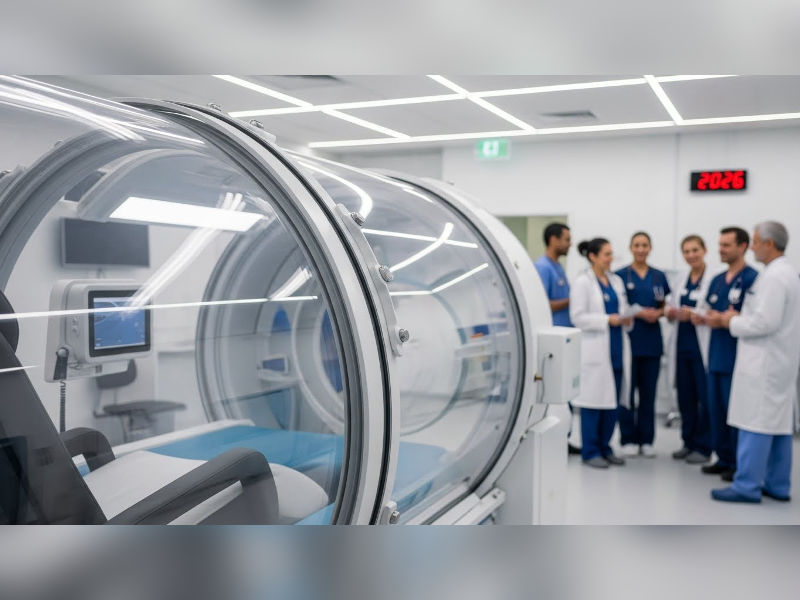
HBOT Now LLC operates multiple hyperbaric oxygen therapy centers across the United States, offering clinical-grade sessions in multiplace and monoplace chambers. The company focuses on FDA-cleared indications including wound healing, radiation injury, and carbon monoxide poisoning, alongside off-label protocols for TBI and post-surgical recovery.
What separates them isn’t just equipment, it’s their dedication to making oxygen therapy available when patients need it. Whether managing chronic wounds or exploring therapy for specific conditions, knowing what HBOT Now offers shapes treatment choices.
Table of Contents
What Sets HBOT Now LLC Apart in the Hyperbaric Industry
HBOT Now LLC operates with one goal: deliver medically supervised hyperbaric oxygen therapy to communities needing it. Unlike facilities treating this as a side service, they’ve built operations around oxygen delivery and patient care.
Breathing 100% oxygen inside a pressurized hard chamber raises dissolved plasma oxygen by up to 1,200%, reaching tissues that normal circulation cannot adequately supply.
UHMS, 2020
Their model blends clinical expertise with real accessibility. You’ll find chambers in hospitals, outpatient centers, and wound facilities. The company doesn’t own every chamber they manage. But they provide an operational framework, keeping programs running.
Their focus on evidence-based protocols stands out. They’re not chasing wellness trends. HBOT Now follows FDA-approved indications and works within medical guidelines. This careful approach shows commitment to legitimate practice.
Their technician training programs matter. Operating chambers require serious preparation. Safety protocols become critical with pressurized oxygen. The company invests in proper certification and ongoing education.
Comprehensive Service Offerings Across Multiple Locations
HBOT Now LLC doesn’t just install chambers and leave. Their service model includes support layers keeping therapy programs effective.
Equipment management comes first. Chambers need regular maintenance, safety checks, and calibration. The company handles technical demands so hospital staff can focus on patient care. This covers both soft hyperbaric chambers for lower-pressure work and monoplace hard chambers for full protocols.
- Clinical oversight and protocol creation
- Staff training on safety and emergency response
- Equipment installation with proper ventilation
- Maintenance schedules and quick response
- Regulatory compliance help for inspections
Their billing support tackles healthcare’s biggest frustration. Insurance reimbursement gets complicated. HBOT Now brings expertise here, directly affecting whether patients can afford treatments.
14
FDA-cleared indications for hyperbaric oxygen therapy recognized by the UHMS, including diabetic wounds, radiation injury, and decompression sickness
UHMS Indications List, 2020
They also consult for facilities considering programs. This includes feasibility studies and space planning.
Medical Conditions Treated Through HBOT Now Programs
Academic programs have an advanced understanding of hyperbaric therapy. Research linked to the Duke Hyperbaric Medicine Program plays a key role. These studies examine pressurized oxygen effects. They focus on tissue repair. They also address neurological recovery.
These studies are why conditions treated through HBOT Now LLC facilities follow medical guidelines rather than experimental uses. This distinction matters for insurance and outcomes.
Diabetic foot ulcers make up a significant volume. These wounds often resist standard treatment. Hyperbaric oxygen promotes healing by boosting oxygen to damaged tissue. Therapy works best combined with proper wound care and blood sugar control.
Radiation tissue damage from cancer treatment represents another approved use. Some patients develop chronic wounds months after radiation. Hyperbaric oxygen can trigger new blood vessel growth in these areas (Mathieu et al., 2017). Results vary based on radiation dose.
| Condition Type | Treatment Length | Expected Results |
| Diabetic wounds | 30-40 sessions, 6-8 weeks | Better healing with wound care |
| Radiation injury | 40-60 sessions, 8-12 weeks | Less pain, tissue recovery |
| CO poisoning | 3-5 sessions within 48 hours | Faster CO removal |
| Skin grafts | 10-20 sessions, 2-4 weeks | Better graft survival |
Carbon monoxide poisoning demands immediate treatment. Therapy speeds CO elimination and reduces brain complications. This represents emergency medicine rather than scheduled treatments.
Decompression sickness, the bends among divers, remains a core indication. Facilities partnering with HBOT Now stay ready for diving emergencies.
Understanding what they don’t treat matters. You might read about a hyperbaric time chamber for autism or Lyme disease treatment. These fall outside standard protocols.
Equipment Standards and Safety Protocols Used
When entering a chamber managed by HBOT Now LLC, you enter a controlled safety environment. Equipment may vary by location. Safety standards apply consistently across all facilities.
Monoplace chambers, built for single patients, are most common. These acrylic tubes let staff watch patients while maintaining pressure. Some find them confining. Multiplace chambers fit multiple patients inside. Though these need more space.
Pressure levels depend on the condition. Most approved uses require 2.0 to 2.5 atmospheres absolute (ATA)., and sessions typically last 90-120 minutes.. This includes compression and decompression.
Fire safety is critical., and 100% oxygen environments catch fire easily.. Strict rules exist around clothing and cosmetics. You’ll change into cotton garments and remove all cosmetics. These rules prevent fires.
Facilities follow NFPA 99 standards and maintain UHMS accreditation (Undersea and Hyperbaric Medical Society, 2023). This means regular safety drills and equipment tests.
Insurance Coverage and Payment Options
Cost matters. Hyperbaric therapy isn’t cheap. A single session can hit $1,000-$2,000 without insurance. Most conditions need 20-60 treatments. Understanding coverage becomes crucial.
Medicare covers hyperbaric oxygen for specific approved conditions when medical need is documented. This includes certain diabetic wounds and radiation damage. But coverage isn’t automatic.
Private insurance varies by carrier., and some follow Medicare guidelines.. Others have stricter policies.Prior authorization is almost always required., and hBOT Now LLC facilities help with this.. But approval timelines can delay starts.
- Benefit verification before scheduling
- Prior authorization with documentation
- Appeals help when claims are denied
- Payment plans for patient portions
- Cash pricing for non-covered uses
For conditions outside approved indications, expect out-of-pocket payment. The hyperbaric chamber cost conversation changes without insurance, potentially $30,000-$60,000.
Some patients explore buying chambers for home use. The home hyperbaric chamber market offers options from $10,000 soft chambers to $100,000+ hard chambers.
Geographic Reach and Facility Locations
HBOT Now LLC works through partnerships with existing healthcare facilities. Their geographic presence depends on which hospitals and wound centers they’ve contracted with.
Their footprint concentrates on where populations deal with diabetes complications. You’ll find programs more in regions with aging populations or high diabetes rates.
| Region | Partner Locations | Main Services |
| Southeast | 15-20 facilities | Wound care, diabetic complications |
| Mid-Atlantic | 10-15 facilities | Full programs with emergency coverage |
| Southwest | 8-12 facilities | Wound care with sports applications |
| Midwest | 12-18 facilities | Hospital programs with rural outreach |
Finding the nearest location requires contacting them or checking with local wound centers. Not every facility advertises HBOT Now involvement. Many hospitals prefer presenting services under their branding.
Rural access stays limited. Equipment and staffing needs make sustaining programs outside population centers difficult. Some patients travel 50-100 miles.
The company has tried telemedicine for consultation. Though actual sessions require in-person attendance.
Patient Experience and Treatment Protocols

What’s treatment actually like through a HBOT Now LLC facility? Experience starts with a medical evaluation. Not everyone qualifies. Contraindications need to be ruled out.
Initial assessment covers medical history and current medications. Certain health issues, like untreated pneumothorax, complicate therapy (Kranke et al., 2015). Your team needs this information for safe planning.
Treatment schedules typically run Monday through Friday. This becomes a major time commitment with 30-60 total sessions. Each appointment includes changing clothes, a safety briefing, chamber time, and a post-treatment check.
Inside the chamber, you’ll feel pressure changes similar to airplane descent but greater. Your ears need equalizing frequently. Use techniques like swallowing or yawning. Most people adjust after a few sessions.
Side effects are generally manageable. Temporary vision changes happen in roughly 20% of patients. Your prescription might shift slightly but usually returns. Sinus discomfort can occur. Rarely, oxygen toxicity causes seizures. That’s why protocols include air breaks.
Staff monitor patients continuously. Communication systems let you signal if problems arise. Emergency procedures exist if needed.
Future Developments and Industry Innovations
Early public awareness of hyperbaric therapy was shaped by high-profile stories. One example is the Michael Jackson hyperbaric chamber narrative. This story brought mainstream attention to the treatment. It did so decades before modern clinical expansion.
Fortunately, the hyperbaric industry keeps evolving. HBOT Now LLC participates through equipment upgrades and protocol refinement. Developments include improved chamber designs, reducing claustrophobia.
Research into additional medical applications continues. Though the gap between studies and FDA approval remains substantial. Traumatic brain injury applications show potential. But clinical protocols haven’t reached insurance coverage.
Technology integration offers practical improvements. Digital monitoring provides better data on treatment parameters. This helps optimize protocols.
The portable hyperbaric chamber market has grown. Though these units deliver lower pressures.
Accessibility remains an ongoing challenge. The HBOT cost barrier keeps many from accessing treatment. Industry efforts to improve efficiency could eventually expand access.
For wound healing, typical HBOT protocols run 90-minute sessions at 2.0 to 2.4 ATA, five days per week, over four to six weeks.
UHMS Clinical Guidelines
FAQs
- What medical conditions does HBOT Now LLC treat at their facilities?
HBOT Now LLC treats FDA-approved conditions., and these include diabetic foot ulcers.. Radiation tissue damage is treated.Carbon monoxide poisoning is included., and decompression sickness is covered.. All care follows medical guidelines.
- How much does treatment cost through HBOT Now programs?
Costs depend on insurance coverage., and medicare often covers approved conditions.. Many private insurers also provide coverage. Medical necessity must be documented. Self-pay rates range from $1,000 to $2,000 per session.
- Where are HBOT Now LLC facilities located across the United States?
HBOT Now operates through hospital partnerships., and wound care centers are also involved.. Locations span the Southeast.The Mid-Atlantic is included., and the Southwest and Midwest are covered.. Specific sites require direct inquiry.
- What safety standards do HBOT Now chambers meet?
All chambers meet NFPA 99 standards., and uHMS accreditation is followed.. Safety inspections are routine. Staff are certified. Emergency procedures are established.
- How long does a typical treatment course last?
Treatment length depends on the condition. Carbon monoxide poisoning may require 3 to 5 sessions. Radiation damage can require 40 to 60 sessions. Most wound care protocols involve 30 to 40 treatments.
References:
Kranke, P., Bennett, M. H., Martyn-St James, M., Schnabel, A., Debus, S. E., & Weibel, S. (2015). Cochrane Library
Mathieu, D., Marroni, A., & Kot, J. (2017). PubMed Central
Undersea and Hyperbaric Medical Society. (2023). UHMS: Approved HBO Indications
References
- UHMS. (2020). Hyperbaric Oxygen Therapy Indications, 14th Edition. Undersea and Hyperbaric Medical Society. Link
- Thom SR. (2011). Hyperbaric oxygen: its mechanisms and efficacy. Plast Reconstr Surg, 127(Suppl 1):131S-141S. doi:10.1097/PRS.0b013e3181fbe2bf
- Londahl M. (2012). Hyperbaric oxygen therapy as adjunctive treatment for diabetic foot ulcers. Int Wound J, 9(Suppl 1):8-13. doi:10.1111/j.1742-481X.2012.00969.x
Medical Disclaimer
The content on BaricBoost.com is for informational purposes only and is not intended as a substitute for professional medical advice, diagnosis, or treatment. Always seek the advice of your physician or other qualified health provider with any questions you may have regarding a medical condition. Never disregard professional medical advice or delay in seeking it because of something you have read on this website.

Author
Seph Fontane Pennock is the founder of BaricBoost.com and Regenerated.com, a clinic directory for regenerative medicine serving 10,000+ providers across the United States. He previously built and sold PositivePsychology.com, which grew to 19 million users and became the largest evidence-based positive psychology resource on the web. Seph brings direct experience as an HBOT patient, having completed protocols at clinics across three continents while navigating mold illness, systemic inflammation, and autoimmune conditions. His treatment journey includes hyperbaric oxygen therapy, peptide protocols, NAD+ therapy, and consultations with specialists from Dubai to Cape Town to Mexico. This combination of entrepreneurial track record and lived patient experience shapes everything published on BaricBoost.com. Every article is grounded in peer-reviewed research, informed by real clinical encounters, and written for patients making high-stakes treatment decisions. Seph's focus is on bringing transparency, scientific rigor, and practical guidance to the hyperbaric oxygen therapy space.