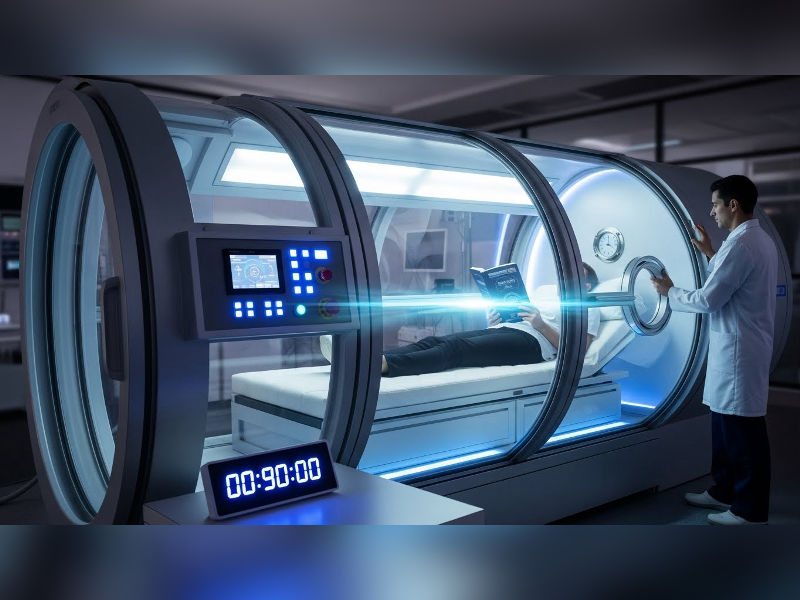
The “hyperbaric time chamber” is a pop culture term borrowed from Dragon Ball Z, but the real technology behind it is straightforward: a pressurized chamber that delivers 100% oxygen at 1.5 to 3.0 ATA. A standard 90-minute session increases dissolved plasma oxygen by roughly 15 times normal levels. The therapy has 14 FDA-cleared indications and a growing evidence base for off-label recovery applications.
Unlike the fictional training device from Dragon Ball Z, real hyperbaric chambers have a clinical purpose. They deliver concentrated oxygen. The oxygen is delivered under controlled pressure. This process accelerates tissue repair in measurable ways.
These pressurized environments change how the body absorbs oxygen. They allow significantly more oxygen than normal breathing. In many cases, this is 10 to 15 times the usual amount.
A standard 90-minute HBOT session at 2.0 ATA delivers roughly 15 times more dissolved oxygen to tissues than breathing room air at sea level, driving angiogenesis and cellular repair.
Thom, 2011
This therapy is not about mystical power-ups, and it is based on established physiological mechanisms. These principles have been studied for decades. Its applications are wide-ranging. They include wound care and neurological recovery. Other medical uses continue to emerge.
Understanding what happens during those 90-minute sessions matters. It clarifies how the therapy works. It also helps you make informed decisions about incorporating it into care.
Table of Contents
How Hyperbaric Chambers Work Beyond Dragon Ball Fiction
Real-world hyperbaric oxygen therapy follows clear scientific principles. The hyperbaric chamber Dragon Ball Z comparison is not entirely inaccurate. Both rely on controlled environments. Both aim to support performance and recovery.
Academic and clinical research from institutions such as the Duke Hyperbaric Medicine Program has advanced the understanding of this therapy. The research explains how pressurized oxygen supports tissue repair. It also clarifies its role in neurological recovery.
In a medical setting, you enter a sealed chamber., and atmospheric pressure increases gradually.. It reaches between 1.3 and 3.0 times normal levels., and you breathe 100% oxygen throughout the session.. This forces more oxygen into your bloodstream. Oxygen levels in the plasma also increase. As a result, oxygen reaches tissues with limited supply (Thom, 2011).
This process triggers coordinated biological responses. Red blood cells become fully saturated with oxygen. Oxygen also dissolves directly into the plasma. It enters the cerebrospinal fluid as well. This dissolved oxygen reaches areas with poor blood flow. These include damaged tissue. Inflamed joints are affected.Oxygen-deprived brain regions are included., and the rise in oxygen signals the body to act.. Stem cells are mobilized. Repair mechanisms activate across multiple systems.
90 min
is the standard clinical HBOT session length for wound healing and most FDA-cleared indications, with pressurization and depressurization adding 20-30 minutes total
UHMS Guidelines, 2020
Modern hyperbaric chambers come in two main forms. Monoplace units are built for one person. Multiplace chambers treat several patients at once.Soft-shell chambers operate at lower pressures., and they are commonly used in home settings.. Hard-shell chambers reach much higher pressures. They treat conditions such as decompression sickness. The appropriate choice depends on therapeutic goals.
Seven Health Benefits That Make Sessions Worth Your Time
Enhanced wound healing is one of the most documented advantages. Damaged tissue requires oxygen to rebuild collagen. It also needs oxygen to fight infection effectively. Studies show hyperbaric exposure can reduce healing time for diabetic foot ulcers by up to 40% (Kranke et al., 2015). This makes the therapy valuable for difficult wounds, and it is especially useful when conventional treatment fails.
Reduced inflammation is another key effect. Increased oxygen helps regulate inflammatory markers. This improves immune system efficiency. The effect is strongest when tissues are well oxygenated. People with Crohn’s disease report symptom improvement. Individuals with chronic pain report similar reductions after consistent sessions.
Neurological support is an emerging application. It is gaining increased research attention. Brain injuries often involve restricted blood flow.Extra oxygen can reach these compromised regions., and this may help support neural repair.. Some practitioners use the therapy for concussions. Others apply it in traumatic brain injury recovery.
Additional benefits are also reported. They include:
- Faster athletic recovery through reduced muscle fatigue.
- Enhanced immune function in oxygen-rich environments.
- Improved circulation through new blood vessel formation.
- Support for bone healing after fractures.
There is an important limitation to consider., and benefits usually require multiple sessions.. Most protocols involve 20 to 40 treatments. Therapeutic effects build gradually over time. This occurs as the body adapts to repeated oxygen exposure.
Understanding the Dragon Ball Connection and Why It Matters
The hyperbaric chamber DBZ reference helps explain public curiosity around this therapy. Similar curiosity surrounded the Michael Jackson hyperbaric chamber narrative. The story drew early public attention to hyperbaric therapy. This occurred decades before wellness clinics became common.
In the anime, the chamber allows warriors to train for what feels like a year. Only a single day passes outside. Gravity is intensified inside the chamber. Every movement becomes more demanding as a result.
Real hyperbaric chambers do not manipulate time. They also do not alter gravity. Instead, they create conditions where healing processes work more efficiently. These conditions differ from normal physiological environments. The comparison still works at a conceptual level. Both fictional and real chambers rely on controlled environmental change. That control enhances biological performance.
This reference has increased awareness of legitimate HBOT. Many people encounter oxygen therapy for the first time through anime-related searches. They would not otherwise seek out medical information. Some clinics have leaned into the comparison. They use it as an entry point for explanation. At the same time, they clearly separate fantasy from medical reality.
What Happens During Your 90-Minute Session
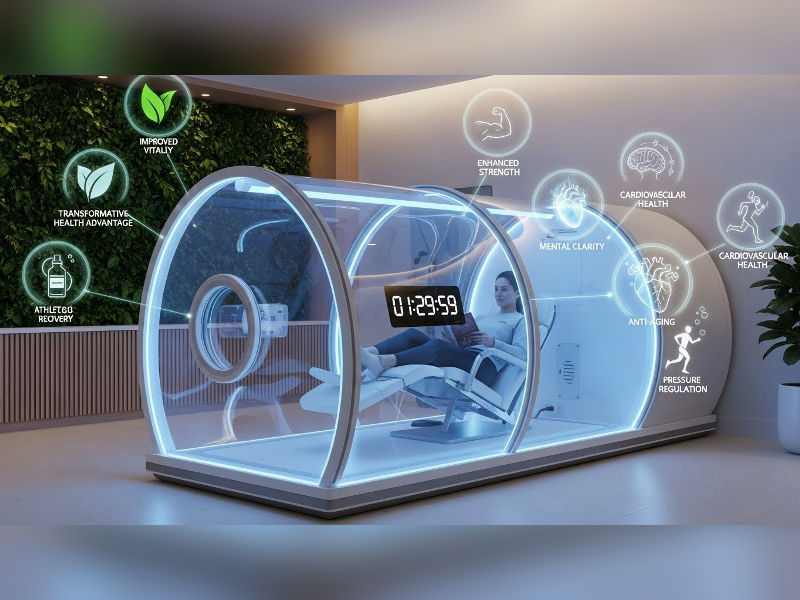
Before your first treatment, you complete a screening process. Some medical conditions create risks under pressure. You also receive preparation instructions. These explain what to wear.Cotton clothing is usually required., and they also explain what to avoid.. Petroleum-based products are prohibited. High-oxygen environments increase fire risk.
Once cleared, the session follows a set sequence., and you enter the chamber in a controlled setting.. In a monoplace unit, you lie down.In a multiplace chamber, you sit upright., and a technician raises pressure gradually.. This stage lasts about ten minutes.Your ears may pop., and the sensation is similar to airplane descent.. Swallowing or yawning helps equalize pressure.
The main treatment phase lasts 60 to 80 minutes., and duration depends on the protocol.. You breathe oxygen-enriched air throughout.The chamber maintains elevated pressure., and most people remain comfortable.. Many read or listen to music.Others watch movies or rest quietly., and the environment stays calm.. Temperature remains controlled.Near the end, pressure decreases gradually., and this takes about ten minutes.. Total session time is usually 90 to 120 minutes.
Side effects are generally mild. Temporary vision changes may occur after repeated sessions. These effects usually resolve within weeks. Ear discomfort is the most common issue. Proper pressure equalization reduces this risk. Oxygen toxicity is rare, and it is associated with unusually long sessions.
Comparing Clinical Applications With Home-Use Chambers
Clinical-grade chambers in hospitals and specialized centers operate at higher pressures. These pressures typically range from 2.0 to 3.0 ATA. Such levels are required to treat acute medical conditions. Examples include gas gangrene and severe carbon monoxide poisoning. The FDA approves HBOT for 14 specific conditions. Sessions in these clinical settings vary in cost. Prices usually range from $300 to $2,000 per session.
Commercial providers such as HBOT Now LLC have expanded access to home chambers. These units operate at lower pressures. They are marketed for wellness and recovery purposes. Most operate at much lower pressures. Typical levels range from 1.3 to 1.5 ATA. These chambers are marketed for wellness purposes. They are also promoted for athletic recovery. The hyperbaric chamber cost to buy varies widely. Basic soft-shell units start around $4,000. Hard-shell models can exceed $100,000.
| Chamber Type | Pressure Range | Typical Cost | Best For |
| Clinical Hard-Shell | 2.0-3.0 ATA | $200-2,000/session | Acute medical conditions |
| Clinical Multiplace | 2.0-2.5 ATA | $300-1,500/session | Group therapy settings |
| Home Hard-Shell | 1.5-2.0 ATA | $30,000-100,000 | Athletes, chronic conditions |
| Home Soft-Shell | 1.3-1.5 ATA | $4,000-25,000 | Wellness, recovery |
The decision between clinical and home use depends on several factors. Treating an FDA-approved condition usually requires clinical care. This setting provides higher pressures. It also includes medical supervision. For ongoing wellness support, home chambers may be more economical over time. Cost savings increase with repeated use. Lower-pressure home units have clear limits. They cannot match the therapeutic intensity of clinical chambers.
What Are the Side Effects and Risks?
Hyperbaric therapy has a strong safety record when administered correctly. It is not completely risk-free. The primary concern is fire. This risk exists in any oxygen-rich, pressurized environment. For that reason, strict safety protocols are enforced. Petroleum-based products are prohibited. Electronics that could create sparks are not allowed. Synthetic fabrics are also restricted. These rules are mandatory. They function as essential safeguards, not optional guidelines.
Certain medical conditions create contraindications. An untreated collapsed lung represents an absolute contraindication because pressure changes could worsen the condition. Recent ear surgery can complicate pressure equalization. Some chemotherapy agents interact poorly with high oxygen levels. If you’re pregnant, most facilities won’t treat you due to limited safety data (Weaver, 2014).
Relative contraindications require evaluation but don’t necessarily prevent treatment:
- Uncontrolled high fever
- Active asthma with air trapping
- Recent chest surgery
- History of spontaneous pneumothorax
- Claustrophobia
The key is thorough screening. Reputable facilities take detailed medical histories. This happens before any treatment begins. If you are considering hyperbaric oxygen chamber therapy, transparency matters. Accurate disclosure protects you. Do not downplay symptoms. Even minor issues can be important.
Integrating Chamber Sessions Into Your Overall Health Strategy
Viewing HBOT as a standalone miracle cure misses the core idea. The therapy works best within a broader care strategy. This approach includes proper nutrition. It also includes adequate sleep.Oxygen therapy supports healing conditions., and the body still needs raw materials.. Proteins are required for tissue repair. Hydration supports metabolic function.
Timing also plays an important role. Athletes often schedule sessions after intense training. This is when inflammation peaks. Surgical patients may begin treatment once wounds are sufficiently closed. People with chronic conditions usually follow structured protocols. These plans are set by healthcare providers. No single schedule works for everyone.
Cost and accessibility remain significant barriers. Wellness centers offering HBOT are increasing in number. Geographic limitations still exist. Rural areas often have fewer options. Many people cannot commit to 20 or 40 sessions. These treatments are spread over several weeks. Some explore home hyperbaric chamber options. This can improve access. The upfront investment remains substantial.
Tracking outcomes is essential. Documentation helps determine whether the therapy is effective. Keep notes on symptoms. Record energy levels and pain scores.Take photos when treating visible wounds., and this information becomes valuable over time.. It supports decisions about continuing therapy. Insurance providers increasingly require evidence of progress for coverage.
The cumulative benefit of HBOT builds across multiple sessions. New blood vessel growth continues for weeks after a full treatment course ends, long after the final chamber session.
Efrati et al., 2014
FAQs
- What makes the hyperbaric time chamber different from regular oxygen therapy?
Unlike standard oxygen delivered through masks, hyperbaric time chambers use a different approach. They combine increased atmospheric pressure with high oxygen concentrations. This combination forces more oxygen into the bloodstream. It also drives oxygen deeper into body tissues. As a result, oxygen reaches areas with compromised circulation. These areas would not benefit from normal oxygen therapy.
- How does the hyperbaric chamber Dragon Ball reference relate to actual medical treatment?
The hyperbaric chamber Dragon Ball Z connection comes from the anime’s Hyperbolic Time Chamber. In the story, training is accelerated through environmental manipulation. Real hyperbaric chambers do not alter time. They also do not change gravity. Instead, they create conditions that support healing. These processes operate more efficiently than they do under normal atmospheric pressure.
- Can anyone use a hyperbaric chamber, or are there restrictions?
Not everyone qualifies for hyperbaric chamber therapy. Some medical conditions prevent safe treatment. Untreated collapsed lungs are one example. Certain active cancers also present risks. Recent ear surgeries can be a limitation as well. Comprehensive medical screening determines eligibility. It also identifies any precautions that may be required.
- What conditions respond best to hyperbaric oxygen treatment?
FDA-approved applications include diabetic foot ulcers. They also include radiation-related tissue damage. Carbon monoxide poisoning is another approved indication. Research continues to expand potential uses. Studies are examining traumatic brain injury. Stroke recovery is also being explored. Hyperbaric chamber for athletes are gaining interest. This approach focuses on faster recovery after intense training.
- How many sessions does it typically take to see results from hyperbaric therapy?
Most therapeutic protocols require 20 to 40 sessions. Significant improvements often appear after this point. Some people notice increased energy earlier. Chronic conditions usually need longer treatment series. Acute injuries often respond faster. Individual responses vary. Overall health plays a role. Condition severity also matters.
References
- Thom SR. (2011). Hyperbaric oxygen: its mechanisms and efficacy. Plast Reconstr Surg, 127(Suppl 1):131S-141S. doi:10.1097/PRS.0b013e3181fbe2bf
- Efrati S, Ben-Jacob E. (2014). Reflections on the neurotherapeutic effects of hyperbaric oxygen. Expert Rev Neurother, 14(3):233-236. doi:10.1586/14737175.2014.884928
- UHMS. (2020). Hyperbaric Oxygen Therapy Indications. Undersea and Hyperbaric Medical Society. Link
Medical Disclaimer
The content on BaricBoost.com is for informational purposes only and is not intended as a substitute for professional medical advice, diagnosis, or treatment. Always seek the advice of your physician or other qualified health provider with any questions you may have regarding a medical condition. Never disregard professional medical advice or delay in seeking it because of something you have read on this website.

Author
Seph Fontane Pennock is the founder of BaricBoost.com and Regenerated.com, a clinic directory for regenerative medicine serving 10,000+ providers across the United States. He previously built and sold PositivePsychology.com, which grew to 19 million users and became the largest evidence-based positive psychology resource on the web. Seph brings direct experience as an HBOT patient, having completed protocols at clinics across three continents while navigating mold illness, systemic inflammation, and autoimmune conditions. His treatment journey includes hyperbaric oxygen therapy, peptide protocols, NAD+ therapy, and consultations with specialists from Dubai to Cape Town to Mexico. This combination of entrepreneurial track record and lived patient experience shapes everything published on BaricBoost.com. Every article is grounded in peer-reviewed research, informed by real clinical encounters, and written for patients making high-stakes treatment decisions. Seph's focus is on bringing transparency, scientific rigor, and practical guidance to the hyperbaric oxygen therapy space.