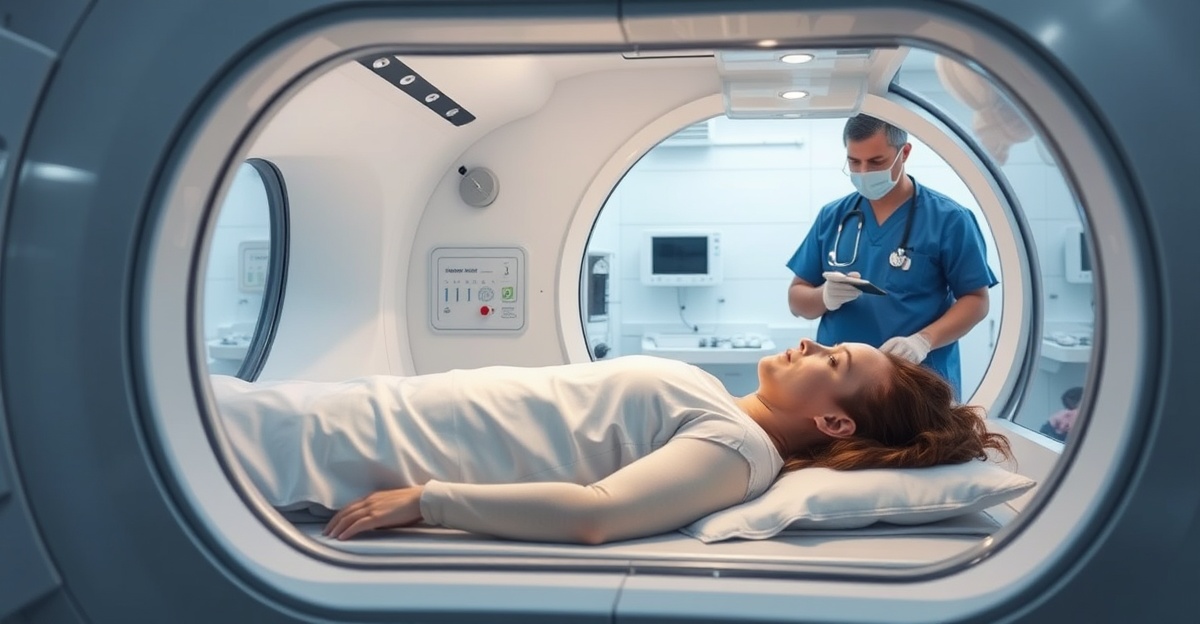
An estimated 100,000 to 150,000 people receive hyperbaric oxygen therapy in the US each year, and 500,000 to 700,000 worldwide. No single registry counts every treatment, so these figures combine Medicare claims, the US Wound Registry, and clinic surveys. Medicare alone accounts for roughly 26,000 to 31,000 patients a year, the most reliably measured slice of the US total.
Part of the BaricBoost HBOT Data series. Cite as: “How Many People Receive HBOT Per Year? (2026 Patient Volume Statistics),” BaricBoost.com, July 2026.
Global HBOT Patient Volume at a Glance
| Region | Est. Annual HBOT Patients | Share of Global | Primary Source Basis |
|---|---|---|---|
| United States | 100,000 to 150,000 | ~20 to 30% | Medicare claims, US Wound Registry, clinic estimates |
| China | 200,000+ (estimated) | Largest single share | National HBOT institution survey (~1,924 institutions) |
| Japan | 15,000 to 20,000 (estimated) | Small | Clinical and sports-medicine estimates |
| Israel | 10,000 to 15,000 (estimated) | Small (highest per capita) | National coverage data |
| United Kingdom | 5,000 to 8,000 (estimated) | Small | NHS plus MS-charity facilities |
| World total | 500,000 to 700,000 | 100% | Combined national estimates |
How many people get HBOT in the US each year?
The US treats an estimated 100,000 to 150,000 HBOT patients per year across all settings. No single database captures every treatment, so the figure is assembled from Medicare claims, wound care networks, freestanding clinic reports, and military and VA records. The most reliably measured slice comes from Medicare: roughly 26,000 to 31,000 beneficiaries received HBOT annually in recent years, peaking around 2021, with an average of about 26 sessions per patient.1
Medicare Utilization and Cost Trend
Medicare claims provide the only consistent longitudinal tracking of HBOT volume in the US. Beneficiary counts rose through the 2010s, peaked around 2021, and pulled back slightly in 2022. Over the same period, the total Medicare cost per 40-session course fell 15.6%, from $27,562 in 2013 to $23,834 in 2022, driven largely by lower physician costs.1
| Year | Medicare HBOT Patients | Total Cost (40-session course) |
|---|---|---|
| 2013 | ~19,400 | $27,562 |
| 2021 (peak) | ~31,000 | N/A |
| 2022 | ~25,900 | $23,834 |
US Wound Registry Data
The US Wound Registry (USWR) provides the most comprehensive real-world dataset on HBOT utilization in clinical wound care. Fife and Eckert (2018) reported that the registry captured 199,158 patients across roughly 2,100 providers between 2012 and 2018, with diabetic foot ulcer patients who received hyperbaric oxygen therapy averaging 28 treatment sessions each.2
- Total patients captured (2012 to 2018): 199,158 across about 2,100 providers
- DFU patients receiving HBOT: 9,908 of 62,843 diabetic foot ulcer patients (15.7%)
- Average treatments per DFU patient: 28 sessions
Where do US HBOT patients get treated?
Most US HBOT patients are treated in hospital wound care centers, with freestanding clinics a growing second. The estimates below sum to roughly 108,000 to 143,000 patients per year, consistent with the 100,000 to 150,000 US anchor.
| Setting | Est. Annual Patients | Avg Sessions/Patient | Primary Conditions |
|---|---|---|---|
| Hospital wound care | 70,000 to 90,000 | 30 to 40 | Diabetic ulcers, radiation injury |
| Freestanding clinics | 30,000 to 40,000 | 20 to 40 | Long COVID, TBI, anti-aging |
| Military/VA | 5,000 to 8,000 | 40 to 60 | TBI and blast injury, wound care |
| Emergency/acute | 3,000 to 5,000 | 1 to 5 | CO poisoning, decompression sickness |
The fastest-growing segment is patients paying out of pocket for off-label HBOT. Based on clinic surveys and industry estimates, off-label patients represent roughly 20 to 30% of freestanding clinic volume and nearly all home chamber usage. Long COVID became a major off-label driver after Zilberman-Itskovich et al. (2022) reported significant improvements in cognitive function and brain perfusion in a randomized trial.3 Many freestanding clinics report long COVID as their fastest-growing patient category since 2022.
How many people receive HBOT worldwide?
Globally, an estimated 500,000 to 700,000 patients receive clinical HBOT each year. The US accounts for roughly 20 to 30% of that total, followed by China, Japan, Israel, Germany, and the United Kingdom. Israel has the highest per-capita utilization, driven by national insurance coverage for several off-label indications.
- China: A national survey identified roughly 1,924 HBOT institutions and 11,266 practitioners, treating an estimated 200,000 or more patients per year. China’s larger patient volume reflects government health policy that favors HBOT for stroke rehabilitation.
- Israel: With an estimated 15 to 20 chambers per million residents (among the world’s highest density), Israel treats an estimated 10,000 to 15,000 patients per year. Israel’s Shamir Medical Center runs one of the largest single-site multiplace HBOT programs in the world and has produced much of the clinical trial data on HBOT for long COVID, TBI, and aging.
- United Kingdom: An estimated 3 to 4 chambers per million, treating roughly 5,000 to 8,000 patients per year. The NHS covers HBOT mainly for decompression illness and gas embolism, and multiple sclerosis charities operate many UK HBOT facilities.
- Japan: An estimated 15,000 to 20,000 patients per year, with strong adoption in sports medicine and post-stroke rehabilitation.
Per-capita treatment rates in the US are lower than Israel but higher than most European countries, reflecting a larger off-label cash-pay market alongside more restrictive insurance coverage than nations with universal healthcare. For the equipment side of this picture, see our data on how many hyperbaric chambers are in the US and the broader hyperbaric oxygen therapy market size.
Does patient volume affect wait times?
Yes. Patient volume directly affects access. At hospital-based wound care centers, the average wait for non-emergency HBOT is 1 to 3 weeks, and some programs report 4 to 6 week waits during peak periods. Freestanding clinics typically offer faster access, often within days, because cash-pay patients avoid the insurance authorization delays that can add 1 to 2 weeks at hospital programs. For emergency indications (carbon monoxide poisoning, decompression sickness, gas embolism), treatment begins immediately at facilities with 24/7 capability.
Growing volume, particularly from off-label demand, is straining capacity at freestanding clinics. Some high-volume clinics report running chambers 10 to 12 hours per day, 6 days per week, which has driven chamber purchases and new clinic openings in high-demand markets such as Florida, Texas, and California.
Sources
- Fife CE, et al. Trends in Medicare Costs of Hyperbaric Oxygen Therapy, 2013 through 2022. Undersea Hyperb Med, 2024;51(2). Total 40-session course cost fell 15.6% ($27,562 in 2013 to $23,834 in 2022). uhms.org
- Fife CE, Eckert KA. The Hyperbaric Oxygen Therapy Registry: Driving quality. Undersea Hyperb Med, 2018. DOI: 10.22462/01.02.2018.1
- Zilberman-Itskovich S, et al. Hyperbaric oxygen therapy improves neurocognitive functions and symptoms of post-COVID condition: randomized controlled trial. Sci Rep, 2022;12:11252. DOI: 10.1038/s41598-022-15565-0
- Centers for Medicare & Medicaid Services. Medicare Part B Claims Data: CPT 99183 / G0277. Annual claims analysis. cms.gov
- Tanaka H, et al. Emerging Indications for Hyperbaric Oxygen Treatment: Registry Cohort Study. Interact J Med Res, 2024. DOI: 10.2196/53821
- Undersea and Hyperbaric Medical Society. Hyperbaric Oxygen Therapy Indications, 14th Edition, 2024. uhms.org
- Divers Alert Network (DAN). Annual Diving Report: Decompression Illness Cases, 2024. Industry report.
- Healogics. Annual Wound Care Report. Company publication (industry estimate, support only).
Medical Disclaimer
The content on BaricBoost.com is for informational purposes only and is not intended as a substitute for professional medical advice, diagnosis, or treatment. Always seek the advice of your physician or other qualified health provider with any questions you may have regarding a medical condition. Never disregard professional medical advice or delay in seeking it because of something you have read on this website.

Author
Seph Fontane Pennock is the founder of BaricBoost.com and Regenerated.com, a clinic directory for regenerative medicine serving 10,000+ providers across the United States. He previously built and sold PositivePsychology.com, which grew to 19 million users and became the largest evidence-based positive psychology resource on the web. Seph brings direct experience as an HBOT patient, having completed protocols at clinics across three continents while navigating mold illness, systemic inflammation, and autoimmune conditions. His treatment journey includes hyperbaric oxygen therapy, peptide protocols, NAD+ therapy, and consultations with specialists from Dubai to Cape Town to Mexico. This combination of entrepreneurial track record and lived patient experience shapes everything published on BaricBoost.com. Every article is grounded in peer-reviewed research, informed by real clinical encounters, and written for patients making high-stakes treatment decisions. Seph's focus is on bringing transparency, scientific rigor, and practical guidance to the hyperbaric oxygen therapy space.