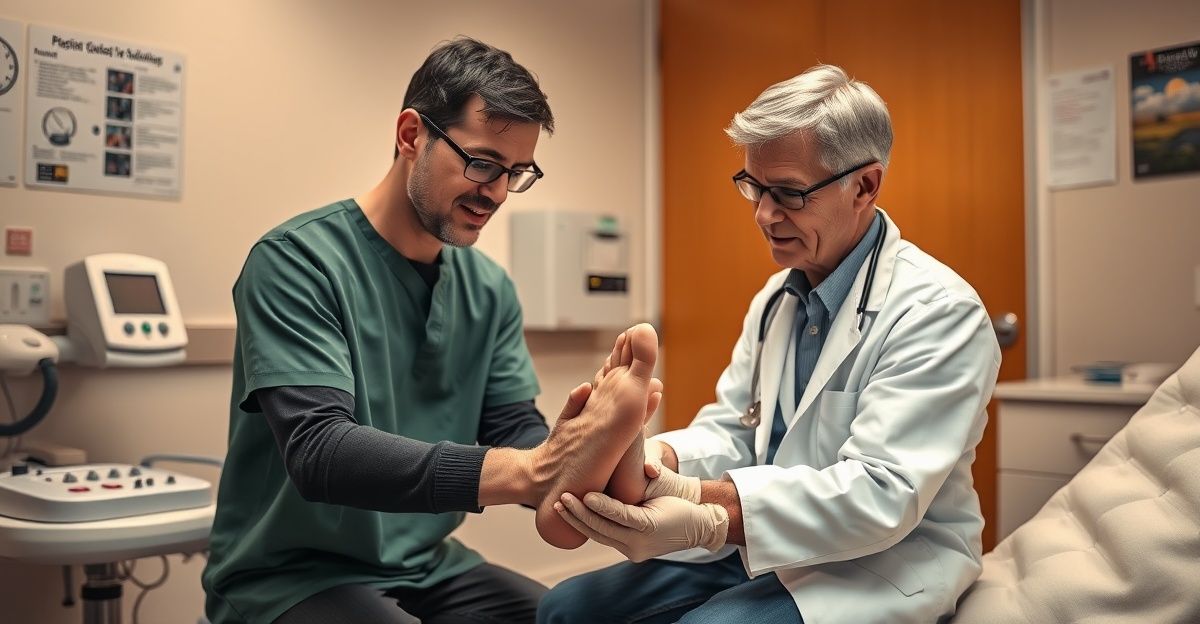
Yes, HBOT can significantly reduce the risk of amputation in diabetic patients with non-healing lower-extremity wounds. A 2016 meta-analysis in Diabetes/Metabolism Research and Reviews found that HBOT reduced the relative risk of major amputation by 36% compared to standard wound care alone (RR 0.64, 95% CI 0.44-0.92). In real terms, over 100,000 diabetes-related amputations occur each year in the United States, and evidence suggests that timely HBOT referral could prevent a substantial fraction of them. This is one of several recovery contexts where HBOT is applied gaining attention in clinical practice.
How Many Diabetes-Related Amputations Happen Each Year?
The numbers are staggering. According to the CDC’s National Diabetes Statistics Report, approximately 154,000 lower-extremity amputations were performed on adults with diabetes in the US in 2020. That is roughly 420 amputations per day. The rate has been increasing since 2009, reversing decades of decline, with the sharpest increases among young adults (aged 18-44) and Black and Hispanic populations.
Diabetic foot ulcers (DFUs) precede 85% of diabetes-related amputations. The pathway is predictable: a minor wound forms (often from ill-fitting shoes or neuropathy-related trauma), impaired healing allows the wound to deepen, infection sets in, and the tissue damage becomes irreversible. Each step in this cascade is a potential intervention point, and HBOT addresses the fundamental problem of inadequate oxygen delivery to wound tissue.
The economic burden is enormous. The average cost of a diabetes-related amputation in the US is approximately $70,000-$100,000 for the procedure and initial hospitalization alone. Post-amputation care (rehabilitation, prosthetics, home modifications, ongoing medical care) adds $50,000-$200,000 over the following five years. A 40-session HBOT course costs $10,000-$18,000, making limb salvage not only medically preferable but also cost-effective when it succeeds.
The five-year mortality rate after a major diabetes-related amputation exceeds 50%, which is worse than many common cancers including breast, prostate, and colorectal cancer. Preventing amputation does not just save a limb. It saves lives.
What the Clinical Trials Show About HBOT and Amputation Risk
Multiple randomized controlled trials and meta-analyses have examined HBOT’s impact on amputation rates in diabetic patients. The evidence is not unanimous, but the overall trend favors HBOT when used appropriately in patients who meet clinical criteria.
The Londahl et al. (2010) trial published in Diabetes Care randomized 94 patients with chronic diabetic foot ulcers to HBOT (40 sessions at 2.5 ATA) or placebo (breathing air at slightly elevated pressure). At one year, complete healing occurred in 52% of the HBOT group versus 29% of controls. Major amputations occurred in 0 HBOT patients versus 4 control patients. While the amputation numbers were small, the difference was clinically meaningful and directionally consistent with other studies.
A large retrospective cohort study by Margolis et al. (2013) in Diabetes Care analyzed 6,259 Medicare beneficiaries with diabetic foot ulcers. This study found no significant difference in amputation rates between HBOT-treated and non-treated patients in the overall analysis. When stratified by wound severity, HBOT showed benefit in the most severe wounds (Wagner IV-V), consistent with the biological rationale that HBOT helps most when tissue hypoxia is the primary barrier to healing.
Faglia et al. (1996) published a randomized trial in Diabetes Care that showed the most dramatic results. Among 70 patients with severe diabetic foot ulcers (Wagner IV), major amputation occurred in 8.6% of HBOT-treated patients versus 33.3% of controls. This trial is frequently cited but has been criticized for its small sample size and single-center design.
The 2015 Cochrane review by Kranke et al. found that HBOT significantly improved healing of diabetic foot ulcers at six weeks (RR 2.35) and showed a trend toward reduced major amputation, though the authors noted that evidence quality was moderate and larger trials were needed. Detailed outcome breakdowns are available on our DFU data page.
The 87% Amputation Avoidance Figure: Context and Caveats
A frequently cited statistic claims that 87% of patients facing amputation avoided it with HBOT. This figure originates from case series at specialized wound care centers that combine HBOT with aggressive multidisciplinary wound management (vascular surgery, podiatry, infectious disease, nutrition, endocrinology). While real, it reflects best-case scenarios at high-volume centers with experienced teams and highly selected patient populations.
In broader clinical practice, the amputation reduction is more modest but still clinically meaningful. The pooled data from controlled trials suggests HBOT reduces major amputation risk by approximately 30-40% when added to standard wound care. The absolute benefit depends on baseline amputation risk: higher-risk patients (Wagner IV-V, peripheral arterial disease, prior contralateral amputation, end-stage renal disease) see the greatest absolute benefit because their baseline amputation risk is highest.
The key takeaway is not one specific number but the consistent direction across studies. HBOT, when used appropriately in patients who meet clinical criteria, reduces the likelihood that a diabetic foot ulcer progresses to amputation. The magnitude of benefit varies by study design, patient selection, and clinical setting.
When HBOT Should Start to Prevent Amputation
Timing matters critically. The current evidence supports referring patients for HBOT evaluation when a diabetic lower-extremity wound has not improved after 30 days of optimal standard wound care. This aligns with both CMS coverage requirements and UHMS clinical guidelines.
Some wound care specialists argue that earlier referral (at the 2-week mark for Wagner III+ wounds) could improve outcomes by intervening before the wound deteriorates further. A 2018 study in Undersea and Hyperbaric Medicine found that patients who began HBOT within 8 weeks of wound onset had significantly higher healing rates than those who started after 6 months. Every week of delay allows further tissue deterioration, biofilm maturation, and vascular compromise.
The practical barrier to earlier referral is insurance coverage. CMS requires 30 days of failed standard care before approving HBOT. This creates a clinical tension between wanting to intervene early and needing to satisfy coverage requirements. Some wound care centers address this by ensuring that the 30-day standard care period is maximally optimized (comprehensive vascular workup, glucose optimization, aggressive debridement, proper offloading) so that by day 30, the documentation clearly demonstrates treatment failure and HBOT can begin immediately.
Red flags that should prompt immediate HBOT evaluation include wound worsening despite standard care, new signs of osteomyelitis on MRI, transcutaneous oxygen measurements below 30 mmHg at the wound margin, gas in soft tissues on imaging, and any discussion of amputation as a treatment option. When amputation is being considered, HBOT should be evaluated as an alternative before an irreversible decision is made.
Who Qualifies for HBOT to Prevent Amputation?
Not every patient facing amputation is a candidate for HBOT. Qualification requires several clinical criteria, and some patients will not benefit even if they meet the basic requirements.
General qualifying criteria include:
- Documented wound type: Diabetic foot ulcer Wagner III or higher (for Medicare coverage), or other CMS-approved wound indication
- Failed standard care: At least 30 days of documented wound management including debridement, offloading, infection control, and glycemic optimization
- Adequate arterial supply: Ankle-brachial index above 0.7, or toe pressure above 40 mmHg. Patients with ABI below 0.5 should be evaluated for revascularization before HBOT, because oxygen delivery depends on having some arterial inflow
- Hypoxic wound bed: TCOM values below 40 mmHg at the wound margin on room air, with a measurable increase when breathing 100% oxygen (ideally rising above 200 mmHg)
- No absolute contraindications: Untreated pneumothorax, concurrent bleomycin therapy, certain other chemotherapy agents
Patients with severe, uncorrectable peripheral arterial disease (no revascularization options, ABI below 0.4, absent pedal pulses) generally respond poorly to HBOT, because the fundamental blood supply problem limits oxygen delivery even at elevated pressures. HBOT works best when the vascular infrastructure can deliver oxygenated blood to the wound vicinity, even if local tissue perfusion is compromised by microvascular disease.
End-stage renal disease on hemodialysis is not a contraindication but does reduce HBOT effectiveness. Uremic toxins impair multiple aspects of wound healing, and dialysis-related fluid shifts complicate wound management. These patients can still benefit from HBOT but may require longer treatment courses. For more on HBOT and diabetes broadly, see our diabetes and HBOT page.
What Does the HBOT Protocol Look Like?
The standard limb-salvage HBOT protocol involves daily sessions at 2.0-2.4 ATA for 90 minutes of oxygen breathing, five days per week. Most protocols start with an initial course of 20 sessions, followed by wound reassessment with measurements and repeat TCOM.
After 20 sessions, the wound care team evaluates progress. If the wound is improving (at least 15% reduction in area), treatment continues for an additional 10-20 sessions. If no improvement is evident and TCOM values have not improved, continuing HBOT is unlikely to be beneficial and treatment is typically discontinued. Continuing ineffective HBOT wastes patient time and resources, and delays consideration of other treatment options.
Total treatment courses for limb salvage range from 20 to 60 sessions. The average across published literature is approximately 40 sessions. Throughout HBOT treatment, standard wound care continues in parallel, including regular debridement, dressing changes, offloading, infection management, and vascular re-evaluation if needed. HBOT is always an adjunct, never a standalone treatment.
Some wound care centers use an accelerated protocol for urgent limb-salvage cases, with twice-daily sessions for the first 1-2 weeks. This approach delivers more sessions in a shorter time frame and is based on the rationale that rapid oxygen loading may prevent tissue deterioration in wounds at immediate risk of amputation. Evidence for twice-daily versus once-daily protocols is limited to case series, but the approach is used at several major academic wound care centers. See our sessions guide for detailed protocol breakdowns by wound type.
What Happens After HBOT: Long-Term Outcomes
Limb salvage with HBOT is not the end of the story. Patients who avoid amputation through HBOT still require long-term wound surveillance and diabetic foot care to prevent recurrence. DFU recurrence rates are approximately 40% at one year and 65% at three years even after successful healing, according to a 2017 review by Armstrong et al. in the New England Journal of Medicine.
Post-HBOT care should include:
- Diabetic shoe and custom orthotic prescriptions (Medicare covers one pair annually under the Therapeutic Shoe Bill)
- Monthly foot examinations for the first year, transitioning to quarterly thereafter
- Ongoing glycemic optimization (target HbA1c below 7% or as individually appropriate)
- Immediate evaluation of any new wound, callus, blister, or pre-ulcerative lesion
- Vascular surveillance if peripheral arterial disease was present
- Smoking cessation support (smoking increases recurrence risk 2-3 fold)
Patients who successfully avoided amputation through HBOT tend to have better mobility, lower mortality, and higher quality of life than those who undergo amputation. A comprehensive overview of HBOT wound outcomes is available in our wound healing guide.
How Does HBOT Compare to Other Treatments?
HBOT is one of several adjunctive therapies used in limb salvage. Understanding where it fits relative to other interventions helps patients and clinicians make informed decisions about treatment sequencing.
Revascularization (bypass surgery or angioplasty) addresses the macrovascular component of arterial insufficiency. If a patient has significant peripheral arterial disease (ABI below 0.7), revascularization should typically precede or accompany HBOT. HBOT cannot compensate for absent arterial inflow. It addresses microvascular and tissue-level hypoxia, not large-vessel occlusion.
Growth factor therapy (becaplermin/Regranex) is an FDA-approved topical growth factor for diabetic foot ulcers. It stimulates granulation tissue formation but requires adequate tissue oxygenation to work effectively. Some wound care teams combine growth factor application with HBOT to address both the growth factor deficit and the oxygen deficit simultaneously.
Skin substitutes and cellular therapies (Dermagraft, Apligraf, EpiFix) provide biological scaffolding and growth factors to the wound bed. Like growth factors, these products depend on adequate local oxygenation and vascularity to integrate and function. Using them in a severely hypoxic wound bed without addressing the underlying oxygen deficit leads to graft failure.
The optimal limb-salvage strategy is multimodal: restore arterial flow with revascularization when indicated, optimize tissue oxygenation with HBOT, manage infection aggressively, offload the wound consistently, and consider bioactive therapies once the wound bed environment is optimized. No single therapy is sufficient for the most challenging diabetic wounds. The combination of approaches, selected and sequenced based on the individual patient’s pathophysiology, produces the best outcomes.
Sources
- Liu R, Li L, et al. “Systematic review of the effectiveness of hyperbaric oxygenation therapy in the management of chronic diabetic foot ulcers.” Mayo Clinic Proceedings, 2013. PubMed
- Londahl M, Katzman P, et al. “Hyperbaric oxygen therapy facilitates healing of chronic foot ulcers in patients with diabetes.” Diabetes Care, 2010. PubMed
- Margolis DJ, Gupta J, et al. “Lack of effectiveness of hyperbaric oxygen therapy for the treatment of diabetic foot ulcer and prevention of amputation.” Diabetes Care, 2013. PubMed
- Kranke P, Bennett MH, et al. “Hyperbaric oxygen therapy for chronic wounds.” Cochrane Database of Systematic Reviews, 2015. PubMed
- Centers for Disease Control and Prevention. “National Diabetes Statistics Report.” CDC.gov
- Faglia E, Favales F, et al. “Adjunctive systemic hyperbaric oxygen therapy in treatment of severe prevalently ischemic diabetic foot ulcer.” Diabetes Care, 1996. PubMed
- Armstrong DG, Boulton AJM, Bus SA. “Diabetic foot ulcers and their recurrence.” New England Journal of Medicine, 2017. PubMed
- Fedorko L, Bowen JM, et al. “Hyperbaric oxygen therapy does not reduce indications for amputation in patients with diabetes with nonhealing ulcers of the lower limb.” Diabetes Care, 2016. PubMed
Medical Disclaimer
The content on BaricBoost.com is for informational purposes only and is not intended as a substitute for professional medical advice, diagnosis, or treatment. Always seek the advice of your physician or other qualified health provider with any questions you may have regarding a medical condition. Never disregard professional medical advice or delay in seeking it because of something you have read on this website.

Author
Seph Fontane Pennock is the founder of BaricBoost.com and Regenerated.com, a clinic directory for regenerative medicine serving 10,000+ providers across the United States. He previously built and sold PositivePsychology.com, which grew to 19 million users and became the largest evidence-based positive psychology resource on the web. Seph brings direct experience as an HBOT patient, having completed protocols at clinics across three continents while navigating mold illness, systemic inflammation, and autoimmune conditions. His treatment journey includes hyperbaric oxygen therapy, peptide protocols, NAD+ therapy, and consultations with specialists from Dubai to Cape Town to Mexico. This combination of entrepreneurial track record and lived patient experience shapes everything published on BaricBoost.com. Every article is grounded in peer-reviewed research, informed by real clinical encounters, and written for patients making high-stakes treatment decisions. Seph's focus is on bringing transparency, scientific rigor, and practical guidance to the hyperbaric oxygen therapy space.