Affiliate Disclosure
This article contains affiliate links. If you purchase through these links, we may earn a commission at no additional cost to you. This does not influence our evaluations or rankings.
A home soft-shell hyperbaric chamber pays for itself after roughly 124 clinic-equivalent sessions. That assumes the $13,495 median soft-shell price from BaricBoost’s July 2026 Price Index, a $110 mild-HBOT session (the midpoint of the $75 to $150 clinic range), and about $1.50 of electricity per home session. At three sessions a week, that is about ten months.
Key Takeaways
- A new soft-shell home chamber has a median listed price of $13,495 (range $4,495 to $24,372 across 11 verified listings), according to BaricBoost’s July 2026 price data.
- Against mild-HBOT clinic sessions at the $110 midpoint, the median home chamber breaks even after about 124 sessions, or roughly 91 sessions at $150 and 184 sessions at $75, per BaricBoost’s July 2026 price data.
- The cheapest FDA-cleared soft chamber, the Newtowne C4-27 at $4,495, breaks even in about 42 sessions, roughly 14 weeks at three sessions per week, based on BaricBoost’s July 2026 price data.
- Used chambers resell at 40 to 60 percent of new prices; selling at 50 percent cuts the median chamber’s effective break-even to about 62 sessions, per BaricBoost’s July 2026 price data.
- Soft-shell rentals run $900 to $1,500 per month, and roughly six months of rent equals the purchase price of a comparable chamber, according to BaricBoost’s July 2026 price data.
The catch, and it matters: this math compares like for like. A 1.3 ATA soft chamber at home replaces a 1.3 ATA mild-HBOT session at a wellness studio. It does not replace a 2.0 to 2.8 ATA clinical session, which runs $200 to $600 and delivers a different treatment. Keep the two comparisons separate and the numbers stay honest.
What Each Path Costs Upfront
All purchase prices below come from the BaricBoost Hyperbaric Chamber Price Index, which recorded every figure from a live retailer, dealer, or marketplace page on July 23, 2026. We use our own index as the primary price source because it is the only chamber price series we know of where every row is verified and dated. Session prices reflect the current US clinic market.
| Path | Upfront Cost | What You Get |
|---|---|---|
| Mild-HBOT clinic session | $75 to $150 per session | 1.3 ATA soft chamber, staffed studio, no commitment |
| Clinical HBOT session | $200 to $600 per session | 2.0 to 2.8 ATA, 100% oxygen, physician oversight |
| Entry soft-shell chamber (new) | $4,495 | Newtowne C4-27, 1.3 ATA, FDA cleared |
| Median soft-shell chamber (new) | $13,495 | Larger 1.3 to 1.4 ATA units, e.g. Summit to Sea Grand Dive |
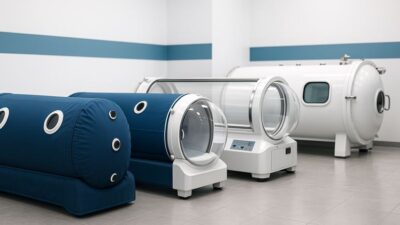
| Personal hard-shell chamber (new) | $41,700 median | 1.5 to 3.0 ATA, closer to clinical pressure |
| Soft-shell rental | $900 to $1,500 per month | Month-to-month use, deposit typically $400 |
For the full pricing picture behind these categories, including brand-by-brand figures, see our hyperbaric chamber cost guide.
The Break-Even Math: Three Worked Scenarios
Assumptions for all three scenarios: mild-HBOT clinic sessions at $110 (midpoint of $75 to $150), median soft chamber at $13,495, electricity at $1.50 per home session, and no financing costs. Each home session therefore saves $108.50 versus the clinic. Change the inputs and the answer moves, so we show the arithmetic.
Scenario 1: A 20-session protocol
Twenty mild-HBOT sessions at the clinic cost 20 x $110 = $2,200, or $1,500 to $3,000 across the full price range. Even the cheapest FDA-cleared chamber costs $4,495, which is more than the most expensive clinic outcome. Buying loses. A one-month soft-shell rental at $900 to $1,500 covers all 20 sessions for less than the clinic midpoint. For a short protocol, rent or use a clinic; do not buy.
Scenario 2: A 40-session protocol
Forty clinic sessions cost 40 x $110 = $4,400, or $3,000 to $6,000 across the range. The entry chamber at $4,495 plus about $60 of electricity (40 x $1.50) totals $4,555, essentially a tie with the clinic midpoint. But ownership has a second act: sell the chamber afterward at 50 percent of new ($2,248) and your net cost drops to about $2,307, roughly half the clinic bill. The median $13,495 chamber still loses at this volume, even after resale. A two-to-three-month rental at $1,200 per month ($2,400 to $3,600) also beats the clinic. At 40 sessions, renting or buying cheap wins; buying mid-market does not.
Scenario 3: Daily long-term use
Five sessions a week is about 260 sessions a year. At the clinic, that is 260 x $110 = $28,600 per year, every year. The median home chamber costs $13,495 once, plus about $390 in electricity (260 x $1.50) and an estimated $500 to $2,000 in annual upkeep. Cumulative clinic spending passes the chamber price at session 124 ($13,495 divided by the $108.50 per-session saving), which arrives in week 25 at five sessions per week. From month seven onward, every home session is nearly free money compared with the clinic. This is the use case where ownership is not close. Our guide to the best hyperbaric chamber for home use covers which units hold up to daily cycling.
The Hidden Costs of Owning
The sticker price is not the whole bill, though the extras are smaller than most buyers fear.
Electricity. A stationary oxygen concentrator draws 300 to 600 watts and the compressor adds more, which works out to roughly $1.50 per session, or $5 to $15 per month for daily users at average US rates. Over a 124-session break-even run, that is under $200, which is why it barely moves the math.
Maintenance. Soft chambers need zipper care, valve checks, and periodic concentrator servicing (filters and sieve beds). Budget $500 to $2,000 per year depending on usage intensity; our cost guide’s planning figure for a heavily used soft-shell setup is about $2,000. Most first-year issues fall under warranty.
Depreciation, or the resale rebate. In BaricBoost’s July 2026 Price Index sweep, used chambers listed at 40 to 60 percent of new prices. That resale value is effectively a rebate on ownership. Sell the median $13,495 chamber at 50 percent and your net cost of ownership is about $6,747, which lowers the effective break-even to roughly 62 sessions. Realistic asking prices and what sells are covered in our used hyperbaric chamber guide.
When the Clinic Wins Regardless of the Math
Some situations are not a spreadsheet decision.
Clinical pressure. Home soft chambers run 1.3 to 1.4 ATA on compressed ambient air. Clinical chambers run 2.0 to 2.8 ATA with 100 percent oxygen, a materially different oxygen dose. If your condition calls for clinical HBOT, a soft chamber is not a cheaper version of the same treatment; it is a different product.
Covered indications. Medicare and most private insurers cover facility-based HBOT for approved indications such as diabetic foot ulcers, radiation injury, and decompression sickness. If you qualify, your out-of-pocket cost may be a copay, and no home chamber can compete with that. Insurance never covers home chamber purchases or rentals.
Supervision and safety. Clinics monitor for ear barotrauma and oxygen toxicity, and staff handle emergencies. First-time users, children, and anyone with complicating conditions belong under supervision, at least initially. Note also that soft chambers are FDA cleared only for acute mountain sickness; every other home use is off-label. If clinic access is the constraint, start with our hyperbaric treatment near me directory.
Renting: The Middle Path
Soft-shell rentals run $900 to $1,500 per month at most dealers, with prepaid three-month packages as low as $417 to $500 per month, plus a refundable deposit of about $400. The break-even against buying sits near six months: a Newtowne C4-34 rents for $1,195 per month and sells new for $7,495, so month seven of renting costs more than owning. Renting wins for defined protocols of 40 to 60 sessions, for testing whether you tolerate and benefit from HBOT before committing, and for post-surgical recovery windows. Many programs credit up to 80 percent of rent toward a purchase. Full provider rates and terms are in our hyperbaric chamber rental guide.
Frequently Asked Questions
How many sessions until a home chamber pays for itself?
At BaricBoost’s July 2026 median soft-shell price of $13,495 and a $110 mild-HBOT session, about 124 sessions, or roughly ten months at three sessions per week. The cheapest FDA-cleared chamber at $4,495 breaks even in about 42 sessions. Selling the chamber later at 50 percent of new roughly halves those numbers.
Is a home soft chamber the same treatment as clinic HBOT?
No. Home soft chambers deliver 1.3 to 1.4 ATA with ambient air, while clinical chambers deliver 2.0 to 2.8 ATA with 100 percent oxygen. The break-even math only applies against mild-HBOT studio sessions at similar pressure. For insurance-covered medical indications, facility-based clinical HBOT is the appropriate comparison and usually the right choice.
What does a home session actually cost to run?
Roughly $1.50 in electricity per session, or $5 to $15 per month for daily users, since concentrators draw 300 to 600 watts. Add $500 to $2,000 per year for maintenance on a heavily used setup. Even with both included, the marginal cost per home session stays under $10 for frequent users.
Should I rent before buying?
Usually, yes. At $900 to $1,500 per month, one or two months of renting costs far less than a purchase mistake, and rent-to-own programs commonly credit up to 80 percent of payments toward buying. If you already know you will use the chamber for more than six months, buying is cheaper from day one.
Sources
- BaricBoost. “Hyperbaric Chamber Price Index: 26 Verified Listings, Tracked (July 2026).” baricboost.com/hyperbaric-chamber-price-index/
- BaricBoost. “Hyperbaric Chamber Cost: Complete 2026 Pricing Guide.” baricboost.com/hyperbaric-chamber-cost/
- BaricBoost. “Hyperbaric Chamber Rental: Complete Rental Guide.” baricboost.com/hyperbaric-chamber-rental/
- Thervo. “How Much Does Hyperbaric Oxygen Therapy Cost? (2026).” thervo.com/costs/hyperbaric-oxygen-therapy-cost
- FindHBOT. “HBOT Cost 2026: $150-$400/Session Pricing Guide.” findhbot.com/blog/hyperbaric-oxygen-therapy-cost
- Carbon Wellness MD. “How Much Does It Cost to Run an Oxygen Concentrator 24/7?” carbonwellnessmd.com/blogs/news/cost-to-run-oxygen-concentrator-24-7
- Peak Primal Wellness. “How Much Does a Home Hyperbaric Chamber Actually Cost?” peakprimalwellness.com/blogs/wellness/how-much-does-a-home-hyperbaric-chamber-actually-cost
Medical Disclaimer
The content on BaricBoost.com is for informational purposes only and is not intended as a substitute for professional medical advice, diagnosis, or treatment. Always seek the advice of your physician or other qualified health provider with any questions you may have regarding a medical condition. Never disregard professional medical advice or delay in seeking it because of something you have read on this website.

Author
Seph Fontane Pennock is the founder of BaricBoost.com and Regenerated.com, a clinic directory for regenerative medicine serving 10,000+ providers across the United States. He previously built and sold PositivePsychology.com, which grew to 19 million users and became the largest evidence-based positive psychology resource on the web. Seph brings direct experience as an HBOT patient, having completed protocols at clinics across three continents while navigating mold illness, systemic inflammation, and autoimmune conditions. His treatment journey includes hyperbaric oxygen therapy, peptide protocols, NAD+ therapy, and consultations with specialists from Dubai to Cape Town to Mexico. This combination of entrepreneurial track record and lived patient experience shapes everything published on BaricBoost.com. Every article is grounded in peer-reviewed research, informed by real clinical encounters, and written for patients making high-stakes treatment decisions. Seph's focus is on bringing transparency, scientific rigor, and practical guidance to the hyperbaric oxygen therapy space.
Why Trust Our Evaluations
Our rankings are based on hands-on testing, published clinical data, and verified manufacturer specifications. We apply the same criteria to every product regardless of affiliate status. Editorial Process · Evaluation Methodology