Affiliate Disclosure
This article contains affiliate links. If you purchase through these links, we may earn a commission at no additional cost to you. This does not influence our evaluations or rankings.
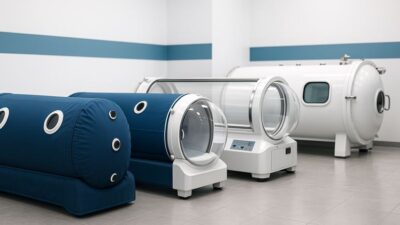
Hyperbaric chambers sell in four price bands. Soft-shell portable chambers run $4,495 to $15,000 new. Personal hard-shell units run $28,000 to $50,000. Clinical monoplace chambers run $30,000 to $150,000 or more, and hospital multiplace systems exceed $100,000 to $500,000 installed. The used market averages $29,665 across 44 tracked listings.
Two definitions decide most buying mistakes. 510(k) cleared means the FDA agreed a device is substantially equivalent to an existing one and can be marketed for a stated use; it is not the same as FDA approved, a higher bar that no home hyperbaric chamber has met. ASME PVHO-1 is the engineering standard for Pressure Vessels for Human Occupancy; it is voluntary but the recognized benchmark for hard-shell chamber safety.
Hyperbaric chamber prices by type in 2026
Price tracks pressure. The higher the maximum ATA (atmospheres absolute), the heavier the construction, the stricter the engineering, and the more you pay. Here is the market as it stands in 2026, based on current dealer listings and manufacturer pricing.
| Category | Max ATA | New Price Range | Used Price Range |
|---|---|---|---|
| Soft-shell portable | 1.3-1.5 ATA | $4,495-$15,000 | $2,000-$8,000 |
| Personal hard-shell | 1.5-2.0 ATA | $28,000-$50,000 | $15,000-$35,000 |
| Clinical monoplace | 2.0-3.0 ATA | $30,000-$150,000+ | $20,000-$112,000 |
| Multiplace | 2.0-6.0 ATA | $100,000-$500,000+ | Custom quote |
FDA-cleared soft-shell home chambers
Clinical monoplace hard-shell chambers
Average used chamber price (44 listings analyzed)
US brands with FDA 510(k) clearance: OxyHealth, Summit to Sea, Newtowne
Soft-shell portable chambers ($4,495-$15,000)
The most common chamber type for home purchase. Fabric construction, zipper seals, 1.3-1.5 ATA maximum pressure with ambient air. Three brands hold FDA 510(k) clearance for this category: OxyHealth, Summit to Sea, and Newtowne Hyperbarics. Chinese brands (Macy-Pan, OxyRevo, Airvida) hold CE certification but not FDA clearance. One honesty note before you spend anything: that 510(k) clearance covers acute mountain sickness only. The cleared intended use is “to provide mild hyperbaria for the treatment of Acute Mountain Sickness.” Using a soft chamber for recovery, wound support, or any other condition is off-label. Our guide to the best hyperbaric chambers for home use compares the cleared models head to head.
Personal hard-shell chambers ($28,000-$50,000)
Rigid aluminum or steel construction capable of 1.5-2.0 ATA, used in home wellness settings and small clinics. Recent 2026 dealer listings include the Airvida Ultra (from about $28,000), Macy-Pan HP2202 (about $40,500), and OxyRevo Space60 (about $43,000). None hold FDA clearance; they are CE certified. Treat those figures as current listing snapshots, since model pricing in this segment shifts quarterly. If you are torn between fabric and steel, our hard-shell vs soft-shell comparison breaks down pressure, safety, and cost per session.
Clinical monoplace hard-shell ($30,000-$150,000+)
Physician-supervised medical chambers operating at 2.0-3.0 ATA with 100% oxygen. Perry Baromedical and Sechrist Industries are the leading US FDA-registered manufacturers. On the used side, recent listings for a 2020 Sechrist 3600HR have run near $111,875 and a Sechrist 3300H near $93,125, which shows how well clinical hardware holds value. For the full purchase-plus-operating-cost picture, see our hyperbaric chamber cost to buy guide and the broader hyperbaric chamber cost breakdown.
Multiplace chambers ($100,000-$500,000+)
Treat multiple patients simultaneously at 2.0-6.0 ATA. Hospital-grade US-manufactured multiplace systems from Perry Baromedical and Sechrist exceed $200,000 to $500,000 installed once oxygen supply, monitoring, and construction are included. These are institutional purchases, not home equipment.
Where to buy: every channel compared
The same chamber category can cost half as much on one platform as another. The price difference is not free. It is paid for in clearance, warranty, and support you give up.
| Channel | FDA Clearance | Warranty | Support | Risk Level |
|---|---|---|---|---|
| Authorized dealer (FDA-cleared brands) | Yes | 2-5 years | Yes | Low |
| Manufacturer direct | Yes (for cleared brands) | Full warranty | Yes | Low |
| Amazon | Rarely | Limited | No | Medium-High |
| eBay | Rarely | None | No | High |
| Alibaba | No | Limited | No | Very High |
| Certified pre-owned (Perry, Sechrist) | N/A (used) | OEM warranty | Yes | Low-Medium |
Manufacturer direct and authorized dealers
Buying from OxyHealth, Summit to Sea, or Newtowne (or their authorized dealers) gets you the cleared device, the real warranty, US-based service, and financing. The tradeoff is price. You will pay full retail, and entry models start around $4,495 rather than the $2,000 figures you see on import listings. For most home buyers, this is still the right call. A chamber is a pressure vessel you sit inside. Buy it from someone who answers the phone.
Amazon
Amazon carries soft chambers from lesser-known import brands, usually $2,000-$8,000. Listings rarely state a verifiable 510(k) number, return logistics on a 100-pound pressure vessel are painful, and third-party sellers come and go. It can work for accessories, and occasionally a legitimate brand sells there, but check every claim against the FDA database first. We cover the current listings and what checks out in our review of hyperbaric chambers on Amazon.
Alibaba
Alibaba-sourced chambers are typically 40-70% cheaper than US-authorized equivalents. The tradeoffs: no FDA clearance, no US legal accountability for injuries, uncertain material safety, and the average Chinese HBOT brand has been in business less than two years. If they close, warranty, parts, and support disappear with them. Add freight, import duties, and the risk of customs holds on an unregistered medical device, and the discount shrinks fast. Full breakdown in our Alibaba hyperbaric chamber guide.
eBay and private sales
Hyperbaric chambers are Class II prescription medical devices under FDA regulations. Under federal device rules, reselling one generally requires a certified medical device reseller who inspects and recertifies the unit, so a private individual listing a used chamber on eBay is not operating within those rules. eBay does not consistently enforce this. Used chambers from private sellers carry no verifiable maintenance history, no warranty, and no legal protection for the buyer, so treat every private eBay chamber as an as-is gamble.
Used equipment dealers
The safest used channels are manufacturer certified pre-owned programs (Perry Baromedical CPO, Sechrist CPO with a 90-day limited OEM warranty), Atlanta Hyperbaric Center (2-year warranty on used units), Hyperbaric Store, and DOTmed.com for clinical equipment with escrow services. Always verify pressure test certification, total hours of operation, maintenance history, and whether the manufacturer will still service the unit.
“A $2,000 Alibaba chamber might look identical to a $6,000 FDA-cleared model. The difference is in what you cannot see: material safety testing, pressure vessel certification, and a manufacturer who can be held accountable in a US court.”
BaricBoost platform analysis, 2026
Should you buy a new or used hyperbaric chamber?
Used chambers typically sell for 40 to 60 percent of new. On a $10,000 soft-shell that saves you $4,000-$6,000. On a $100,000 monoplace it saves a clinic $40,000 or more. So why does anyone buy new?
Buy new if you are a home buyer spending under $15,000. The savings on a used soft-shell are modest, and soft chambers age in ways you cannot inspect: zipper fatigue, window crazing, valve wear, and off-gassing fabric. A new unit comes with a 2-5 year warranty and a known history. That is worth the difference at this price point.
Consider used if you are buying clinical hard-shell equipment. Sechrist and Perry monoplace chambers are built for decades of service, hold detailed maintenance logs, and can be recertified. A certified pre-owned unit with a fresh pressure test and OEM warranty is a rational clinic purchase. Our used hyperbaric chamber guide walks through pricing, inspection, and where the 44 listings in our dataset came from.
Red flags and scams
The chamber market has a real fraud problem at the cheap end. Walk away when you see any of these:
- No stated ATA rating. Every legitimate chamber lists its operating pressure. Listings that say only “oxygen chamber” or quote oxygen percentage without pressure are hiding the spec that defines the product.
- “FDA approved” claims. No home chamber is FDA approved. The correct term is 510(k) cleared, and only for acute mountain sickness. A seller using “FDA approved” either does not know the rules or is counting on you not knowing them.
- Unverifiable clearance numbers. Ask for the 510(k) number and check it yourself at accessdata.fda.gov. Some importers cite another company’s clearance or a number that covers a different device.
- Gray-market imports. A chamber shipped direct from a factory with no US presence has no service network, no parts supply, and no one to hold accountable. The average Chinese HBOT brand has been in business less than two years.
- Built-in oxygen fittings on soft chambers. The FDA has warned about aftermarket oxygen modifications to low-pressure fabric chambers, which raise fire risk and conflict with NFPA 99 fire codes. A soft chamber sold with oxygen plumbing is a hazard, not a feature.
- No warranty, or warranty serviced only overseas. A warranty you have to ship a 300-pound chamber to Shanghai to claim is not a warranty.
- Prices far below market. A “new” 1.5 ATA hard-shell for $9,000 is not a deal. It is a spec that does not exist at that price.
Certifications and paperwork to demand
Before money moves, get documents, not assurances. For any chamber:
- FDA 510(k) clearance number. Check it at accessdata.fda.gov and confirm the clearance holder matches the brand you are buying.
- FDA establishment registration for the manufacturer or importer. Registration is not clearance, but a factory that is not even registered should end the conversation.
- CE certification for EU-market devices. Ask for the actual certificate, not just the claim, and note that CE marking does not substitute for FDA clearance in the US.
- ASME PVHO-1 status for hard-shell chambers. Voluntary, but the gold standard for pressure vessels for human occupancy. Clinical buyers should treat it as mandatory.
- Warranty terms in writing plus the location of the nearest service technician. A US-based service network is the difference between a two-day repair and a two-month outage.
For used chambers, add: pressure test records, total operating hours, complete maintenance history, the reason for sale, and written confirmation that the manufacturer will still service the serial number.
Financing and rent-to-own
Very few buyers pay cash for a hard-shell chamber, and financing is now standard even for soft-shells. Typical 2026 terms:
- Manufacturer financing. OxyHealth advertises plans starting around $198 per month. Other dealers quote payments from $174 to $289 per month on entry and mid-range chambers, with some offering zero money down.
- Consumer medical financing. CareCredit-style revolving credit and point-of-sale lenders (Cherry and similar) run 0% promotional periods up to 18 months, then 6-24% APR depending on credit.
- Leases. Consumer chamber leases typically run $300-$800 per month depending on chamber type and term.
- Rent-to-own. Programs like Community Hyperbaric’s apply 100% of the first month’s rent and deposit toward purchase, then credit around 75% of each later payment until payoff. This is the lowest-risk way to find out whether you will actually use a chamber daily before committing five figures.
- Business financing. Clinics buying monoplace equipment usually use equipment loans or Section 179 expensing. Used clinical chambers finance through the same dealers that sell them.
If you are not ready to commit at all, renting first is often smarter than financing. Our hyperbaric chamber rental guide covers monthly rates and what to check in a rental contract.
Frequently Asked Questions
How much does a hyperbaric chamber cost to buy?
Soft-shell home chambers cost $4,495 to $15,000 new. Personal hard-shell chambers run $28,000 to $50,000. Clinical monoplace chambers run $30,000 to $150,000 or more, and multiplace systems exceed $100,000 installed. Used units typically sell for 40 to 60 percent of new prices, and the tracked used market averages $29,665 across 44 listings (BaricBoost analysis of Bimedis data, 2025).
Can I legally buy a hyperbaric chamber for home use?
Yes. FDA-cleared soft chambers from OxyHealth, Summit to Sea, and Newtowne are sold to consumers, with most dealers requesting a prescription because chambers are Class II prescription devices. The clearance covers acute mountain sickness only, so any other health use is off-label. Reselling a used Class II chamber as a private individual, as on eBay, falls outside the federal rules that route resale through certified medical device dealers.
Are cheap hyperbaric chambers on Amazon or Alibaba safe?
Treat them as unverified pressure vessels. Most hold no FDA clearance, ship from factories with no US presence, and offer warranties you cannot realistically claim. Some are 40-70% cheaper than cleared equivalents, but you give up material safety testing, fire-code compliance, and any legal recourse if something fails. Always check the 510(k) number against the FDA database before buying.
Is a used hyperbaric chamber worth it?
For clinical hard-shell equipment, often yes. Sechrist and Perry monoplace chambers are built to be recertified, and certified pre-owned units carry OEM warranties. For home soft-shells the savings are smaller and hidden wear (zipper fatigue, window crazing, valve wear) is harder to inspect, so most home buyers do better purchasing new with a full warranty.
Sources
- U.S. Food and Drug Administration. “Follow Instructions for Safe Use of Hyperbaric Oxygen Therapy Devices: Letter to Health Care Providers.” 2025. FDA
- U.S. Food and Drug Administration. “510(k) Premarket Notification Database.” accessdata.fda.gov
- Southern African Undersea and Hyperbaric Medical Association. “Low-Pressure Fabric Hyperbaric Chambers.” 2020. SAUHMA
- Undersea and Hyperbaric Medical Society. “The Dangers of Soft-Sided Bag Chambers.” UHMS
- Bimedis medical equipment marketplace (used hyperbaric chamber listings, basis for the 44-listing price analysis). Bimedis
- OxyHealth. “Financing.” OxyHealth
- Atlanta Hyperbaric Center. “Hyperbaric Chambers for Sale” and used-chamber buying guidance. Atlanta Hyperbaric Center
Medical Disclaimer
The content on BaricBoost.com is for informational purposes only and is not intended as a substitute for professional medical advice, diagnosis, or treatment. Always seek the advice of your physician or other qualified health provider with any questions you may have regarding a medical condition. Never disregard professional medical advice or delay in seeking it because of something you have read on this website.

Author
Seph Fontane Pennock is the founder of BaricBoost.com and Regenerated.com, a clinic directory for regenerative medicine serving 10,000+ providers across the United States. He previously built and sold PositivePsychology.com, which grew to 19 million users and became the largest evidence-based positive psychology resource on the web. Seph brings direct experience as an HBOT patient, having completed protocols at clinics across three continents while navigating mold illness, systemic inflammation, and autoimmune conditions. His treatment journey includes hyperbaric oxygen therapy, peptide protocols, NAD+ therapy, and consultations with specialists from Dubai to Cape Town to Mexico. This combination of entrepreneurial track record and lived patient experience shapes everything published on BaricBoost.com. Every article is grounded in peer-reviewed research, informed by real clinical encounters, and written for patients making high-stakes treatment decisions. Seph's focus is on bringing transparency, scientific rigor, and practical guidance to the hyperbaric oxygen therapy space.
Why Trust Our Evaluations
Our rankings are based on hands-on testing, published clinical data, and verified manufacturer specifications. We apply the same criteria to every product regardless of affiliate status. Editorial Process · Evaluation Methodology