Affiliate Disclosure
This article contains affiliate links. If you purchase through these links, we may earn a commission at no additional cost to you. This does not influence our evaluations or rankings.
Hyperbaric oxygen therapy does not treat cancer directly. What it does is increase tumor oxygenation, which can improve the effectiveness of radiation therapy by 20-30% in hypoxic tumors, according to a 2024 Cochrane review. HBOT also has FDA clearance for treating radiation-induced tissue damage (delayed radiation injury), one of the most common reasons cancer patients end up in a chamber. This is one of several cancer treatment applications for HBOT currently under clinical review.
Table of Contents
How Hyperbaric Chamber Cancer Treatment Works
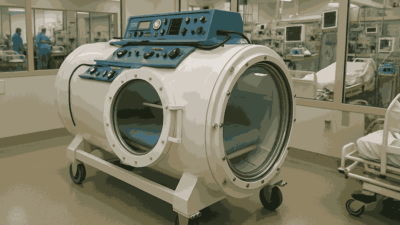
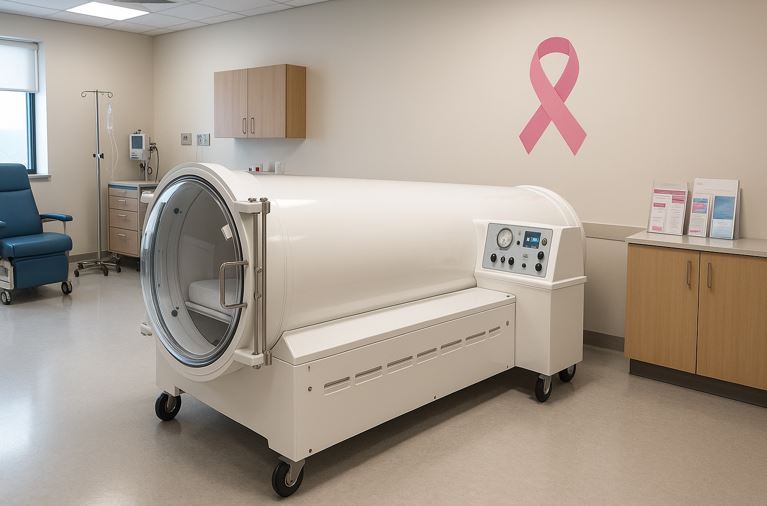
Hyperbaric chamber and cancer therapy involves breathing 100% oxygen while inside a pressurized chamber, typically at 1.5 to 3.0 ATA. This process increases the amount of oxygen dissolved in your blood plasma, delivering higher oxygen levels to tissues throughout your body.
For cancer patients, this increased oxygen delivery has proven benefits in specific situations:
Enhanced Tissue Healing: Cancer treatments like radiation can damage healthy tissues. The extra oxygen from HBOT helps these damaged tissues repair themselves faster, particularly for radiation-induced injuries.
Reduced Radiation Side Effects: HBOT therapy for cancer patients has proven effective at treating specific radiation complications after they occur, including tissue death, chronic wounds, and organ damage from radiation.
Note on Experimental Uses: While some research explores whether HBOT might enhance radiation effectiveness (radiosensitization), this application is limited to head and neck cancers in specific protocols and is not standard care. The evidence for other experimental oncology uses remains insufficient.
Evidence-Based Benefits: What Research Actually Shows
There are two distinct evidence bases for HBOT in cancer care. Understanding the difference matters for setting accurate expectations.
1. HBOT as a Radiosensitizer (used during radiation): A 2018 Cochrane systematic review analyzed 19 randomized controlled trials with 2,286 patients and found that for head and neck cancers, HBOT combined with radiotherapy reduced five-year mortality by 18% (RR 0.82, 95% CI 0.69-0.98) and one-year local recurrence by 34% (RR 0.66, 95% CI 0.56-0.78).1 No clear benefit was found for cervical or bladder cancer.
“Across 19 randomized controlled trials with 2,286 patients, HBOT combined with radiation reduced head and neck cancer mortality by 18% at five years and cut local recurrence by 34% at one year.”
Bennett et al., 2018, Cochrane Review
2. HBOT for treating radiation damage (used after radiation): This is the FDA-cleared use and the most common application for cancer survivors. Delayed radiation tissue injury is one of the 14 approved indications for HBOT. A 2023 Cochrane review of 18 RCTs involving 1,071 patients found HBOT was 39% more likely to produce complete resolution or significant improvement of late radiation tissue injury compared to controls (RR 1.39, 95% CI 1.02-1.89).2
Radiation-Induced Side Effects HBOT Treats:
- Radiation cystitis (bladder inflammation from pelvic radiation)
- Radiation proctitis (rectal inflammation from pelvic radiation)
- Osteoradionecrosis (jaw bone death after head/neck radiation)
- Soft tissue radionecrosis (including chest wall and breast tissue)
Does HBOT Feed Cancer? The Safety Evidence
This is the most common concern raised by cancer patients, and it has now been thoroughly answered by decades of research. The worry: because HBOT promotes healing and angiogenesis, might it also stimulate tumor growth?
Multiple systematic reviews have examined this question. A landmark 2012 review in Targeted Oncology analyzed all available studies from 2004-2012 and concluded that there is no evidence HBOT acts as a tumor stimulator or enhances recurrence, and that HBOT may actually have tumor-inhibitory effects in certain cancer subtypes.4 This review has been cited 263 times.
“There is no evidence indicating that hyperbaric oxygen acts as a stimulator of tumor growth or an enhancer of recurrence. Evidence implies HBO may have tumor-inhibitory effects in certain cancer subtypes.”
Moen & Stuhr, 2012, Targeted Oncology (cited 263 times)
The most recent evidence comes from a 2025 retrospective study of 45 solid tumor patients, 18.6% of whom had active cancer when HBOT began.5 Analysis found no significant correlation between HBOT sessions and metastasis (p=0.213) or mortality (p=0.881), and no HBOT-related complications were observed across a median follow-up of 783 days.
The mechanism explains why: tumor angiogenesis is driven by VEGF in response to hypoxia. By increasing tissue oxygenation, HBOT may actually reduce the hypoxia-driven signals that fuel aggressive tumor behavior. An earlier Feldmeier et al. review (2003), cited 139 times, concluded directly: “A history of malignancy should not be considered a contraindication for HBO2 therapy.”6
Types of Cancer Where HBOT Shows Promise
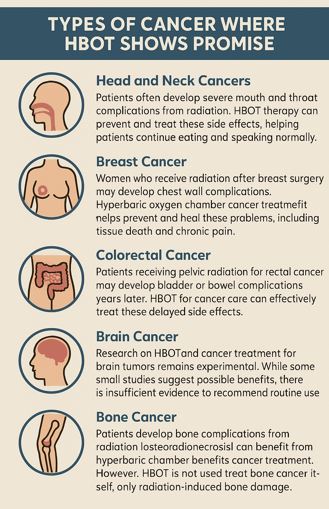
Head and Neck Cancers: The most evidence-backed cancer application. HBOT combined with radiation showed 18% five-year mortality reduction and 34% local recurrence reduction in the Cochrane review.1 Post-treatment, HBOT also treats osteoradionecrosis of the jaw, one of the most debilitating late effects in this population.
Breast Cancer: Women who receive radiation after breast surgery may develop chest wall complications. In a study of 67 breast cancer survivors, 85% reported meaningful improvement in pain, fibrosis, and shoulder mobility after a mean of 44 HBOT sessions, with improvements sustained at 12 months.3
Colorectal and Pelvic Cancers: Patients receiving pelvic radiation for rectal, prostate, cervical, or bladder cancers may develop radiation cystitis or proctitis years later. HBOT treats these delayed side effects with strong clinical evidence behind it. See the dedicated articles on radiation cystitis and radiation damage for the detailed evidence.
Brain Cancer: Research on HBOT for brain tumors remains experimental. While some small studies suggest possible benefits, there is insufficient evidence to recommend routine use.
Treatment Protocols and What to Expect
HBOT cancer treatment follows specific protocols based on your condition:
- Duration: 90-120 minutes per session
- Pressure: 2.0-2.5 ATA
- Frequency: 5 days per week (Monday-Friday)
- Total sessions: 20-40 depending on condition
Treatment is delivered in either a monoplace hard-shell chamber or a multiplace chamber. Soft chambers used in wellness settings cannot achieve the 2.0+ ATA required for therapeutic benefit in radiation injury applications.
Integration with cancer care: HBOT for cancer patients is typically used alongside conventional treatments. For radiation sensitization, it is administered concurrent with radiation sessions. For treating established radiation complications, it is used after cancer treatment is complete, with oncologist confirmation of no active malignancy in the treatment area.
Limitations and Risks of HBOT in Cancer Care
Significant Limitations
Not a Cancer Treatment: HBOT does not cure cancer or stop cancer growth. It only treats specific complications from radiation therapy or enhances radiation as a sensitizer. Claims about HBOT fighting cancer directly are not supported by evidence.
Limited Cancer-Type Evidence: The radiosensitization benefit was demonstrated primarily in head and neck cancers. No clear benefit was found for cervical or bladder cancer in the same Cochrane review. Extrapolating these results to other cancer types is not supported.
Access and Cost Issues: Treatment requires 20-60 sessions over several months, is not available in all areas, and can be expensive even with HBOT insurance coverage.
Medical Risks and Side Effects
Oxygen Toxicity: Extended exposure to high oxygen levels can cause lung inflammation, seizures (rare), and vision problems. The Cochrane radiosensitization review noted increased severe radiation reactions when HBOT was combined with radiation (RR 2.64).1
Barotrauma: Pressure changes can cause ear drum injury, sinus problems, and in rare cases lung injuries. The Lin 2023 Cochrane review found ear barotrauma without sham pressurization had an RR of 9.08.2
Contraindications for Cancer Patients
Absolute contraindications include untreated pneumothorax, certain chemotherapy drugs (bleomycin, doxorubicin, cisplatin), active lung infections, severe heart failure, and uncontrolled seizure disorders. Active cancer in the treatment area is a contraindication for post-treatment radiation injury protocols. Clear oncology sign-off is required.
What Are the Side Effects and Risks?
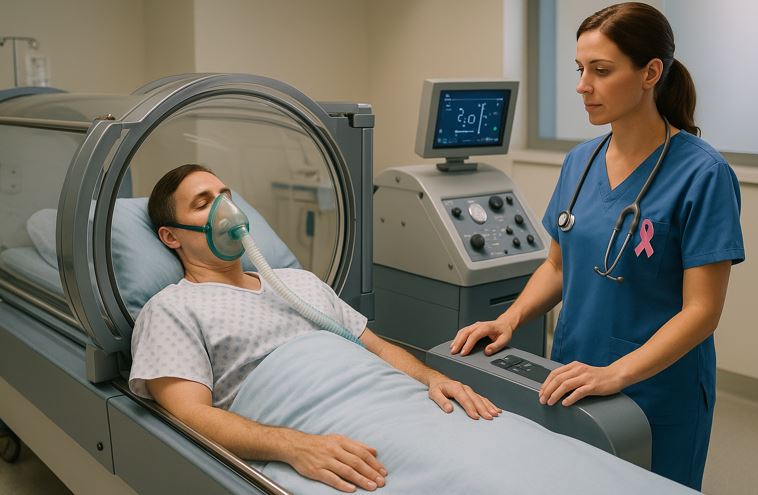
Medical oversight is essential. Before starting HBOT cancer treatment, patients need a complete medical history review, physical examination, chest X-ray, medication review for drug interactions, and coordination between the hyperbaric medicine physician and the oncology team. During treatment, staff monitor for oxygen toxicity, ear or sinus problems, and interactions with ongoing cancer therapies.
Costs and Insurance Coverage
Hyperbaric chamber treatment costs vary widely: hospital-based treatment runs $300-$600 per session; outpatient clinics charge $150-$400 per session; complete protocols total $3,000-$15,000. Medicare and many private insurance plans cover HBOT for radiation tissue injury (an FDA-cleared indication), osteoradionecrosis, and radiation cystitis. Experimental cancer treatment uses are generally not covered. Pre-authorization is usually required, and oncologist documentation is essential.
Choosing the Right Treatment Facility
Choose facilities with board-certified hyperbaric medicine physicians, trained nursing staff, and hard-shell chambers that can achieve the 2.0+ ATA required for these indications. Ask about the facility’s experience treating cancer patients specifically. The best facilities work closely with your oncology team, sharing treatment plans and progress updates. Look for UHMS accreditation as a quality signal.
Conclusion
Hyperbaric chamber for cancer treatment offers proven benefits for managing radiation-induced complications and, in head and neck cancers, potentially enhancing radiation effectiveness. It is not a cancer cure. The safety question is settled by decades of evidence: HBOT does not promote tumor growth. If you are considering HBOT as part of your cancer care, work closely with your oncology team to determine whether this therapy applies to your situation, and ensure you access it through a properly accredited facility.
References
- Bennett MH, Feldmeier J, Smee R, Milross C. Hyperbaric oxygenation for tumour sensitisation to radiotherapy. Cochrane Database Syst Rev. 2018;4(4):CD005007. DOI: 10.1002/14651858.CD005007.pub4. PMID: 29637538.
- Lin Z, Bennett MH, Hawkins G, et al. Hyperbaric oxygen therapy for late radiation tissue injury. Cochrane Database Syst Rev. 2023;8:CD005005. DOI: 10.1002/14651858.CD005005.pub5. PMID: 37585677.
- Spruijt NE, van den Berg R. The effect of hyperbaric oxygen treatment on late radiation tissue injury after breast cancer. Diving Hyperb Med. 2020;50(3):206-213. DOI: 10.28920/dhm50.3.206-213. PMID: 32957121.
- Moen I, Stuhr L. Hyperbaric oxygen therapy and cancer — a review. Target Oncol. 2012;7(4):233-42. DOI: 10.1007/s11523-012-0233-x. PMID: 23054400.
- Canarslan Demir K, et al. Hyperbaric Oxygen Therapy for Managing Cancer Treatment Complications: A Safety Evaluation. Medicina. 2025;61(3):385. DOI: 10.3390/medicina61030385. PMID: 40142196.
- Feldmeier JJ, Carl UM, Hartmann K, Sminia P. Hyperbaric oxygen: does it promote growth or recurrence of malignancy? Undersea Hyperb Med. 2003;30(1):1-18. PMID: 12841604.
- Niezgoda JA, Serena T, Carter MJ. Outcomes of Radiation Injuries Using Hyperbaric Oxygen Therapy. Adv Skin Wound Care. 2016;29(1):12-19. DOI: 10.1097/01.ASW.0000473679.29537.c0. PMID: 26650092.
- Gonzalez MJ, et al. New Insights on Hyperbaric Oxygen Therapy for Cancer. J Anal Oncol. 2024;13:02. DOI: 10.30683/1927-7229.2024.13.02.
- Al-Waili NS, Butler GJ, Beale J, et al. Hyperbaric oxygen and malignancies: a potential role in radiotherapy, chemotherapy, tumor surgery and phototherapy. Med Sci Monit. 2005;11(9):RA279-89. PMID: 16127374.
- Feldmeier JJ, Heimbach RD, Davolt DA, et al. Does hyperbaric oxygen have a cancer-causing or -promoting effect? A review of the pertinent literature. Undersea Hyperb Med. 1994;21(4):467-75. PMID: 8000286.
Medical Disclaimer
The content on BaricBoost.com is for informational purposes only and is not intended as a substitute for professional medical advice, diagnosis, or treatment. Always seek the advice of your physician or other qualified health provider with any questions you may have regarding a medical condition. Never disregard professional medical advice or delay in seeking it because of something you have read on this website.

Author
Seph Fontane Pennock is the founder of BaricBoost.com and Regenerated.com, a clinic directory for regenerative medicine serving 10,000+ providers across the United States. He previously built and sold PositivePsychology.com, which grew to 19 million users and became the largest evidence-based positive psychology resource on the web. Seph brings direct experience as an HBOT patient, having completed protocols at clinics across three continents while navigating mold illness, systemic inflammation, and autoimmune conditions. His treatment journey includes hyperbaric oxygen therapy, peptide protocols, NAD+ therapy, and consultations with specialists from Dubai to Cape Town to Mexico. This combination of entrepreneurial track record and lived patient experience shapes everything published on BaricBoost.com. Every article is grounded in peer-reviewed research, informed by real clinical encounters, and written for patients making high-stakes treatment decisions. Seph's focus is on bringing transparency, scientific rigor, and practical guidance to the hyperbaric oxygen therapy space.
Why Trust Our Evaluations
Our rankings are based on hands-on testing, published clinical data, and verified manufacturer specifications. We apply the same criteria to every product regardless of affiliate status. Editorial Process · Evaluation Methodology