A typical HBOT session lasts 60 to 90 minutes at pressure, with total clinic time of 1.5 to 2 hours. Most patients describe the experience as more relaxing than expected once they know what each phase involves. This guide walks through arrival to post-session, including what you will feel, hear, and do during compression, treatment, and decompression.
What is the session timeline at a glance?
Every HBOT session moves through five stages. Knowing the sequence ahead of time removes most of the first-visit anxiety.
| Phase | Duration | What you feel | What to do |
|---|---|---|---|
| Preparation | 15 to 20 min | Routine intake, safety review | Change into cotton garments, remove prohibited items |
| Compression | 10 to 15 min | Ear fullness, mild warmth | Equalize ears (swallow, yawn, Valsalva) |
| Treatment | 60 to 90 min | Warmth fading, relaxation, some nap | Breathe normally, rest, take air breaks |
| Decompression | 10 to 15 min | Ear pressure again, usually milder | Equalize ears as needed |
| After | Immediate | Relaxed or energized | Resume normal activity, stay hydrated |
How should you prepare before you arrive?
The night before your first HBOT session, shower and avoid petroleum-based products, which are prohibited in the chamber because they become flammable in an oxygen-enriched environment. Wear comfortable, loose clothing; you will change into approved cotton garments at the facility.
Eat a light meal 1 to 2 hours before your session. Avoid arriving on an empty stomach or straight after a large meal, and stay well hydrated. If you are diabetic, check your blood glucose before the session, since hypoglycemia is a known though uncommon effect of HBOT. Arrive 15 to 20 minutes early for your first visit to allow time for intake and safety review. New patients who are anxious about the enclosed space may find the claustrophobia strategies helpful before day one.
What can you not bring into the chamber?
Before compression, you will be screened for prohibited items:
- All electronics: smartphones, smartwatches, hearing aids (unless specifically approved), Bluetooth headphones
- Synthetic fabrics: change into the facility’s approved 100% cotton garments
- Personal care products: no deodorant, perfume, makeup, sunscreen, lip balm, or petroleum-based products
- Hard contact lenses: remove before entering; soft lenses are generally permitted
These prohibitions exist because the enriched oxygen environment makes such items fire hazards. A facility that does not enforce intake screening is not operating safely.
What happens during the compression phase?
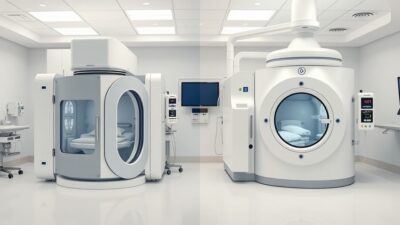
You will lie on a padded gurney in a monoplace chamber, or sit in a chair or on a bench in a multiplace chamber. The chamber is sealed and compression begins, lasting about 10 to 15 minutes.
What you will feel: gradual ear pressure or fullness, similar to an airplane descent or diving into a pool. Some patients also notice mild warmth as pressure increases. Both are normal and temporary.
Equalization techniques your provider will teach before the first session: swallow, yawn, or use the Valsalva maneuver (pinch your nose and blow gently). If you cannot equalize, alert the technician via intercom immediately. They can pause compression while you equalize. Do not push through pain, since unaddressed ear pressure can progress to barotrauma. Middle ear barotrauma affects roughly 9 to 15% of patients, but most cases are mild and self-resolve when patients speak up promptly (Voigt et al., 2025).
What happens during the treatment phase?
Once the chamber reaches operating pressure, the treatment phase begins and runs 60 to 90 minutes. You breathe normally; the elevated oxygen concentration does the work, so no special breathing is needed.
Common experiences during treatment:
- Warmth that fades as you acclimate to the pressure
- Mild tingling, especially in the first few sessions
- Deep relaxation; many patients nap
- A heightened sense of energy in some patients
- Occasional slight visual changes (temporary myopia is common with extended treatment courses)
You can communicate with staff via intercom throughout. In monoplace chambers, staff observe you continuously through the acrylic viewport; in multiplace chambers, trained staff are inside with you. Air breaks, five minutes of breathing room air via mask while staying at pressure, are standard at many facilities every 25 to 30 minutes. This cuts oxygen toxicity risk significantly: air breaks reduced seizure frequency from 3.9 to 1.2 per 10,000 sessions without reducing benefit (Costa et al., 2019).
What happens during decompression?
At the end of treatment, pressure is gradually reduced to normal over about 10 to 15 minutes. You may feel ear pressure again, though most patients find it less noticeable than compression. Use the same equalization techniques.
What should you do after an HBOT session?
Most patients feel relaxed, some feel energized, and many report reduced pain or clearer thinking in the hours after HBOT. You can resume normal activities immediately with no recovery period. Stay hydrated. If you are diabetic and on insulin or glucose-lowering medication, check your blood glucose afterward, since HBOT can lower it. If you have ear pain or muffled hearing after the session, tell your provider; most post-session ear discomfort clears within hours, while persistent or worsening pain warrants evaluation. For what the benefits feel like over a full course, see how long HBOT effects last.
In a study of patient knowledge and experience of HBOT, most participants reported the treatment was more comfortable than they expected, with anxiety before the first session giving way to relaxation over the first few treatments (MacInnes et al., 2021).
How many sessions will you need?
Course length depends on the condition being treated (Dias et al., 2008). The full HBOT sessions guide covers protocols by diagnosis in more detail.
| Condition Type | Average Sessions | Typical Schedule |
|---|---|---|
| Acute injuries (fasciitis, gangrene) | About 15 sessions | 5 days/week |
| Chronic conditions (osteomyelitis, diabetic ulcers) | About 30 sessions | 5 days/week |
| Radiation injury | 30 to 40 sessions | 5 days/week |
| TBI, neurological (off-label) | 40 to 60 sessions | 5 days/week |
| General wellness (off-label) | 20 to 40 sessions | Varies |
What should you tell your provider before starting?
- Any current medications, especially chemotherapy agents (bleomycin, cisplatin, doxorubicin, and disulfiram interact with HBOT)
- History of ear problems, previous ear surgery, or chronic congestion
- History of pneumothorax or lung conditions
- Diabetes and your current glucose management
- Anxiety or claustrophobia, so the team can prepare support
- Pregnancy (HBOT safety in pregnancy is not established)
- Recent upper respiratory infection
Does HBOT hurt?
For most patients, no. The main discomfort is ear pressure during compression, which is manageable with proper equalization. Patients who communicate immediately when they feel ear pain and use equalization techniques rarely experience more than mild, temporary discomfort. Middle ear barotrauma affects about 9 to 15% of patients but is usually mild and self-resolving (Voigt et al., 2025).
Can I drive home after HBOT?
Most patients can. HBOT does not cause sedation or impaired judgment. Some patients feel drowsy from the relaxation during a session; if you feel unusually tired after your first one, arrange a ride until you know how you respond. Over time, most patients feel energized rather than drowsy after sessions (MacInnes et al., 2021).
What if I need to stop the session?
Tell the technician via intercom. They will begin controlled decompression. You cannot exit the chamber while it is pressurized, and decompression takes 10 to 15 minutes for safety. This is why communicating discomfort early rather than waiting matters: problems can usually be managed before they require stopping the session entirely.
Sources
- Dias MD, Fontes B, Poggetti R, Birolini D. Hyperbaric oxygen therapy: types of injury and number of sessions, a review of 1506 cases. Undersea and Hyperbaric Medicine, 2008;35(4):259-268. PMID: 18351127
- Voigt A, Laspro M, Thys E, et al. Systematic review of otologic adverse events in hyperbaric oxygen therapy. Undersea and Hyperbaric Medicine, 2025. PMID: 41429031
- Costa DA, Ganilha JS, Barata PC, et al. Seizure frequency in more than 180,000 treatment sessions with hyperbaric oxygen therapy: a single centre 20-year analysis. Diving and Hyperbaric Medicine, 2019;49(3):167-174. doi:10.28920/dhm49.3.167-174
- MacInnes L, Baines C, Bishop A, et al. Patient knowledge and experience of hyperbaric oxygen treatment. Diving and Hyperbaric Medicine, 2021;51(1):72-77. doi:10.28920/dhm51.1.72-77
- Cleveland Clinic. Hyperbaric oxygen therapy. Cleveland Clinic patient guide
Medical Disclaimer
The content on BaricBoost.com is for informational purposes only and is not intended as a substitute for professional medical advice, diagnosis, or treatment. Always seek the advice of your physician or other qualified health provider with any questions you may have regarding a medical condition. Never disregard professional medical advice or delay in seeking it because of something you have read on this website.

Author
Seph Fontane Pennock is the founder of BaricBoost.com and Regenerated.com, a clinic directory for regenerative medicine serving 10,000+ providers across the United States. He previously built and sold PositivePsychology.com, which grew to 19 million users and became the largest evidence-based positive psychology resource on the web. Seph brings direct experience as an HBOT patient, having completed protocols at clinics across three continents while navigating mold illness, systemic inflammation, and autoimmune conditions. His treatment journey includes hyperbaric oxygen therapy, peptide protocols, NAD+ therapy, and consultations with specialists from Dubai to Cape Town to Mexico. This combination of entrepreneurial track record and lived patient experience shapes everything published on BaricBoost.com. Every article is grounded in peer-reviewed research, informed by real clinical encounters, and written for patients making high-stakes treatment decisions. Seph's focus is on bringing transparency, scientific rigor, and practical guidance to the hyperbaric oxygen therapy space.