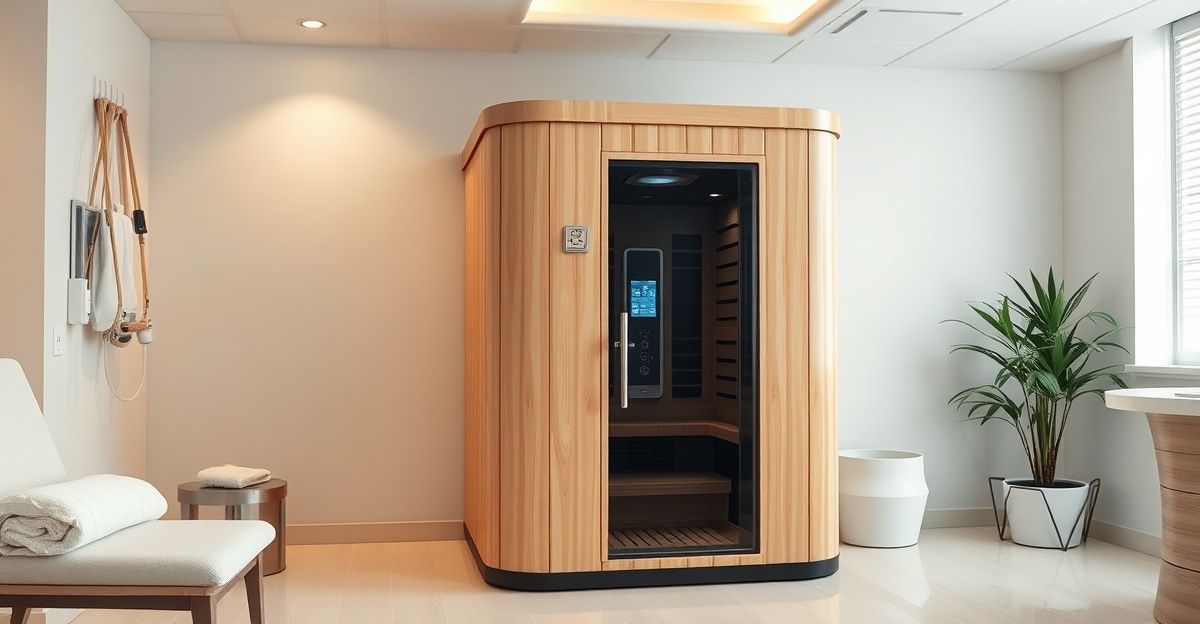
Ozone sauna therapy combines steam heat with ozone gas, allowing ozone to be absorbed through the skin while your body sweats inside a specialized cabinet. It is one of the least invasive forms of ozone therapy, and clinics across the country offer it as a standalone treatment or part of a broader detoxification protocol.
The idea is simple. Steam opens your pores. Ozone fills the cabinet. Your skin absorbs the ozone (or more precisely, the reactive molecules ozone creates when it contacts moisture and skin oils). The result is a systemic effect without needles, IVs, or pressurized chambers.
But how well does this actually work? The evidence is more limited than you might expect. Here is what we know, what we do not know, and what to expect from a session.
Key Takeaways
- Ozone saunas deliver ozone through the skin while steam opens pores for absorption
- Sessions last 30-45 minutes and cost – at most clinics
- The HOCATT system adds carbonic acid to enhance transdermal absorption by up to 2x
- Clinical evidence is limited, with most research extrapolated from other ozone delivery routes
- Ozone saunas are considered gentler than IV ozone, making them a common entry point for new patients
How Ozone Saunas Work
An ozone sauna is a specialized cabinet or tent that encloses your body while your head remains outside. This is a critical design feature. Ozone should never be inhaled directly, as it is a lung irritant. Keeping your head outside the cabinet protects your airways.
The process works in two phases:
Phase 1: Steam and Pore Opening
The cabinet fills with steam, raising the temperature to a comfortable but warming level (typically 100-110 degrees Fahrenheit). This heat opens your pores and increases blood flow to the skin surface. The steam also creates a humid environment that is essential for the next phase.
Phase 2: Ozone Delivery
Medical-grade ozone is introduced into the steam-filled cabinet. When ozone contacts the moisture on your skin and the polyunsaturated fatty acids in your skin oils, it generates reactive oxygen species (ROS), including hydrogen peroxide (H2O2) and lipid oxidation products. These smaller molecules, sometimes called “ozone messengers,” can penetrate through dilated pores and enter the bloodstream and lymphatic system.1
This is an important distinction. It is not ozone itself being absorbed through the skin. Ozone reacts on contact with biological surfaces and produces secondary messengers that create the therapeutic effect.
Types of Ozone Saunas
There are several formats for delivering transdermal ozone therapy.
| Type | Description | Best For |
|---|---|---|
| Cabinet sauna | Sit-in unit with head exposed, professional grade | Clinic use, full-body treatment |
| Body tent | Portable enclosure, often used at home | Home use, budget-friendly option |
| HOCATT system | Multi-modal unit with carbonic acid, ozone, PEMF, infrared | Advanced clinical treatment |
| Limb bagging | Ozone applied to a specific limb in a sealed bag | Localized treatment (wounds, joints) |
The HOCATT System
The HOCATT (Hyperthermic Ozone and Carbonic Acid Transdermal Therapy) is the most advanced ozone sauna available. It adds a carbonic acid pre-cycle before introducing ozone.
During the first 3-8 minutes, carbon dioxide is infused into the chamber to create carbonic acid on the skin. Carbonic acid is one of the few compounds that naturally increases oxygen uptake and delivery at the cellular level without side effects. It also dilates blood vessels and pores beyond what steam alone achieves. This pre-treatment reportedly enhances the absorption of ozone messengers by up to two times compared to standard ozone saunas.2
The HOCATT also incorporates pulsed electromagnetic field therapy (PEMF), far infrared, and photon light therapy, making it a multimodal treatment device.
What a Session Looks Like
A typical ozone sauna session follows this sequence:
- Preparation – You undress and sit inside the cabinet. Your head stays outside through a seal around your neck. A towel covers the gap to prevent ozone from reaching your face.
- Steam buildup – The cabinet fills with steam for 5-10 minutes, warming your body and opening pores.
- Ozone introduction – Medical-grade ozone flows into the cabinet for 20-30 minutes. You sit comfortably while your body sweats and absorbs the ozone byproducts through your skin.
- Cool down – The session ends. You towel off, hydrate, and rest briefly.
Total time is 30-45 minutes. Most people find it relaxing, similar to a regular steam sauna but with a faint smell of ozone (which should remain mild since your head is outside the unit).
Proposed Benefits of Ozone Sauna Therapy
Clinics and practitioners attribute several benefits to transdermal ozone therapy. It is important to note that many of these claims are extrapolated from research on other ozone delivery methods (IV, rectal, or injected) rather than from studies specifically on transdermal absorption.
Circulation and Oxygenation
Dr. Emma Borrelli, who studied under Velio Bocci (often called the father of modern ozone therapy research), conducted a study on ozone saunas and verified an increase in body oxygenation along with improved antioxidant parameters in subjects.3
Skin Health
The combination of steam, sweating, and ozone exposure may support skin health. Ozone has documented antimicrobial properties, and the sweating process helps clear pores. Some practitioners recommend ozone saunas for chronic skin conditions, though controlled studies on this specific application are lacking.
Immune Modulation
Ozone therapy in general has been shown to modulate immune function by stimulating cytokine production and activating antioxidant pathways. Whether transdermal delivery achieves sufficient systemic levels to produce this effect is not yet confirmed by robust clinical evidence.1
Detoxification Support
The sweating induced by the steam component eliminates some toxins through the skin, as with any sauna. The ozone component may add an oxidative element that breaks down certain toxic compounds, though the degree to which this occurs transdermally is debated.
“Ozone sauna therapy and pulsed electromagnetic field therapy delivered via the HOCATT machine could improve endometriosis pain along with lowering serum inflammatory markers.”
El-Nashar et al., Journal of Ovarian Research, 2023
Reproductive Health
Emerging research has examined ozone sauna therapy for reproductive conditions. A study using the HOCATT system found that ozone sauna therapy combined with PEMF could potentially improve outcomes in women with diminished ovarian reserve undergoing IVF. Endometrial lining thickness and embryo formation were significantly higher after treatment.4
A separate pilot study found that HOCATT-delivered OST and PEMF reduced endometriosis pain and lowered serum inflammatory markers.5
Evidence: What the Research Actually Shows
Honesty about the evidence matters. The clinical research specifically on transdermal ozone therapy is limited.
Most ozone therapy research has focused on other delivery routes:
- Major autohemotherapy (MAH) – drawing blood, ozonating it, and reinfusing it
- Rectal insufflation – ozone introduced rectally
- Direct injection – ozone injected into joints or tissues
Transdermal ozone does not appear to deliver the same concentration of ozone byproducts as these methods. Current expert consensus is that ozone saunas are not a replacement for IV, rectal, or vaginal ozone therapies because those routes have stronger evidence for their mechanisms and benefits.
That does not mean ozone saunas have no value. They may serve as:
- A gentle introduction to ozone therapy for nervous patients
- A complementary treatment alongside more direct ozone delivery
- A way to combine the proven benefits of heat therapy with some degree of ozone exposure
Ozone Sauna vs Other Ozone Modalities
| Modality | Route | Evidence Level | Invasiveness |
|---|---|---|---|
| Ozone sauna | Transdermal | Limited | Non-invasive |
| Rectal insufflation | Mucosal | Moderate | Minimally invasive |
| MAH (IV ozone) | Intravenous | Moderate | Invasive |
| 10-pass ozone | Intravenous (high-dose) | Limited | Invasive |
| Ozone injection | Direct tissue | Moderate | Invasive |
For a deeper look at ozone blood therapies, including MAH and high-dose protocols, see our guide to ozone therapy.
Cost and Accessibility
Ozone sauna sessions typically cost – per session at a clinic. HOCATT sessions tend to be on the higher end due to the multi-modal technology involved.
Packages are common. Many clinics offer 5-session or 10-session bundles at a reduced per-session rate. A typical package of 10 sessions might run -,500.
Home Ozone Sauna Options
Home setups are possible but require careful sourcing:
- Portable ozone sauna tent: –
- Medical-grade ozone generator: ,000-,000
- Oxygen source: – (oxygen concentrator or tank)
Total home setup cost ranges from ,500 to ,000. You must use a medical-grade ozone generator, not an air purifier or industrial unit. The ozone source must be fed with pure oxygen, not ambient air, to avoid producing nitrogen oxides.
Safety and Precautions
Ozone sauna therapy is generally well tolerated. The main risks are:
- Ozone inhalation – The most important safety rule. Ozone is a lung irritant and should never be inhaled. A properly designed cabinet keeps your head outside the ozone environment.
- Herxheimer reaction – Some people experience temporary worsening of symptoms (fatigue, headache, malaise) after initial sessions. This is thought to result from the die-off of pathogens or mobilization of toxins.
- Dehydration – As with any sauna, you lose fluids through sweating. Hydrate before and after.
- Heat sensitivity – People with heat intolerance or cardiovascular conditions should start with lower temperatures and shorter sessions.
Contraindications for ozone therapy in general include G6PD deficiency, hyperthyroidism, active bleeding, and pregnancy.
The Bottom Line
Ozone sauna therapy is the gentlest entry point into ozone therapy. It requires no needles, operates at normal pressure, and combines the established benefits of heat therapy with transdermal ozone exposure.
The evidence specifically for transdermal ozone is limited. Most of what we know about ozone therapy comes from research on IV and rectal delivery routes. The HOCATT system’s carbonic acid pre-cycle may improve absorption significantly, but large-scale clinical trials are still needed.
If you are curious about ozone therapy but hesitant about IV or rectal routes, an ozone sauna session is a reasonable starting point. Just go in with realistic expectations about what the current evidence supports.
Sources
- Bocci V. Ozone: A New Medical Drug. 2nd ed. Springer Netherlands; 2011. doi: 10.1007/978-90-481-9234-2
- HOCATT Hyperthermic Ozone and Carbonic Acid Transdermal Therapy. Technical documentation. Available at: https://hocatt.com
- Borrelli E, Bocci V. Visual improvement following ozone therapy in dry age-related macular degeneration; a review. Medical Hypothesis, Discovery and Innovation in Ophthalmology. 2013;2(2):47-51.
- El-Nashar IH et al. Ozone sauna therapy and pulsed electromagnetic field therapy could potentially improve outcome in women with diminished ovarian reserve undergoing assisted reproductive technology. J Ovarian Res. 2023;16(1):109. doi: 10.1186/s13048-023-01189-z
- El-Nashar IH et al. Ozone Sauna Therapy (OST) and Pulsed Electromagnetic Field Therapy (PEMF) delivered via the HOCATT machine could improve endometriosis pain along with lowering serum inflammatory markers. Ir J Med Sci. 2023;192(6):3081-3088. doi: 10.1007/s11845-023-03308-7
Medical Disclaimer
The content on BaricBoost.com is for informational purposes only and is not intended as a substitute for professional medical advice, diagnosis, or treatment. Always seek the advice of your physician or other qualified health provider with any questions you may have regarding a medical condition. Never disregard professional medical advice or delay in seeking it because of something you have read on this website.

Author
Seph Fontane Pennock is the founder of BaricBoost.com and Regenerated.com, a clinic directory for regenerative medicine serving 10,000+ providers across the United States. He previously built and sold PositivePsychology.com, which grew to 19 million users and became the largest evidence-based positive psychology resource on the web. Seph brings direct experience as an HBOT patient, having completed protocols at clinics across three continents while navigating mold illness, systemic inflammation, and autoimmune conditions. His treatment journey includes hyperbaric oxygen therapy, peptide protocols, NAD+ therapy, and consultations with specialists from Dubai to Cape Town to Mexico. This combination of entrepreneurial track record and lived patient experience shapes everything published on BaricBoost.com. Every article is grounded in peer-reviewed research, informed by real clinical encounters, and written for patients making high-stakes treatment decisions. Seph's focus is on bringing transparency, scientific rigor, and practical guidance to the hyperbaric oxygen therapy space.