Stroke: The Scale of the Problem
In the largest analysis to date, 86% of 162 chronic stroke patients showed clinically significant cognitive improvement after HBOT, some treated years after their stroke. A crossover RCT of 74 patients found significant gains in neurological function, daily living, and quality of life, with SPECT imaging confirming reactivated brain tissue. Approximately 795,000 Americans have a stroke each year (CDC), and many plateau after standard rehabilitation. HBOT targets the stunned but viable penumbral tissue that conventional therapy cannot reach.
Part of the BaricBoost HBOT Data series. Cite as: “HBOT for Stroke Recovery: 2026 Neuroplasticity & Clinical Outcomes Data,” BaricBoost.com, July 2026.
The concept that HBOT could reactivate dormant brain tissue and extend the recovery window has been studied primarily by Professor Shai Efrati’s group at the Sagol Center in Israel, with results that challenge conventional wisdom about stroke recovery timelines.
What Does the Research Say?
The statistics tell two different stories depending on when HBOT is applied.
| Timing | Key Statistic | Verdict |
|---|---|---|
| Acute (<24 hours) | 11 RCTs, 705 patients: no mortality benefit (RR 0.97) | Insufficient evidence |
| Subacute (weeks to months) | Small pilots: within-group improvements; between-group not significant | Preliminary only |
| Chronic (>3 months) | RCT + large retrospective: 86% clinically significant cognitive improvement | Promising, needs replication |
How Effective Is HBOT for Chronic Stroke?
Hadanny et al. (2020): The Largest Cognitive Outcomes Study
This retrospective analysis of 162 chronic stroke patients (75.3% male, mean age 60.75 years, 74.6% ischemic, 53.7% left hemisphere) provides the largest dataset on HBOT in stroke recovery:1
- 86% achieved clinically significant improvement (more than 0.5 SD in cognitive scores)
- All cognitive domains improved significantly (P < 0.05)
- No significant difference between cortical and subcortical strokes
- Hemorrhagic strokes showed significantly higher improvement in information processing speed
- Left hemisphere strokes had higher motor domain improvement
- Baseline cognitive function was a significant predictor of improvement in all domains
- Gains documented in patients 3 to 190 months post-stroke
Efrati et al. (2013): The Landmark Crossover RCT
This prospective, randomized, controlled crossover trial of 74 chronic stroke patients (6 to 36 months post-stroke) remains the most methodologically rigorous study to date:2
| Outcome | Result | Significance |
|---|---|---|
| NIHSS (neurological deficit score) | Significant reduction (better function) | p < 0.0001 |
| ADL score (daily living activities) | Significant improvement | p < 0.001 |
| Quality of life (EQ-5D) | Significant improvement | p < 0.01 |
| Brain SPECT perfusion | Increased in peri-infarct regions | p < 0.001 |
| Control period (waiting) | No improvement | Rules out spontaneous recovery |
The crossover design strengthened the findings: the control group showed no improvement during the waiting period, then showed similar improvements once they received HBOT. This directly rules out spontaneous recovery as an explanation. Efrati and colleagues reported a significant NIHSS reduction, though the trial did not frame the effect as a fixed point-change figure.
Khairy et al. (2025): Imaging Correlation
A single-subject case with 83 sessions over 16 weeks documented:5
- Right motor cortex perfusion: +15.83%
- Right frontal lobe perfusion: +15.92%
- DTI: increased fractional anisotropy in major white matter tracts
- Functional: progression from wheelchair to ambulation with a cane
The broader literature is mixed by design and vintage. An earlier systematic review by Carson and colleagues (2005) reached cautious conclusions given small samples and methodological limits, while a later prospective study by Rosario and colleagues (2018) reported measurable functional improvement after HBOT in ischemic stroke.76
Does HBOT Help in the First Hours After a Stroke?
For acute ischemic stroke (within hours of onset), the data does not support HBOT:
- Cochrane Review (Bennett et al. 2014): 11 RCTs, 705 participants. No mortality benefit (RR 0.97, P = 0.96). Only 4 of 14 disability scales showed improvement.3
- BMC Neurology meta-analysis (Li et al. 2024): 8 RCTs, 493 patients. No significant differences in NIHSS (MD -1.41, P = NS) or Barthel index (MD 8.85, P = NS).4
Standard acute stroke protocols (thrombolysis, mechanical thrombectomy) remain the only evidence-based treatments in the acute phase. HBOT is not indicated in the first hours after a stroke.
The Neuroplasticity Mechanism
HBOT’s effect on chronic stroke recovery is theorized to work through reactivation of the ischemic penumbra: the zone of stunned but not dead brain tissue surrounding the stroke core. Under normal oxygen conditions, this tissue remains metabolically dormant. Under HBOT, dramatically elevated oxygen delivery can:
- Reactivate stunned neurons in the penumbra that have been metabolically silent
- Stimulate angiogenesis in areas with compromised blood supply
- Promote neurogenesis and synaptogenesis, building new neural connections
- Reduce chronic neuroinflammation in injured brain tissue
SPECT imaging before and after treatment consistently shows increased cerebral blood flow and metabolic activity in peri-infarct regions, providing objective evidence that HBOT produces measurable biological change. This aligns with before and after results seen across neurological HBOT applications. The same penumbra-reactivation logic is why HBOT is studied across the broader category of brain and neurological conditions, including the overlap with TBI and concussion outcomes.
What Does the HBOT Protocol Look Like?
The protocol used in evidence-based chronic stroke trials:
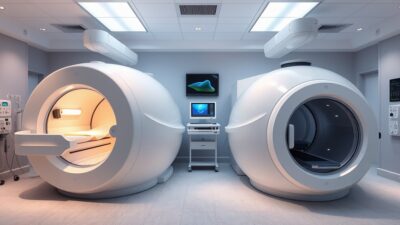
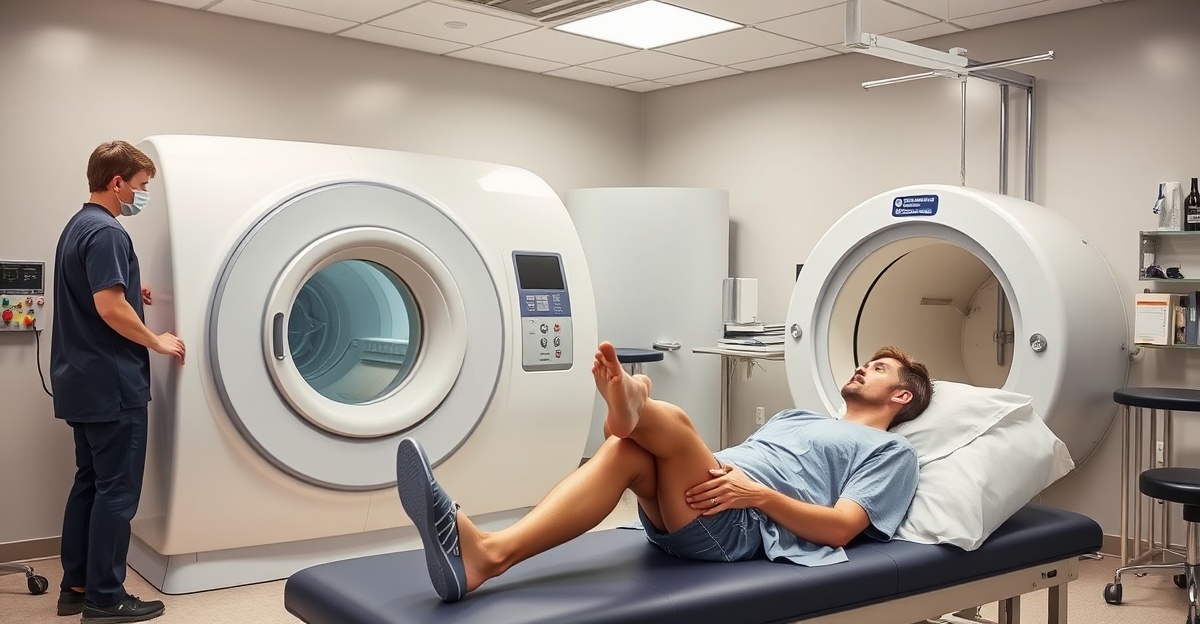
- Pressure: 2.0 ATA in a hard chamber
- Oxygen: 100% medical-grade oxygen
- Session duration: 90 minutes at treatment pressure
- Frequency: 5 sessions per week
- Course length: 40 to 60 sessions (8 to 12 weeks)
The 40 to 60 session course is longer than most HBOT protocols for other conditions, reflecting the complexity of neuroplastic repair and the need for sustained metabolic stimulation to reactivate dormant neural tissue. Soft chambers are not appropriate for this indication.
Limitations and Honest Assessment
- Limited research groups: Most positive chronic stroke data comes from a single group (Efrati/Sagol Center, Israel). Independent replication with sham controls is needed.
- Sample sizes: The largest published RCT included 74 patients. The 162-patient study was retrospective, not randomized.
- Patient selection: Patients with large completed infarcts and minimal surviving penumbral tissue are unlikely to benefit.
- Cost barrier: At $200 to $400 per session, a 60-session course costs $12,000 to $24,000 out of pocket.
- No insurance coverage: Stroke recovery is not among the 14 FDA-cleared indications.
Sources
- Hadanny A, et al. Hyperbaric oxygen therapy improves neurocognitive functions of post-stroke patients: retrospective analysis. Restor Neurol Neurosci. 2020;38(1):93-107. DOI: 10.3233/RNN-190959
- Efrati S, et al. Hyperbaric oxygen induces late neuroplasticity in post stroke patients: randomized, prospective trial. PLoS ONE. 2013;8(1):e53716. DOI: 10.1371/journal.pone.0053716
- Bennett MH, et al. Hyperbaric oxygen therapy for acute ischaemic stroke. Cochrane Database Syst Rev. 2014;(11):CD004954. DOI: 10.1002/14651858.CD004954.pub3
- Li X, et al. Efficacy and safety of hyperbaric oxygen therapy in acute ischaemic stroke: a systematic review and meta-analysis. BMC Neurol. 2024;24:51. DOI: 10.1186/s12883-024-03555-w
- Khairy S, et al. Anatomical and metabolic brain imaging correlation of neurological improvements following hyperbaric oxygen therapy. J Med Case Rep. 2025;19:87. DOI: 10.1186/s13256-025-05577-5
- Rosario ER, et al. The effect of hyperbaric oxygen therapy on functional impairments caused by ischemic stroke. Neurol Res Int. 2018;2018:3172679. DOI: 10.1155/2018/3172679
- Carson S, et al. Hyperbaric oxygen therapy for stroke: a systematic review of the evidence. Clin Rehabil. 2005;19(8):819-833. DOI: 10.1191/0269215505cr907oa
Medical Disclaimer
The content on BaricBoost.com is for informational purposes only and is not intended as a substitute for professional medical advice, diagnosis, or treatment. Always seek the advice of your physician or other qualified health provider with any questions you may have regarding a medical condition. Never disregard professional medical advice or delay in seeking it because of something you have read on this website.

Author
Seph Fontane Pennock is the founder of BaricBoost.com and Regenerated.com, a clinic directory for regenerative medicine serving 10,000+ providers across the United States. He previously built and sold PositivePsychology.com, which grew to 19 million users and became the largest evidence-based positive psychology resource on the web. Seph brings direct experience as an HBOT patient, having completed protocols at clinics across three continents while navigating mold illness, systemic inflammation, and autoimmune conditions. His treatment journey includes hyperbaric oxygen therapy, peptide protocols, NAD+ therapy, and consultations with specialists from Dubai to Cape Town to Mexico. This combination of entrepreneurial track record and lived patient experience shapes everything published on BaricBoost.com. Every article is grounded in peer-reviewed research, informed by real clinical encounters, and written for patients making high-stakes treatment decisions. Seph's focus is on bringing transparency, scientific rigor, and practical guidance to the hyperbaric oxygen therapy space.