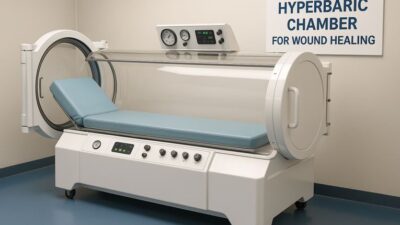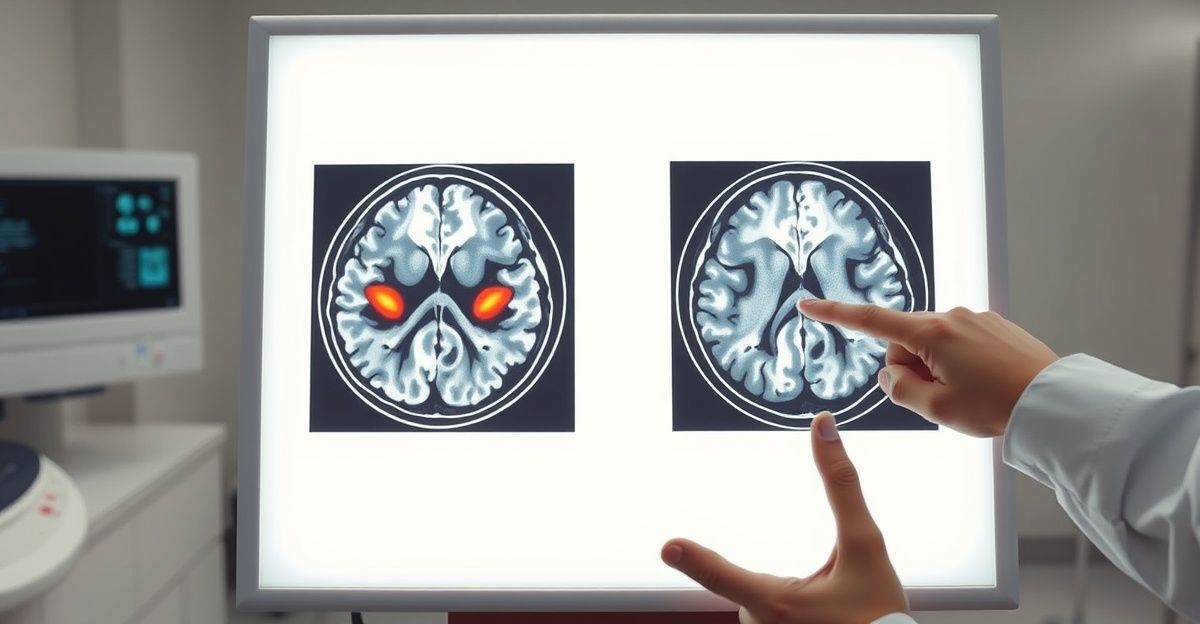
HBOT evidence for traumatic brain injury splits along the severity spectrum. For acute severe TBI (GCS 3 to 8), a 2016 meta-analysis by Wang et al. found that HBOT reduced mortality and improved functional outcomes when administered in the acute hospital phase. For mild TBI and post-concussion syndrome, the evidence comes from a different set of trials using lower pressures and longer protocols, with consistent cognitive improvement but ongoing controversy about sham controls. The two categories require fundamentally different protocols and have different evidence strengths. It is one of several related brain conditions explored with hyperbaric oxygen currently being explored in clinical research.
TBI severity classification: what the numbers mean
Traumatic brain injury is classified by the Glasgow Coma Scale (GCS) score at presentation, combined with duration of loss of consciousness and post-traumatic amnesia.
Mild TBI (GCS 13 to 15): Loss of consciousness less than 30 minutes, post-traumatic amnesia less than 24 hours. This includes the vast majority of concussions. Structural brain imaging (CT, standard MRI) is typically normal. Roughly 80% to 85% of all TBIs fall in this category. The term “mild” refers to the initial injury mechanics, not the potential for chronic symptoms. Approximately 15% to 30% of mild TBI patients develop persistent post-concussion syndrome.
Moderate TBI (GCS 9 to 12): Loss of consciousness 30 minutes to 24 hours, post-traumatic amnesia 1 to 7 days. Structural imaging may show contusions or hemorrhage. Patients typically require hospitalization. Moderate TBI is relatively uncommon, accounting for roughly 10% of TBI diagnoses.
Severe TBI (GCS 3 to 8): Loss of consciousness exceeding 24 hours, post-traumatic amnesia exceeding 7 days. These patients require intensive care. Structural damage is usually visible on imaging. Mortality rates range from 30% to 50% depending on mechanism and associated injuries. Severe TBI accounts for approximately 5% to 10% of all TBIs but drives the majority of TBI-related deaths and disability.
This classification matters for HBOT because the pathophysiology, treatment timing, protocol parameters, and evidence base differ across severity levels.
Severe TBI: acute-phase HBOT evidence
The strongest HBOT evidence in terms of traditional medical endpoints (mortality, GCS improvement) actually comes from severe TBI treated in the acute hospital phase.
The 2016 meta-analysis by Wang et al. in Neurological Sciences pooled data from multiple controlled trials of HBOT in severe TBI. The analysis found that HBOT significantly reduced mortality (OR 0.49, 95% CI 0.29 to 0.84) and improved GCS scores at discharge compared to standard care alone. These are hard endpoints with less susceptibility to placebo effects than the neurocognitive scores used in mild TBI trials.
A 2024 randomized controlled trial by Chaturvedi et al. in the Asian Journal of Neurosurgery evaluated HBOT as an adjunct to standard care in moderate TBI. The treatment group received HBOT at 1.5 to 2.0 ATA in addition to standard neurosurgical management. Results showed significantly better neurological outcomes in the HBOT group at discharge and at follow-up assessments.
The mechanism in acute severe TBI is straightforward. After a severe brain injury, large regions of brain tissue become ischemic (oxygen-starved) but are not yet dead. This is the ischemic penumbra, analogous to the concept in stroke. HBOT floods this vulnerable tissue with dissolved oxygen, bypassing the damaged vasculature. The goal is tissue salvage: keeping neurons alive through the critical acute period until normal blood supply can be restored through medical management and the brain’s own repair processes.
The acute severe TBI protocol uses higher pressures (2.0 to 2.4 ATA) than the mild TBI protocol. This makes physiological sense. In the acute phase, maximizing oxygen delivery to ischemic tissue is the priority, and the vasoconstriction concern is secondary to tissue survival. Sessions are shorter (often 45 to 60 minutes) and may be given once or twice daily for a shorter total course (10 to 20 sessions). Treatment begins as soon as the patient is medically stable, often within the first 48 to 72 hours post-injury.
Mild TBI and PCS: a different evidence landscape
The mild TBI HBOT evidence base is larger in terms of number of trials but more controversial in interpretation. The core studies include the Boussi-Gross 2013 RCT, the Harch 2020 RCT, and the Weaver 2025 double-blind trial.
The consistent finding: patients with mild TBI and persistent symptoms who receive HBOT at 1.5 ATA improve on neurocognitive testing. Memory, attention, processing speed, and executive function scores improve. SPECT imaging shows corresponding increases in cerebral blood flow.
The persistent controversy: sham groups also improve. Every mild TBI HBOT trial that has used a sham control (typically air at 1.2 to 1.3 ATA in a pressurized chamber) has found improvement in the sham group as well. The between-group differences (HBOT minus sham) are statistically significant in some trials (Harch 2020, Boussi-Gross 2013) but not in others (Cifu 2014).
The sham debate has two interpretations. The conservative view: HBOT has a large placebo effect for a subjective condition, and the true treatment effect is small or absent. The HBOT-advocate view: any pressurization above 1.0 ATA increases tissue oxygenation and is therefore not a true sham, meaning the “sham” groups are actually receiving a low-dose treatment. The Biggs 2021 effect size analysis supports the latter interpretation, showing meaningful effect sizes even in studies with negative primary outcomes.
This controversy is not merely academic. It directly determines VA coverage decisions, insurance reimbursement, and whether HBOT is recommended in clinical practice guidelines. The inability to create a true inert sham for HBOT (since any pressurization has physiological effects) is a fundamental methodological challenge that may never be fully resolved.
Different protocols for different severities
The protocol differences between severe and mild TBI reflect the different pathophysiology and treatment goals at each severity level.
Severe TBI (acute):
- Pressure: 2.0 to 2.4 ATA
- Timing: within 48 to 72 hours of injury
- Sessions: 10 to 20
- Frequency: once or twice daily
- Setting: hospital-based, patient often intubated/sedated
- Goal: tissue salvage, reduce mortality, improve acute neurological outcomes
Mild TBI/PCS (chronic):
- Pressure: 1.5 ATA
- Timing: months to years after injury
- Sessions: 40 to 60
- Frequency: five times per week
- Setting: outpatient HBOT clinic, patient awake and ambulatory
- Goal: neuroplasticity, angiogenesis, cognitive improvement
The HOBIT (Hyperbaric Oxygen Brain Injury Treatment) trial, an ongoing adaptive Phase II study funded by the DoD (NCT02407028), is attempting to determine the optimal pressure and dosing for severe TBI. If successful, it could lead to a Phase III trial and ultimately change the standard of care for acute severe TBI in hospitals.
The VA recommendation controversy
The differing evidence profiles for mild versus severe TBI create a paradoxical situation in VA and military medicine.
For severe TBI, the meta-analytic evidence is positive and the endpoints are objective (mortality, GCS scores). Yet severe TBI HBOT is primarily delivered in the acute hospital setting, where it can be incorporated into standard care without requiring a separate coverage decision. It is available at VA hospitals that have HBOT capability, though not uniformly implemented.
For mild TBI, which affects the overwhelming majority of veterans with TBI diagnoses, the evidence is positive but contested. The VA’s official position, informed by the Cifu 2014 trial results, is that HBOT has not been proven superior to sham for mild TBI. This position drives the coverage denial that affects hundreds of thousands of veterans.
The result: the condition with the stronger traditional evidence (severe TBI) affects fewer veterans and has some pathway to treatment. The condition with contested but meaningful evidence (mild TBI/PCS) affects far more veterans and has no pathway to VA-funded treatment. This structural mismatch is a recurring point in congressional hearings on veteran healthcare. For a complete look at the evidence base, see our HBOT for TBI clinical data review. For broader information on how HBOT is being studied for brain injury, see our HBOT for brain injury guide.
Moderate TBI: the evidence gap
Moderate TBI occupies an awkward middle ground in the HBOT evidence base. Most trials have enrolled either severe TBI patients (acute hospital setting) or mild TBI/PCS patients (chronic outpatient setting). Moderate TBI patients, who account for roughly 10% of all TBI diagnoses, have been underrepresented in HBOT research.
The Chaturvedi 2024 trial is one of the few to specifically target moderate TBI, and its positive results suggest this population may benefit from HBOT. The optimal protocol for moderate TBI remains unclear. It likely falls somewhere between the acute severe protocol (higher pressure, fewer sessions, immediate timing) and the chronic mild protocol (lower pressure, more sessions, delayed timing). But no trial has tested this directly.
Patients with moderate TBI who develop persistent cognitive deficits months after injury are often managed using the mild TBI PCS protocol (1.5 ATA, 40 to 60 sessions). This is extrapolation from the mild TBI evidence, not a validated protocol for moderate TBI specifically. The reasoning is that persistent cognitive deficits from moderate TBI share pathophysiology with PCS from mild TBI (chronic hypoperfusion, neuroinflammation, metabolic dysfunction). But moderate TBI patients may have more structural damage, which could limit the degree of recovery achievable through metabolic optimization alone.
What imaging reveals about severity and HBOT response
Advanced neuroimaging is increasingly used to understand how TBI severity affects brain pathology and treatment response. The imaging modalities most relevant to HBOT assessment include:
SPECT (Single Photon Emission Computed Tomography): Measures regional cerebral blood flow. In mild TBI, SPECT typically shows focal areas of reduced perfusion that correlate with symptoms. In severe TBI, perfusion deficits are more widespread and profound. SPECT before and after HBOT shows perfusion improvements in both severity categories, though the magnitude and pattern differ. Harch has used SPECT extensively in his published trials and advocates for it as a diagnostic and monitoring tool.
DTI (Diffusion Tensor Imaging): Maps white matter tract integrity. DTI can detect axonal damage that standard MRI misses, making it valuable for mild TBI where conventional imaging is normal. In severe TBI, DTI reveals the extent of diffuse axonal injury. The Efrati group has published DTI data showing white matter improvements after HBOT in brain injury patients, suggesting that the therapy can promote axonal repair and remyelination.
Functional MRI: Measures brain connectivity patterns. The Hadanny 2022 pediatric trial used fMRI to document changes in brain connectivity after HBOT, showing increased connectivity in frontal and temporal networks associated with attention and memory. This imaging modality is more commonly available in research settings than in clinical HBOT practice.
The imaging data collectively suggest that HBOT produces measurable biological changes in brain tissue regardless of TBI severity, but that the clinical significance of those changes varies with severity. In severe TBI, the changes translate to survival and gross neurological function. In mild TBI, they translate to subtle but meaningful cognitive improvements. The appropriate expectations for treatment should be calibrated accordingly.
Clinical decision-making: which patients benefit most?
Given the different evidence profiles across severity levels, clinicians and patients face practical decisions about when HBOT is most likely to provide benefit.
Strongest case for HBOT: Patients with mild TBI and persistent post-concussion symptoms lasting more than 3 months, especially those with documented perfusion deficits on SPECT imaging and predominant cognitive symptoms (memory, attention, processing speed). These patients match the profile of responders in the Boussi-Gross and Harch trials most closely.
Reasonable case for HBOT: Patients with moderate TBI and persistent cognitive deficits, based on the Chaturvedi 2024 data and extrapolation from the mild TBI evidence. Veterans with blast TBI and co-occurring PTSD, based on the Harch 2020 veteran-specific data.
Weakest case for HBOT: Patients with severe TBI in the chronic phase (years post-injury with severe cognitive and behavioral impairment). While case reports exist, the degree of structural damage in severe TBI may limit the recovery potential from metabolic optimization. Expectations should be conservative.
Consider timing: For severe TBI, the strongest evidence supports acute treatment (within days). For mild TBI, the evidence supports treatment at virtually any time point from months to years post-injury. Moderate TBI falls in between, with limited data to guide timing decisions.
Sources
- Wang F, Wang Y, Sun T, Yu HL. “Hyperbaric oxygen therapy for the treatment of traumatic brain injury: a meta-analysis.” Neurological Sciences. 2016;37:693-701. DOI: 10.1007/s10072-015-2460-2
- Chaturvedi J, Mago V, Gupta M, et al. “Hyperbaric Oxygen Therapy in Moderate Traumatic Brain Injury: A Randomized Controlled Trial.” Asian Journal of Neurosurgery. 2024. DOI: 10.1055/s-0044-1791997
- Boussi-Gross R, Golan H, Fishlev G, et al. “Hyperbaric oxygen therapy can improve post concussion syndrome years after mild traumatic brain injury.” PLoS One. 2013;8(11):e79995. DOI: 10.1371/journal.pone.0079995
- Harch PG, Andrews SR, Rowe CJ, et al. “Hyperbaric oxygen therapy for mild traumatic brain injury persistent postconcussion syndrome: a randomized controlled trial.” Medical Gas Research. 2020;10(1):8-20. DOI: 10.4103/2045-9912.279978
- Weaver LK, Ziemnik R, Deru K, Russo AA. “A double-blind randomized trial of hyperbaric oxygen for persistent symptoms after brain injury.” Scientific Reports. 2025;15. DOI: 10.1038/s41598-025-86631-6
- Cifu DX, et al. “The Effect of Hyperbaric Oxygen on Persistent Postconcussion Symptoms.” Journal of Head Trauma Rehabilitation. 2014;29(1):11-20. DOI: 10.1097/HTR.0b013e3182a6aaf0
- Biggs AT, Dainer H, Littlejohn LF. “Effect Sizes for Symptomatic and Cognitive Improvements in Traumatic Brain Injury Following Hyperbaric Oxygen Therapy.” Journal of Applied Physiology. 2021. DOI: 10.1152/japplphysiol.01084.2020
- Harch PG. “Systematic Review and Dosage Analysis: Hyperbaric Oxygen Therapy Efficacy in Mild Traumatic Brain Injury Persistent Postconcussion Syndrome.” Frontiers in Neurology. 2022;13:815056. DOI: 10.3389/fneur.2022.815056
- Bennett MH, Trytko BE, Jonker B. “Hyperbaric oxygen therapy for the adjunctive treatment of traumatic brain injury.” Cochrane Database of Systematic Reviews. 2012;12:CD004609. DOI: 10.1002/14651858.CD004609.pub3
Medical Disclaimer
The content on BaricBoost.com is for informational purposes only and is not intended as a substitute for professional medical advice, diagnosis, or treatment. Always seek the advice of your physician or other qualified health provider with any questions you may have regarding a medical condition. Never disregard professional medical advice or delay in seeking it because of something you have read on this website.

Author
Seph Fontane Pennock is the founder of BaricBoost.com and Regenerated.com, a clinic directory for regenerative medicine serving 10,000+ providers across the United States. He previously built and sold PositivePsychology.com, which grew to 19 million users and became the largest evidence-based positive psychology resource on the web. Seph brings direct experience as an HBOT patient, having completed protocols at clinics across three continents while navigating mold illness, systemic inflammation, and autoimmune conditions. His treatment journey includes hyperbaric oxygen therapy, peptide protocols, NAD+ therapy, and consultations with specialists from Dubai to Cape Town to Mexico. This combination of entrepreneurial track record and lived patient experience shapes everything published on BaricBoost.com. Every article is grounded in peer-reviewed research, informed by real clinical encounters, and written for patients making high-stakes treatment decisions. Seph's focus is on bringing transparency, scientific rigor, and practical guidance to the hyperbaric oxygen therapy space.